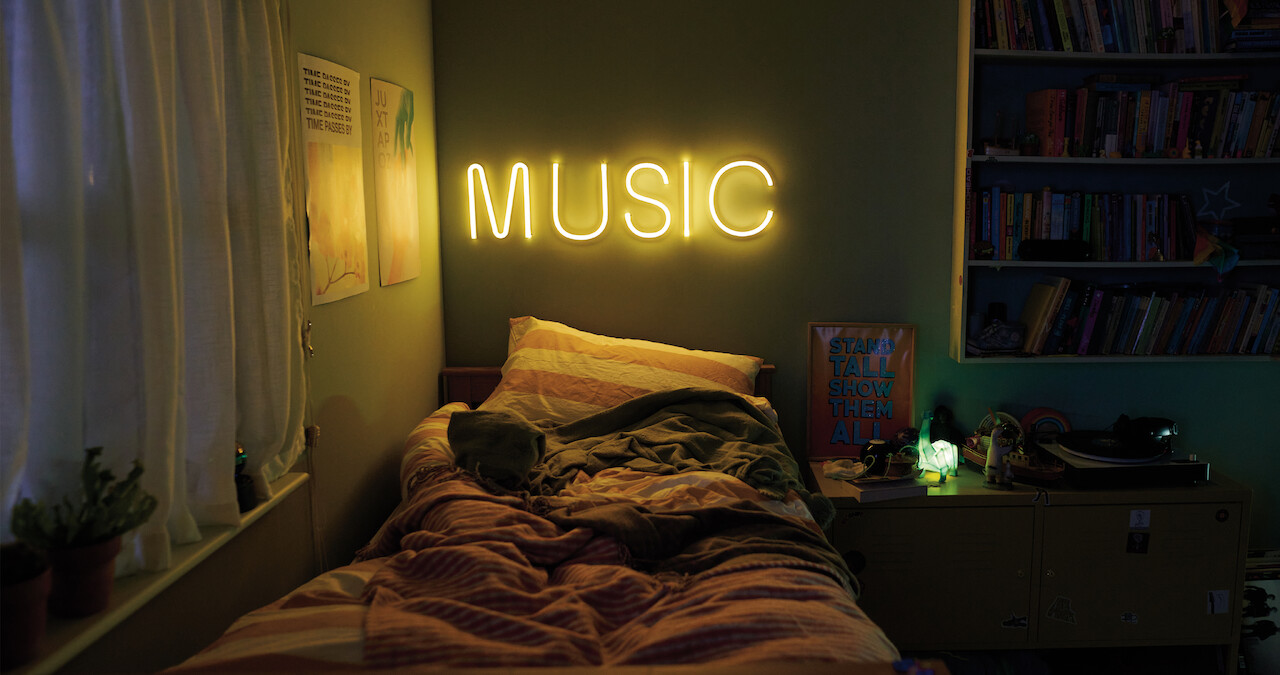
Behind the Scenes
The Hidden Messages in ‘Heartstopper’ Bedrooms
They’re more than just cool sets –– they’re sanctuaries.
By Lydia Wang
May 26, 2022
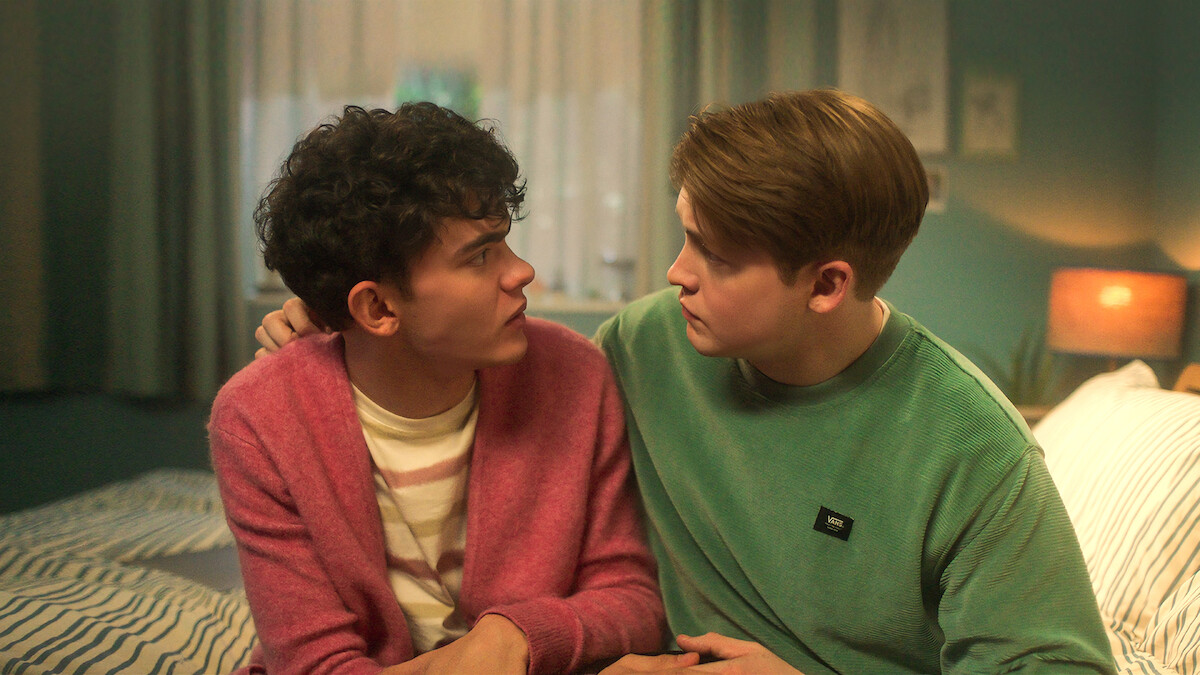
The idea of sanctuary is an intrinsic part of Heartstopper, a show about finding safety, comfort, and joy in relationships and physical spaces. For Charlie (Joe Locke), one of those sanctuaries is Mr. Ajayi’s art room; for Nick (Kit Connor), one could argue his sanctuary is Charlie’s arms. A lot of queer teens (and queer adults) can relate to the need for a safe space for introspection and self-expression. And since we didn’t all get to grow up with an empathetic mentor or a best friend turned love interest, many teens turned to their bedrooms as a place to feel free to be their true selves.
It’s a sentiment that Tim Dickel, Heartstopper’s production designer, understands all too well. “People always say, ‘You’re a 53-year-old man. How do you design for teenagers?’ And I just go straight back to when I was 16, 17,” Dickel tells Tudum. He grew up in “a very weird part of Essex [near London]” that he describes as “very heterosexual,” and he didn’t always feel like he fit in. But in his own bedroom, he had a safe space to explore his own identity and passions.
“For me, when I was a kid, I could do what I wanted in that space,” Dickel adds.
The same is true for the kids in Heartstopper. Dickel and executive producer Patrick Walters unpack some of the subtle details and important metaphors in Charlie, Nick, and Elle’s bedrooms for Tudum — and talk about the importance of creating safe spaces for teenagers, whether they’re fictional characters or young adults.
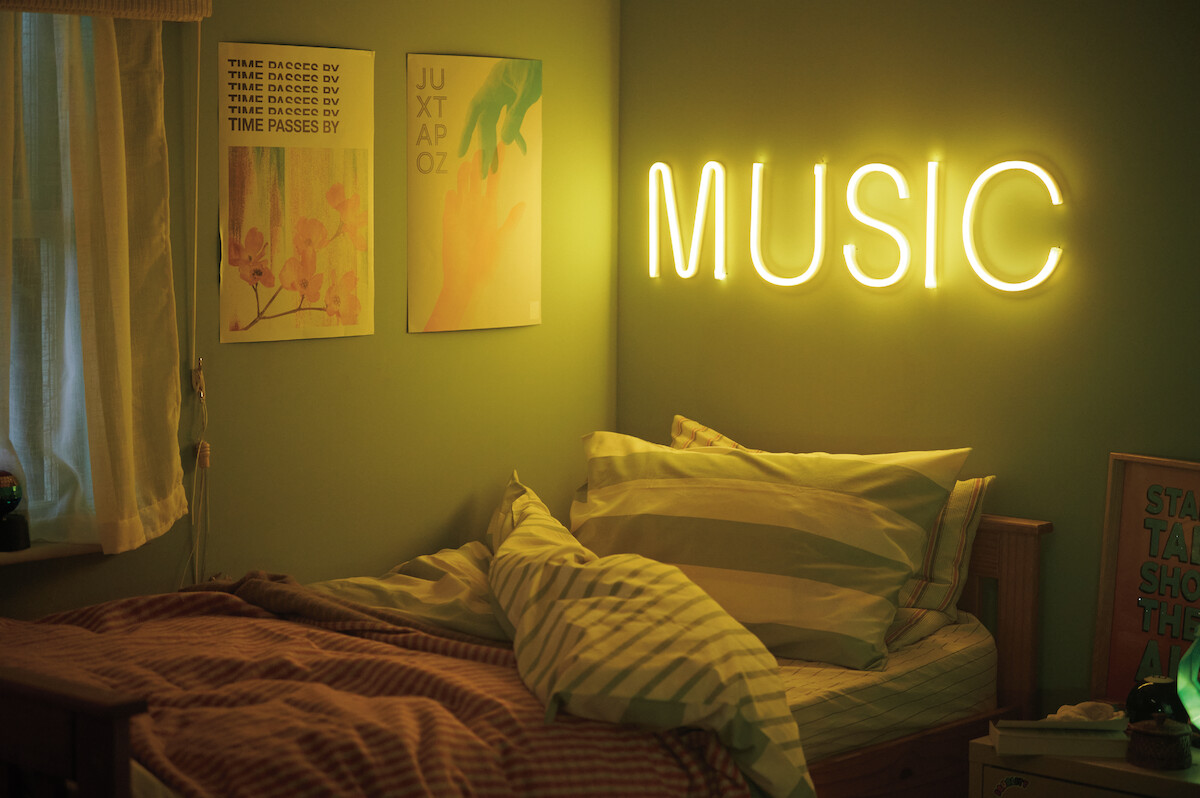
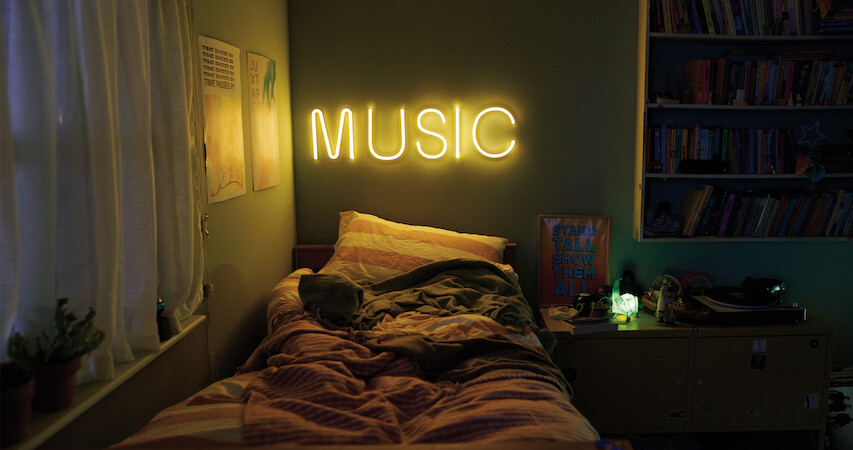
Charlie’s bedroom gets more colorful and crowded as he comes into himself.
“[Charlie’s] room starts with the books,” says Dickel. Many components of Charlie’s bedroom, including specific posters on the walls, come from Alice Oseman’s original webcomic. But Dickel had a lot of fun adding a subtle metamorphosis to the room that paralleled Charlie’s personal journey.
“Actually, the posters and everything grow in that room. As he grows as a character and the relationship [with Nick] grows, there’s more posters, there’s more images, there’s more stickers,” Dickel says. Overall, Charlie’s walls are very much “a metaphor or cipher for his growth as a character.”
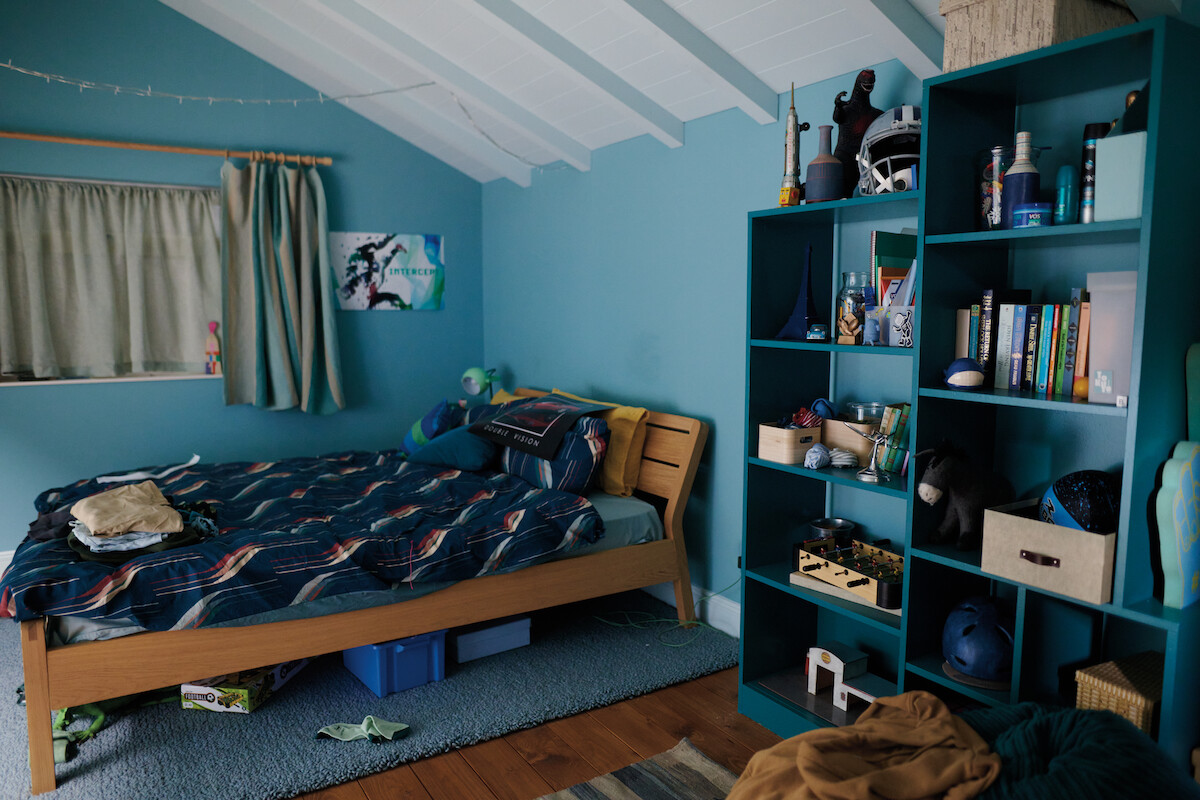
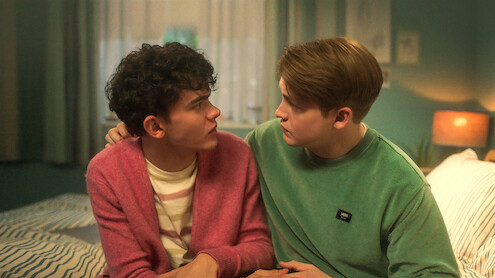
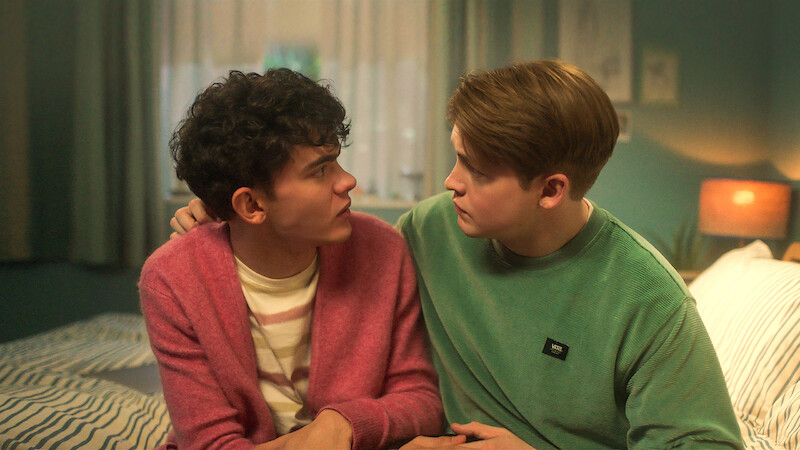
Nick’s room is understated with splashes of “softness” and spaces for him to be vulnerable.
Nick’s room is a little more bare than Charlie’s (fine, it’s a lot barer than Charlie’s). But Dickel says there’s an important contrast between his no-frills bedroom and the little details that hint at his true personality and vulnerability. “That soft fairy light that runs through the room, it just makes the room a lot softer,” he tells Tudum. “What I wanted to do was to create this sort of juxtaposition.”
Walters also adds that Nick’s able to find safe spaces within his bedroom. “When he gets back in Episode 2, having been with Charlie, and he’s having his most soul-searching moment...he retreats into this really intimate little corner with a soft beanbag, he gets his laptop up, and he writes, ‘Am I gay?’ ” Walters says. “It certainly felt, when we were filming that scene, that Nick was finding this little intimate space that he hadn’t been inhabiting before.”
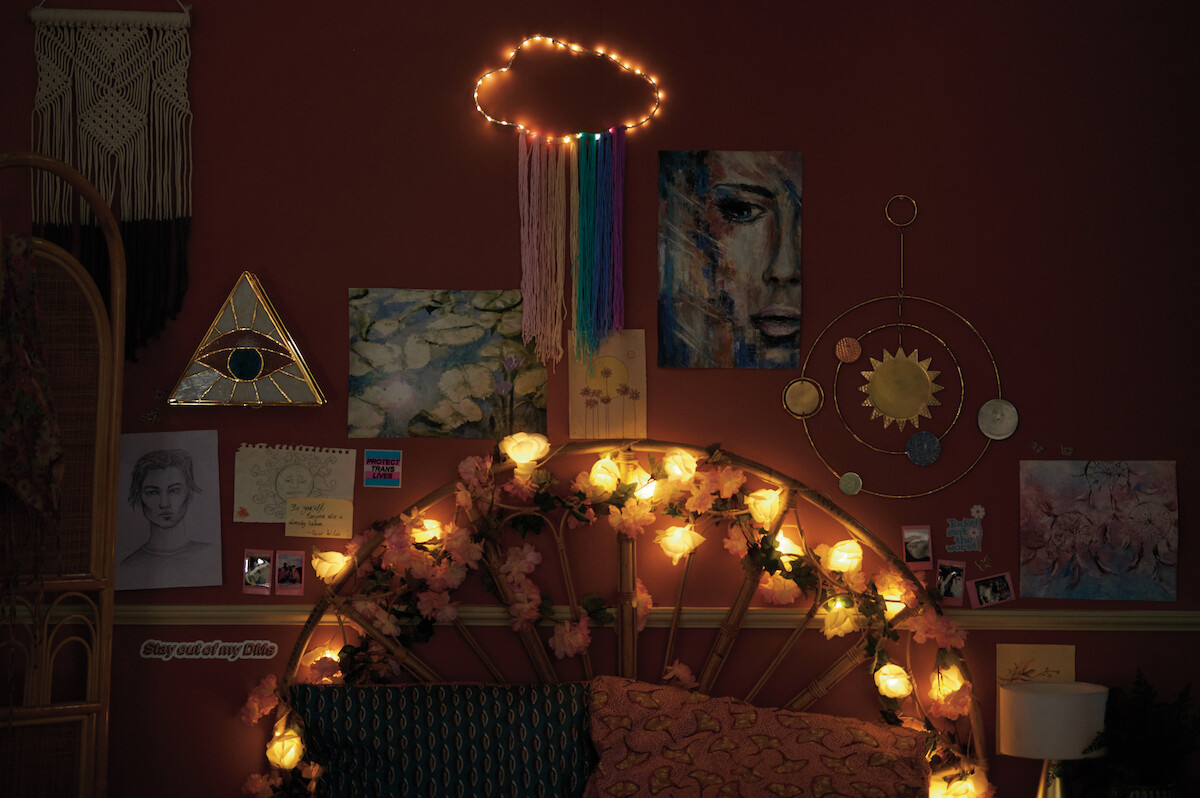
Actor Yasmin Finney played a role in the creation of Elle’s room.
Compared to some of the other bedrooms, Elle’s space doesn’t get as much screen time in Season 1 — but we do get a glimpse of her room during a split-screen shot of the gang texting. While Tao’s wall is decorated with Polaroids, and Isaac is seated in front of a wall of books, Elle’s backdrop has a bit of everything: flowers, photographs, drawings.
“All of these sweet little things that Elle had collected and curated were up on the wall behind her. And then we were like, ‘Oh, should we get a trans flag print?’ And I don’t think you can even see it in [the final shot], but [Yasmin] loved it. She was like, ‘Oh, that’s a great idea,’ ” says Walters. “And it’s, like, as an actor, she felt totally at home in that space.”
As important as it was for the bedrooms to align with the characters (and the webcomic), Dickel emphasizes that it was also a priority for the actors to feel at home in their rooms. He showed his ideas to them and had them “tick things” that “felt right for their characters” and “cross out things” that didn’t. “I designed something, but [also] I’m there to facilitate them being comfortable enough to put on a great performance in the space,” he says. “It means that when they perform in that space, they’re feeling comfortable in that space, and I think that’s really important.”