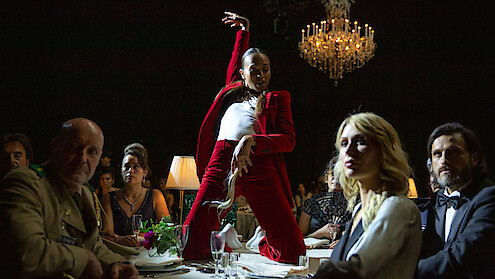
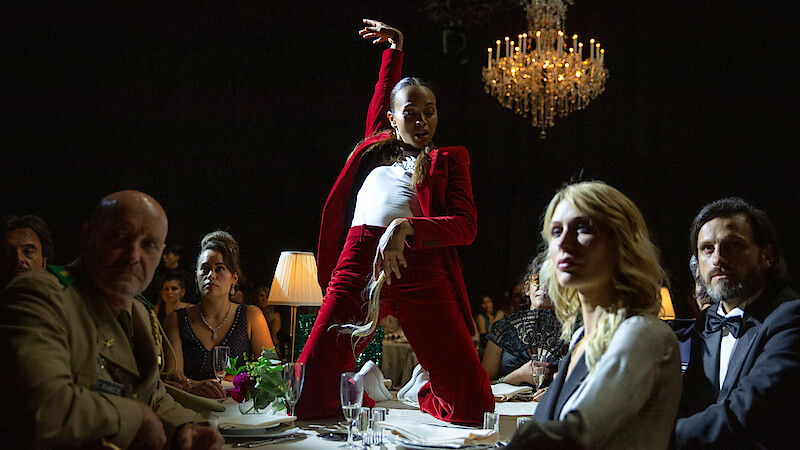
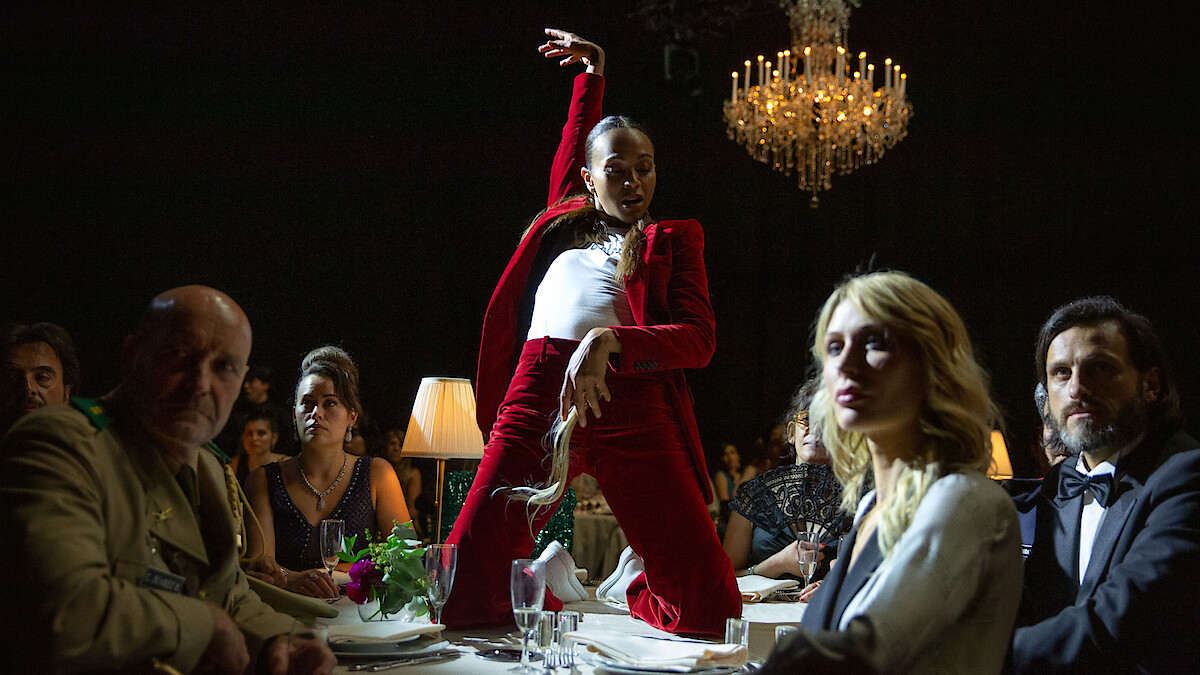
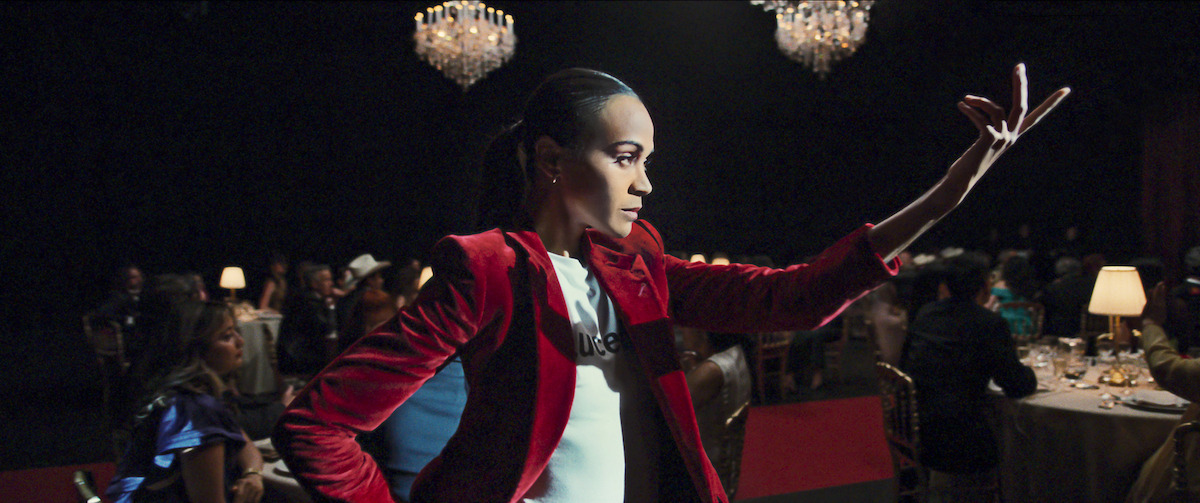
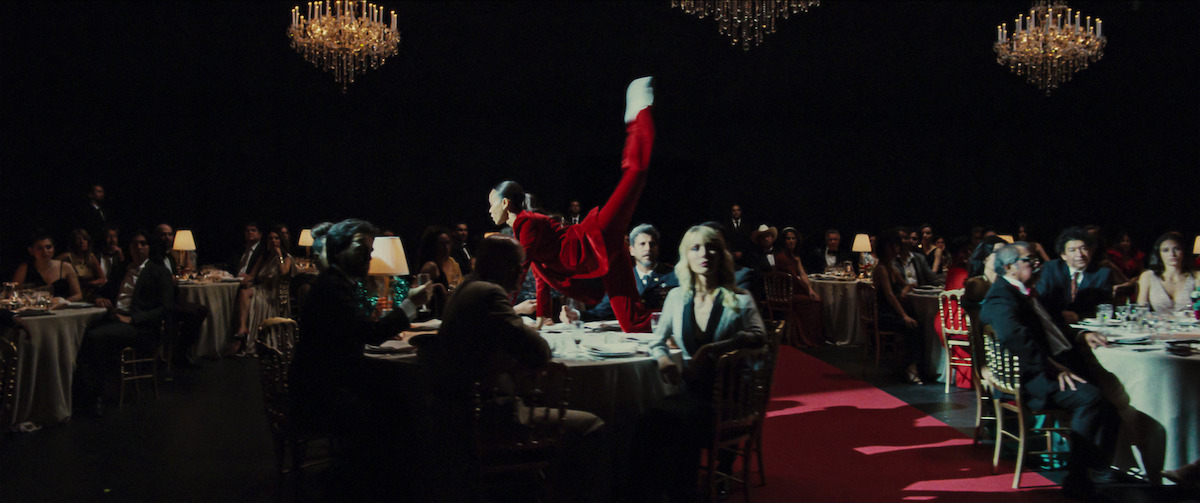
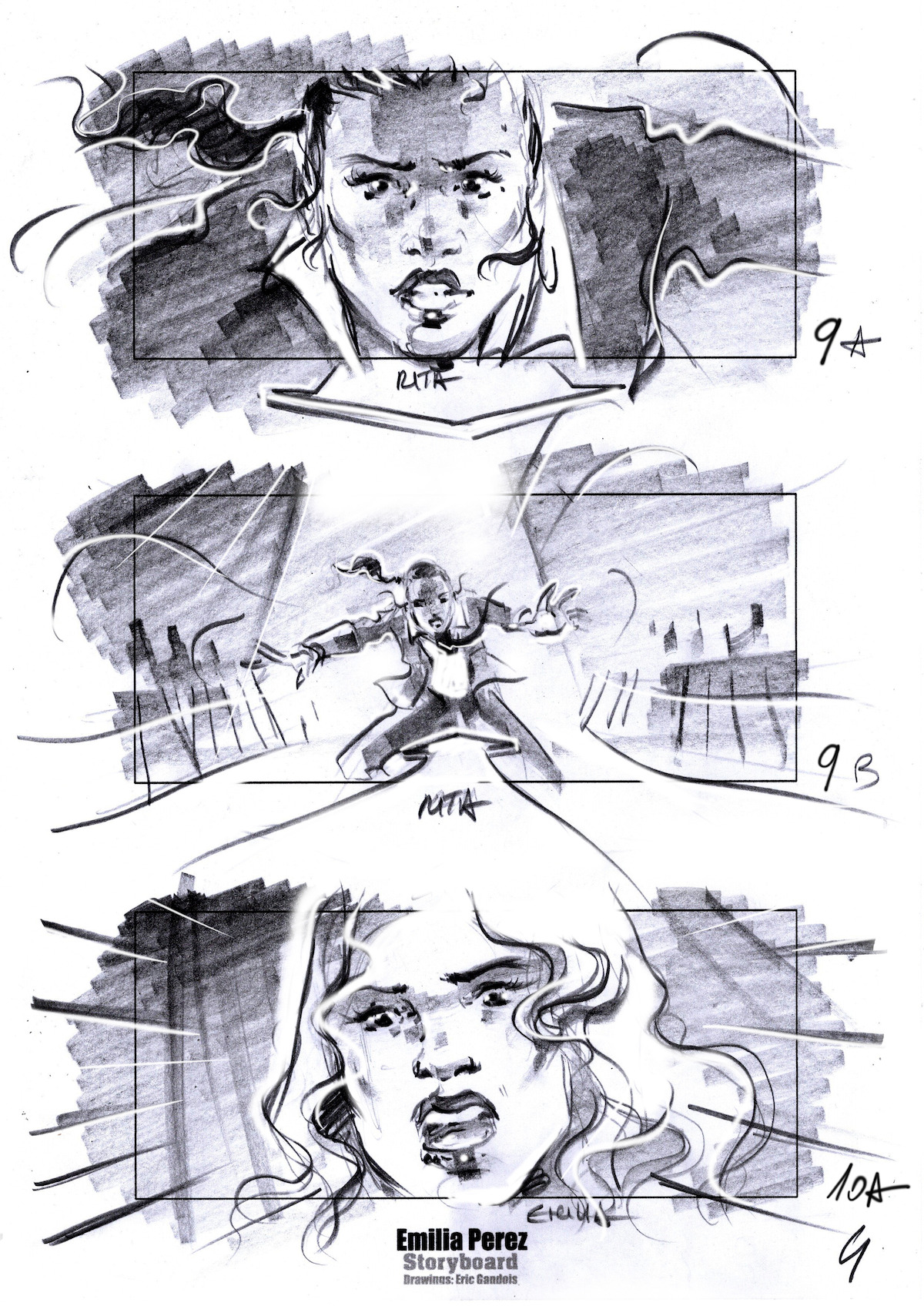
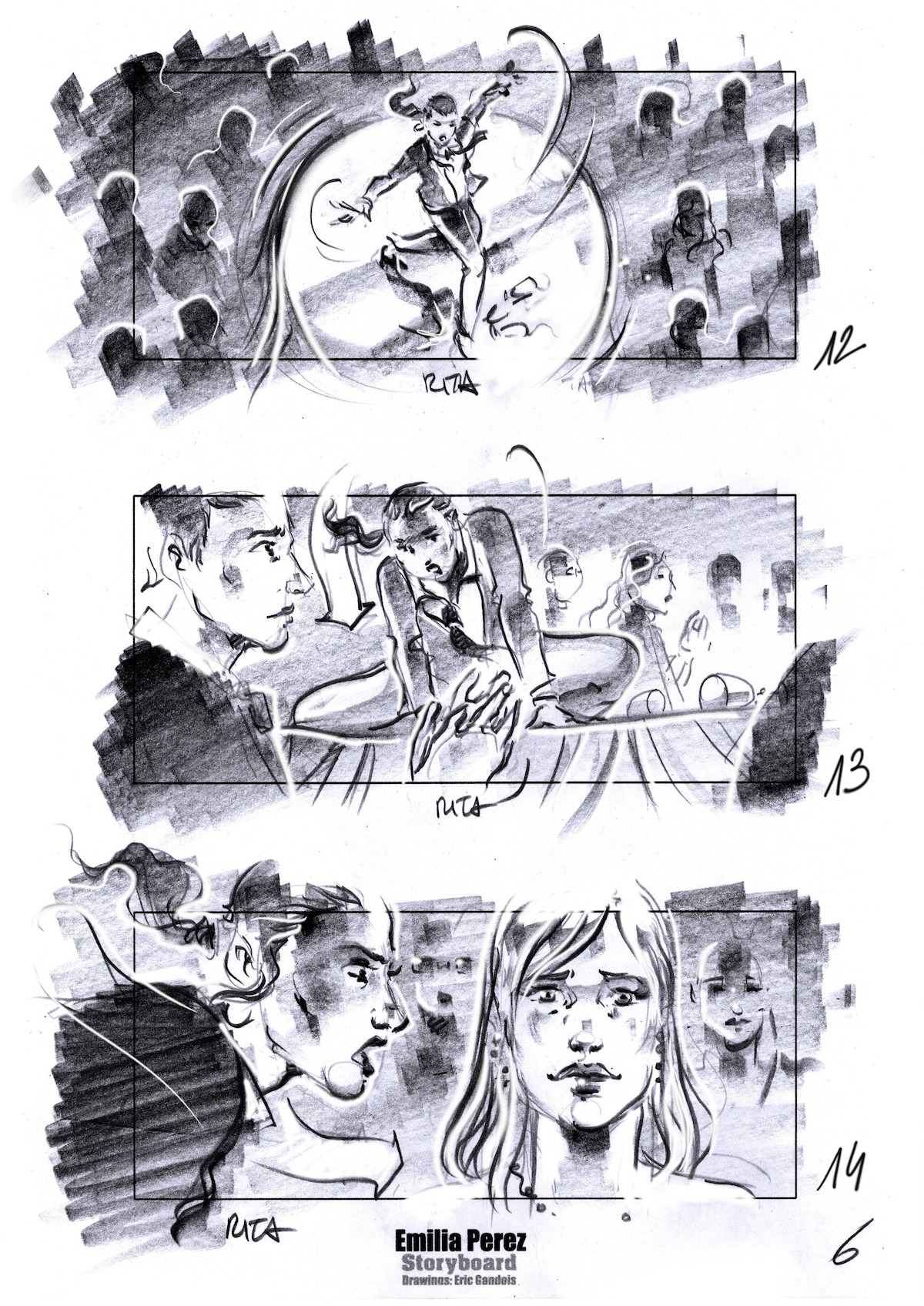
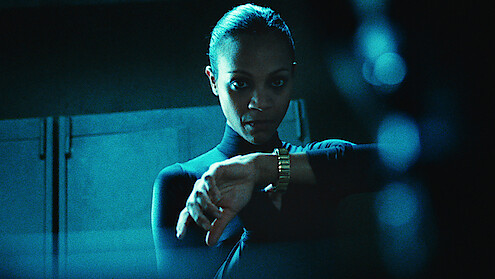
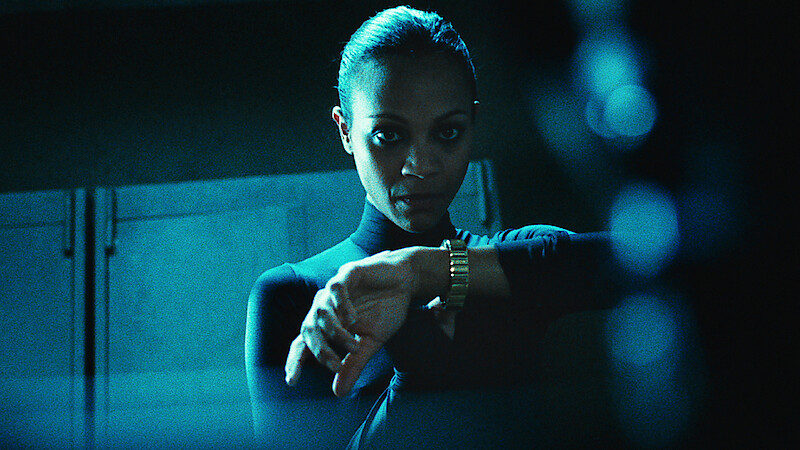
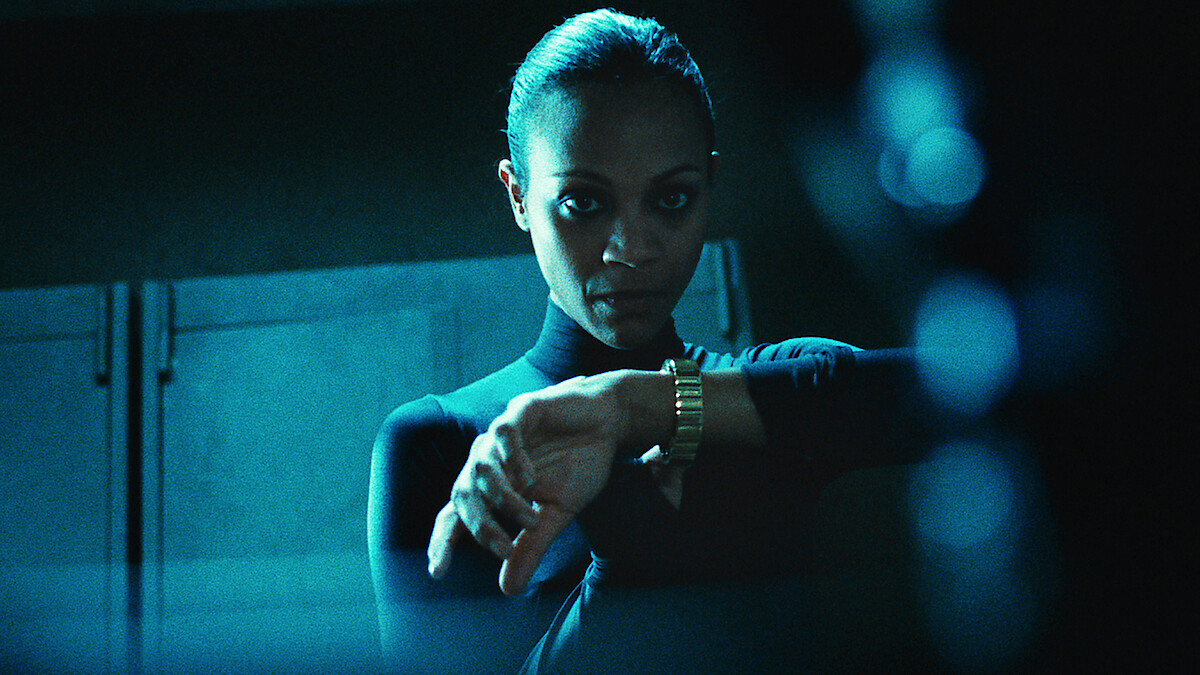
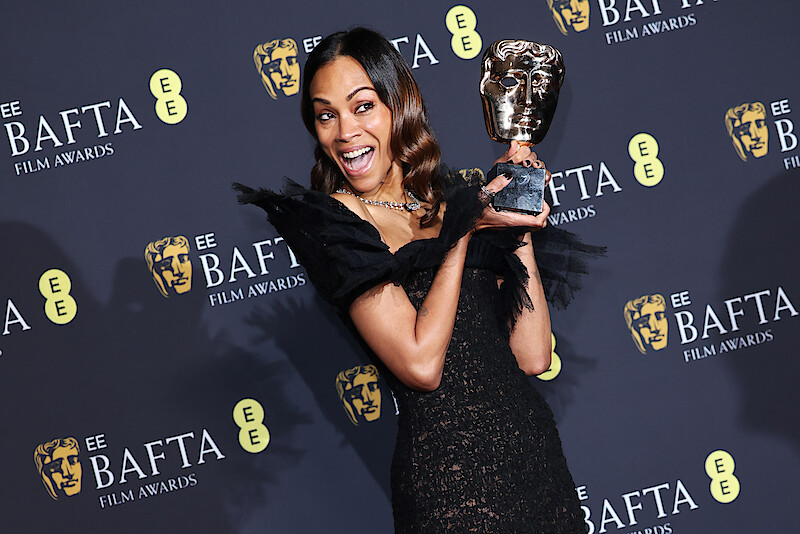
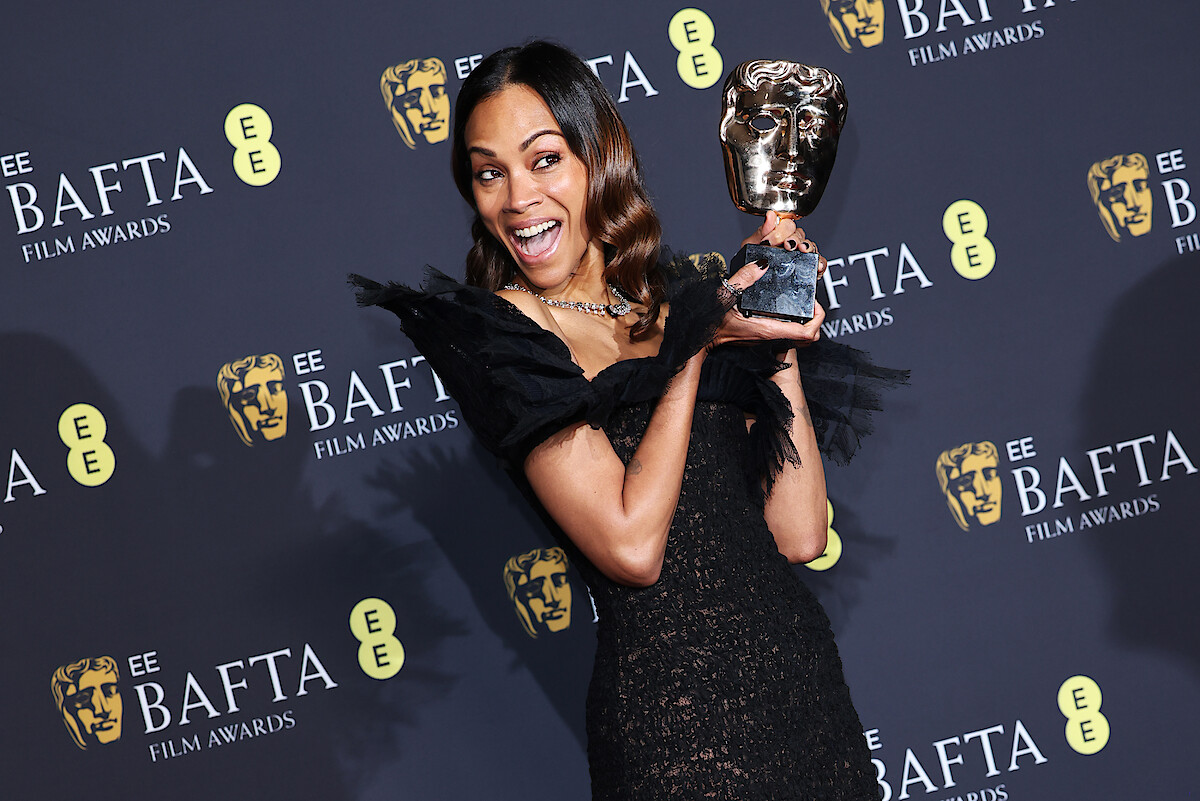
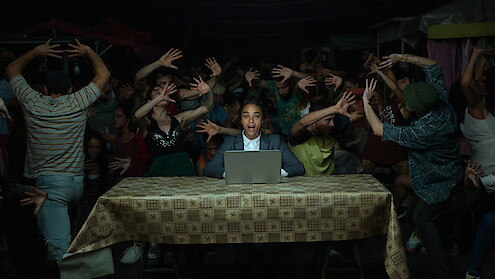
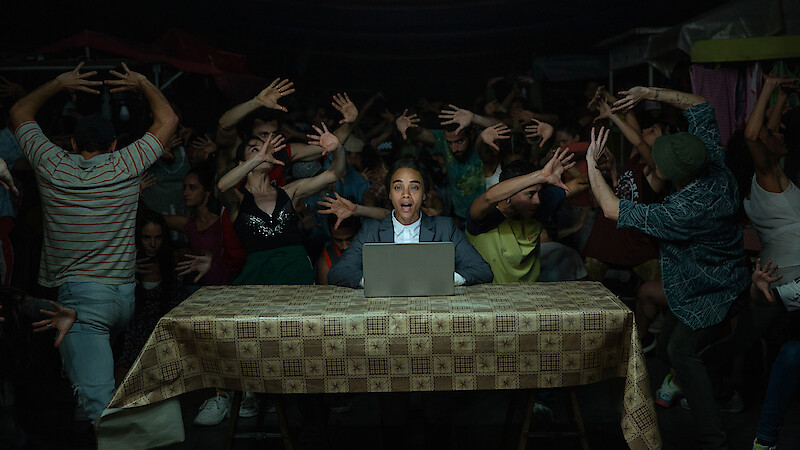
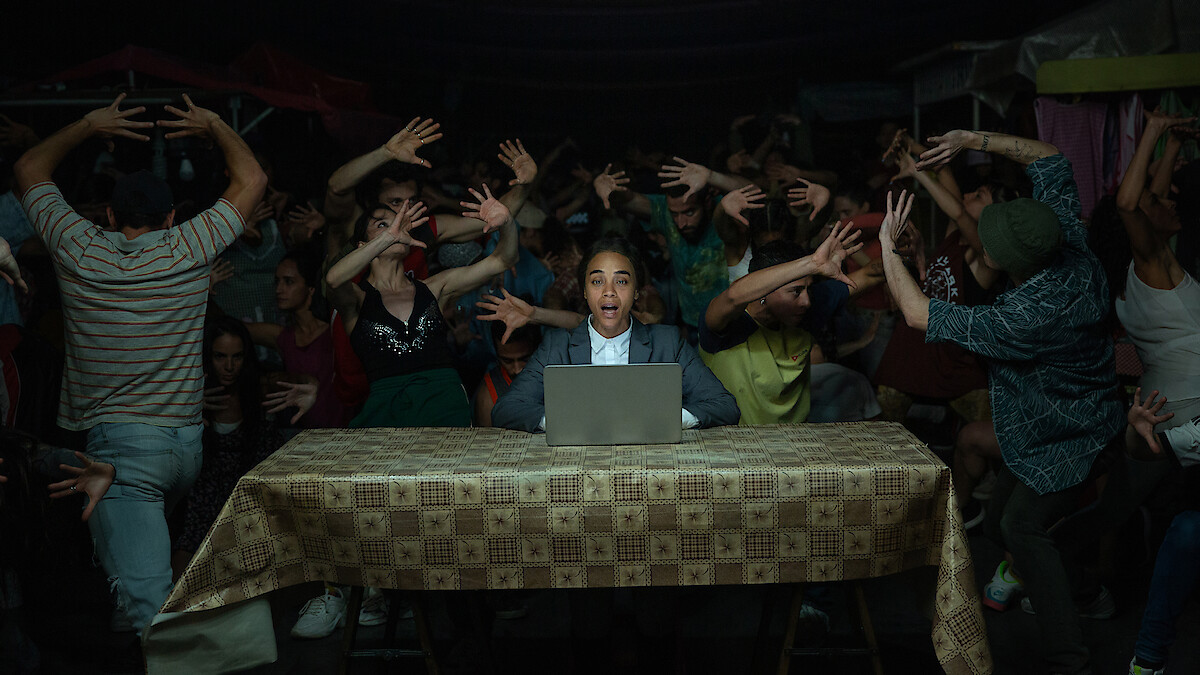
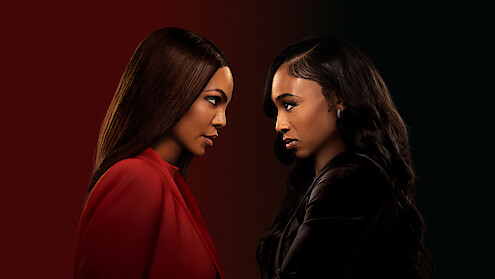
A viewing of Emilia Pérez, the musical crime thriller nominated for 13 Academy Awards, including Best Picture, is something like a fever dream of dialogue, drama, song, and dance. And perhaps no scene captures the hallucinatory excitement quite like one featuring Zoe Saldaña — who plays Rita, a hard-working lawyer with a unique assignment — performing her signature song from the film’s score, “El Mal,” which received the Oscar for Best Original Song at the 97th Academy Awards.
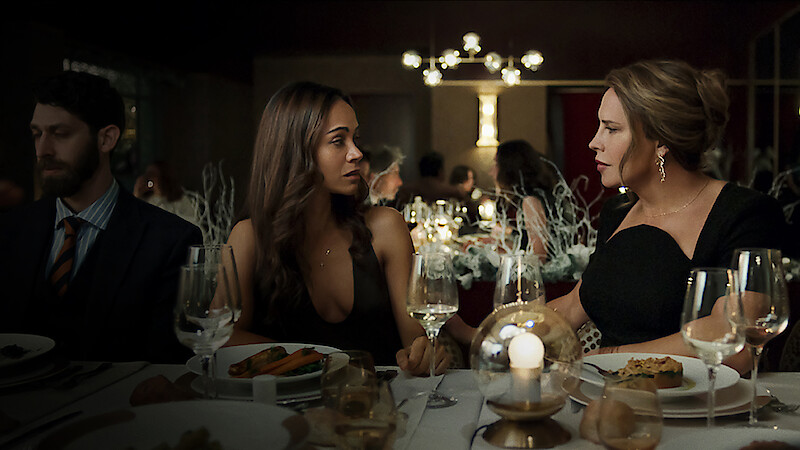
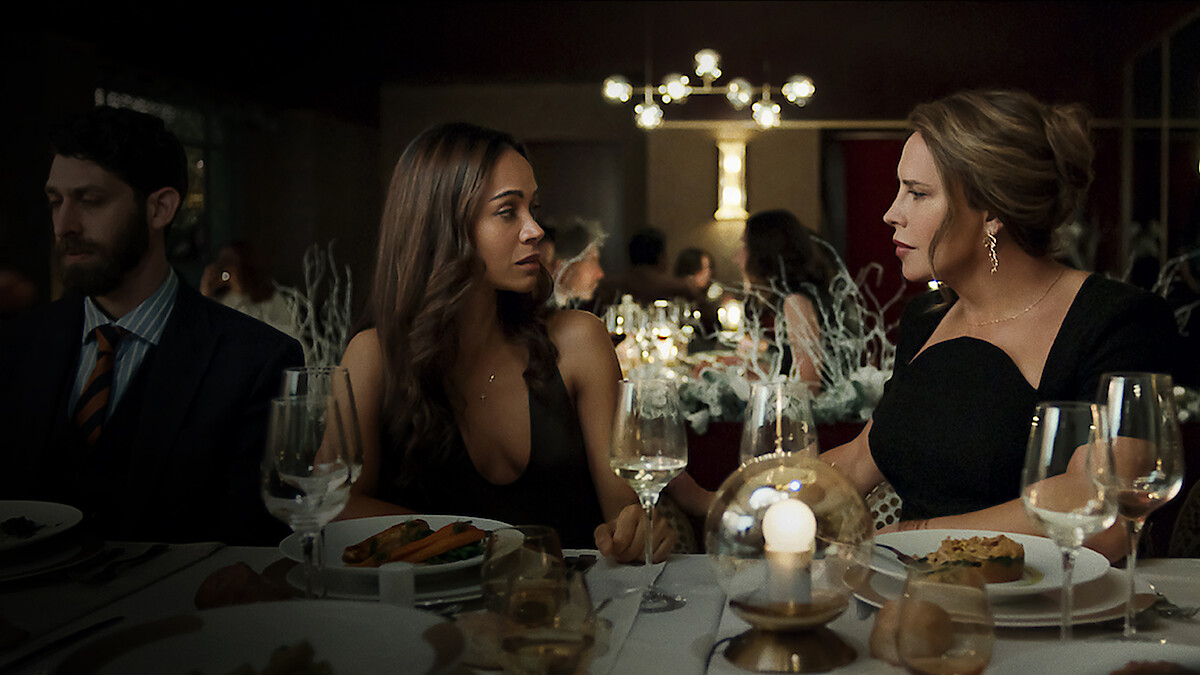
Directed by Jacques Audiard, with all songs written by French duo Clément Ducol and Camille, the film centers on a Mexican cartel leader’s search for self and handles its musical moments with a technicolor, operatic theatricality — the perfect context for Saldaña, who trained as a dancer before becoming an actor. “The origin of Emilia Pérez lies in the desire for an opera,” explains Audiard of the genre-bending epic. “The hazards of life eventually led me to decide to make a film of it, but at the very beginning it was an opera booklet that I had written. Music and dance were therefore inherent to the project from the very start.” Choreographer Damien Jalet, cinematographer Paul Guilhaume, and an innovative team of artisans joined Audiard to create a kind of psychedelic ballet of movement and magic. And with “El Mal,” in which a table-dancing Rita exposes the hypocrisy of the Mexican elite, a climactic mashup entwines kinetic moves and camerawork for a moment of extreme tension and, ultimately, catharsis.
Composers Ducol and Camille wrote six different versions of the song before finding the right approach to the emotionally charged scene. “Jacques's first reference was Bob Dylan's political protest songs, then we moved on to [something] more like Talking Heads, and I remember Jacques mentioning ‘Sympathy for the Devil’ by the Rolling Stones. Then we went for more trance influences and Los Cogelones, which is a Mexican punk band,” explains Camille. “I remember listening to a lot of hip-hop, and thinking, we need something that will allow Zoe's Rita to really go for something very precise, like an archer, like someone rendering justice with a laser, and the laser is her voice.”
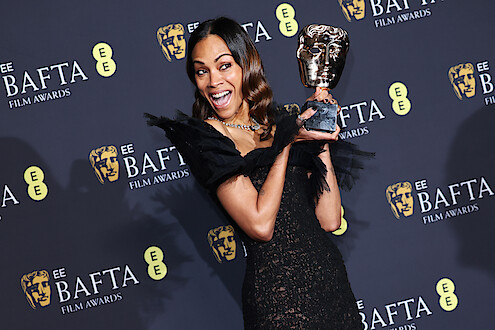
Below, the talent behind the showstopping song and scene — including Saldaña, now an Academy Award winner for Best Supporting Actress for her performance in Emilia Pérez — tells us how it got made.
Writing in Sync
“Emilia Pérez’s screenplay was literally written in sync with the composition of the music. With Camille and Clément, we went back and forth between the writing table and the composition studio. We spent a lot of time in a single place, which centralized both tasks. In the morning, I’d give Camille and Clément instructions based on my writing work from the previous day, and I’d leave to continue writing. They would call me back at the end of the day to listen to their work, and this would then influence the narrative and give me other ideas.” — Jacques Audiard
“Early on we agreed on the fact that the film should not be sung entirely through. We wanted [the] songs to serve a narrative purpose, and so Camille and I wanted to handle what is supposed to happen in some scenes, so that we could translate it into songs.” — Clément Ducol
“ ‘El Mal’ was the song that gave us the most work in terms of finding the right tone. There was a moment where it was a little more lyrical, but then we ended up with a good combination of a hip-hop feel and rock [style] enraged chorus. It’s very rhythmic, and it was very technical to give to Zoe.” — Camille
“I grew up in New York City doing theater, so I was familiar with the idea of a musical. In a way, working with a director, a choreographer, musical directors, and putting it all together to see it come to life reminded me of these experiences in the theater. But I’ve never been around musicians and composers that much, and they blew me away every day.” — Zoe Saldaña
“Zoe is helpful and selfless, which I like so much about actors, but she’s really different. She’s not too familiar with the studio, and she immediately said that singing was out of her comfort zone. But she’s got incredible instinct and an amazing natural musical talent. She’s a big perfectionist who, when she acts, is totally connected to her heart while controlling her every glance and raised eyebrow. She’s an athlete.” — Camille
“Zoe ticked all the boxes all at once — she could sing and dance as a lead dancer; plus, her acting is strikingly charismatic. She really wanted to do the film, but she was busy. We waited for her for a year.” — Audiard
Translating the Choreography
“As for the dance, I knew I wanted it, but [choreography is] a vocabulary I haven’t mastered at all. When we started working together with Damien, the challenge for him was to understand what I was looking for, what I liked, and to translate it choreographically. He was also at the origin of some choreographed moments, even though I wasn’t expecting any dancing at that point in the film. He’s a very persuasive guy!” — Audiard
“Zoe Saldaña is a trained dancer who thinks like a dancer and she’s got the skill set. I immediately told Jacques that she was able to do wonderful things, which helped me set up a kind of bond between the actors and the dancers.” — Damien Jalet
“It was rejuvenating. It was a rebirth. It was a reconnection with my roots. I grew up onstage as a classical dancer. I’m from New York, so life in my head is a musical theater that never ends. I was grateful that I got to come back to that part of me, which I left behind when I started this wonderful career in film. The older I get, the more I realize I have been missing that part of my life. So getting this opportunity to go back to who I truly believe myself to be, it just felt like I was right at home.” — Saldaña
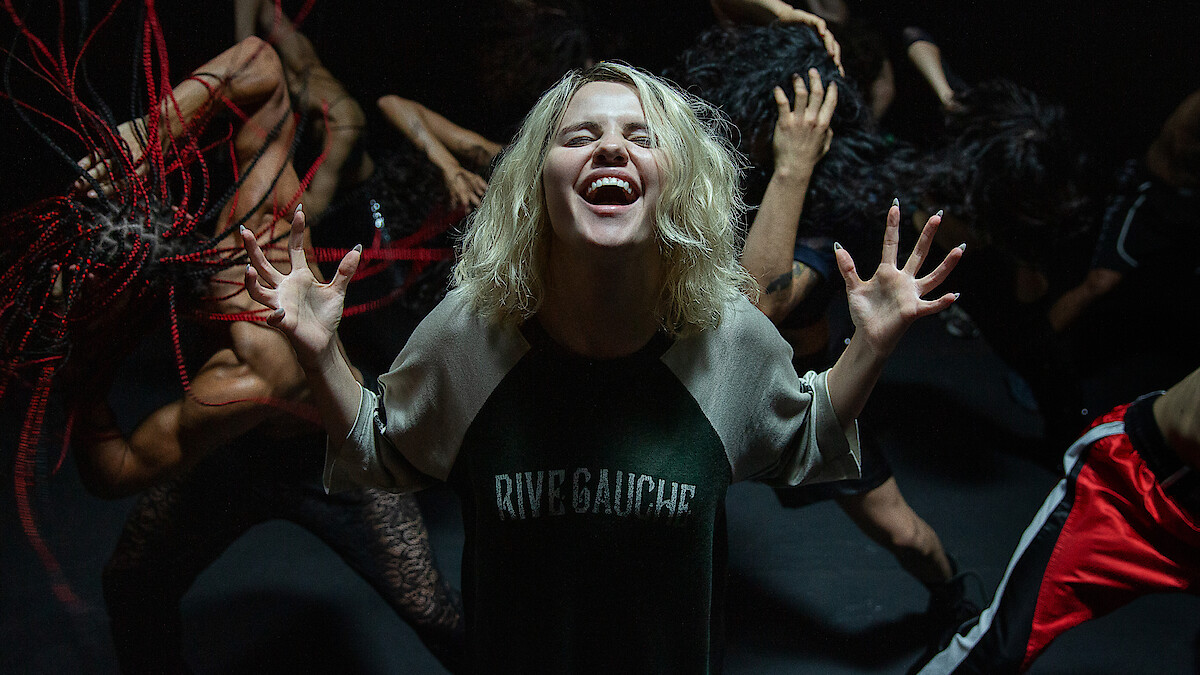
“Each of Rita’s gestures echoes or contradicts what she’s saying. I said to Jacques that I could develop this scene as an actual solo for Zoe, knowing that she would be able to combine, as very few actors can, choreographic virtuosity, acting, and singing. This was an incredible moment in the shoot — the extras who were not dancers found out on the day what they were supposed to do. They didn’t do any rehearsal, which brings, I think, a genuine tension to the scene.” — Jalet
Shooting the Sequence
“We had to find a common grammar, with Paul Guilhaume, the cinematographer, to understand how we were going to film these scenes and Damien’s beautiful dancing moments. I realized that, in the end, the musical numbers weren’t the most difficult to shoot, as the stakes of the sequence were very clear. But what a pleasure to do!” — Audiard
“One of the technical challenges, lighting and camera-wise, [was] Zoe Saldaña’s amazing performance for ‘El Mal.’ She had to be absolutely free to move in the space, looking in any direction, but keep being lit by a single white light. Gaffer Thomas Garreau built a team with live performance technicians for those two days of shooting, and lighting operators were tracking her, switching stage lights on and off as she was performing. Her extreme technicality combined with our Steadicam operator talent did the rest.” — Paul Guilhaume
On Set with “El Mal”
“Jacques keeps on challenging you up until the shoot! You always need to be on your toes, things change a lot, and it’s difficult to set anything early on. It all brings additional tension, and it challenges everyone to do their very best.” — Jalet
“We started working on ‘El Mal’ in January, and it was one of the last scenes we shot in June. Thankfully, we got to do a lot of rehearsal with our Steadicam operator, Sacha Naceri, because the scene was really a dance with him. It was fun, amazing, scary. And it hurt! I was icing my back, elbows, and neck for days afterward, but I did it! I love everything about that scene.” — Saldaña