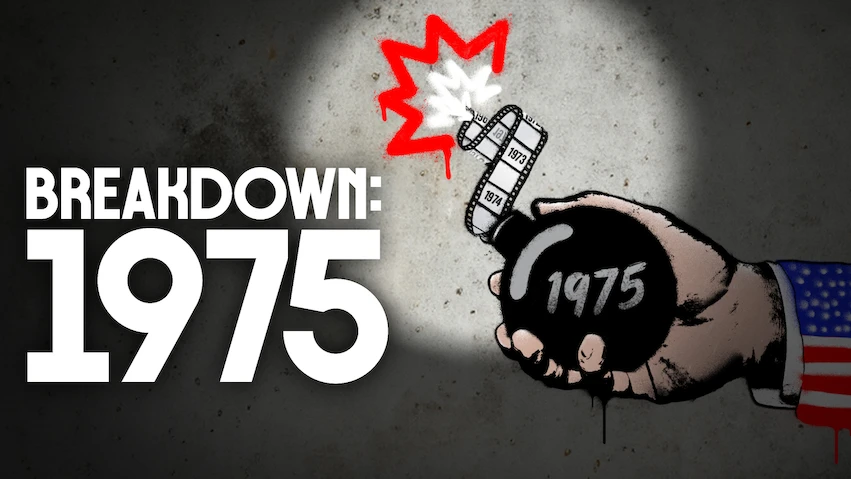
Ask any film nerd, and they’ll tell you 1975 was one of the greatest years of American cinema. Ask Morgan Neville (They’ll Love Me When I’m Dead, The Saint of Second Chances), and he’ll tell you why. The Oscar-winning director’s latest documentary explores the year in cinema dominated by transformative, radical films — ones that dared to offer provocative commentary on the immense political and social upheaval Americans were navigating. What’s a country caught at a pivotal crossroads to do but go to the movies?
Narrated by Jodie Foster — and featuring interviews with Martin Scorsese, Ellen Burstyn, Oliver Stone, Seth Rogen, and Bill Gates, among others — Breakdown: 1975 offers a portrait of a country on the verge of a nervous breakdown. “What was interesting was to have a chance for political thinkers and historians [to] reflect on cinema and for people from cinema [to] reflect on politics and history,” Neville tells Tudum. Those reflections paint a vivid picture of the nation’s disillusionment with the systems that govern us and how those sentiments gave rise to films like Taxi Driver, One Flew Over the Cuckoo’s Nest, Network, and many more.
When will Breakdown: 1975 be released?
Stream it now.
Where can I find the trailer for Breakdown: 1975?
Check it out at the top of this page.
Who’s in the cast of Breakdown: 1975?
Jodie Foster (NYAD) narrates the film.
The documentary features interviews with the following directors, actors, screenwriters, and cultural figures:
The documentary features interviews with the following journalists, historians, and authors:
- Dr. Todd Boyd
- Wesley Morris
- Naomi Fry
- Frank Rich
- James Risen
- James Wolcott
- Jefferson Cowie
- Kurt Andersen
- Peter Bart
- Peter Biskind
- Rick Perlstein
- Sam Wasson
National Archives and Records Ad
What happens in Breakdown: 1975?
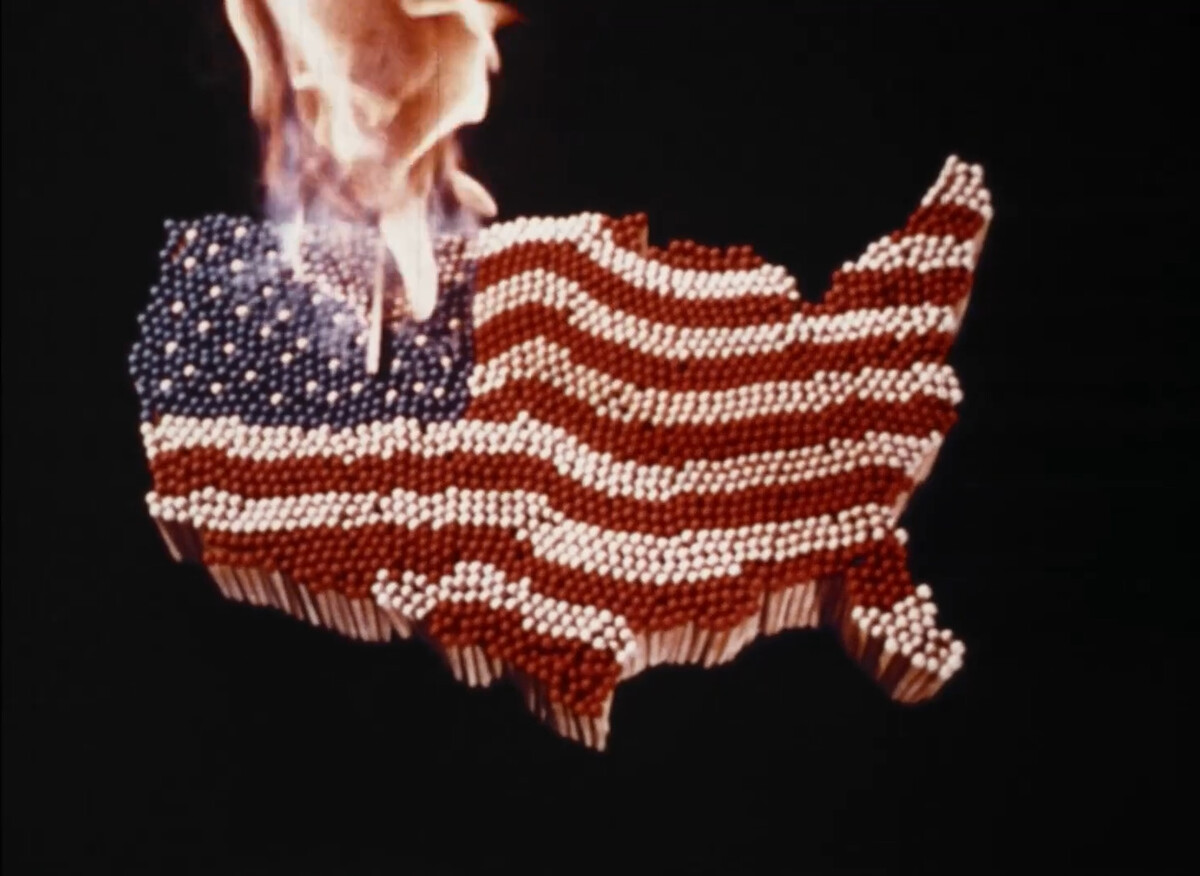
By 1975, the idealism and optimism of the ’60s was dead. The ideals of free love, self-expression, and activism imploded with the realization that the American power structure was riddled with corruption. Starting with the Watergate scandal, which led to President Nixon’s resignation in 1974, Americans weathered blow after blow to the collective understanding of democracy. No longer did citizens believe their government officials were above reproach. The fall of Saigon signaled a bitter end to the Vietnam War and disillusionment with American military might. A rise in inflation and unemployment paired with a historic recession saw people take to the streets in protest of financial institutions that exacerbated class divides. Drug epidemics, the rise of the surveillance state, domestic terrorism, and natural disasters all fed into the country’s cynicism and helplessness.
Morgan Neville’s Breakdown: 1975 explores how, for one brief shining moment, Hollywood was dominated by directors who held a mirror to the corruption and greed infecting American life. The chaos of the era was captured in films that challenged the collective consciousness in real time, from Oscar nominees and winners like Chinatown, All the President’s Men, and The Towering Inferno to cult classics like Mahogany, Cooley High, and The Stepford Wives.
mptvimages.com / Courtesy of Netflix © 2025
Is Breakdown: 1975 based on a true story?
Yes, Breakdown: 1975 follows the cultural forces and events of the ’70s — including Watergate, the Vietnam War, a historic recession, desegregation, the Equal Rights Amendment, and more — and their impact on filmmaking.
“At a time when the culture feels like it’s breaking apart, film can be the thing that helps us make sense of it and feel like we’re not crazy,” Neville told IndieWire. “There’s no better illustration of this than the mid-1970s. It was the best of times, it was the worst of times. And it was funky.”
Neville also drew inspiration for the doc from his own childhood, during which his parents took him to see movies that reflected the darker realities of life.
“I was a child of the ’70s and many of these movies imprinted on me at a very young age,” Neville tells Tudum. “Was it appropriate? Probably not, but I wouldn’t change it for anything.”
What movies are mentioned in Breakdown: 1975?
The movies referenced in the documentary include:
- Jaws (1975)
- Taxi Driver (1976)
- All the President’s Men (1976)
- Barry Lyndon (1975)
- Nashville (1975)
- One Flew Over the Cuckoo’s Nest (1975)
- Network (1976)
- Alice Doesn’t Live Here Anymore (1974)
- Rollerball (1975)
- The Last Detail (1973)
- Easy Rider (1969)
- Five Easy Pieces (1970)
- The Godfather Part II (1974)
- The Sting (1973)
- Chinatown (1974)
- The Day of the Locust (1975)
- Young Frankenstein (1974)
- Benji (1974)
- The Man with the Golden Gun (1974)
- The Towering Inferno (1974)
- The Poseidon Adventure (1972)
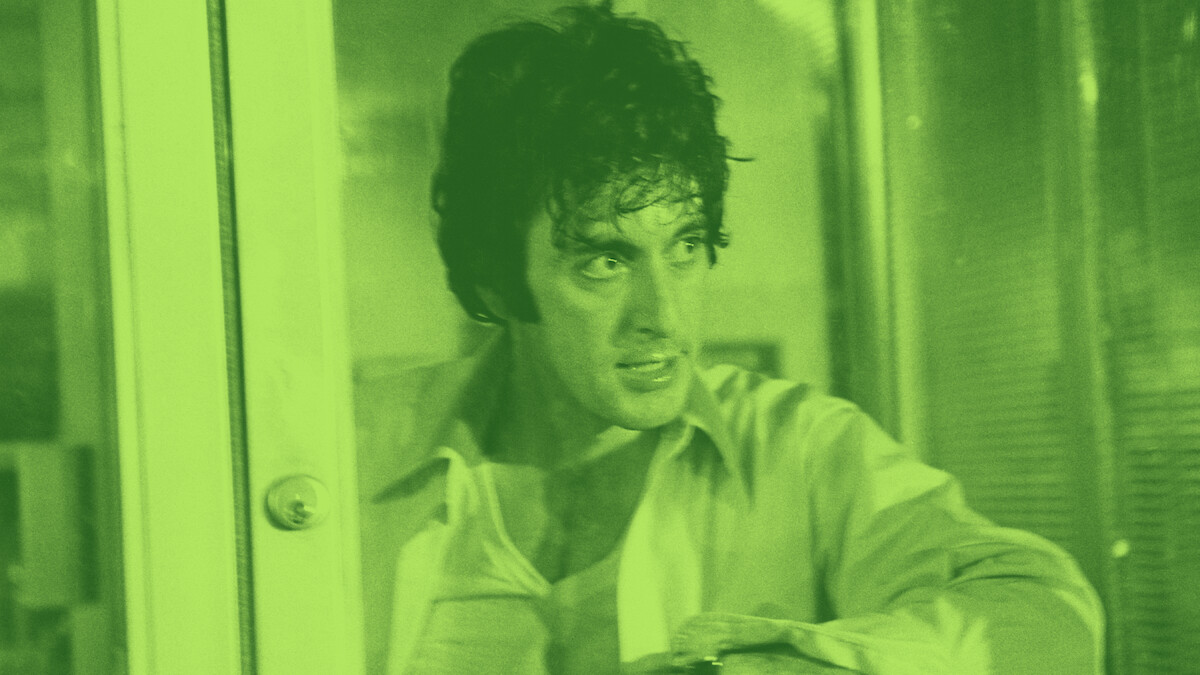
- Dog Day Afternoon (1975)
- Escape to Witch Mountain (1975)
- Assault on Precinct 13 (1976)
- The Outlaw Josey Wales (1976)
- The Enforcer (1976)
- Death Wish (1974)
- Mahogany (1975)
- Logan’s Run (1976)
- Sweet Sweetback’s Baadasssss Song (1971)
- Shaft (1971)
- Super Fly (1972)
- Uptown Saturday Night (1974)
- Blacula (1972)
- Cooley High (1975)
- Cornbread, Earl and Me (1975)
- Car Wash (1976)
- M*A*S*H (1970)
- The Green Berets (1968)
- Hearts and Minds (1974)
- Monty Python and the Holy Grail (1975)
- Executive Action (1973)
- The Parallax View (1974)
- Shampoo (1975)
- The Conversation (1974)
- Three Days of the Condor (1975)
- Jonathan Livingston Seagull (1973)
- Tommy (1975)
- Carrie (1976)
- Futureworld (1976)
- The Questor Tapes (1974)
- Harlan County, USA (1976)
- Smile (1975)
- Funny Lady (1975)
- At Long Last Love (1975)
- Grey Gardens (1975)
- Little House on the Prairie (1974)
- The Stepford Wives (1975)
- Star Wars (1977)
- Rocky (1976)
- The Rocky Horror Picture Show (1975)
- The Bad News Bears (1976)
- Death Race 2000 (1975)
- Dolemite (1975)
- Marathon Man (1976)
- Airport 1975 (1974)
- Foxy Brown (1974)
- The Passenger (1975)
- Night Moves (1975)
- American Graffiti (1973)
The film also references the television shows All In the Family, Happy Days, Laverne & Shirley, Little House on the Prairie, Wonder Woman, and Saturday Night Live.
Here are the 10 movies from 1975 that Morgan Neville wants you to watch:
“This is my personal top 10 from 1975,” Neville tells Tudum. “My apologies to all the great films that didn’t make the list!”
- Jaws
- Dog Day Afternoon
- Monty Python and the Holy Grail
- Smile
- Nashville
- One Flew over the Cuckoo’s Nest
- The Man Who Would Be King
- Night Moves
- Grey Gardens
- Shampoo

Solve new word, logic, and visual puzzles daily