Culture
5 LGBTQ Romance Movies to Fall in Love With
Wherefore art thou more women loving women?
By Alani Vargas
Feb. 16, 2022
Who doesn’t love a good romance film? After all, romance itself can function as a plot device, a plot twist or even a sweet sidebar to the main arc. It can even be the impetus for a villain origin story. No matter how much we love romance movies, however, one thing remains constant: There’s a shared straightness. Most iconic romance films don’t even include queer characters, let alone treat them as the protagonist. That’s changing a bit now, especially for queer women who’ve been getting a little love in holiday movies, including Let It Snow, A New York Christmas Wedding and Happiest Season. So if you’re searching for a few lesbian or sapphic shows and movies to get into this Valentine’s Day, here are our top picks streaming on Netflix right now.
I distinctly remember watching The Haunting of Bly Manor when it was released in October 2020. It premiered during the second, maybe third, wave of the pandemic, so my friend and I broke down scenes over the phone and through the Netflix Party chat (now called Teleparty). We were both stunned when the gardener, Jamie (Amelia Eve), walks into the manor for the first time and exchanges a look with Dani (Victoria Pedretti), the new American au pair for the children who reside at Bly. Though they don’t speak, Dani stares at Jamie and becomes a little flustered by what she’s seeing. The attraction is instant, with the narration simply stating that Jamie acting as if Dani had “always been there” made the others assume so, too.
During the scene, my friend and I sent the same message at the same time: “That’s gay.” Though Bly Manor’s creator, Mike Flanagan, said the show would be more of a love story than a ghost story, it wasn’t marketed as a lesbian romance. Yet we see Jamie and Dani growing closer through each episode. They have a playful banter, support each other and develop an unmistakable emotional depth. Bly Manor doesn’t include a coming-out storyline or a ton of queer-based trauma. Instead, we watch Dani and Jamie helping each other cope with the unexpected horrors they encounter. While their love story could’ve been confined to their workplace bond, we instead follow their love for more than a decade, with the finale chronicling a great deal of their 13-year relationship.
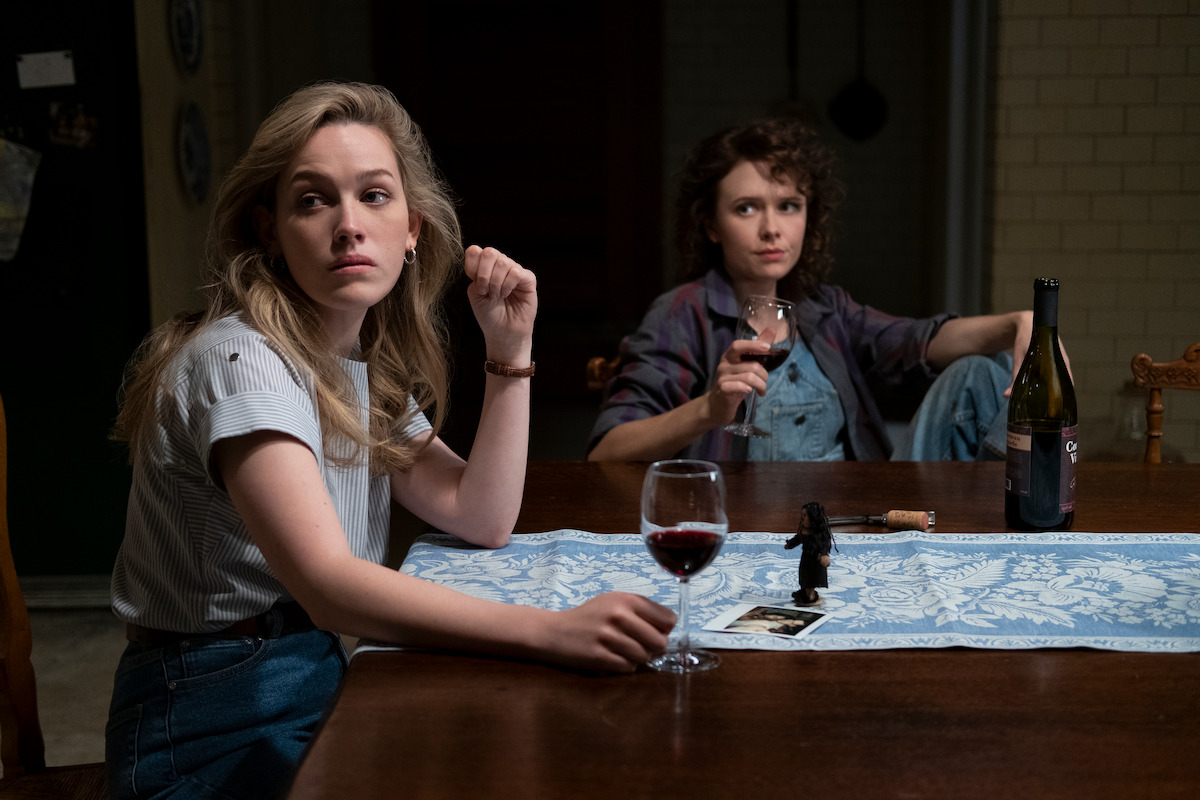
Before (spoiler alert) Dani sacrifices herself to the Lady of the Lake, she and Jamie co-own a flower shop and share a home big enough to include their love. Dani even proposes to Jamie in a heartfelt scene, though there’s the bittersweet undercurrent of knowing they weren’t able to legally marry in the ’90s. It’s no surprise, then, that more than a year after the premiere, Dani and Jamie’s love story is still regarded with such warmth. It offers an authenticity and complexity rarely afforded to on-screen lesbian couples. In its 2020–2021 “Where We Are on TV” report, GLAAD noted the importance of Bly Manor, writing that it wasn’t only a “recent breakout hit,” but that the show could usher in “more content for a primed passionate audience ready to tune in and support series [that] tell nuanced and in-depth stories [about] queer women.”
Months before Bly Manor premiered, The Half of It offered another realistic, though subtle, portrayal of a burgeoning queer relationship. Ellie Chu (Leah Lewis), a Chinese-American girl living in a very white town in the Pacific Northwest, gets ensnared in a plot to convince Aster Flores (Alexxis Lemire), one of the popular girls at her school, to fall in love with goofy jock Paul (Daniel Diemer). The problem? Ellie has a crush on Aster, but their relationship seems impossible, though the film hints at a future where they’ll be together.
Coming-of-age genre movies are a rite of passage. Not only can these movies make or break a good sleepover, but they can also be a mirror that reflects the adolescent experience of finding yourself. There are a plethora of these movies — Clueless, Dead Poets Society, The Perks of Being a Wallflower, The Edge of Seventeen — but not all of them accurately convey the experience of being a young person of color or young queer person. That’s why The Half of It, which deals with coming out in high school while navigating a major crush, is such a great watch. It reflects a real experience to a group of underrepresented teens who might be looking to pop culture to help them figure themselves out.
The Fear Street trilogy not only pays homage to iconic slasher movies, but it also departs from traditional horror films by following Deena (Kiana Madeira) and Sam (Olivia Scott Welch), an on-again, off-again queer teen couple living in the ’90s. Beyond upending the final girl trope, Fear Street centers its horrors around relatable teenage angst: Deena pushes Sam away after Sam moves to a rival town. Sam then begins cheerleading for a rival school and dating a homophobic jock, which causes Deena to exile her even more.
Sure, there are undead serial killers after them, but in the beginning, their breakup and subsequent fighting are the real drama. In fact, Deena and Sam aren’t very healthy for each other, but running from multiple serial killers and unraveling the mystery of their town’s haunting reignite the love between them. By the end of the trilogy, they’re fighting for their lives and for each other. Our protagonists might have an imperfect love that has literally caused their night of horror, but somehow, it works. Maybe lesbian horror is a genre all its own.
Dysfunctional straight couples are all over our screens (Marriage Story, anybody?). There’s something about the turmoil between spouses that makes audiences root for their relationship’s success or its downfall. Yet there are few dysfunctional LGBTQ+ couples in pop culture or even just queer couples struggling with routine relationship troubles. That’s the reason Feel Good seems so revelatory: The relationship between Mae (Mae Martin) and George (Charlotte Ritchie) is riddled with problems. Mae has a lot of trauma they’re unaware of, and George is navigating internalized homophobia. Yet the two are still magnetic to watch, especially when their relationship is going well. They are fun and playful with each other, making them feel like a real, relatable couple. That’s also the reason their relationship’s downward moments hit viewers so hard. George’s refusal to acknowledge Mae as the person she’s dating and Mae’s addiction sometimes push their relationship to the brink. Their emotions are raw, their relationship is messy, and it’s important to see that conflict play out in a queer relationship. It’s an added bonus that the creators of and actors in Feel Good are actually queer people.
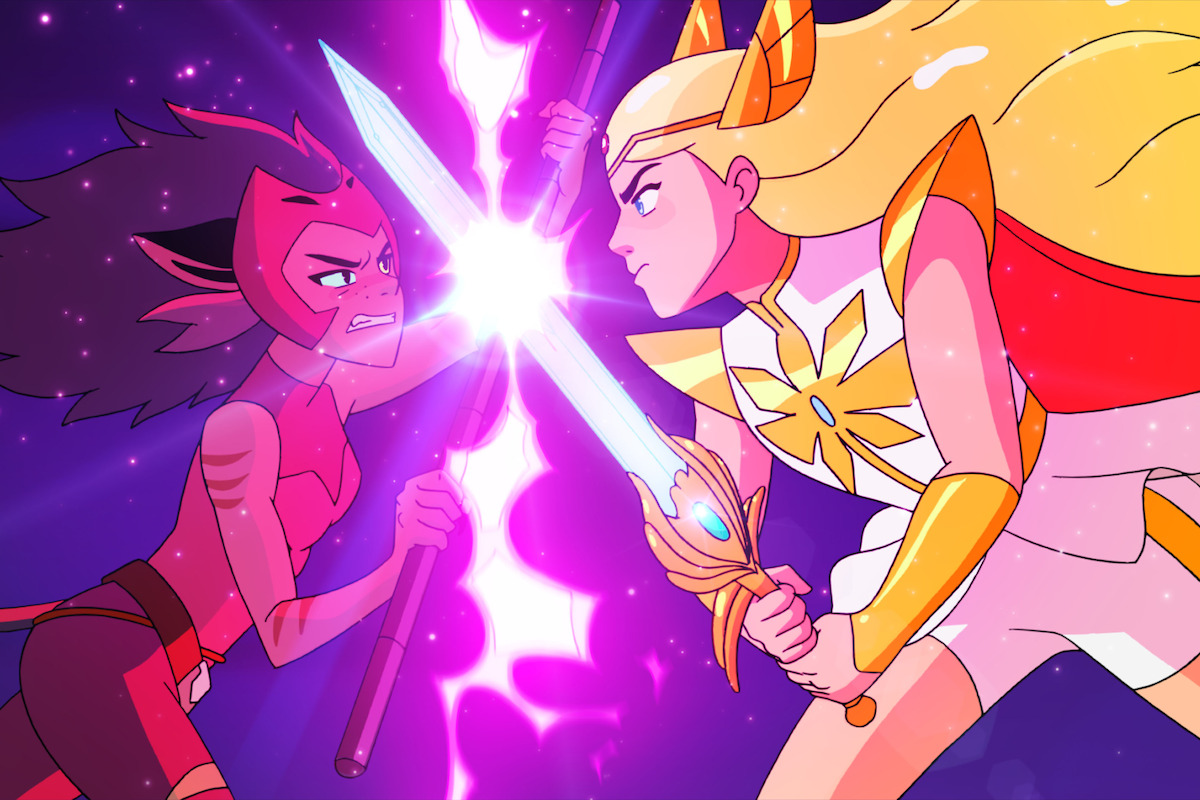
She-ra and the Princesses of Power has range. Our main characters, Adora and Catra, are enemies who become friends in an inherently queer world. From nonbinary and trans characters to princesses casually having wives, She-Ra introduces a setting where these characters can just exist without explanation. While Adora and Catra’s friendship has some strife, Adora is determined to save her friend and express her love. Throughout five seasons, Catra and Adora have a tumultuous relationship, but in the end they give viewers what we’d been waiting for.
Without getting into why representation is so important, because that’s a broken record that is still spinning (and rightfully so), it’s important to acknowledge the need for it, epecially in the lesbian and sapphic space. The couples already mentioned fill a void for viewers. And there are others that do the same, like Kelly (Gugu Mbatha-Raw) and Yorkie (Mackenzie Davis) from Black Mirror’s “San Junipero” episode and two couples from now-canceled Netflix series: Sterling (Maddie Phillips) and April (Devon Hales) from Teenage Bounty Hunters and Elena (Isabella Gomez) and Syd (Sheridan Pierce) from One Day at a Time. Even for a show as new as Arcane, a big fan base has already risen around the relationship between Vi (Hailee Steinfeld) and Caitlyn (Katie Leung).
Aside from the scarcity, one reason that so many fans might become attached to or aggressively root for these couples is because they often depict love that’s so different from the heterosexual view. With elements like coming out, hardships, and different ways in which childhood shapes queer adolescence and adulthood, these stories often are more complex and can dive into heavier topics other shows and movies don’t. These love stories are intense and often show partners on equal footing when it comes to expectations or power dynamics. Plus, love between two women or non-men is bound to look different than heterosexual couples or even two men. Sapphic relationships on Netflix and in media in general show the complex and beautiful ways in which queer women experience love. If you’re constantly seeing a princess kiss or go after Prince Charming, how do you combat compulsory heterosexuality or even see how other types of relationships look or function?

For queer women, there’s nothing sweeter than watching a series or movie that heartwarmingly depicts sapphic love. Seeing Dani and Jamie kiss in their own flower shop or Catra and Adora solidify their long back-and-forth relationship while saving the world hits these viewers right in the heart. Hopefully this trend of centering complex sapphic characters (and couples) in pop culture will continue to increase, so we can eventually get some version of a woman holding a boombox outside her girlfriend’s window.