This article contains major character or plot details.
“It’s so cool.”
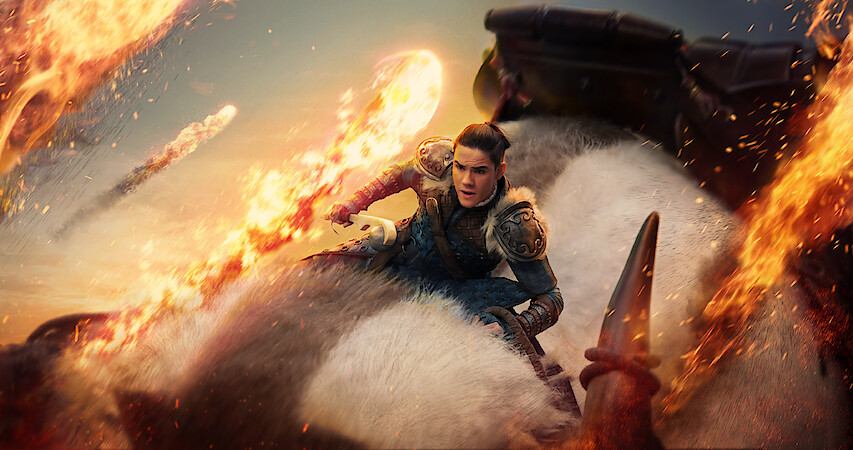
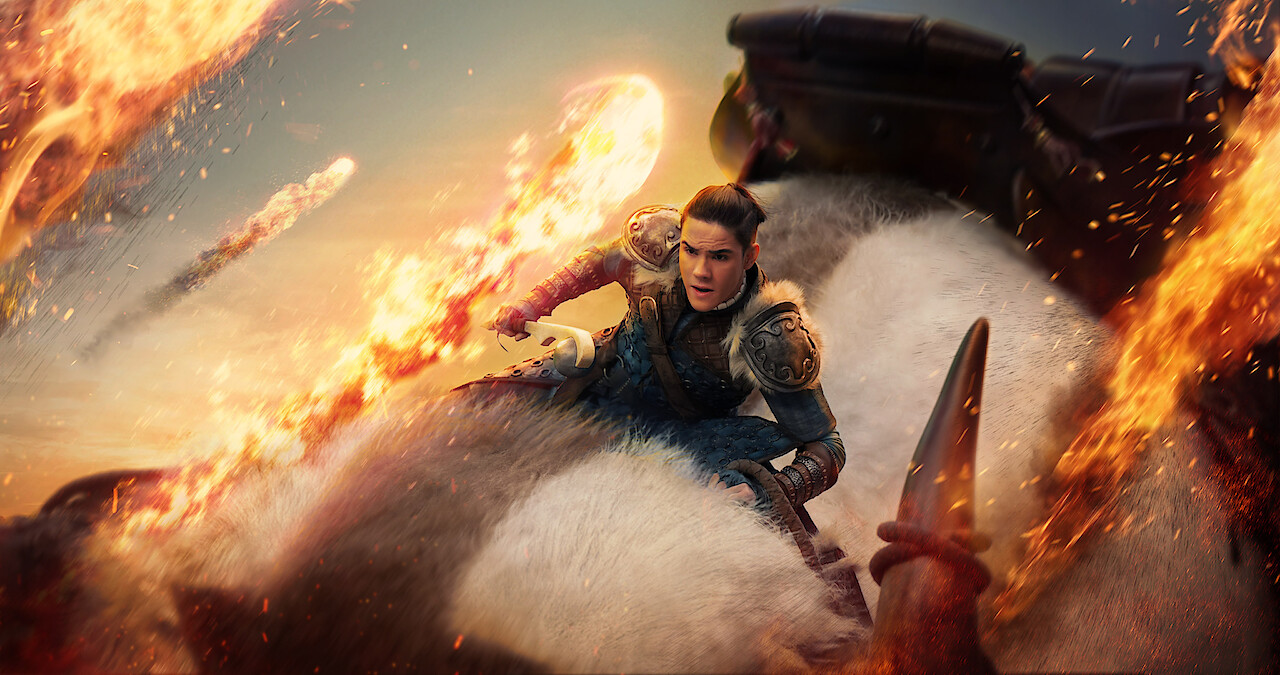
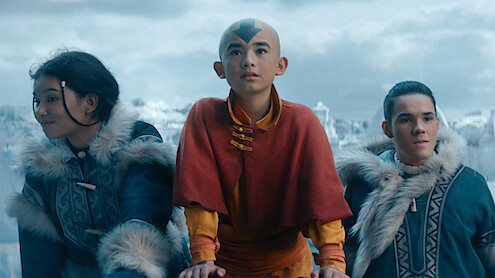
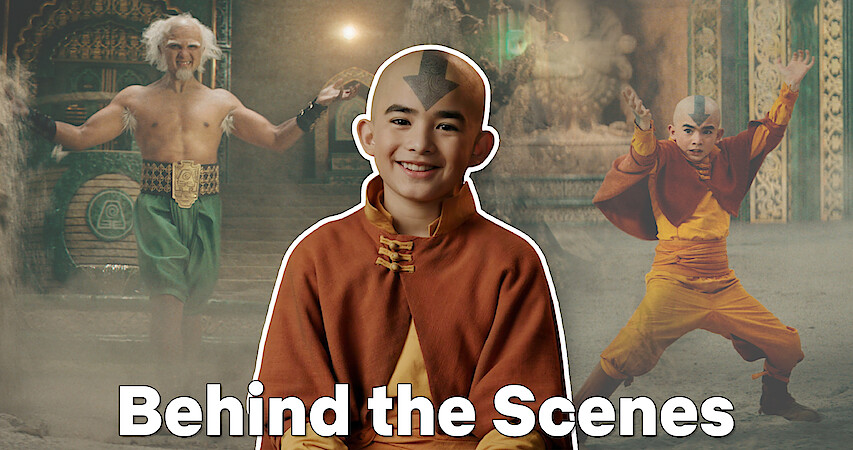
That’s how Gordon Cormier sums up the experience of playing Aang in Avatar: The Last Airbender, in the scenes where he sat atop Appa, his trusty flying bison.
But how much of Aang’s journey through the sky on Appa’s back was really happening? Despite being in an era when computers can do just about anything for us, turns out it was more real than you’d think.
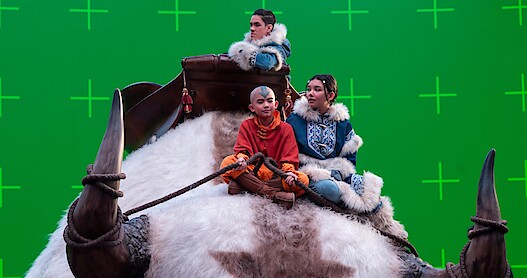
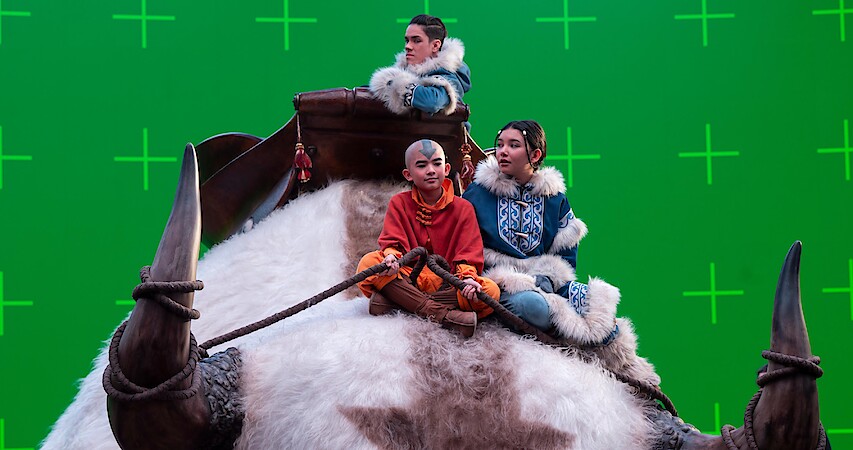
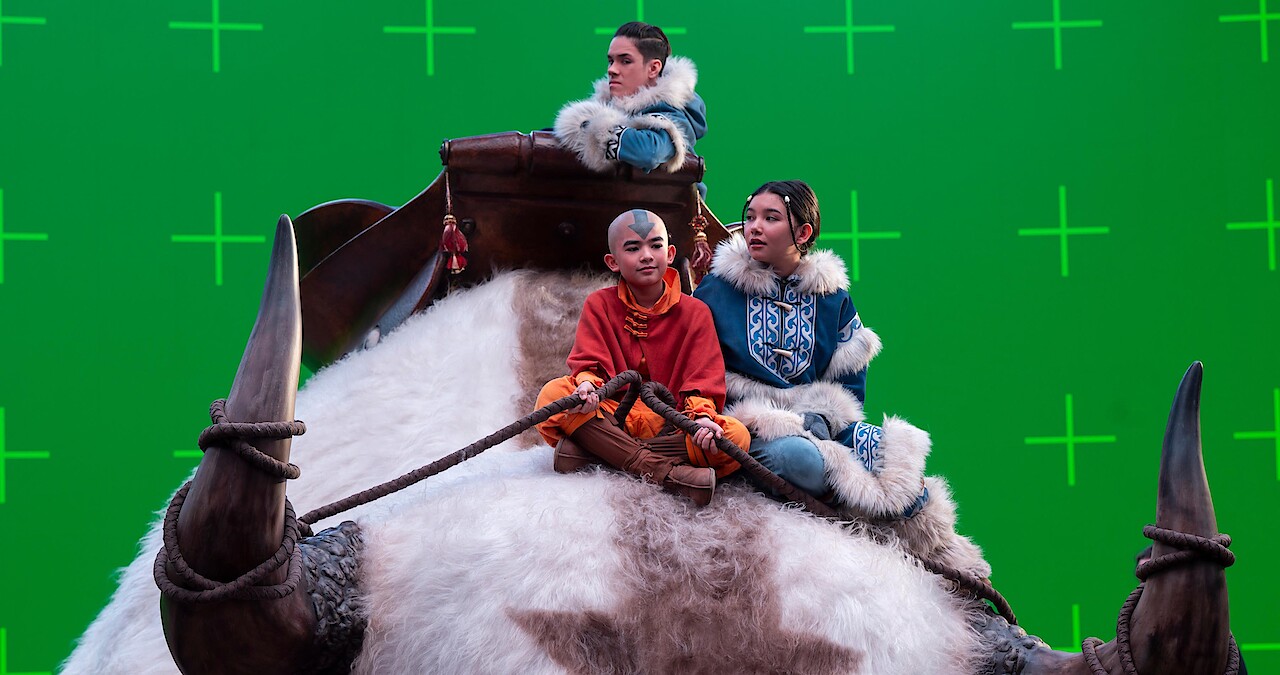
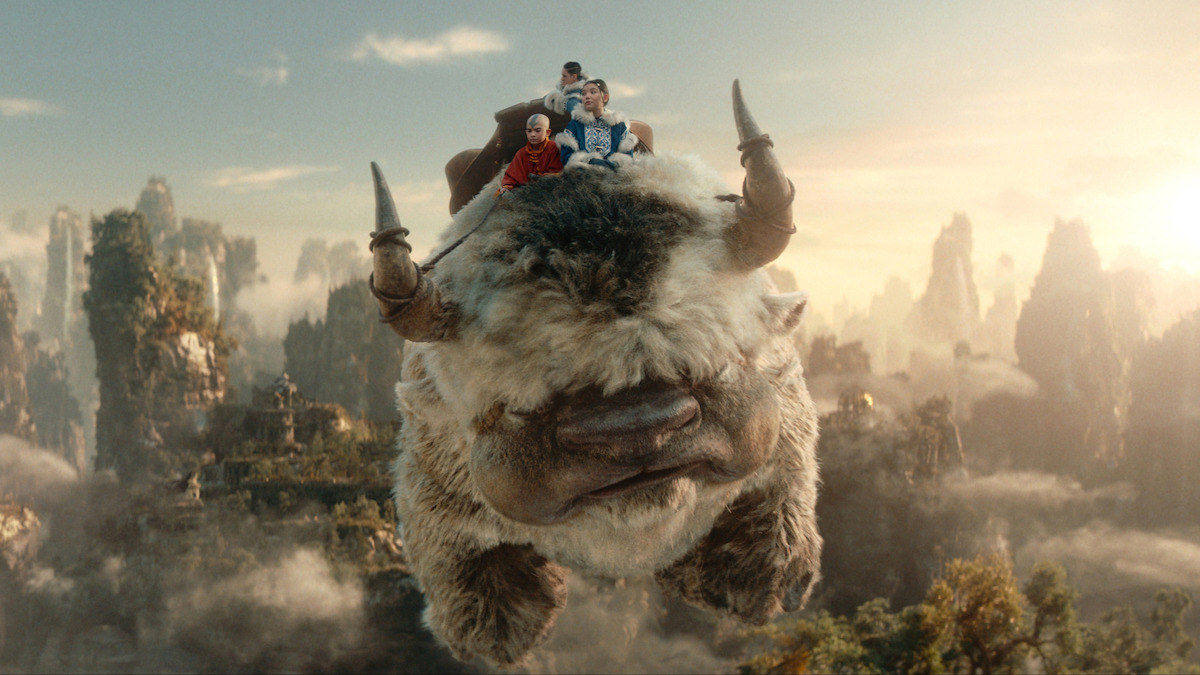
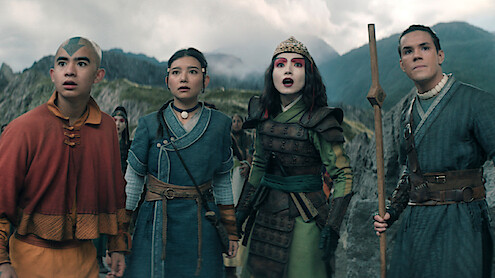
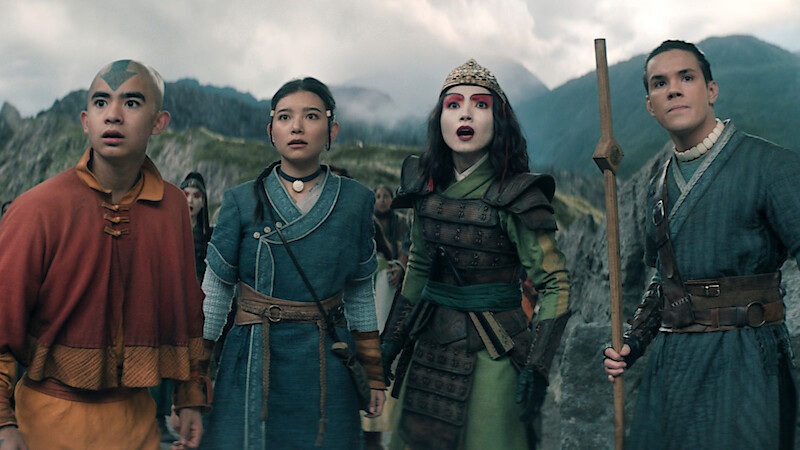
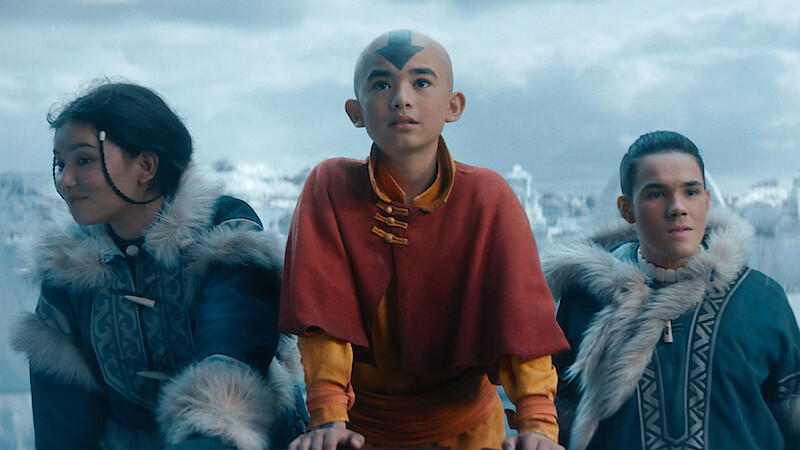
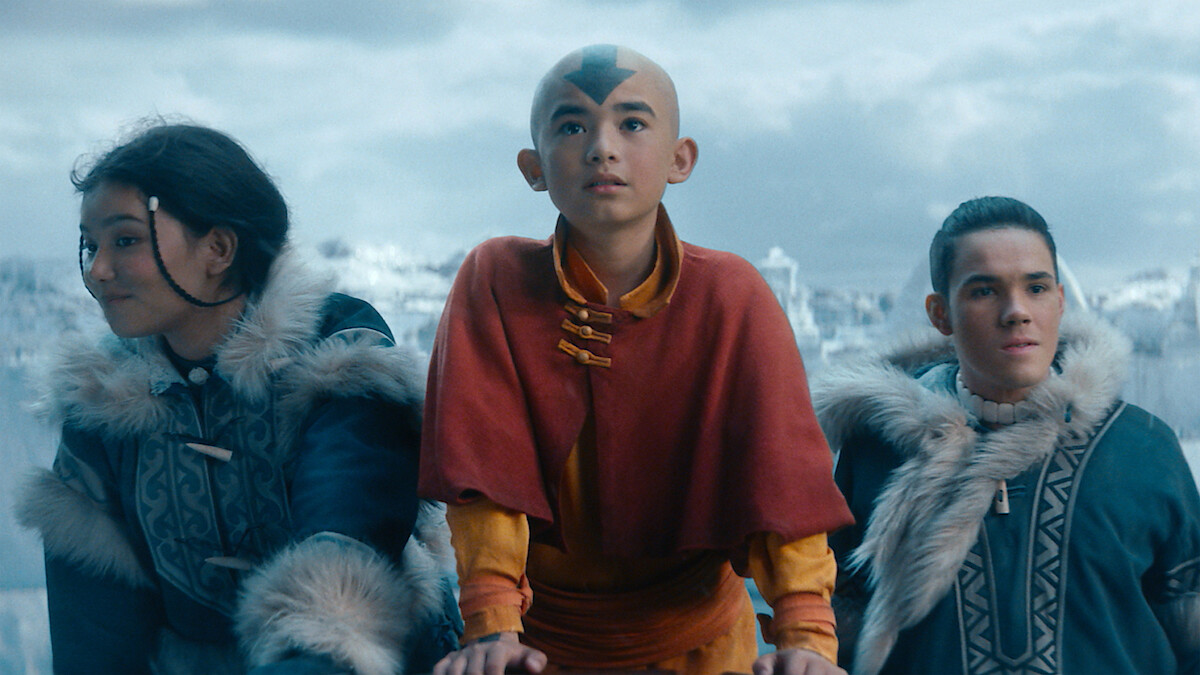
Executive producer Jabbar Raisani describes the setup in conversation with Tudum. “On set, there was a full-size Appa rig with the saddle and the head. The actors” — including Kiawentiio as Katara and Ian Ousley as Sokka — “would climb on top of it and ride 20 feet up in the air.”
Is Appa real or VFX?
Both, actually. While having a tangible portion of Appa’s body on set greatly contributed to the final results, Raisani credits the visual effects team for Appa’s existence — and performance. “I worked really closely with [the team] and talked to them as if they were actors,” Raisani says. “They’d take my performance notes as if they were Appa and re-create that digitally. Gordon has an emotional scene with Appa, and he did an amazing job playing against the Appa head on set that he knew would eventually have a lot of emotion to it. The VFX team did a great job of bringing the emotion to the character so that it matched what Gordon did in the scene.”
But even if Appa’s emotions were added in post-production, the actors’ feelings while filming were very real. Ousley recalls having some of his “best days” on Appa, adding, “It feels like you’re flying through the air which is a childhood dream.”
What kind of animal is Appa?
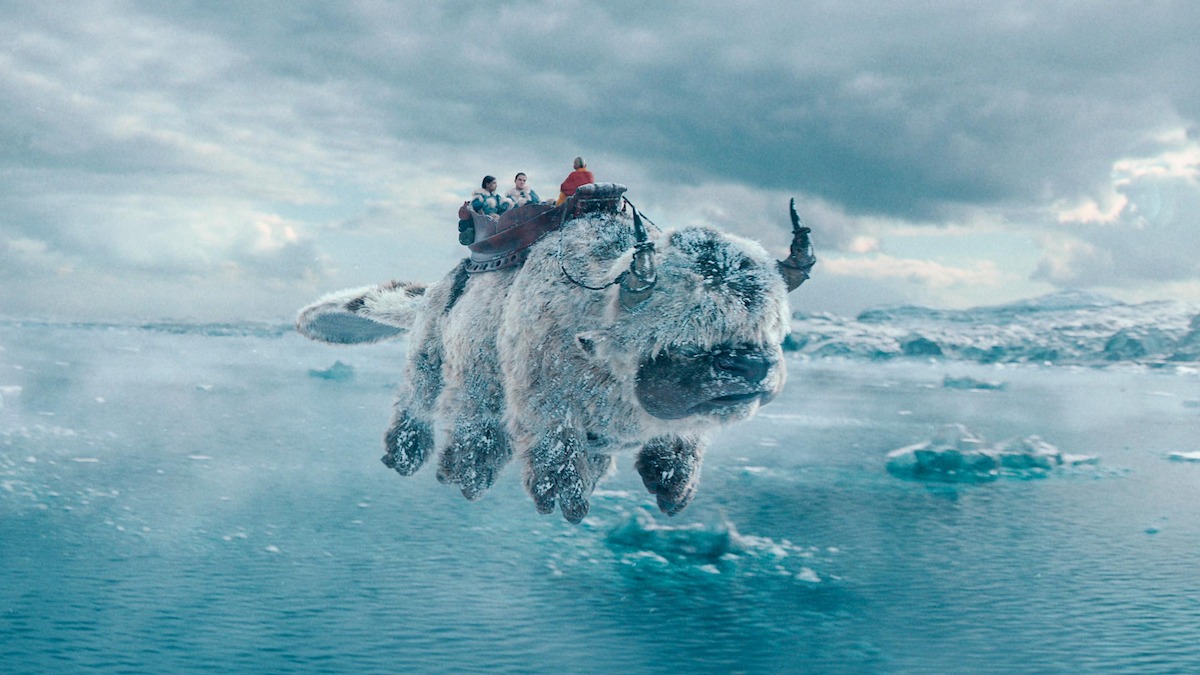
Well, a sky bison. But maybe a better question is: What kind of animals? If aspects of the mythical Appa feel familiar, it might be because he’s a blend of the Appa in the animated series and real life creatures. “For Appa, a very large character that has to fly, the best thing that we could reference were underwater creatures,” Raisani says. “Manatees were a place we pulled from, in terms of how Appa might fly. In the animated series, Appa flies straight a lot. What we were finding [in the live action series] is if Appa doesn’t have any movement in his body, he feels quite stiff and almost like he’s on a roller-coaster rail. We ended up adding a lot of curvature to his spine in moments where he is turning, and some motion through his feet that’s almost like swimming, but we’re playing that as bending. That’s one of the ways he moves or turns his body through space, by bending and pushing through the air.”
For Appa’s underwater scenes, baby hippos were the reference point. “Appa’s tail is a big defining point,” Raisani says, “so we had to do tests for what it looks like when Appa is just in a scene breathing. Does he have a little movement to his tail? Even when Appa isn’t doing something specific, how do we keep Appa alive in a scene? How does Appa move? When he moves, does that movement move through his whole body? Does he have a lot of fat to him? Is he thin underneath all this fur? We really had to do stuff where we took all the hair off and just felt how much fat Appa had, and how much does that jiggle move through his whole body when he does a large or small movement.”
So, is Momo real too?
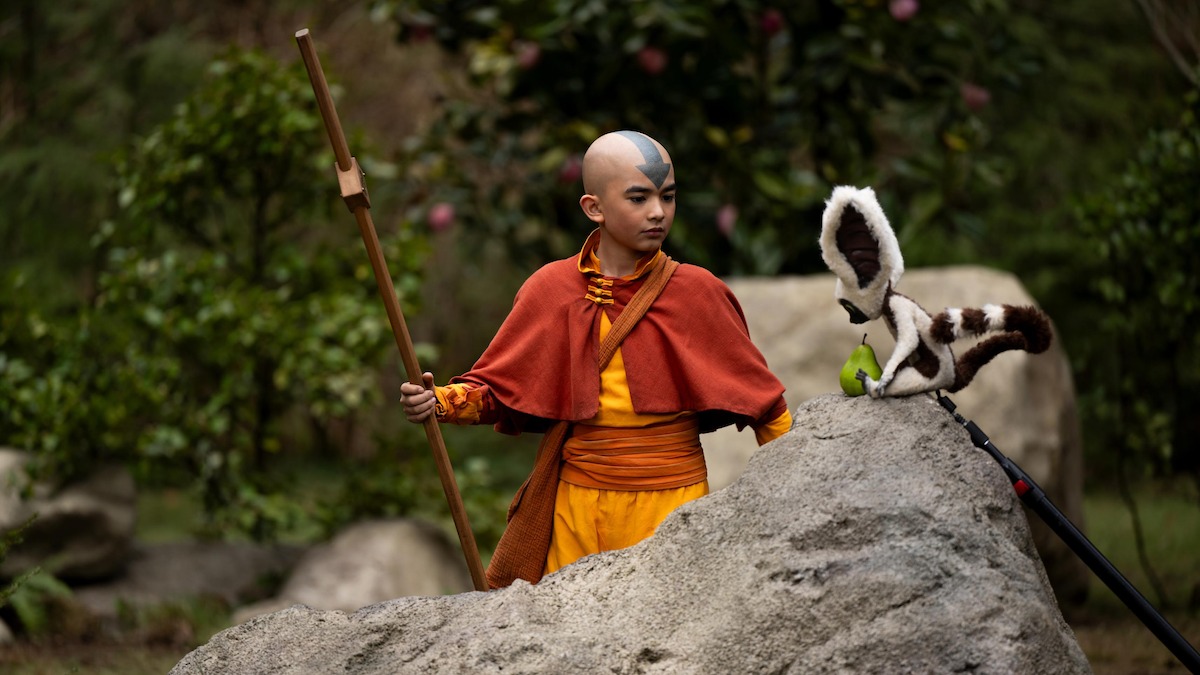
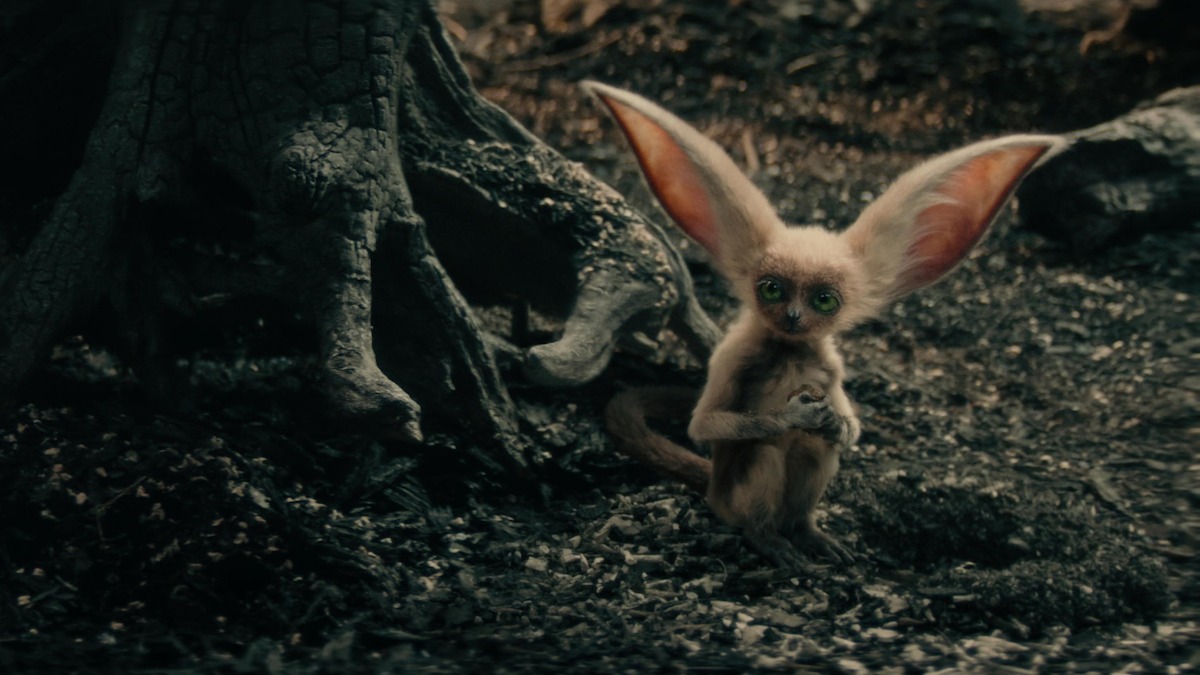
“Momo was completely created with visual effects,” Raisani tells Tudum. While animating the adorable, frenetic, playful character we see bouncing around (and occasionally butting heads with Sokka) relied on referencing lemurs and monkeys, a diligent effort filled with trial, error, and revision was required to create Momo’s appearance.
“It took a long time to get right, to make it feel like Momo, but also like something that exists in the physical world,” says Raisani. “We had to go back to the animated series and really be scientific about what makes Momo Momo. Identifying the real world things that we thought we could incorporate in order to take it out of this sort of uncanny representation of what wasn’t the animated Momo and wasn’t a real lemur — and merging those two things into what we wanted in the show.”
What kind of animal is Momo?
Like Appa, Momo isn’t based on one animal. Every detail surrounding Momo involved plenty of deliberation and spawned an array of questions, according to Raisani. “It goes down to: What are the eye sizes? What’s the eye spacing? What’s the color or discoloration on the fur? How messy does his fur need to get to take him away from this thing that doesn’t look like a real creature? One of the areas we ended up at was like, ‘Oh, he looks kind of gross. He doesn’t look cute,’ and that’s definitely the wrong feeling.”
Raisani says that determining the exact quotient of cuteness (and other factors) for Momo was something that he and [VFX supervisor] Marion Spates worked really hard at to get exactly right. “From there,” he says, “the character can live in any scene and we don’t have to redesign or rethink every time we get into a new scene or lighting.”
How were the other creatures in Avatar: The Last Airbender created?
Heavy VFX were used for the other creatures, though sometimes a physical piece was utilized during filming to supplement the actors’ imaginations. One example is the badgermole: On set, he was a tennis ball on a stick until the VFX team created his on-screen appearance. To depict the colossal badgermole’s weight and its mouth, particularly the detail on its snarling teeth that are shown close up, they largely referenced bears.
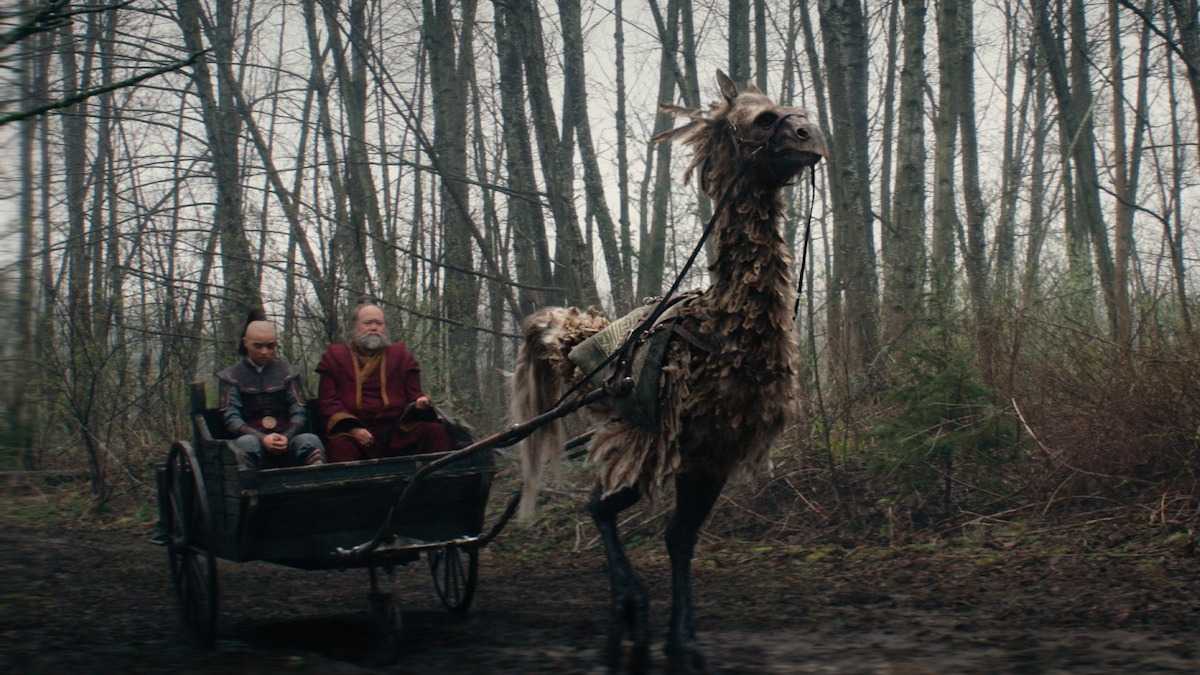
Then there are the ostrich horses, whose stand-ins were stunt vehicles with a stunt driver operating them on a seat beneath the actor, who sat perched in a saddle above. This is hidden by visual effects in the series, so all viewers see are creatures with the shifty movements of an ostrich and the weighty steps of a horse.
As for the gargantuan Whalezilla that appears in the Season 1 finale, a lot of time was required, not just in its visual construction, but in the narrative lead-up to its appearance.
“We knew that we needed to have this epic finale and it culminates in the creation of this creature, which fans from the original will remember very well,” showrunner Albert Kim tells Tudum. “We knew we couldn’t shy away from that, and we wanted to give it its full due. We did everything we could creatively to build up to that storyline and make it seem like the inevitable conclusion to Aang’s arc. At the same time, from a visual standpoint, we spent a lot of time creating this creature, making it feel like it was actually made out of water, but powered by the spirit of the Avatar state so that it has that glow inside — but its surface is all shifting like the flow of water.”
The minute attention to detail that went into creating these beings, both on-set and in post-production, is as awe-inspiring as the creatures themselves. But, if after all that awe, what you’re looking for is just a chance to say “aw,” Raisani has a suggestion: “Baby hippos — if you haven’t googled that yet, I recommend you do. It’s very cute.”