Ask an Expert
Parents Can Learn a Little Something from ‘Ada Twist, Scientist’ Too
Believe us, we got expert advice.
By Tonja Stidhum
Jan. 11, 2022
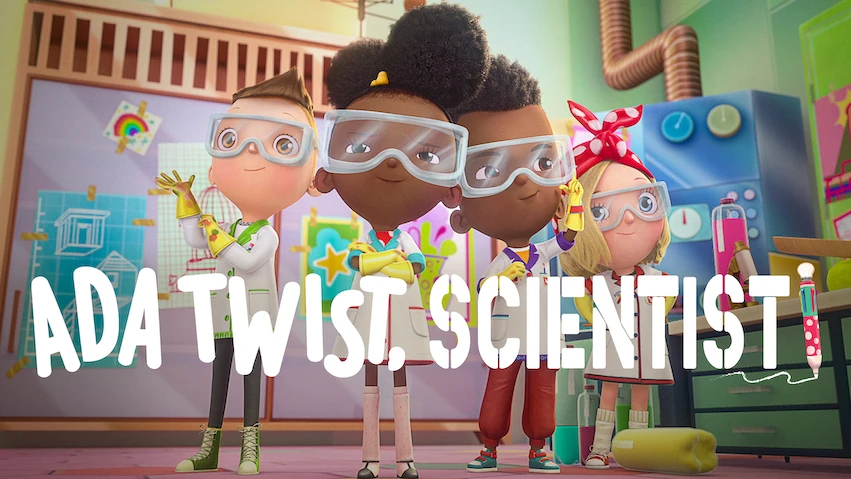
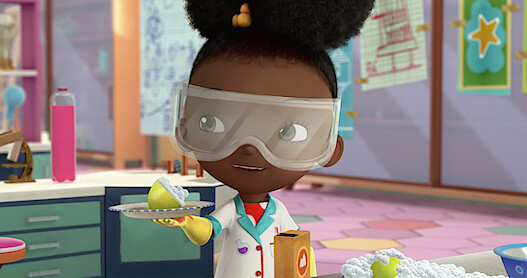
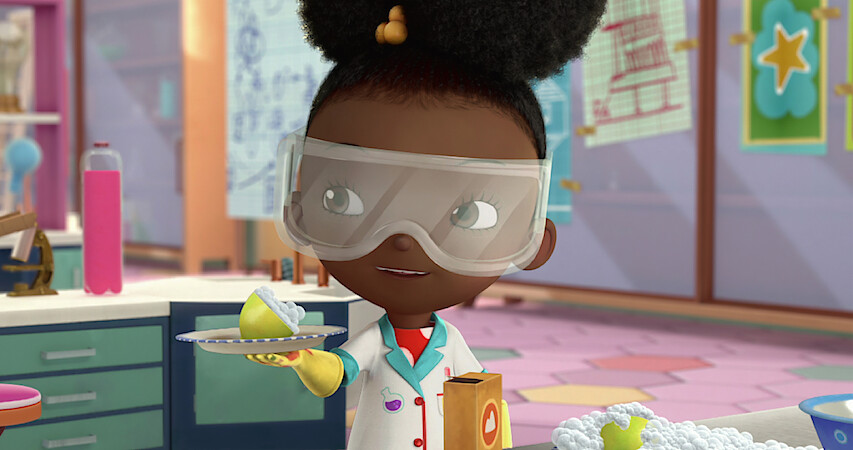
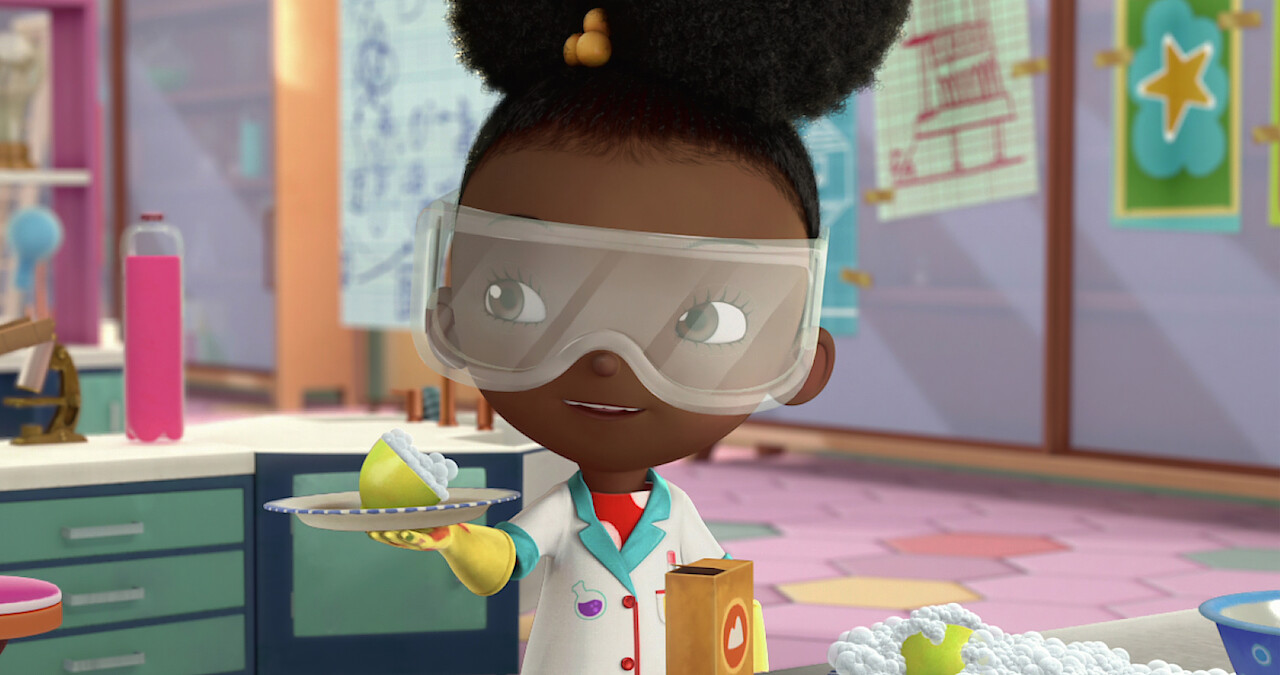
Donned in a crisp white coat over a polka-dotted red dress, the titular Ada Twist (voiced by Amanda Christine) looks right into the camera at her fellow science-enthusiast audience and exclaims: “Science is the best!”
When show creator Chris Nee debuted Ada Twist, Scientist (adapted for television from the 2016 children’s picture book of the same name, written by Andrea Beaty and illustrated by David Roberts) in 2021, it was clear that she created something special. Ada Twist follows the titular tiny scientist as she utilizes the fundamentals of science to embark on many adventures. Whether it’s finding out how tears help get rid of germs or the science behind baking tasty treats, Ada is always on the lookout for the truth — with the help of her equally curious friends, of course.
As kids brace themselves for Ada Twist, Scientist Season 2 and all of the adventures to come, there’s something to be said for parents watching the show with their little ones, too. To supplement that bonding experience, well-known parenting expert Reena B. Patel, an educational board-certified behavior analyst and positive psychologist, spoke with Netflix to help guide parents who are seeking to actively participate with their children and what they’ve learned while watching the series.
“The key to keeping a child motivated is by keeping them curious. This is what Ada does through her inferential questioning,” Patel says, describing the show as a great “conversation starter” within families. “Parents should be part of the viewing and can even pause the show and turn to their child and ask, ‘What do you think will happen next?’ or ‘What would you do in that situation?’”
According to a 2017 study conducted by Texas Tech University, children experienced a noticeable physiological change when they watched TV with their parents as opposed to watching TV in separate rooms. Similar to Ada’s confidence in exploring her curiosity, the little viewer will be extra interested in exploring science when their parents are watching the series with them.
And the learning doesn’t stop at the tiniest of learners — parents can gain something from the series as well.
“Science is based on trial and error and making mistakes,” Patel continued. “Follow [watching the show] up with an opportunity to ask your child if they are purposeful about anything around them? Use this opportunity to explore it further. As parents, you do not need to know all the answers. Do the research and experiment together. Children should feel comfortable making mistakes and learning through the process.”
Sure, this elevated curiosity can lead to bumps in the road — and that’s OK. For Ada (and for parents), that’s where the real adventure begins.
“When watching Ada Twist, let your child take the lead,” Patel said. “Even if you know more [about what] is happening [in an episode], allow your child to inform you. Check for understanding by asking your child to use their own words to summarize what they see. The show uses key concepts through music, for example, to help teach concepts and new vocabulary, which is a great way for children to retain information.”
Patel also explains that each episode taps into teaching self-regulation skills. “Yes, it's frustrating when things do not go the way you anticipate they should, but the characters do a great job emitting positive behaviors and emotions as they push for and find solutions that work. Failure is an opportunity to learn.”
Brought to children’s streaming screens by Barack and Michelle Obama’s Higher Ground Productions, Ada Twist became a representative for the highly underrepresented young Black girl.
According to a Pew Research Center analysis conducted in 2017-2019, Black workers make up 9% of the STEM workforce. Black women make up 2.5% in STEM (science, technology, engineering and mathematics) occupations. Not only are Black children seeing themselves represented in this animated TV series, but non-Black children are witnessing a little Black girl scientist as a default — not the exception.
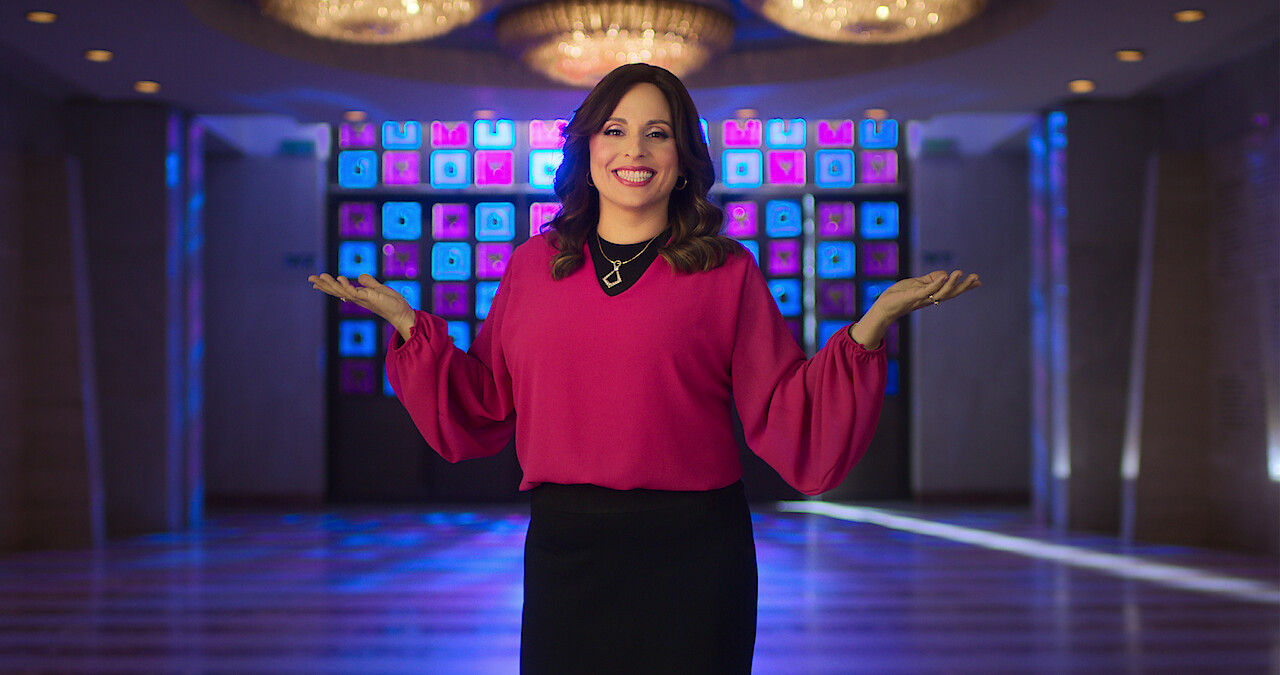
At the end of each two-part episode, Ada introduces a real-life scientist to explain their occupation — usually someone directly related to the topic addressed in the episode. Seeing this vast array of scientists across gender and racial lines juxtaposing science into their everyday lives may boost a child’s interest in science.
“The connection [of] real scientists makes it more relatable,” Patel notes. “The diversity of the characters help embed a sense of belonging, which can be lacking in other animated children shows.”
Speaking of being relatable, Patel is not only dispensing professional information but personal as well—she is a parent, too. “As [a] parent of three children, watching a female young scientist is inspiring,” Patel said. “In science classes, girls are less likely to [raise] their hand and contribute, due to fear of failure, anxiety and limited girls in their class. Ada Twist allows repression to be seen in early childhood, making it the norm. I am starting to see female-led robotics teams.”
Season 2 of Ada Twist, Scientist will drop on Netflix January 25, 2022.