Explainer
A Man in Full Ending Explained: Anatomy of a Rage-Filled Conclusion
Showrunner David E. Kelley warns, “Beware the male ego.”
May 9, 2024
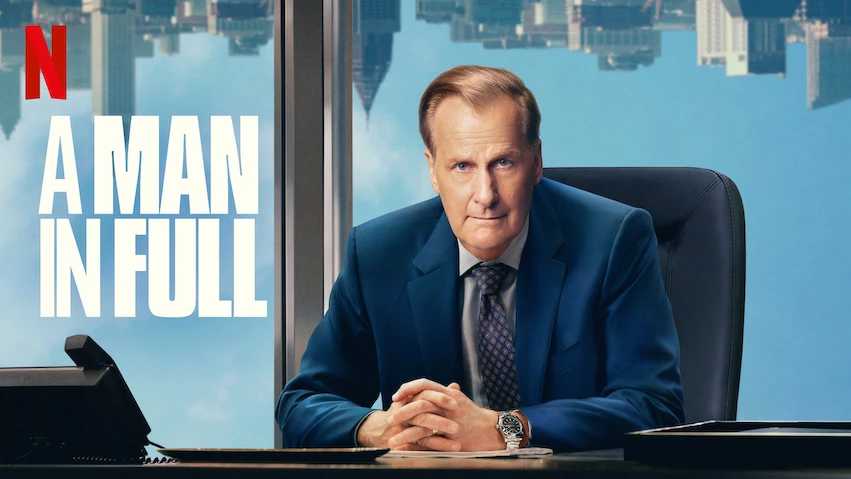
The opening frame of A Man in Full shows the body of Atlanta businessman Charlie Croker (Jeff Daniels) lying lifeless on the floor. But even in death, he has a flair for confrontation: In voice-over, he asks a question of the viewer: “When you die, will people notice?”
Charlie’s brashness remains on full display as the story flashes back to 10 days prior, at his 60th birthday party. He confidently — arrogantly — makes the rounds, asking his ex-wife’s best friend Joyce (Lucy Liu) if she’s had cosmetic work done and forcefully greeting a banker, Raymond Peepgrass (Tom Pelphrey), with a hand tightly (and uncomfortably) clasped around the back of his collar — a moment that foreshadows the final scene, where Charlie’s hand once again finds its way around Raymond’s neck. But how exactly does Charlie’s hubris lead to his downfall? It’s time to dive into the many moving parts of A Man in Full, starting with its origin.
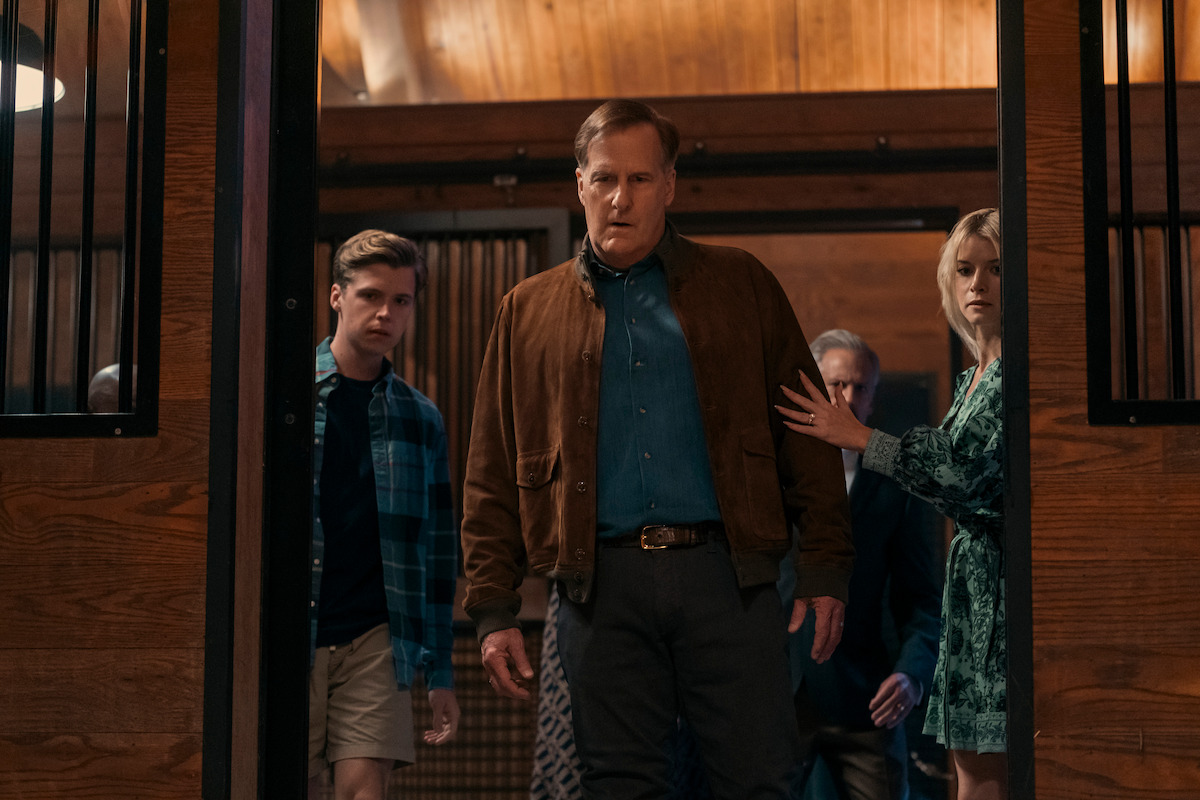
The series is an adaptation of the Tom Wolfe novel of the same title. The book was published in 1998, but the show’s creator, David E. Kelley, tells Tudum that it wasn’t difficult to modernize the story. He credits the author for that, saying, “I think [Wolfe] was always gifted that way. He could see things as they were and as they were going to continue to be. The themes, whether it be racial and class disparities, the vanity of man, or the criteria that mankind seems to use to take measure of themselves, were as ripe as ever — especially with Conrad’s story and his unfair shake [at the hand] of the judicial system.”
Conrad (Jon Michael Hill) is the husband of Jill Hensley (Chanté Adams), Charlie Croker’s assistant, who also happens to be pregnant as the story begins. Conrad and his wife’s boss live very different lives, but their stories fatefully intertwine, in ways that reveal the disparities Kelley describes. After Conrad tries to stop his car from being towed, he’s assaulted by a police officer and jailed after fighting back — and the consequences of these events echo throughout the season.
After merciless Judge Taylor (Anthony Heald) sets Conrad’s bail at $1 million, Jill seeks Charlie’s help. He vows to get Conrad a lawyer, revealing a previously unseen sympathetic side to his character. Charlie’s general ruthlessness, interrupted by moments of sincere generosity, can make it difficult to know how to feel about him, a moral ambiguity that Kelley says he admired in the book.
“My experience reading Tom Wolfe’s Charlie Croker was like, “ ‘Man, this guy is repugnant and pompous and I can condemn him on so many different levels. Why am I pulling for him?’ ”
It was important to Kelley to re-create that experience for viewers. “How do we make this guy contagious, repulsive, [and] offensive? How can we cheer for him as he offends us simultaneously? We wanted it to be complicated and compelling. We could condemn him, but also feel for him and sympathize with him at the same time. That’s where I think Regina King and Jeff Daniels really tapped into him. That’s what appealed to Jeff about the character. It struck a chord with him when he read the book.”
King (Shirley, The Harder They Fall) directed A Man in Full’s premiere, penultimate, and final episodes. The finale, appropriately titled “Judgement Day,” resolves the characters’ individual yet interlaced dilemmas and shows us Conrad’s final day in court.
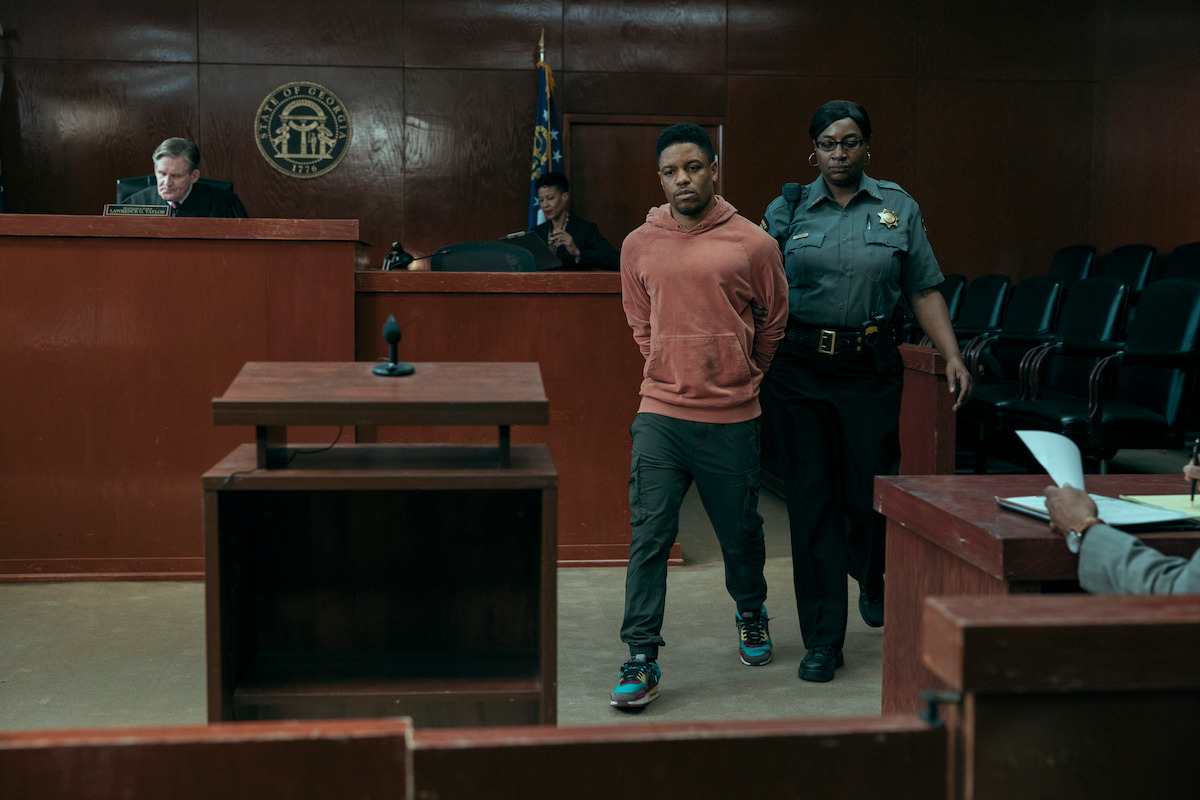
When Charlie instructs his top legal adviser, Roger White (Aml Ameen), to find a way to free Conrad, there are still several bumps in the road before one final, intense hearing before Judge Taylor. After showing the court video footage of Conrad’s violent confrontation with the police, White finally convinces the judge to dismiss all charges, putting an end to Conrad and Jill’s ordeal.
While Conrad’s moment of truth comes in a small courtroom, Charlie’s arrives in front of a phalanx of reporters during a press conference at his alma mater, Georgia Tech, where he’s being honored for his time as a college football star. Charlie faces a dilemma: He’s teetering on the brink of bankruptcy, with his creditors, led by Raymond, about to call in an $800 million debt. Atlanta’s charismatic mayor, Wes Jordan (William Jackson Harper), locked in a tight reelection campaign, has offered to intercede with the bank on Charlie’s behalf — on the condition that Charlie uses his press conference to air an accusation of sexual assault against Jordan’s opponent, Norman Bagovitch (John Lacy). Why Charlie? Because Joyce is one of Bagovitch’s rumored victims.
Ultimately, with his son Wally (Evan Roe) in attendance, and in line with Joyce’s wishes, Charlie decides not to heed Jordan’s request. “I’m proud of you,” Wally tells him, in a moment of harmony between father and son.

Joyce and Bagovitch did have a sexual encounter, but Joyce’s memories of the night are blurry. She asks Charlie to keep her story private so she can move on without subjecting herself to painful public scrutiny.
It feels like a redemption arc might be in order for Charlie, but the good vibes are short-lived; a restless alpha dog at heart, Charlie has business to attend to. He learns that Raymond is heading a partnership that will take over a controlling interest in Charlie’s business holdings by acquiring the stake held by his ex-wife, Martha (Diane Lane). Charlie snaps, rushing to Martha’s home and barging in to find her and Raymond mid-hookup — they’re lovers as well as business partners, and the double blow to his ego hits him with a staggering effect.
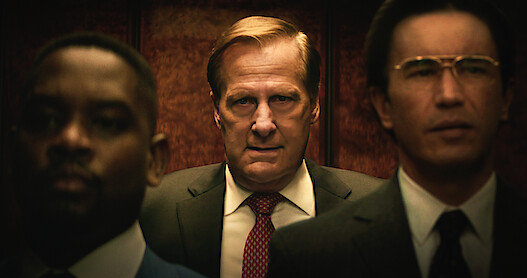
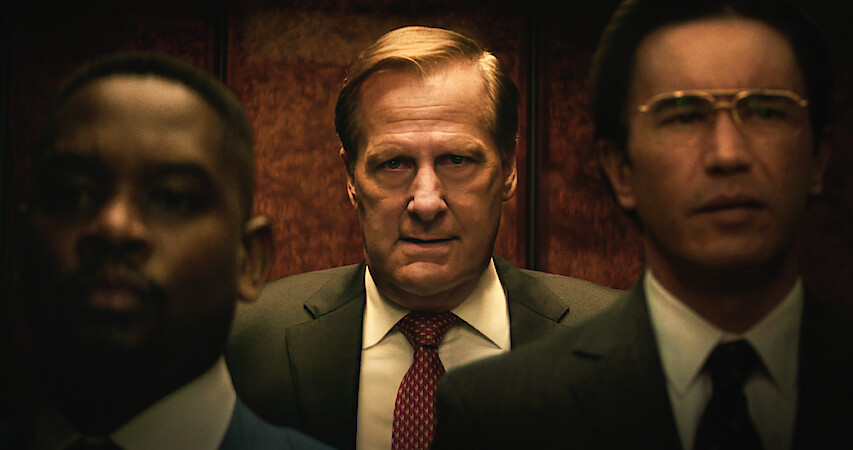
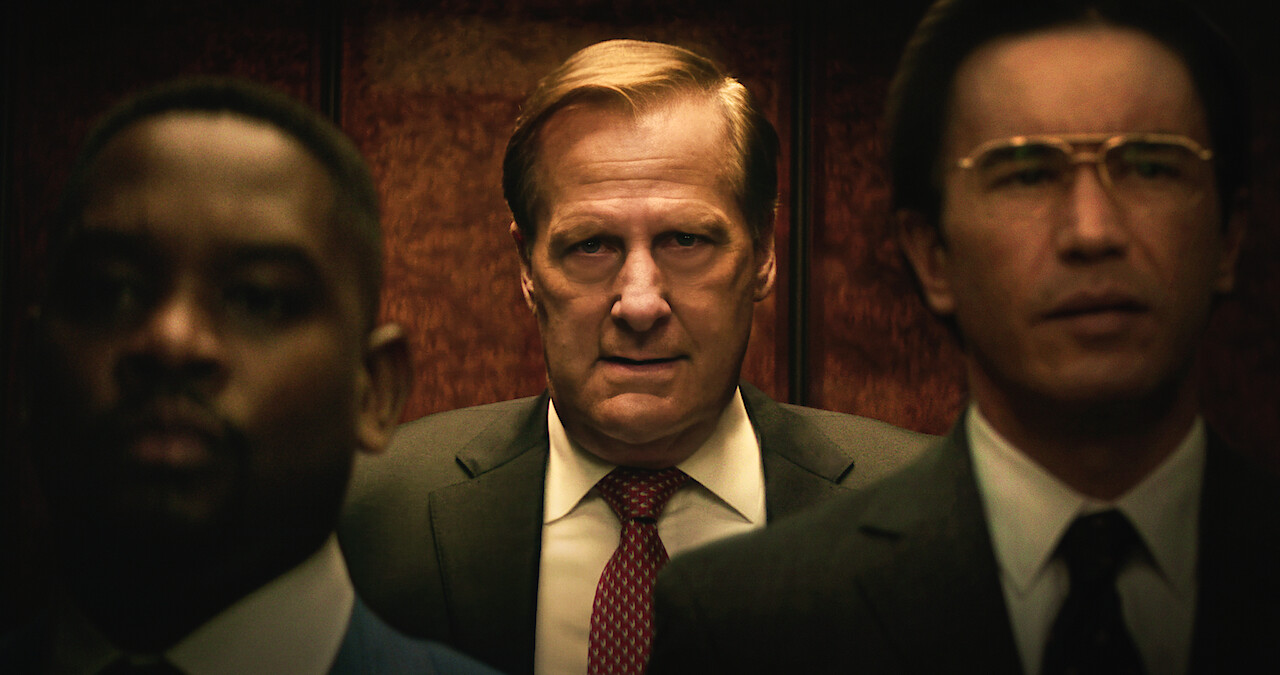
When Martha leaves the room to call the police, Charlie locks the door and stands face-to-face with his nemesis. The tables have turned: After years of enduring Charlie’s bullying and mockery, Raymond has antagonized him throughout the series, and now controls his fate.
Raymond’s feelings toward Charlie can be difficult to interpret — sometimes he seems to hate him, other times he seems to envy him. But prior to this final confrontation, Raymond tells Martha he “admires” Charlie, adding, “He’s lived on his own terms and I’ve just drafted. My entire life. In his wake and the wake of others. And I’m feeling very much like the nothing that he cracked me up to be. And now I realize that I don’t just want to leave my mark, I want to leave it on him.” When Charlie dies, people will certainly notice.
Kelley reflects on Charlie and Raymond’s volatile relationship:
“I think the seed of the disdain both have for each other was self-loathing. The measuring sticks they use to take value of themselves are such folly. It’s about who you’re seen with, who you’re sleeping with, how much money you have, how much power you have. I mean, Charlie’s jumping through the right hoops. He has a son, he has a family, he goes to work, he’s good at his job, but that’s not what drives him. It’s a greed and an envy and a lack of esteem, a hole he’s trying to fill.
“And Raymond Peepgrass, similarly, is trying to somehow fill this void that Charlie serves to excavate. On the one hand, he is envious and jealous of Charlie Croker. On the other hand, that’s the ghost he’s chasing. He wants to be him. That ferments a compounding of his contempt, that the very person that he loathes, he finds himself wanting to be.”
That toxic swirl of emotions ultimately leads to a fatal confrontation.
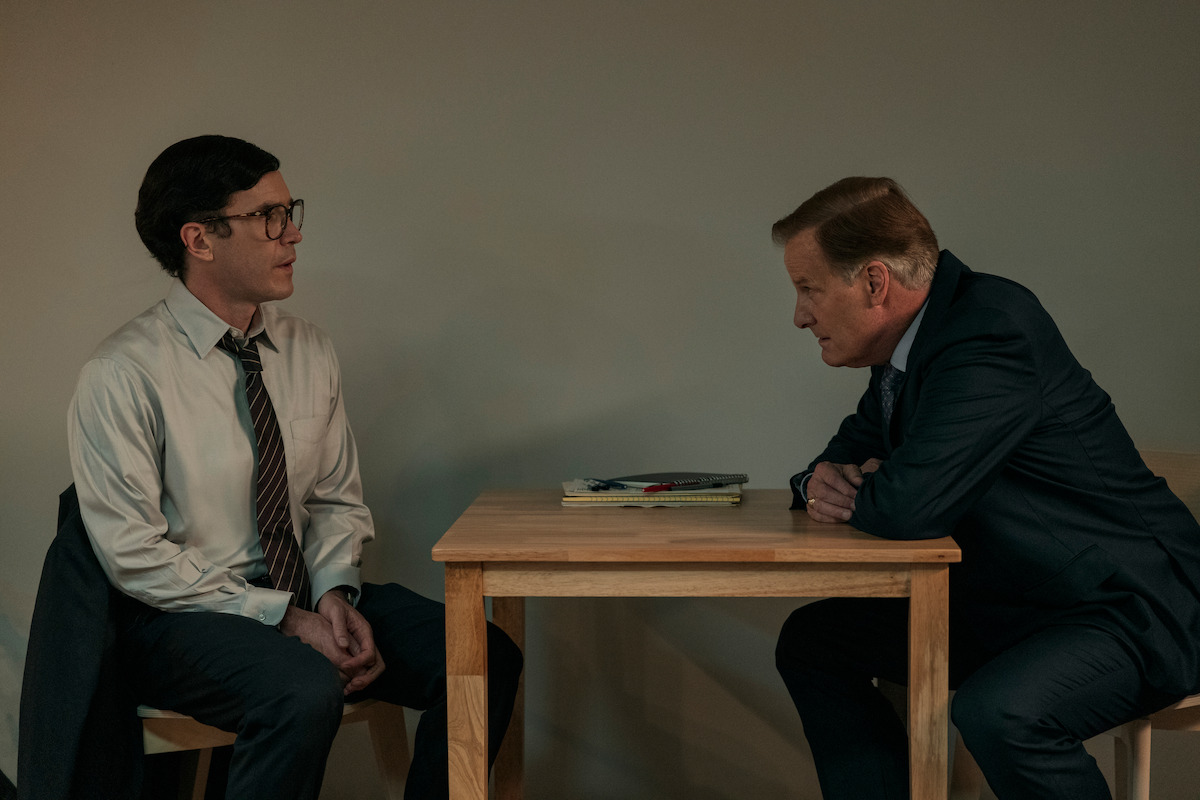
Charlie once again wraps a hand around Raymond’s neck, this time to choke him. At first he’s filled with rage, but then his expression becomes suddenly panicked as he realizes that he can’t break his grip on Raymond’s throat. With his wide eyes gleaming even as he gasps for air, Raymond seems to exult in Charlie’s madness — at least for the moment, before Charlie clutches at his own heart and the two collapse to the floor, Charlie stricken by an apparent coronary, Raymond by asphyxiation.
Roger arrives shortly after, watching as the coroners carry Raymond out in a body bag and consoling a hysterical Martha before heading upstairs to close Charlie’s eyelids.
Kelley allows that Raymond, ironically, may have felt at peace in his violent final moments: “There’s a look on Raymond’s face — his last act in life was to bring Charlie Croker down, and there was some satisfaction in that. It’s very perverse.”
That’s hardly a happy ending, as Kelley points out. He chose to end the series with a warning: “Beware the male ego,” he cautions. “If it’s not checked, it’s capable of all kinds of havoc.”