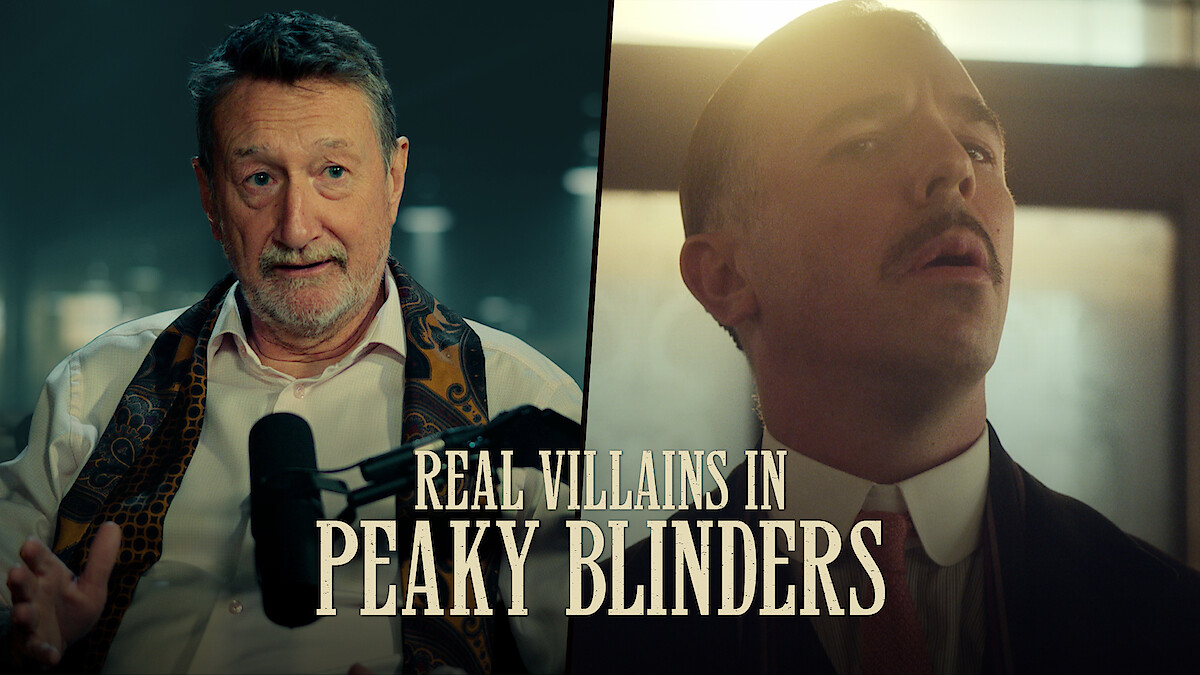
Steven: Music in pubs is always a bad idea, which I agree with.
Edith: Do you dance?
Steven: No.
[both laugh]
[dramatic music plays]
Edith: If you could capture the essence of a Peaky Blinder in a bottle …
[Steven] Mm-hmm.
…what would be in that bottle?
Steven: Don't care.
[laughs]
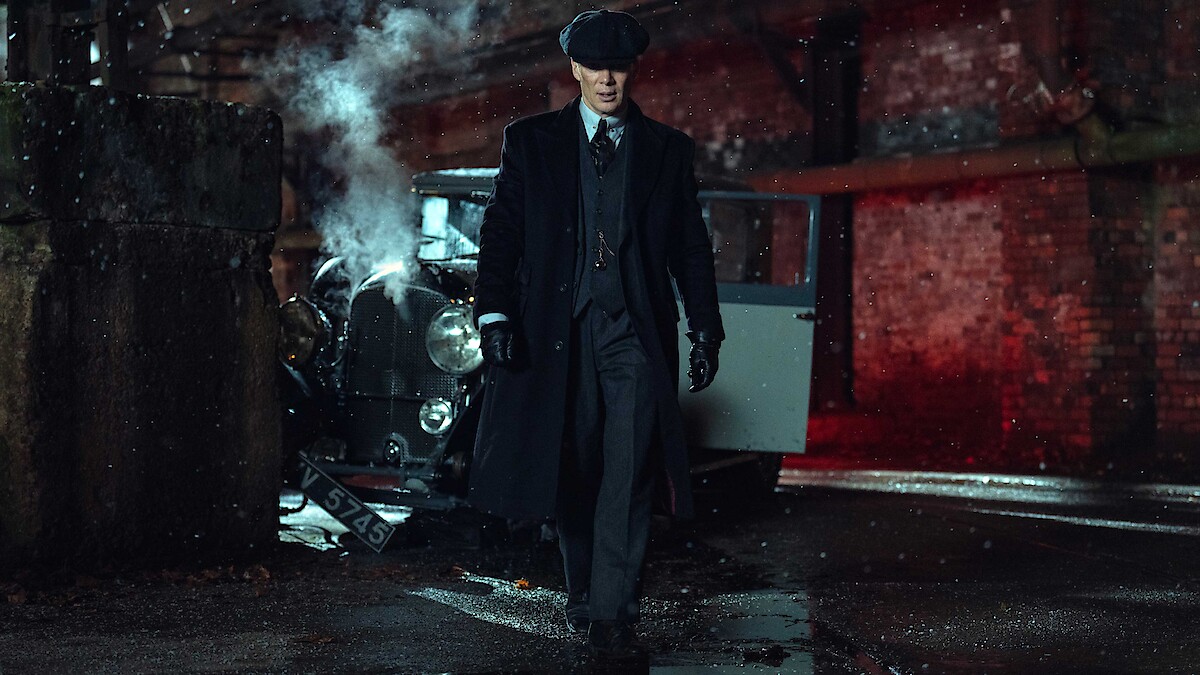
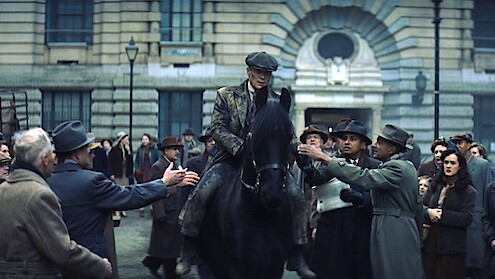
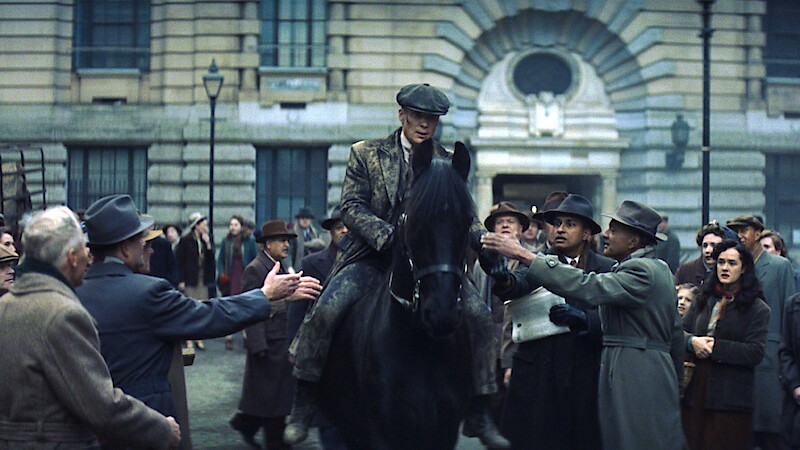
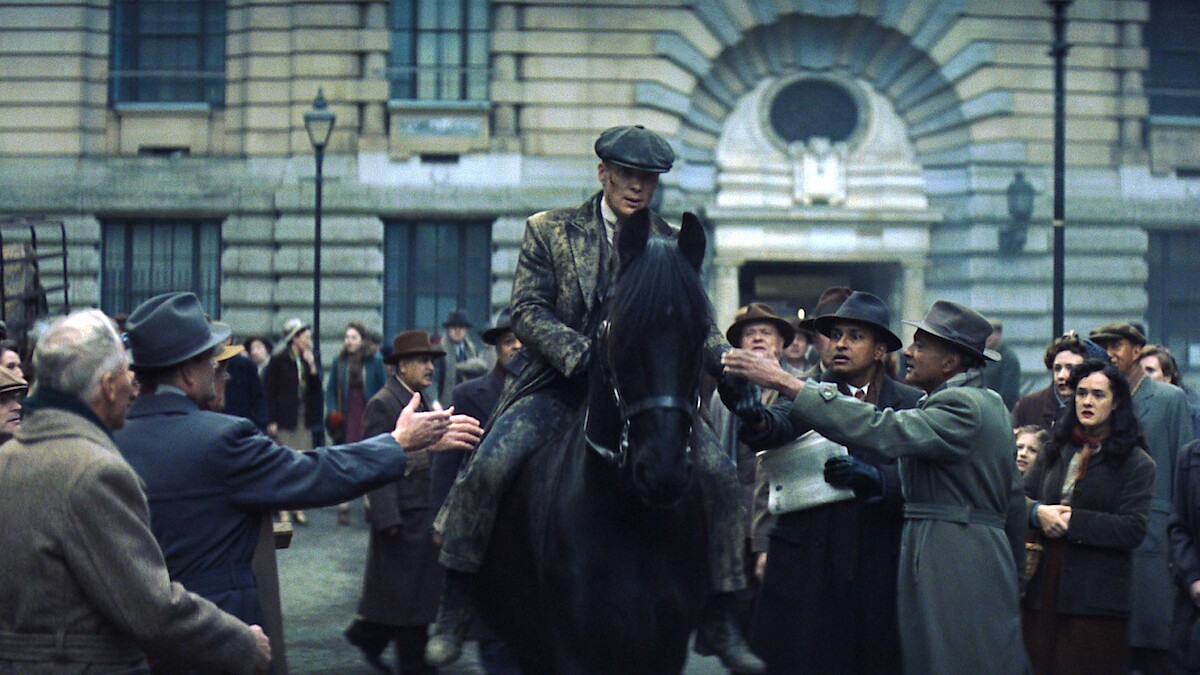
Steven: Don't care. You know, it's like weirdly not caring what other people think, even though every single inch of one's appearance is completely taken care of. What I wanted to do was evoke the way men were in the '20s and '30s, which was very different.
Edith: Yeah.
Steven: Especially after the First World War, and a kind of withdrawn, not engaging, not showing, everything closed down, sort of attitude to life, which was what men were like in those days. I grew up with stories from my parents, which is where a lot of this came from. And they would tell me stories about their parents and what they were like.
Steven: And there was one story where my mom said, "We were walking…" . There's loads of kids, and brothers and sisters, and they're walking with their mom with a pram down the road. And she sees her dad on the road, on the pavement, coming towards them. And he crosses the road and walks on and ignores them because a man then did not engage with children in public.
Edith: Wow.
Steven: Didn't pick up the kids. [No] "Oh, darling." Not manly. Everything is how you are perceived. So when I earlier said, "It means I don't care," it means you do care, but you have to look as if you don't.
Johnny Dogs: Right. I'll go, and I'll drive.
Tommy: I'm not looking for trouble, Johnny.
Johnny : No, but in Garrison Lane, Tom, trouble will be looking for you.
Edith: Particularly this era of Birmingham, why did you want to kind of dive into it and use that as the kind of jumping-off point for these stories?
Steven: I think because when my parents witnessed it, they were kids, so they saw everything as a kid sees it. So, you know, the Garrison pub is just… well, it doesn't exist anymore, but a rough little pub. But for them, it was like a cathedral, and everybody was bigger and stronger, and everything was more dramatic. And then they told me when I was a kid, so that doubly mythologized it. And, for me, it was like a Western. These are characters that they told me about, all these different things that used to happen.
Steven: And just lines that people… Like, there was somebody not in Small Heath, but nearby where they said he — four men came to get him, and they're gonna beat him up. And he said, "This isn't fair. It's just me against you four." "Take my watch. I'm gonna go and get my dad." They said, "OK." So he walks away. Then he comes walking back down with a great big long black coat on. They said, "Where's your dad?" And he pulled out an iron bar and said, "This is my dad." [laughs]
Steven: You know, just the poetry of those things. There's loads of them, you know. And that's what I wanted— That's what made me want to do it. Because I thought, this is a drama that should happen, and it's not like anything else.
Edith: ‘Peaky ‘ is inspired by you hearing these tales as a kid from your family about these real characters, these real moments, these real situations. Are there specific ones that had the most lasting impression on you, do you think?
Steven: They were actually called the Sheldons, and they were my dad's uncles. And they were known as the Peaky Blinders. And his dad, who'd been wounded in the First World War, and didn't get about so easily, sent him on a mess— And he's probably, when I think about it, he's probably sent him to lay a bet. But he gave him a bit of paper and said, "Go and see your uncles." And he was terrified. So he runs barefoot over the cobbles and gets to this place and knocks on the door. He said the door opened. There's a waft of cigarette smoke, the smell of whiskey and beer. And he walks in, and he said there's these men sitting around a round table covered in money, coins, in a place where there is no money.
Edith: Yeah.
Steven: And he said they're all immaculately dressed. They've got the razor blades and got the guns around. And he said they're all drinking beer and whiskey out of jam jars. Because they wouldn't spend any of that on something like a glass. You know, why would you? And that, just that image for me.
Steven: And then, from my mom, she was a bookie's runner when she was 9 because it was illegal to … to lay bets. So, 9 or 10 years old, she'd be walking down the street with a basket of washing and people would walk in the other direction. They'd have a piece of paper with the name of the horse and their odds, their code name, in case the police arrested her, and a coin, which is what they were betting. And then, as they walked by, they'd drop it in. And she'd walk all the way down to Tucker Wright's… He's called Tucker Wright. He was a massive big fat bloke who was the bookie. And there was a dog on a chain that was exactly long enough for you to just about get around the dog. And then she’d deliver the basket of washing, and he'd take the money and give her a sixpence. And it's just an amazing story. I mean, incredible stories and characters. And they were just such a laugh.
Steven: One of them was Charlie Strong. One of them was Curly, was a real person. And I didn't know at the time, but one day my dad just said, "That's your great uncle, you know, Curly." I was related, I didn't know. But I said to him once, and I actually used this line in the show. I said to my dad, I said, "Is this stuff stolen?" And he said, "No." He said , “Charlie simply finds things before they're lost.”
[laughter]