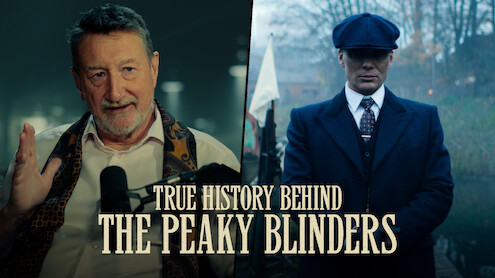
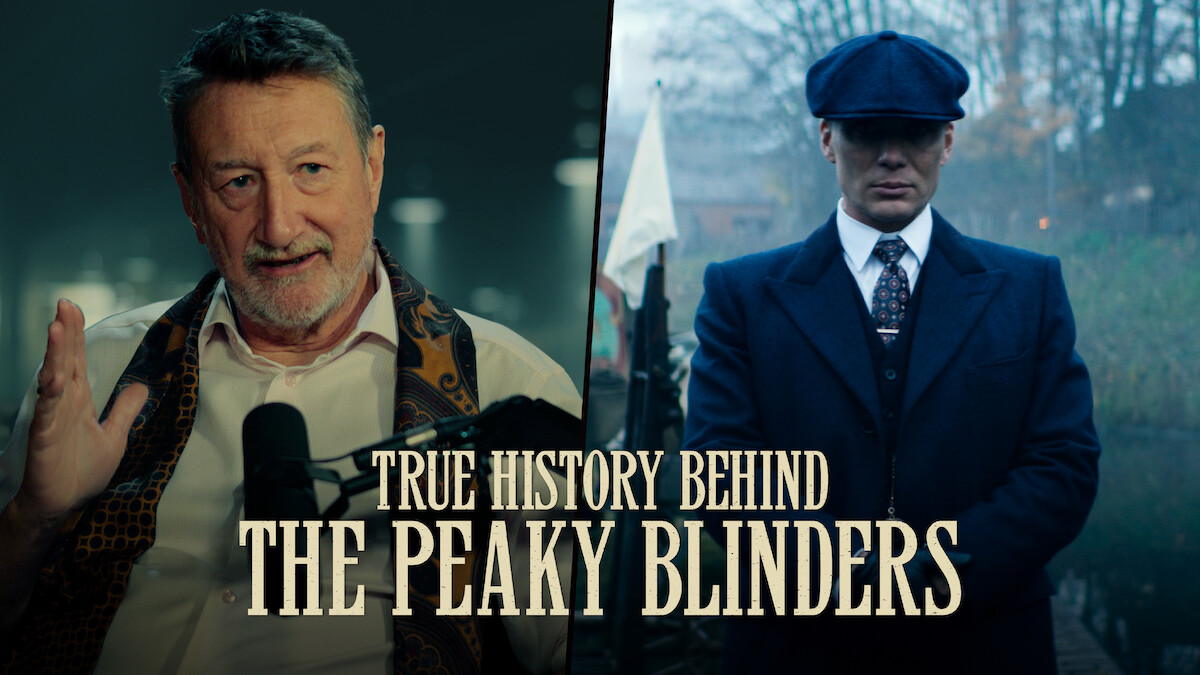
Steven: Some things people are taught when they're commanding men in violent situations, "Never be the same with someone twice." So, be really nice to someone. And they think, "Oh, that's all right." And then next time, really yell at them. And they're so terrified and weird and confused. "What did I do?" And it instills in people the desire to please. Like, "I want you to be nice to me again, so I'll do what you want."
[dramatic music plays]
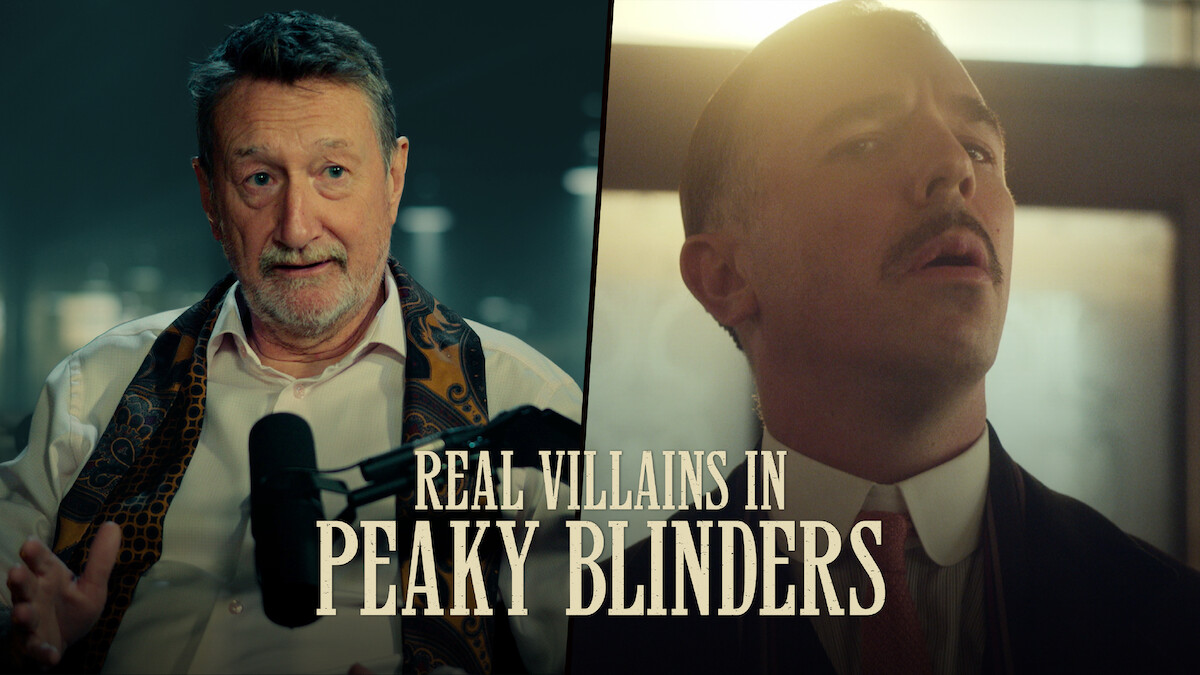
Edith: Oh, you're just … you're such a great storyteller, Steven. That ability to … to take these characters, these moments that you've … that you've heard or you've discovered through research and, you know, put your twist in it as well. But that's what I find so brilliant about some of, like, Tommy's most iconic adversaries, for example. Loads of them are based on real people. Loads of them were real people. Billy Kimber and the Birmingham Boys. What did you learn about them that really stood out?
Steven: Here's an interesting thing.
Edith: [laughs] Here we go.
Steven: Billy Kimber, I mean, I killed him in the … in series one, but the real Billy Kimber was a Birmingham gangster. And he worked with and against Alfie Solomons and all of that. And Alfie Solomons was real. Billy Kimber's granddaughter, at one of the premieres, she was really funny because after the show had gone out and it was popular, she said, "We never talked about him. We were really ashamed of him. And now, we're like, 'It's great. We can talk about him.' "
Edith: The Sabinis. Tell me about, uh ... Are they real?
Steven: Yes.
Edith: Wow.
Steven: Darby Sabini was in … based in Clerkenwell when that was Little Italy in London. Uh, he was based in a pub called The Greyhound. And at a party in Clerkenwell, Alfie Solomons turned up and Darby Sabini shot him. Didn't kill him, but he shot him.
Edith: Wow.
Steven: So, yeah, he was real. So the Sabinis were real. Uh, the real Alfie Solomons was based in Camden Town. So he was all around the canals as well. So, you know, the connection between Camden and Digbeth and the canals is very strong.
Edith: Small Heath is very much a character in it as well, you know, in terms of where these characters are, you know, based and capturing the spirit of that place is important as well.
Steven: What I like is that a lot of this stuff is not in history books. And any research I did, where possible, via word of mouth or newspaper articles about what was, you know, really going on. And, yeah, and it was a completely different way. You know, there's horses mixed with automobiles, and just the whole landscape of it, and the smoke and the smog. And I remember my mum saying that 24 hours a day, there was a rhythm going on of the factories. Mmm.
Edith: What I love as well, right from the start, Peaky has kind of shown Birmingham at that time as just this real melting pot of … of different cultures, different beliefs, different backgrounds.
Steven: Yeah.
Edith: What does that tell us about the place and the people at that time, do you think?
Steven: I mean, I am romanticizing it, and I'm doing it deliberately. Um, so, you know, obviously it was horrible and tough, and there was terrible poverty and, um, and overcrowding and disease and all of those things. But, uh, I did that on purpose to try and sort of make the point that from the inside, that's not how it looks. And from the inside, the only way for it to become tolerable is if everybody helps each other. And, you know, the old cliché of in and out of each other's houses and all that. That's fine. Um … But there is a truth there that people had to … to help each other. And also, really important, have a laugh, you know. A lot of the stories are about people doing really stupid things and laughing and, you know. Yeah, and that whole kind of idea as well of … of being realistic, you know, of a part of society that has been portrayed in a certain way for so many years. And to actually kind of go … kind of readdress that, is important. And Jeremiah, the character Jeremiah, is based on a real person. They used to call him Jimmy Jesus. And he was, uh, from ... I think he was from Jamaica. And he used to walk around barefoot preaching. All the kids used to follow him. They loved him.
[host chuckles]
And, you know, it was just like … These images that you see of these people is great.