Meet the players, storylines, and qualification path shaping their next World Cup run.

A win over Panama sends Canada to the World Cup. A loss sends them down a much tougher path.
One win. That’s all that stands between Canada and a trip to the FIFA Women’s World Cup 2027 in Brazil. If Canada can beat Panama in the Concacaf W Championship quarterfinal on Nov. 28, they’ll secure their place in the tournament. If they lose, the path gets trickier and the room for error narrows significantly. But before that matchup, let’s dive into everything to know about Team Canada’s path to the tournament, which players to look out for along the way, and what’s next if things don’t go to plan.
Qualification status: Not yet qualified
Next match: Canada vs. Panama
Date: Saturday, Nov. 28
Time: 1:00 p.m. ET / 10 a.m. PT
What’s at stake: A win would mean Canada qualifies for the 2027 Women’s World Cup.
Beat Panama on Nov. 28 and Canada goes straight to the Women’s World Cup, no further steps needed. But it’s not an elimination game. This isn’t win or go home, it’s win or go to plan B. If Canada loses, they’re not out, but they’re not safe either. A loss would drop them into the Dec. 2 play-in, where a win would keep the dream alive by advancing them to the FIFA Women’s World Cup Play-Off Tournament — another hurdle on the road to Brazil.
Canada isn’t alone in facing this qualification setup. The USWNT and Mexico also have a direct path to Brazil through the Concacaf W Championship quarterfinals: Win, they’re in; lose and the Play-In becomes the next route forward.
Canada plays Panama on Nov. 28 at 1:00 p.m. ET / 10:00 a.m. PT. If Canada wins, they’ll qualify for the Women’s World Cup. If they lose, they must survive a Dec. 2 Play-In to keep their path to Brazil alive. It’s Canada’s first major competitive test of the Casey Stoney era following her appointment as head coach in January 2025.
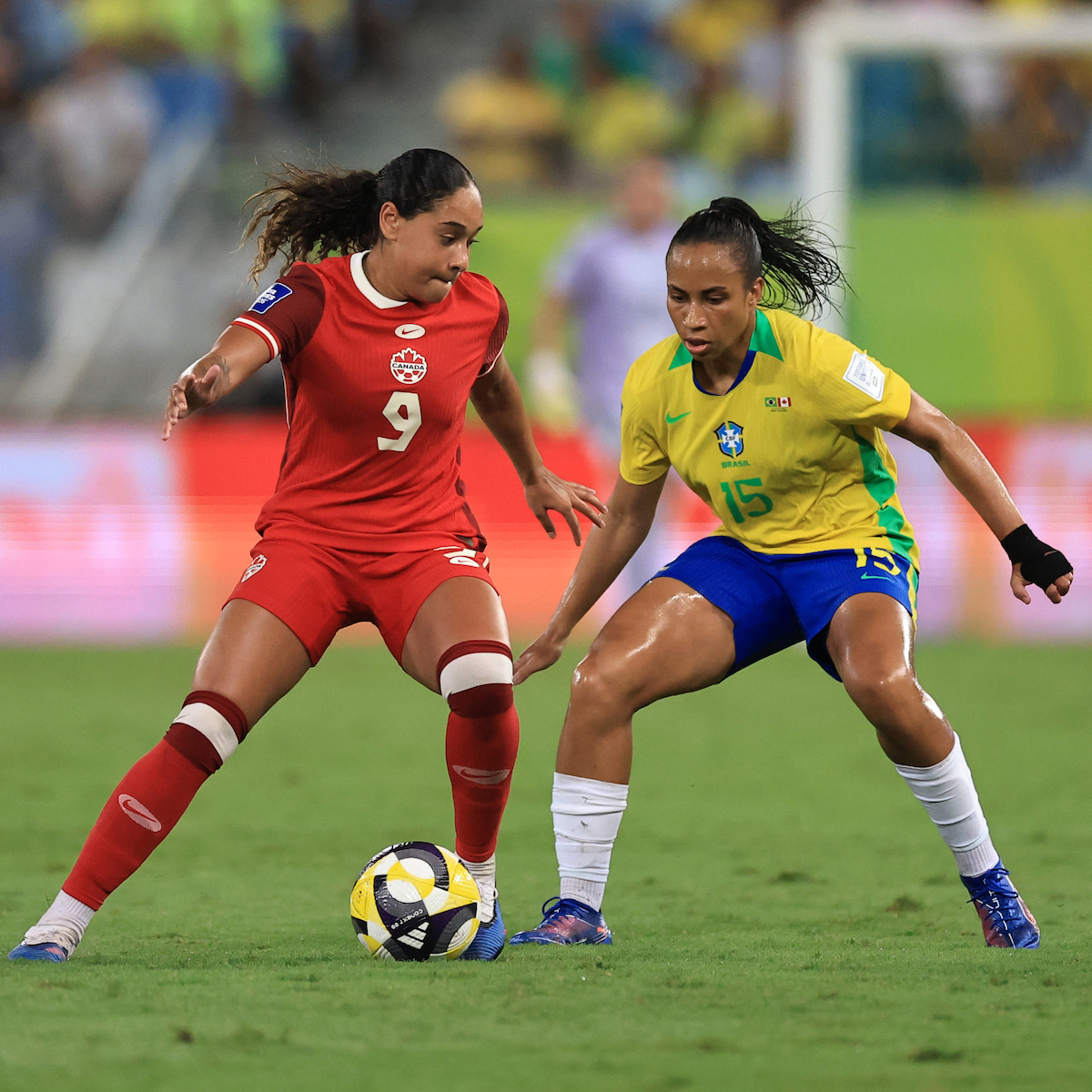
Olivia Smith
Canada’s roster is a tale of two generations meeting in the middle. At just 20, Olivia Smith is already one of the most expensive transfers in women’s soccer history after her move to Arsenal, and her game backs it up with blistering pace, one-on-one fearlessness, and a flair for the moments that flip a match.

Kaylee Hunter is another name to watch. At just 18 years old, she’s fresh off four goals at the U-20 World Cup and a senior call-up almost immediately after. She’s less of a finished product and more of a preview of what’s coming next for Canada.
A few players have quietly held the program together and defined it for the better part of a decade.
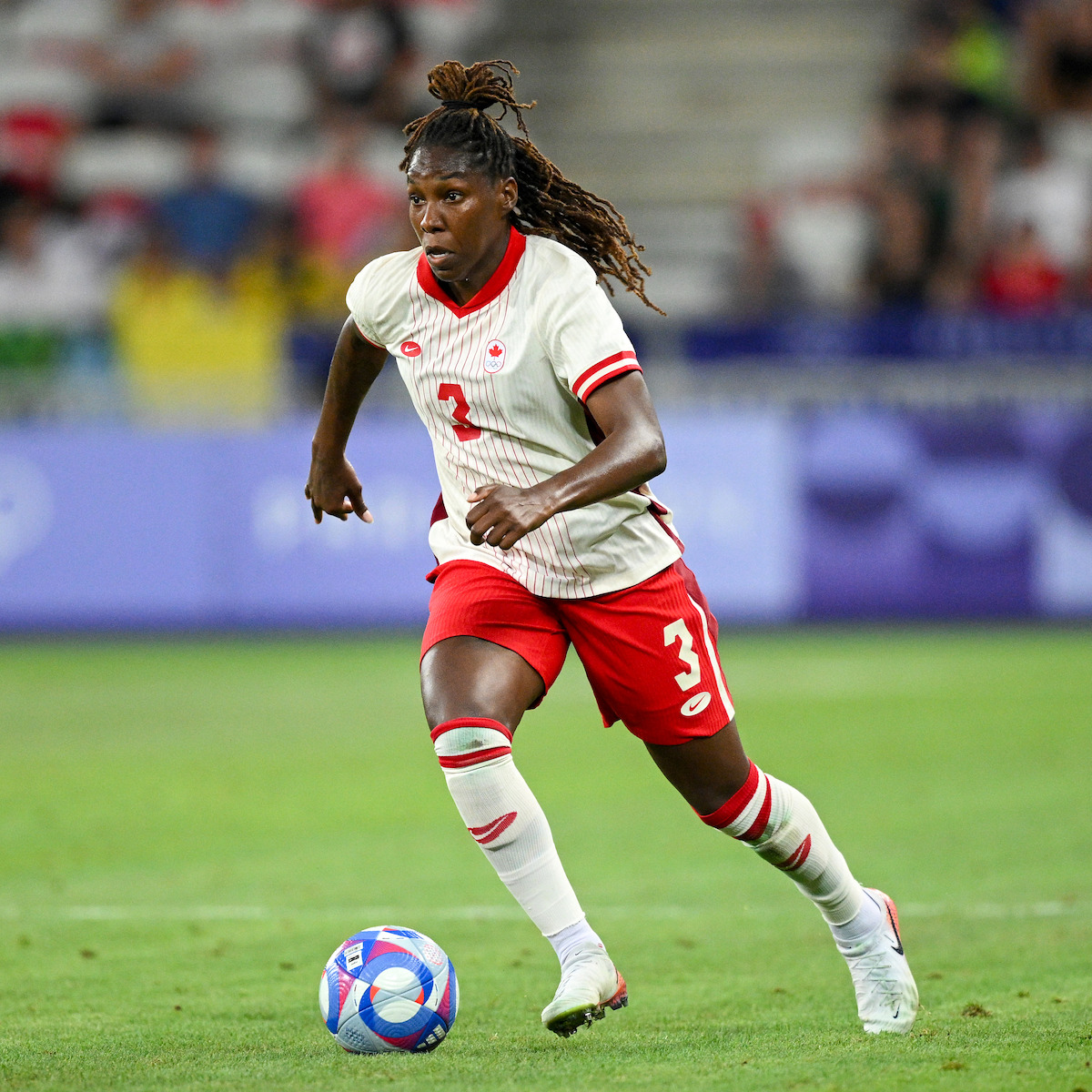
Kadeisha Buchanan
Kadeisha Buchanan has long anchored Canada’s defense, and her return in 2026 after a long injury layoff brought stability as well as her skill on the ball. Jessie Fleming, Canada women’s national team captain since Feb. 2024, has done the same in midfield. Her work rarely lands on highlight reels, but she makes everything around her run smoother, and she’s stepping into a big leadership role as the roster continues to turn over. Ashley Lawrence rounds out the veteran core. As one of Canada’s most capped players, she’s comfortable at fullback or in midfield and is nearly a lock on the squad when healthy.

Jordyn Huitema
Then, there’s Jordyn Huitema, whose place in this picture remains uncertain. She broke through as a teenager with a rare combination of size, speed, and finishing ability that made her look like a future centerpiece for this team, but a torn ACL suffered in July 2026 has put her 2027 timeline in question. She’s expected to miss the Concacaf W Championship in November, and her availability for a potential World Cup remains a major storyline to track.
Canada is in the midst of its first real generational handoff since former captain Christine Sinclair’s retirement. Sinclair is Canadian women’s soccer’s all-time leading scorer with 190 goals. For about two decades, she served as the face and emotional heartbeat of a team that won Olympic bronze in 2012, reached the quarterfinals as World Cup hosts in 2015, and captured Olympic gold at Tokyo 2020. Sinclair’s departure left a void that new head coach Casey Stoney is now navigating with what she has described as “a balance of youth and experience.”
That balance is present in proven veterans like Buchanan and Fleming, who carry the memory of the Olympic gold era, while a wave of new attacking talent led by Smith and Hunter points toward what’s next.
The Nov. 28 quarterfinal against Panama is effectively the first major competitive stress test for this new-look Canada team. Qualifying directly would mark an important early milestone in the transition, while a loss would send Canada into the Play-In and put even more pressure on a team still finding its shape under Stoney.
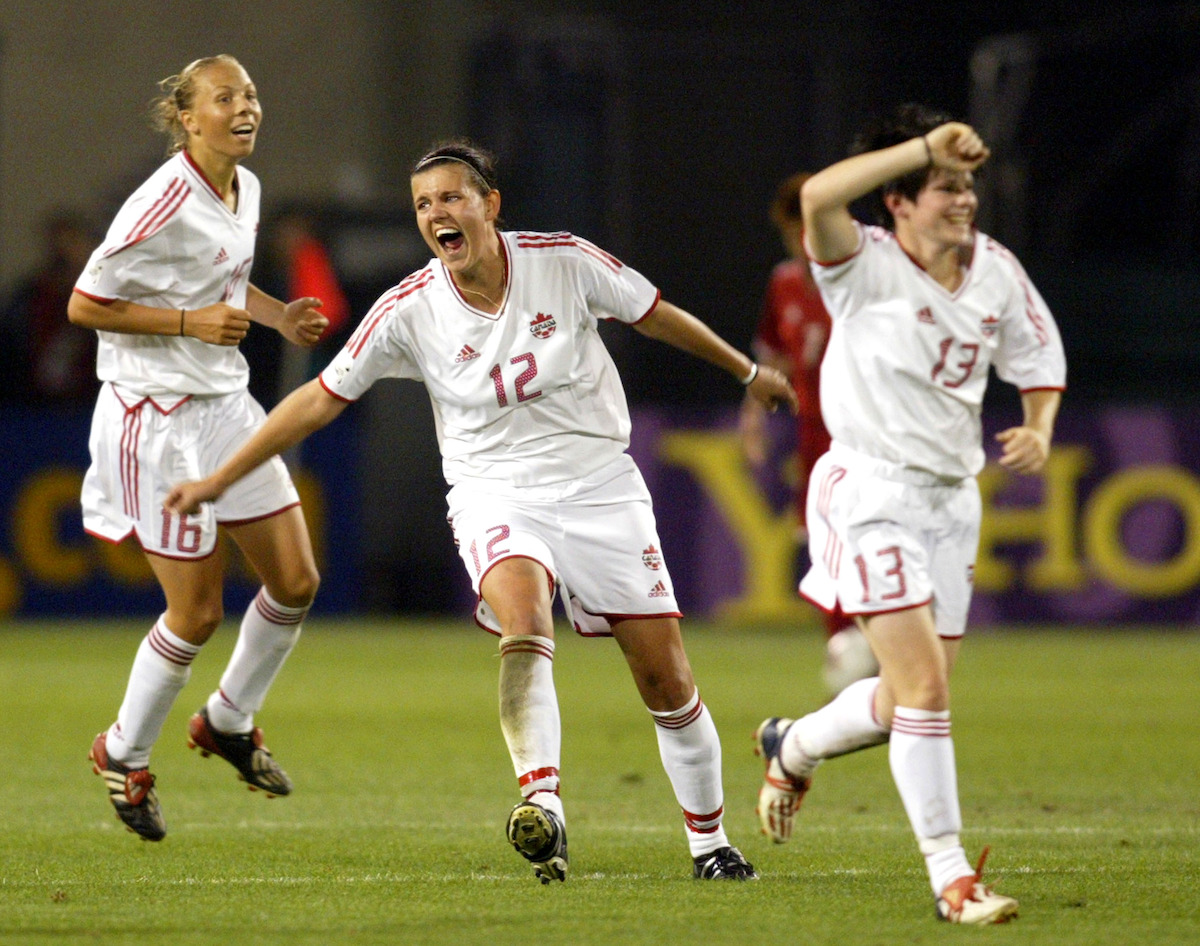
Christine Sinclair #12 of Canada celebrates Canada’s victory with teammates after pulling off a 1-0 win over China in the 2003 Women’s World Cup Quarterfinal match at PGE Park in Portland, Oregon, Oct. 2, 2003.
Canada has appeared in eight FIFA Women’s World Cups since 1995, with a best-ever fourth-place finish in 2003. The team hosted the tournament in 2015, reaching the quarterfinals before a loss to England, and hasn’t returned to the quarterfinals since. That lack of a deep World Cup run stands in sharp contrast to the program’s biggest recent triumph, Olympic gold at Tokyo 2020, and has left Canada still searching for its next major World Cup breakthrough.
The FIFA Women’s World Cup 2027 runs June 24 through July 25 in Brazil, with all 64 matches streaming live on Netflix in the United States and Canada.
US viewers will have access to English- and Spanish-language coverage, while Canada will have English- and French-language telecasts.
If Canada qualifies, check back for updates following the Final Draw for the FIFA Women’s World Cup Brazil 2027™ with its group, opponents, schedule, kickoff times, and viewing information.