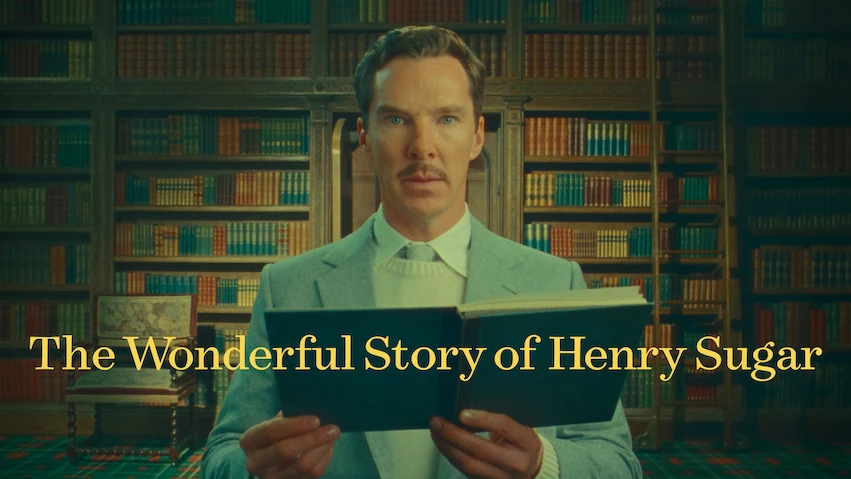
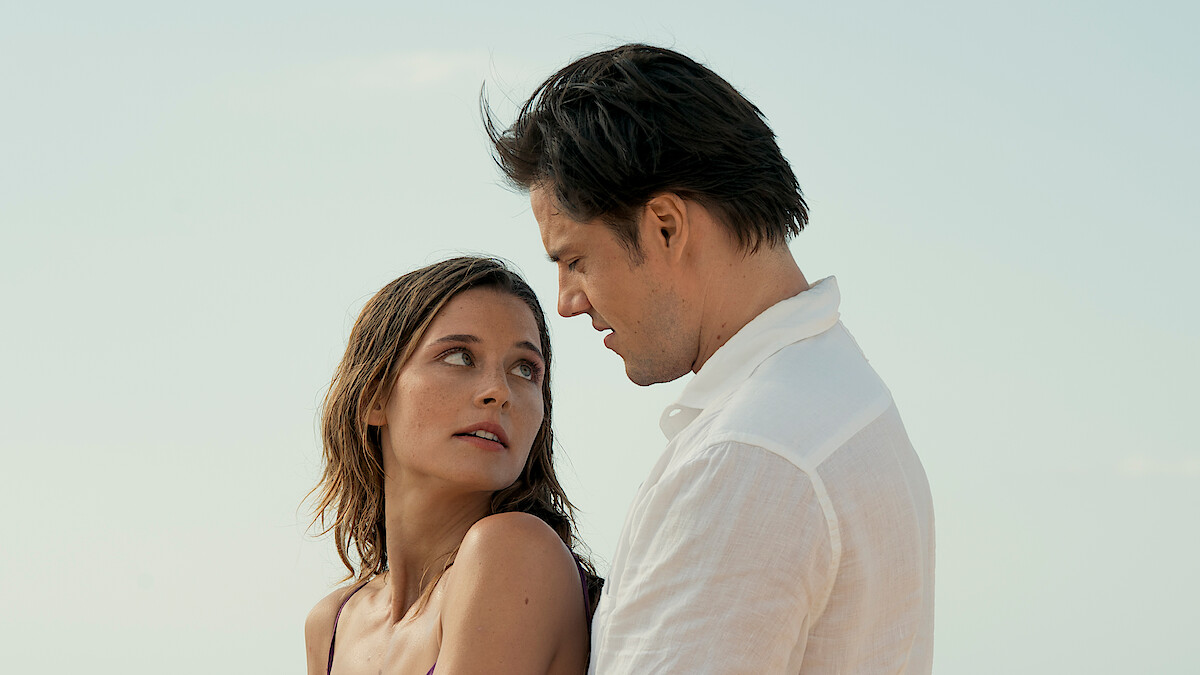
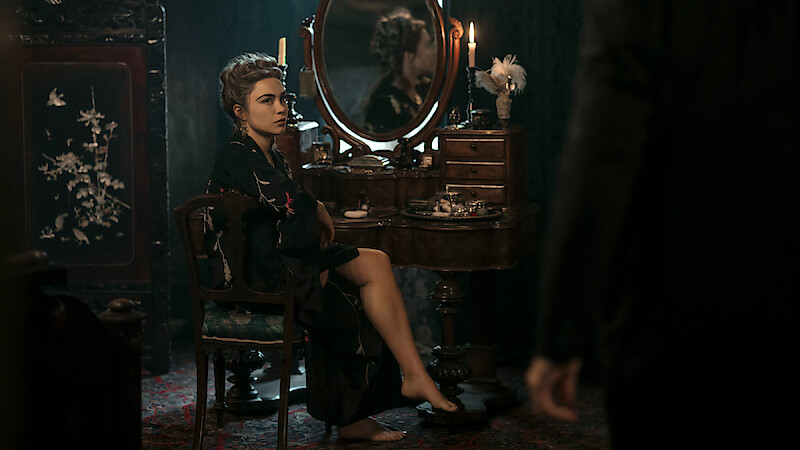
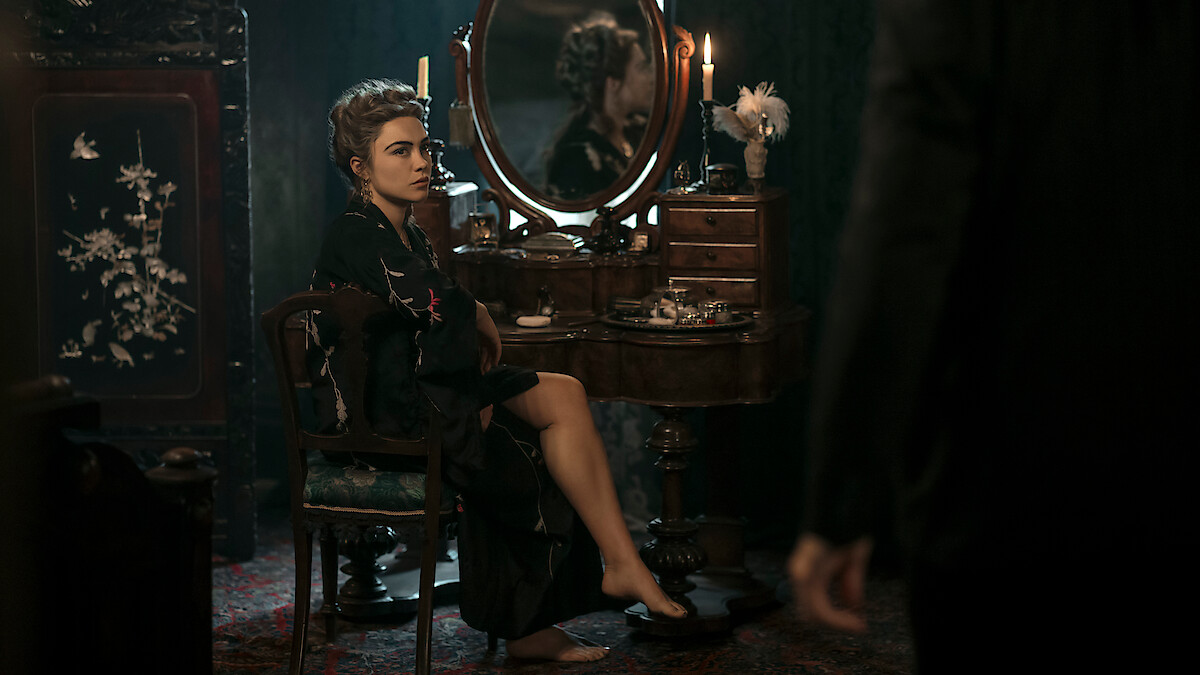
Wes Anderson is one of the most recognizable filmmakers working today, an auteur with a visual stamp so distinctive that a single frame is often enough to identify one of his films. But what goes into crafting that aesthetic? For his new series of Roald Dahl short story adaptations, Anderson called up a pair of old cohorts, costume designer Kasia Walicka Maimone (Moonrise Kingdom) and production designer Adam Stockhausen (who won an Oscar for his work on The Grand Budapest Hotel). Together, they worked to bring Anderson’s artistic vision to life.
Starting with The Wonderful Story of Henry Sugar and continuing with The Swan, The Rat Catcher and Poison, each Anderson short creates its own little world. “He's got a very strong visual language as all of us know,” Walicka Maimone tells Tudum of working with the director. “It’s just really amazing to see somebody at the height of their artistic expression.”
Here’s how the team behind The Wonderful Story of Henry Sugar accompanied Anderson to those heights.
Dressed to impress: a guide to the elegant costumes of Henry Sugar
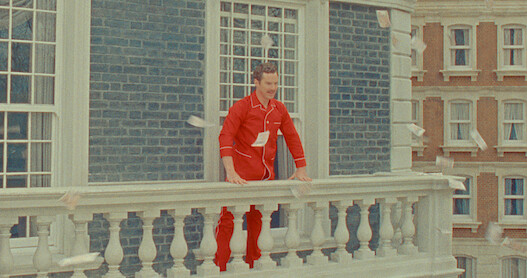
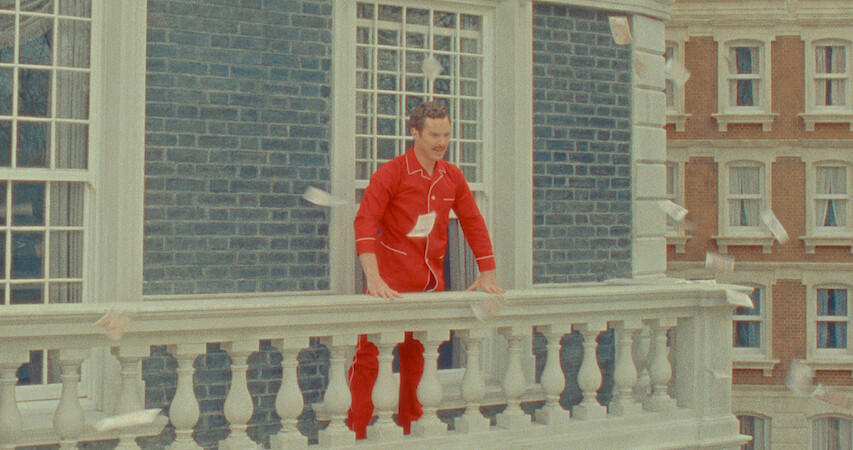
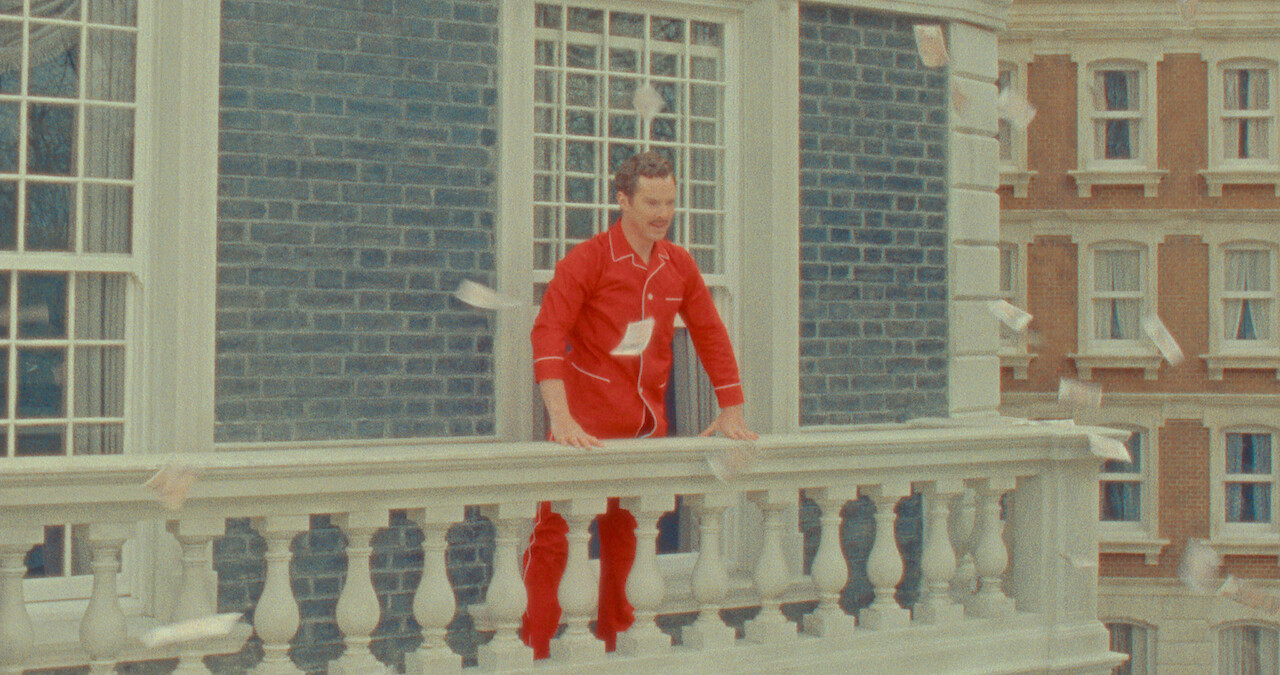
The world of Henry Sugar has plenty of connections to our own — including a depiction of Dahl’s writing hut, the result of painstaking photographic research and re-creation. But like many of Anderson’s films, the film’s setting in time is rather more nebulous. “When people ask which period is it, I always say this is Wes’ period,” Walicka Maimone says. “Wes has such a specific world that by now we all understand and know, and that world is deeply influenced by story and photographic circumstances.”
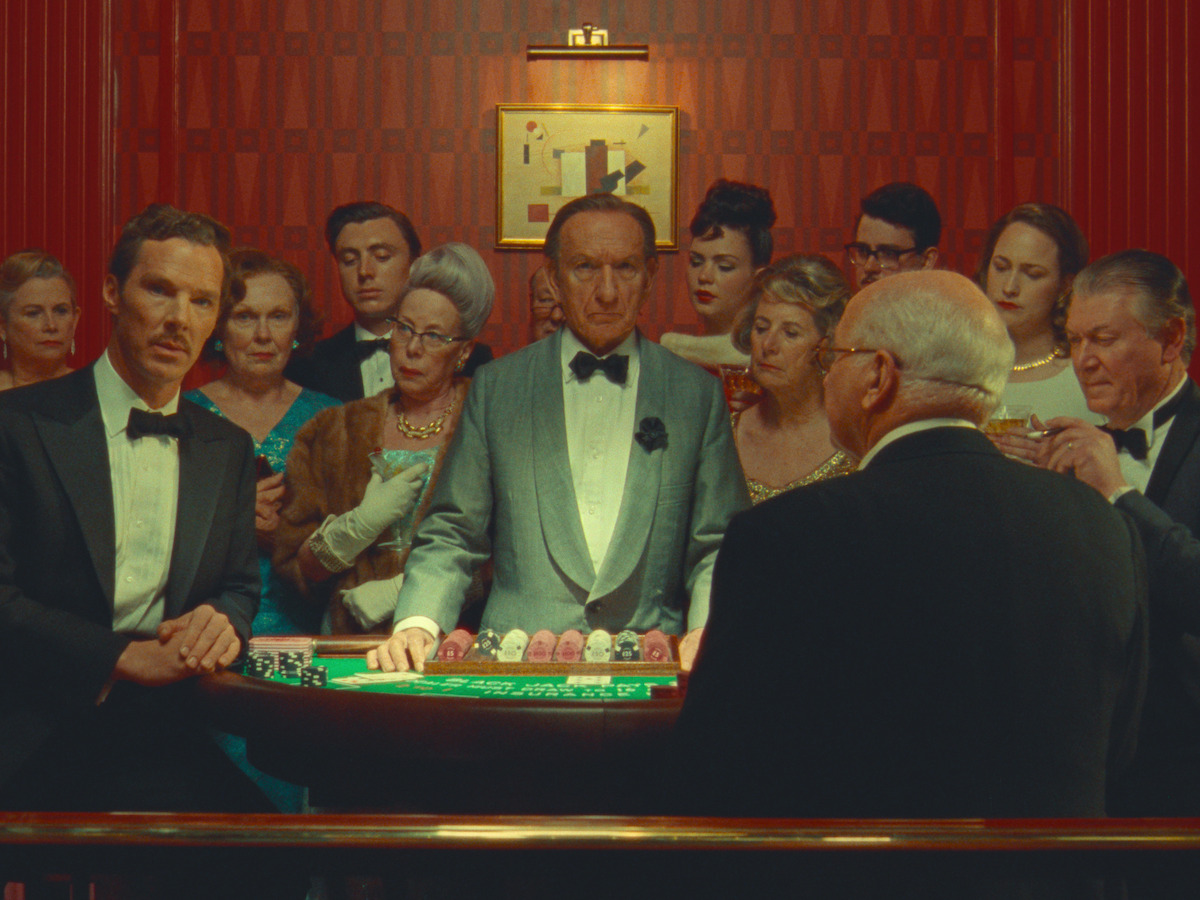
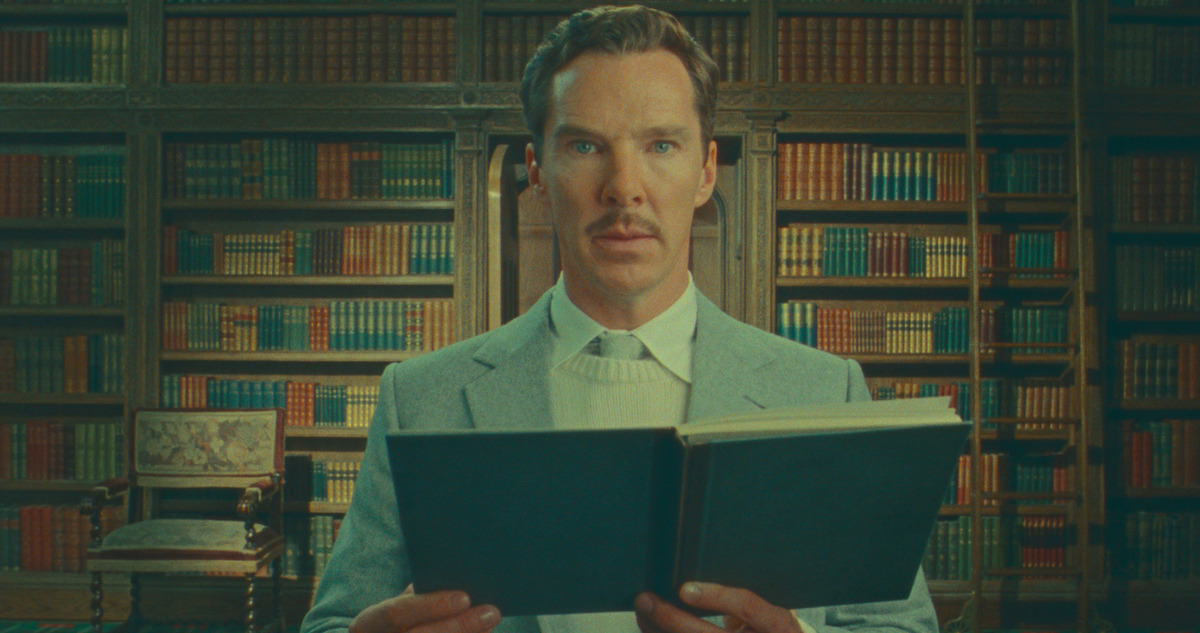
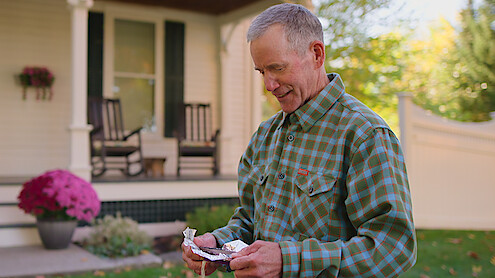
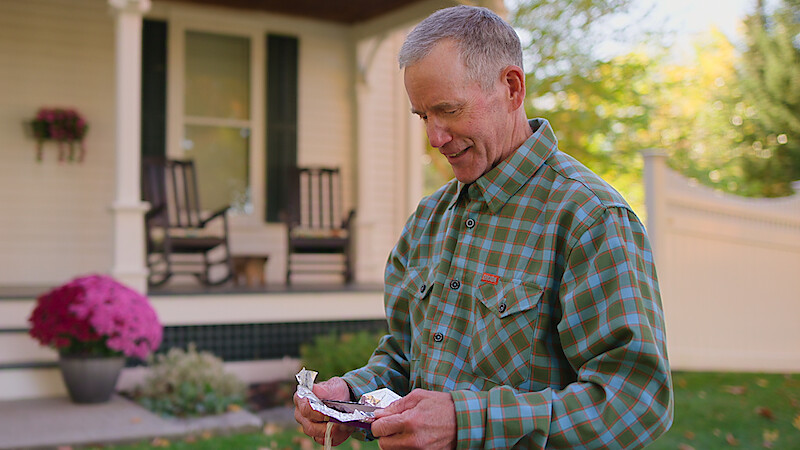
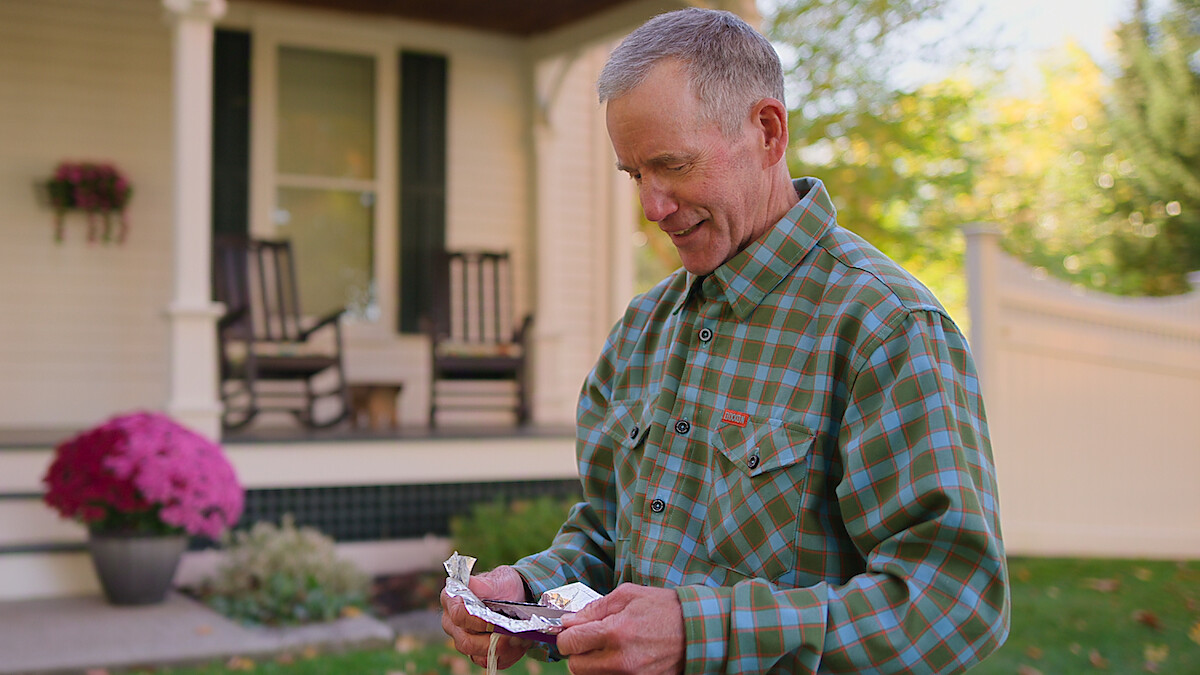
So when it came time to design the costumes, Walicka Maimone drew from a wide variety of inspirations — and colors. “It’s quite a controlled, almost Kodachrome vision of the world, but it’s not consistent,” she says. Indeed, Henry Sugar alone runs the gamut from Dahl’s autumnal writing sweater, to the restrained formal wear of an English manor home, to baroque circus uniforms.
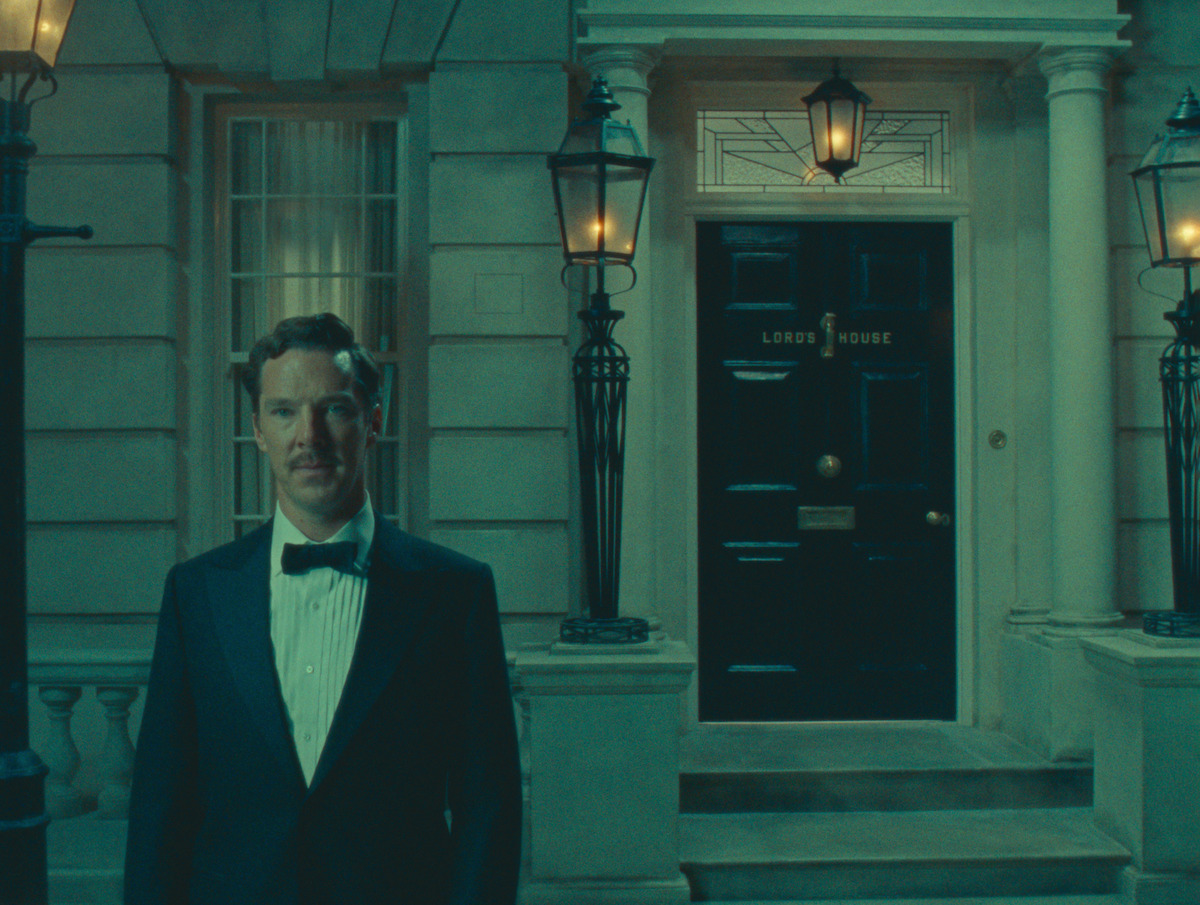
The finished films were smaller productions than Walicka Maimone’s most recent projects (The Pale Blue Eye and The Gilded Age), but in their own way just as intense. “Working with Wes on those shorts is kind of like a gem of exploration of each of the characters because those stories are so much smaller,” Walicka Maimone says. “For Henry Sugar, it’s very much driven from the palette of [an] English vocabulary of very sophisticated, deeply rooted traditions of elegance.”
In the case of Henry Sugar, Anderson had the added benefit of Dahl’s own prose. “He went to an expensive tailor for his suits, to a shirtmaker for his shirts and to a bootmaker for his shoes,” Dahl says in the film — in words drawn directly from the page. To evoke the vivid imagery of Dahl’s words, many of the costumes of Henry Sugar were built from scratch, sometimes starting even earlier than the costume department’s involvement. “In some cases, it’s already written to the script,” Walicka Maimone says. “Wes has extraordinary vision. It’s more of a collaboration with a designer rather than just [with a] director who has strong visuals.”
The exacting details of the production bring another art form to Walicka Maimone’s mind. “It’s almost like working on a piece of jewelry in the old techniques of Florence jewelers,” she adds. “There is a very strong concept, very strong idea, and [we bring] the best of the industry to execute those ideas.”
Stage magic: creating Wes Anderson’s theatrical Henry Sugar sets
It might seem that Stockhausen, who’s teamed up with Anderson on six previous films starting with 2007’s The Darjeeling Limited, would be well used to the filmmaker’s style. But for the new production, Stockhausen’s longtime collaborator had a few new tricks up his sleeve. Anderson’s films have grown even more elaborate and fine-tuned over the years, and The Wonderful Story of Henry Sugar and its three compatriots represent a whole new step in his stylistic evolution. Each film is narrated almost fully to camera in the style of a stage play, with characters delivering both lines of dialogue and narration directly from the pages of Dahl’s texts.
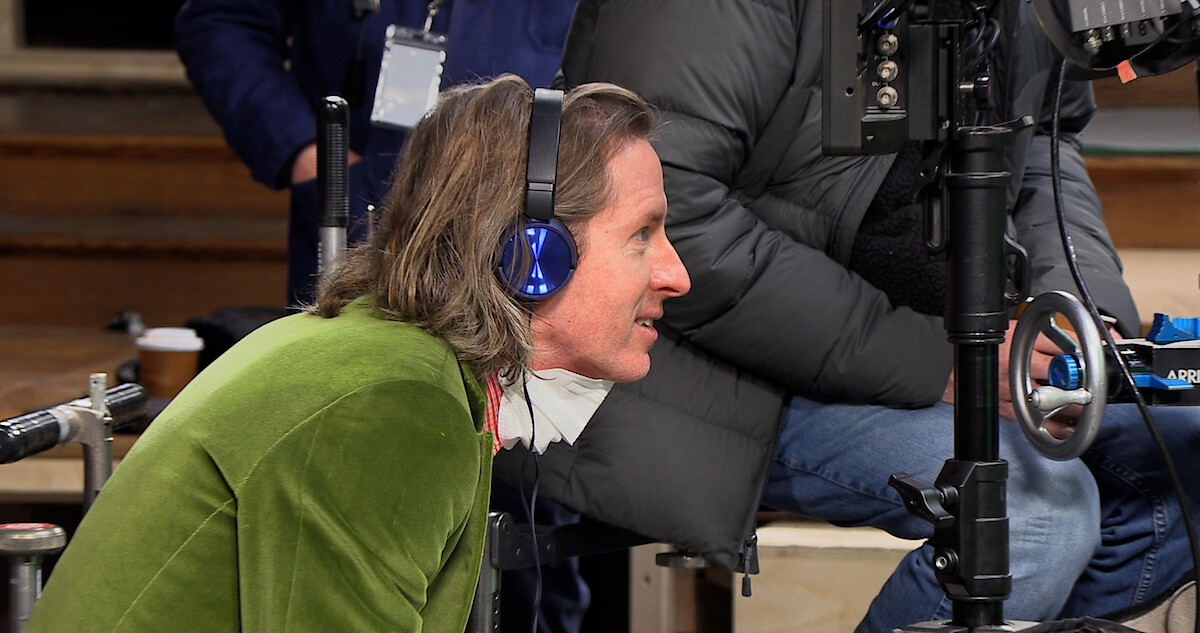
“In order to support the storytelling, we wanted to make a kind of blocking and staging that could happen live,” Anderson himself says in a behind-the-scenes video (watch it above). “We make our way through spaces without actually leaving the same set, we just bring in pieces of scenery. And the scenes could change while the actors stay engaged with the audience.”
It’s a choice that appealed to Stockhausen personally, but it also meant he had a much more difficult job ahead. “It meant that the machine had a lot to do because the narrator didn’t leave [the] frame,” Stockhausen recalls. “The telling of the story was relentless, and it never sort of took a break.” The shorts’ staged sense of artifice also meant the production had to channel Stockhausen’s background in theater, with sets sliding in and out of the frame. “We had to shift and slide and move the world behind the narrative as the story was being told,” Stockhausen says. “That’s a different way to look at things.”
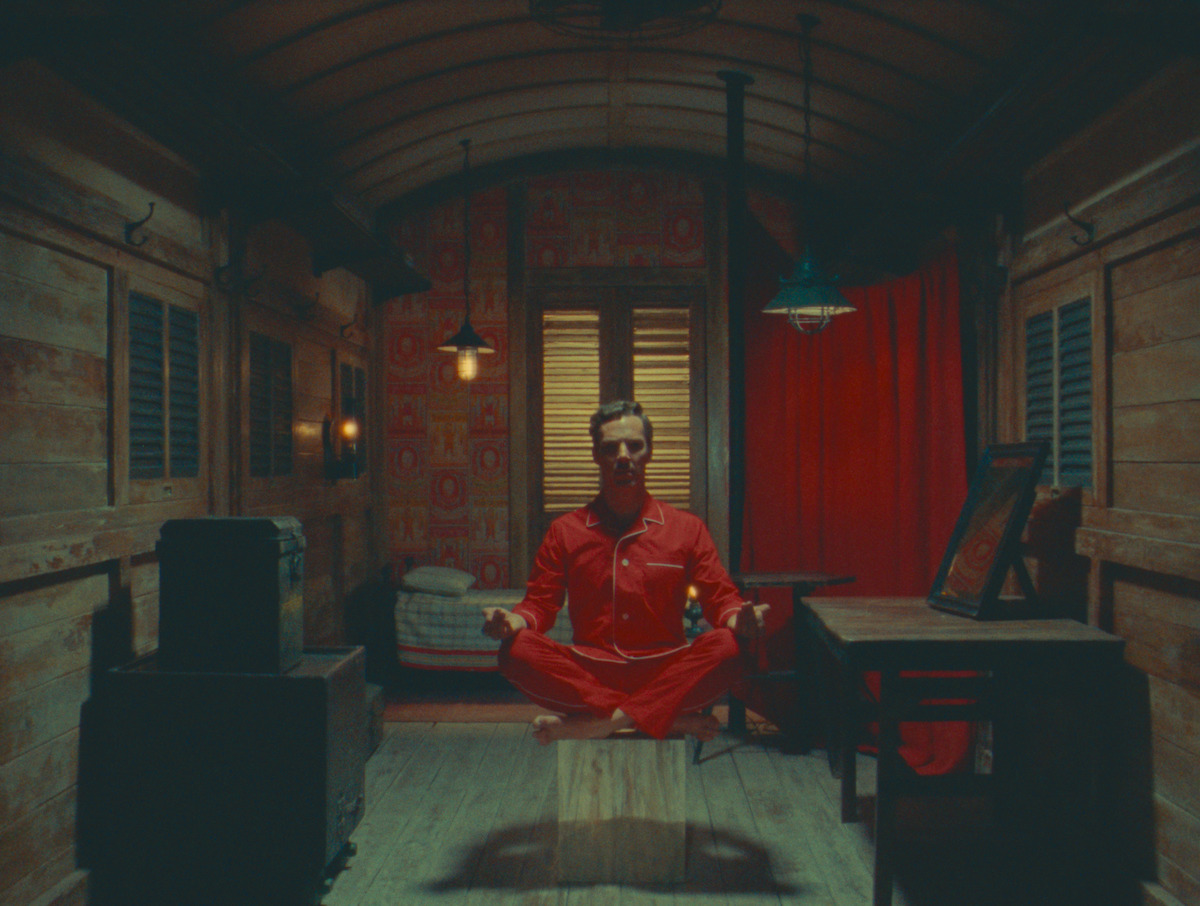
In a production full of bold stagecraft and gorgeous scenery, one of Stockhausen’s favorite pieces of design is a tiny piece of trickery that wouldn’t have been out of place in the earlier days of Anderson’s career. “One thing that I love in this one is the levitation and the boxes that are used for the effect of such a simple trick,” he says. “It meant photographically looking at the background and Catherine Little, our on-set painter, painting a trompe l'œil, a version of the background so that you can be on just a regular old apple box that’s totally invisible when it’s in exactly the right position for the lens.”
Of course, like anything in Anderson’s films, it has to be viewed at the exact proper angle for the effect to be felt. “As soon as it moves just a little bit, that reality fractures, and then it turns sideways and it’s just an apple box,” Stockhausen says. The magic of Henry Sugar is the way it shows you the apple box — and still manages to trick your eyes anyway.
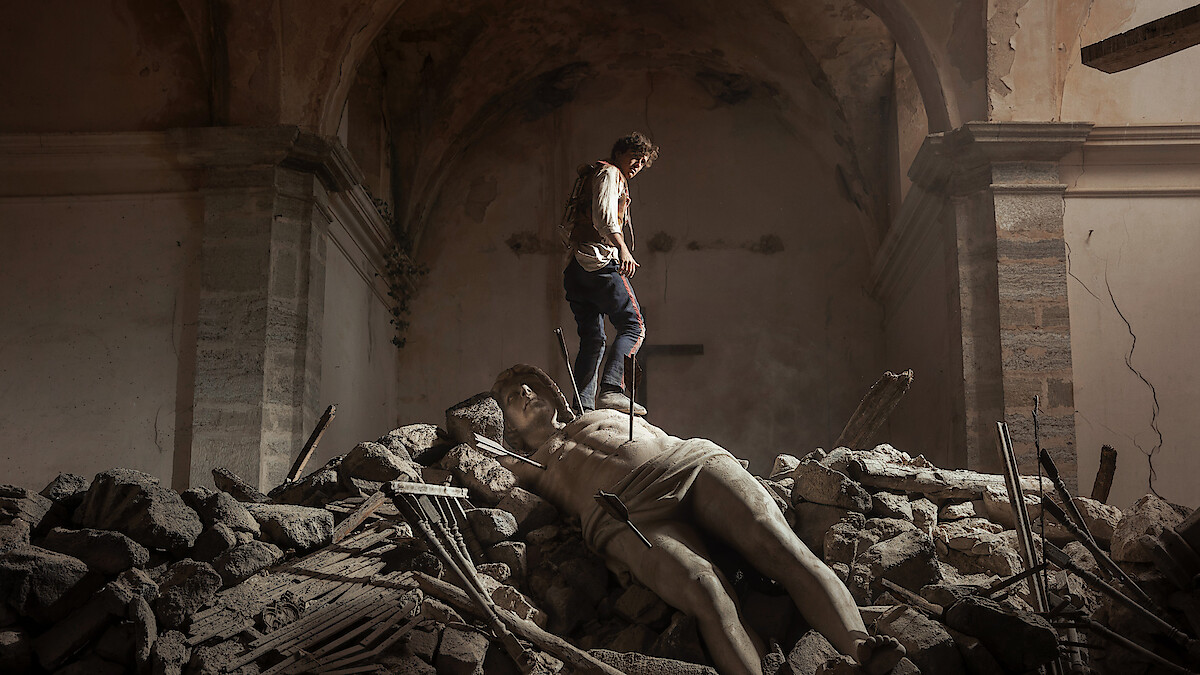
The trickery didn’t stop at simple special effects. One of the shorts was largely filmed just outside of the production’s English soundstages, in what might seem to be the least aesthetically pleasing setting possible. “We kind of took over the parking lot, and The Swan is shot entirely in a parking lot,” Stockhausen says. Anything can be part of a Wes Anderson movie if you put your mind to it.
The Wonderful Story of Henry Sugar is streaming on Netflix on Sept. 27, followed by The Swan on Sept. 28, The Rat Catcher on Sept. 29, and Poison on Sept. 30.