Explainer
Inside The Vince Staples Show Ending, Where Things Aren’t Always What They Seem
The show grabs your attention but never holds your hand.
Feb. 15, 2024
“Anything interesting happen?”
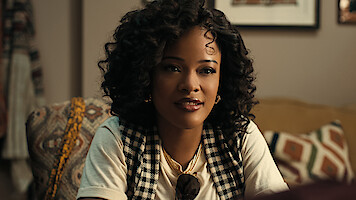
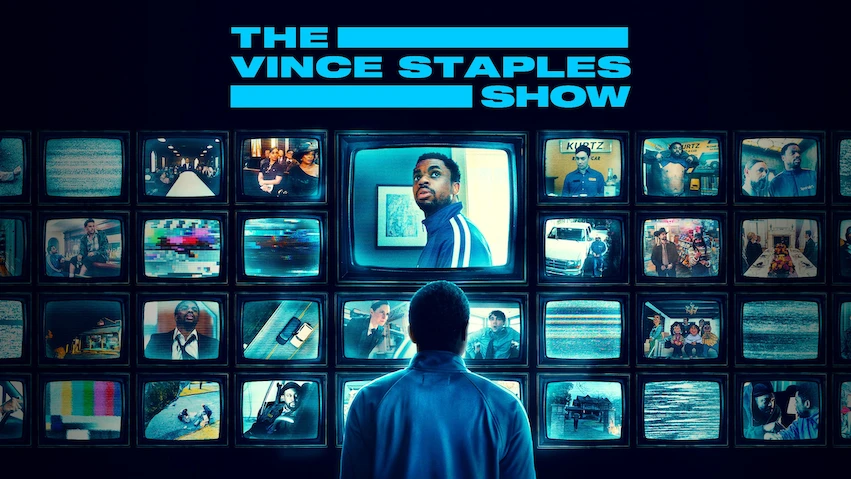
That’s the question Vince’s girlfriend, Deja (Andrea Ellsworth) asks him in the last moments of the fifth and final episode of The Vince Staples Show limited series. Vince replies with a cavalier “Not really,” despite having just survived a mad dash through the city, dodging bullets from a long-lost nemesis hell-bent on killing him. Seems pretty interesting! But, with that final dialogue exchange, co-creator, writer, and actor Vince Staples is making a point: The difference between noteworthy and normal is purely subjective.
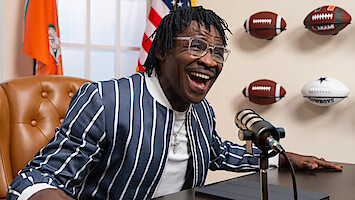
“What is a good day? What is a bad day? How do we perceive things?” Staples, in conversation with Tudum, asks. “The end of Episode 5 might not be the happiest, but sometimes that’s the way things end, and it becomes the norm for us. When you accept the norm, nothing sticks out.” It’s this nuanced space that the show explores — filled with cycles of violence and incarceration; capitalism and its effects; race, class, and the horizons of possibility they define — without giving any easy answers.
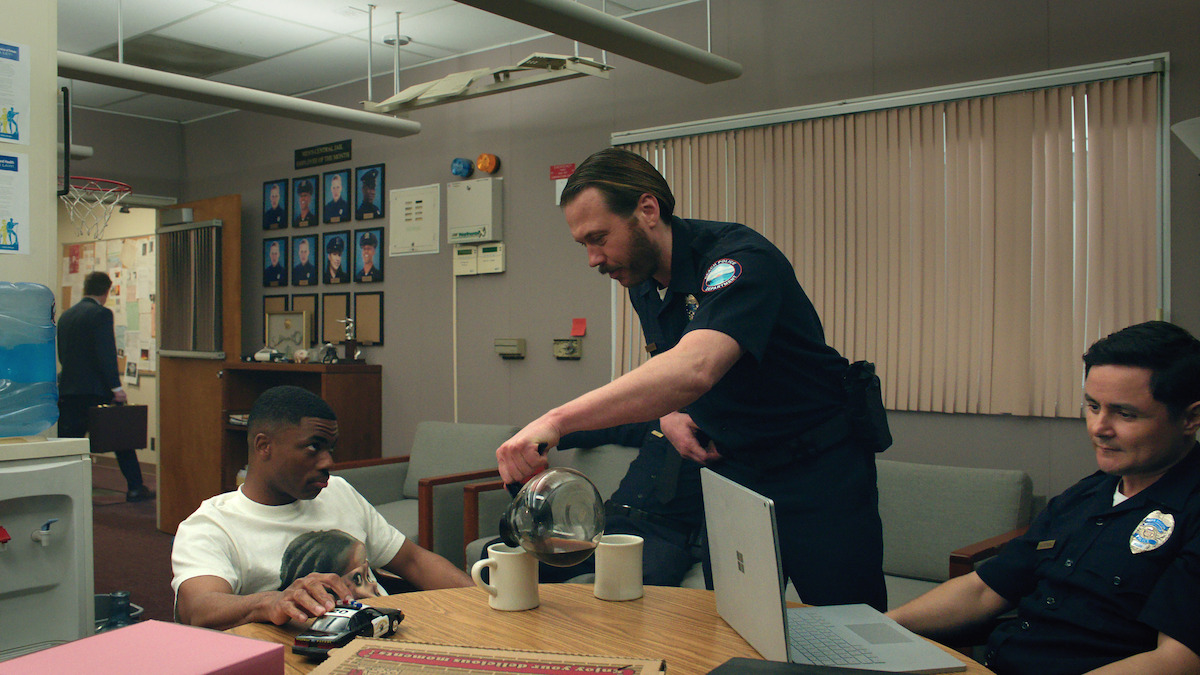
You might have noticed that the show’s first episode has a nearly identical ending to that of its finale. Deja asks Vince the exact same question, “Anything interesting happen?” and Vince gives Deja the exact same answer, “Not really” — despite having just spent the day in jail.
“The whole series, there’s an underlying throughline of perception,” Staples says. “Things aren’t always as they seem.” That season-ending callback is just one indication of the deep care with which Staples created the series. Each episode is filled with surreal happenings and thoughtful touches that might take repeat watches to catch. To truly tell the difference between what’s noteworthy and what’s normal, you have to look closely.
“There are things that you might’ve missed,” Staples says, and watching the show more than once allows viewers “to enjoy this moment from a different perspective.” The makers of The Vince Staples Show sought to reward repeat viewings by packing the show with relevant details. “Gotta leave Easter eggs in there, and there’s definitely a lot of meaning behind them,” he emphasizes. “It’s really important [for the audience] to have a fun experience, to have people go back and ask, ‘Did you hear this? Did you see this?’ In the streaming space, we get through things so fast, and they pass. We wanted to leave as much as possible for consumption… and to give people a reason to go back.”
The show contains tributes to influences like Quentin Tarantino, particularly in the finale: Vince and White Boy (Patrick Walker) lock eyes and re-create the infamous Kill Bill stare-down. And when Vince, on the run, changes clothes in a laundromat, he dons the same UC Santa Cruz Banana Slugs shirt worn by another Vince: John Travolta’s Vincent Vega in Tarantino’s Pulp Fiction.
Staples is hopeful audiences who indulge in a second and third helping will find plenty to dissect. “It’s all very intentional, from wardrobe to framing to the names of locations to the names of the characters. We touch on folklore and conspiracy theories and bigger stories in a tasteful way where if you know, you know –– and if you don’t, you don’t.”
“We took a lot of inspiration from animation. When you watch The Simpsons, there’s so much tucked away in the background and we really wanted to try to embody that,” Staples says, noting an appreciation for the show’s creator, Matt Groening, along with King of the Hill and its co-creator Mike Judge.
Staples says he’s learned much from filmmakers with a “complete approach to creativity,” including auteurs such as Mario Van Peebles, Roy Andersson, and the Coen brothers; he appreciates the “outlandish” and “dystopian” outlook of David Lynch, as well as the sci-fi anthology The Twilight Zone, and the “traditional sitcom structure” of apple-pie classics like The Andy Griffith Show.
And of course there’s Tarantino, and the Banana Slugs in the finale.
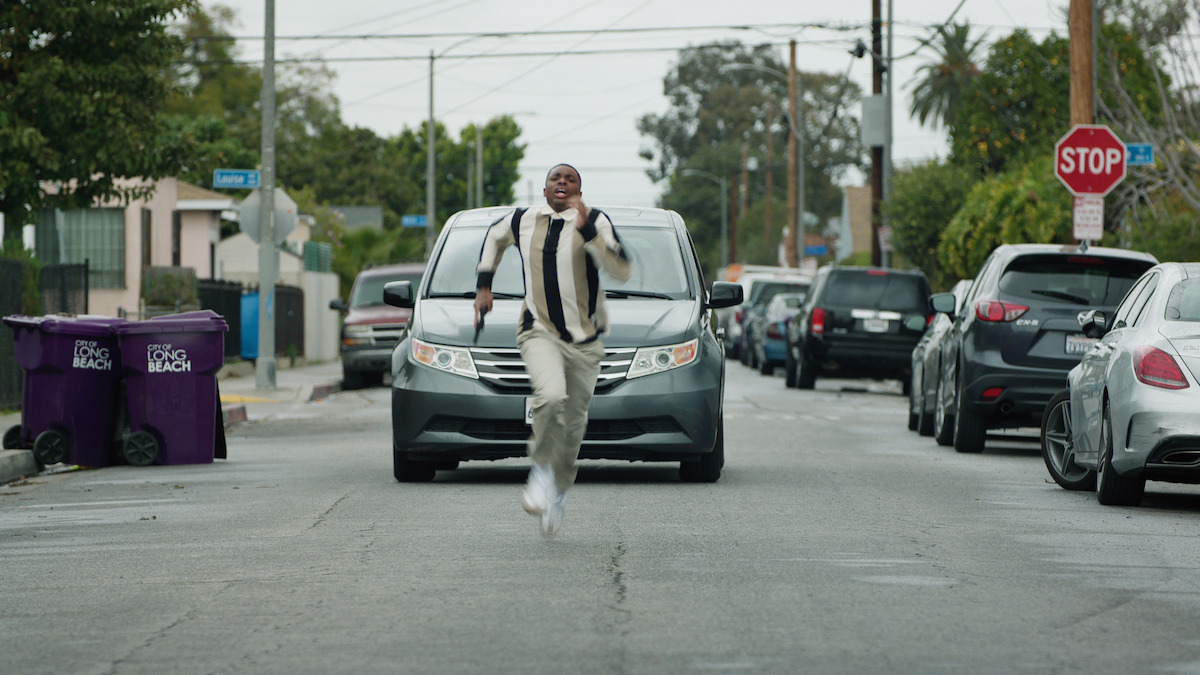
After speaking at a school, Vince encounters a student’s father, a man known as White Boy. Though it’s not explained why, Vince and White Boy clearly have bad blood, and their beef leads to a shoot-out at a run-down mall. After a final gunshot that we hear but don’t see, Vince exits the mall alone, passing the car where White Boy’s son (Idris Keith) is waiting. A news broadcast heard toward the end of the episode references the shooting, reporting a single fatality and “no suspects at this time” — meaning that Vince, who seemingly killed White Boy, is in the clear. For now.
In a post-credits scene, White Boy’s son can be seen at home, fending for himself, watching a commercial for Kapow! Pops, the sugar-free cereal for which Vince was seeking a business loan back in Episode 2. (In Kill Bill, Uma Thurman’s Bride kills Vernita Green, a rival assassin, played by Vivica A. Fox, after Vernita pulls a gun out of a box of Kaboom cereal. The Bride then tells her victim’s child, who bore witness to the murder, “When you grow up, if you still feel raw about it, I’ll be waiting.”)
So, what might be next for Vince, the character? Staples says anything is possible. “There are 365 days in a year, so we’re able to have 365 episodes of this thing[;] anything can happen at any moment in life. Even though a lot of things on the show are surreal, even though a lot of things are crazy, that’s also part of life.”
Watch The Vince Staples Show now on Netflix.