Beauty
How ‘That Girl Lay Lay’ Celebrates the Beauty of Black Hair
Sadie finds herself in knots when Lay Lay ruins her curly locs.
By Destiny Jackson
Jan. 21, 2022
If you’re a Black woman, you know that our hairstyles can change as frequently and effortlessly (well, almost) as an outfit change at a Beyoncé concert. On a whim, we can go from rocking a long silky weave to box braids to a short bob — and then right back to natural hair.
While planning new styles can be fun, it’s often stressful thanks to existing Eurocentric beauty standards. This has been especially true in the workplace, though some progress has been made: In 2019, California became the first state to pass the Crown Act, a hair protection law that is geared towards prohibiting discrimination based on hairstyle and hair texture.
With such abundant discourse about the interwoven threads of Black hair, identity, and self-love, it makes sense that Netflix’s newest teen show, That Girl Lay Lay, would have an episode all about embracing nonconformity and the innate natural beauty of Black hair.
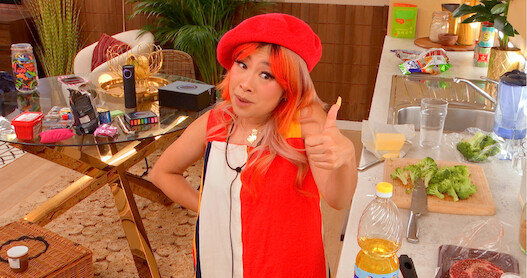
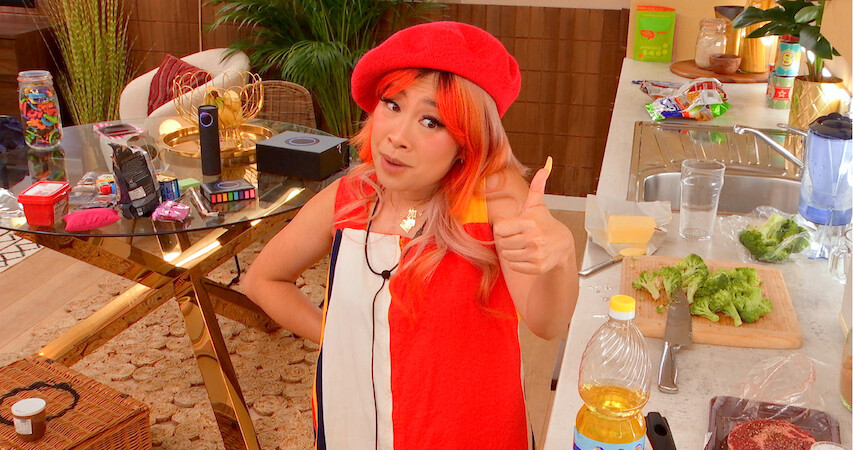
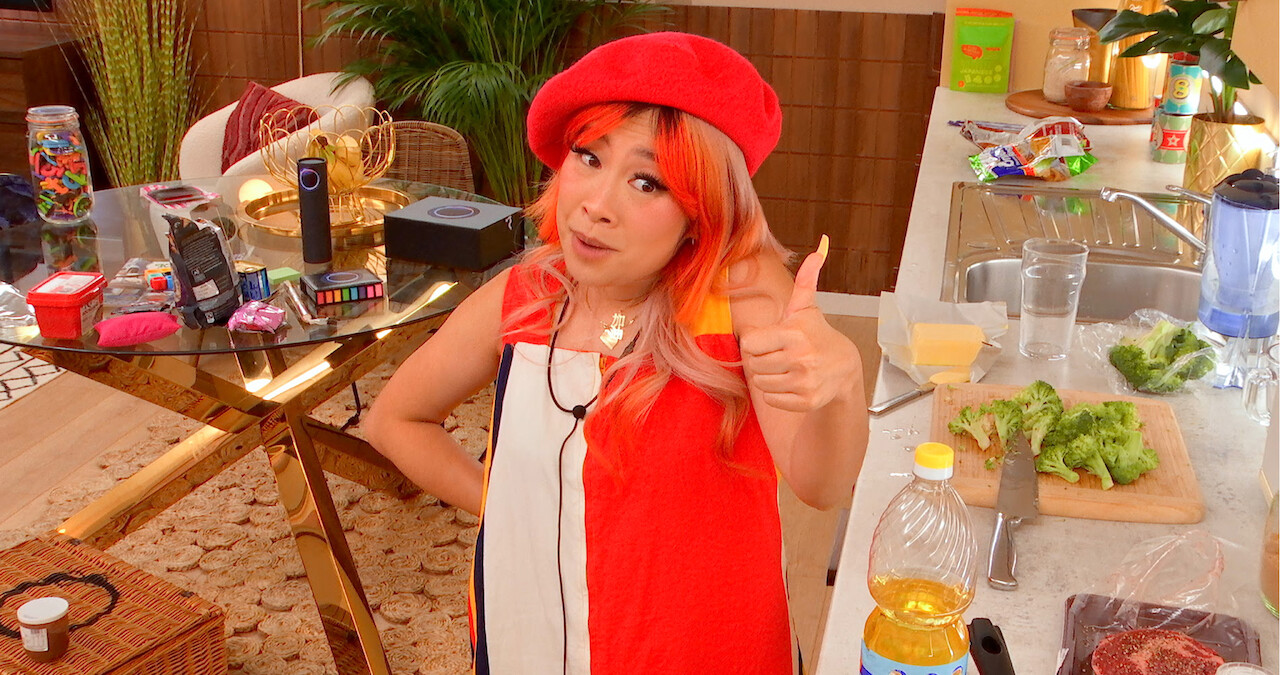
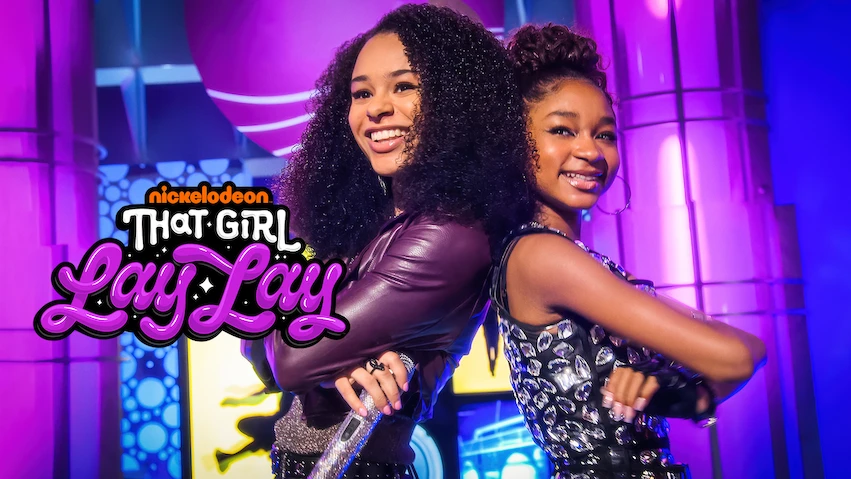
That Girl Lay Lay follows Sadie (Gabrielle Nevaeh Green), a smart but shy teen who wishes upon a star that Lay Lay (Alaya High) — the hype girl from Sadie’s personal affirmation app — actually existed. When Sadie’s wish comes true and Lay Lay comes to life, the two girls help each other navigate the silliness and drama inherent to being teenagers, including navigating what it means to care for and celebrate Black hair.
In Episode 4, “Lay Lay and Sadie’s Big Hair Adventure,” the show tackles the relatable Black woman struggle of misinterpreting our beautiful gravity-defying tresses as a ”bad hair day” and internalizing that as a societal reflection of our self-worth. By doing this in a low-stakes, kid-friendly way, the show introduces audiences to the real-life biases and systemic discrimination surrounding Black hair culture in an uplifting way, and the two girls learn that while your hair might make you stand out, it’s what’s on the inside that counts the most.
In the episode, Lay Lay and Sadie have a prank war that breaks the sacred Black woman hair-maintenance code: “Never mess with a Black woman’s hair.” What happens exactly? Let’s just say that Sadie winds up with hair covered in ketchup, chocolate sauce and glue, and Lay Lay — who, remember, is essentially a computer algorithm — gets a much-needed lesson in Black hair upkeep.
“Doing my hair is a 12-step process that takes 18 hours,” Sadie laments to Lay Lay. But even though the complaint is extremely relatable to anyone with their own natural hair care routine, Lay Lay just doesn’t get it and asks Sadie: “Dang, girl, are we doing your hair or long division?” To which I say, porque no los dos?
Lay Lay, being an app brought to life, has a valid excuse for not having the cultural knowledge that, for example, Black people spend about $473 million a year on hair and beauty products, which is nine times the amount of money that their non-Black counterparts spend. But Sadie really drives the point home by implying that this knowledge is something with which Black women are bestowed at birth, explaining to Lay Lay, “You’re a Black girl, it’s the first rule they give you in the handbook.” There’s nothing quite like a Black woman’s bad hair day to throw things off-balance, and let she who never experienced a bad hair day cast the first hot comb over an open flame.
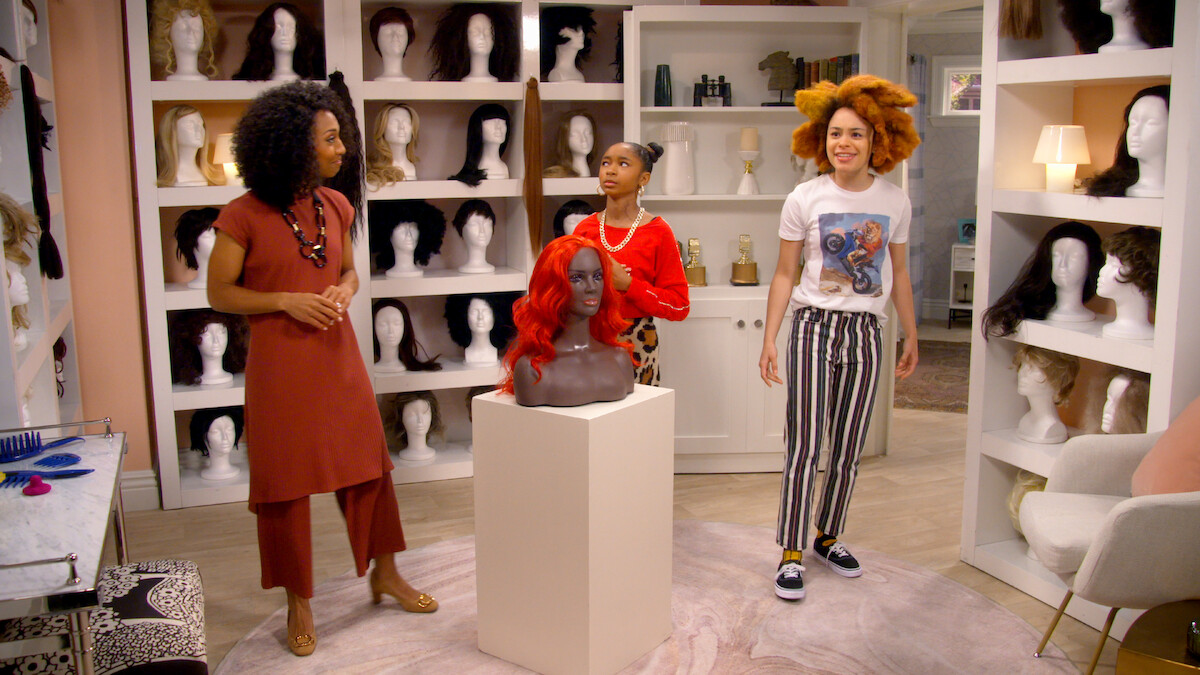
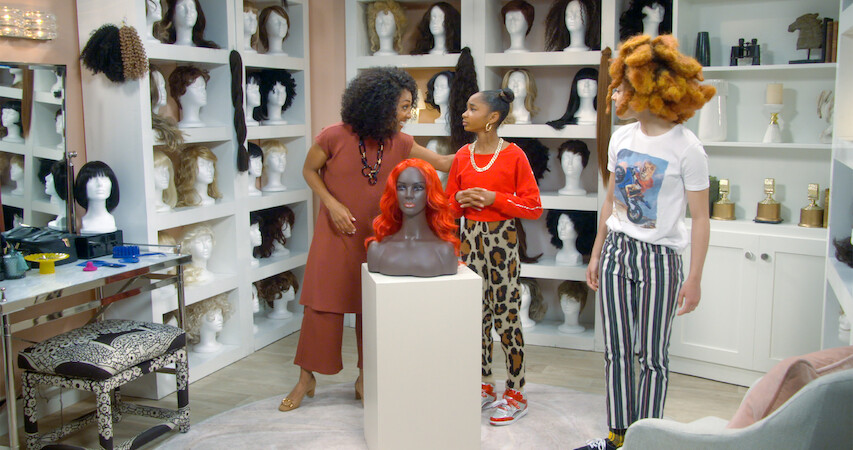
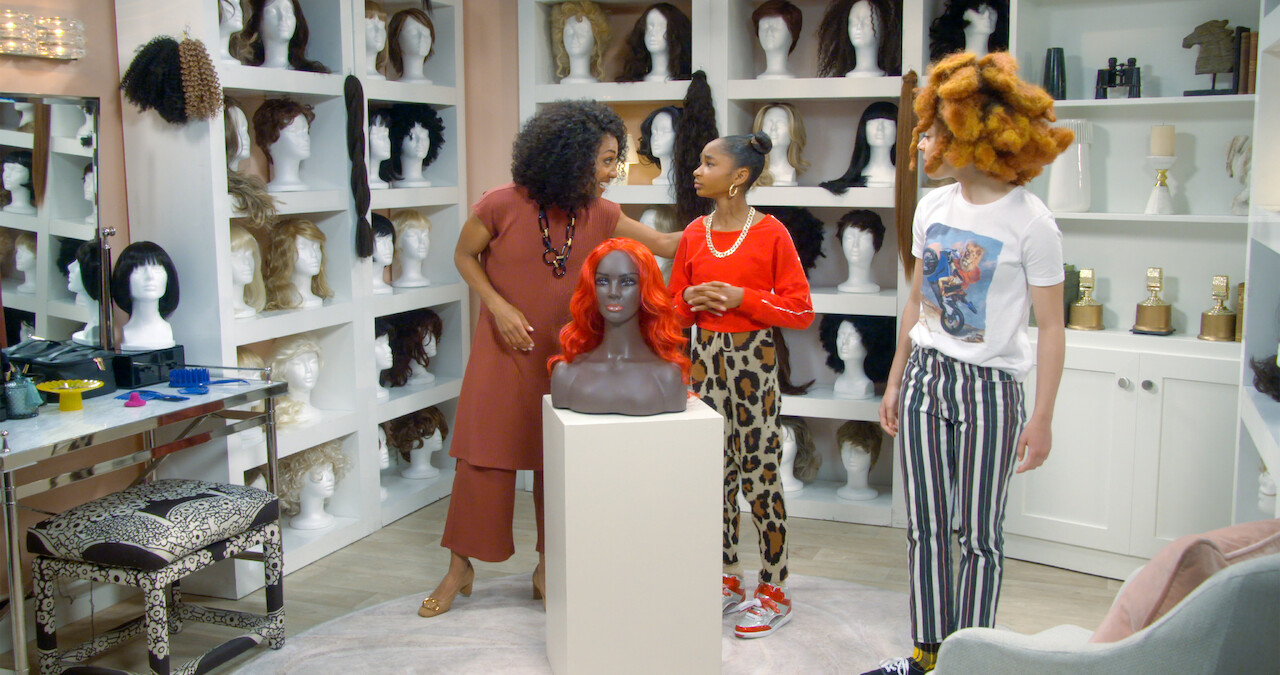
Of course, not all the lessons on Black hair-love come from Sadie — her mom, Trish (Tiffany Daniels), also imparts some wisdom to the girls by revealing her secret closet full of wigs and extensions and explaining all the ways that different hairstyles can empower and inspire self-expression. Sadie and Lay Lay learn the lesson quickly, with Sadie choosing a long black wig that allows her to do an impressively spot-on impression of rap superstar Cardi B. Full of confidence already, Lay Lay opts for a sandy blonde wig that exudes sophistication.
Wearing those wigs and armed with newfound swagger, the girls head out for a night at a concert, where they get one final lesson about self-love and hair joy. After being turned away from the VIP section, Sadie decides to take off the wig and wear her natural afro. In solidarity, Lay Lay also removes her wig and tousles her own hair, and the two are quickly rewarded for their embrace of their unique hairdos by being invited on stage. In this happy ending lies an important message for young Black girls watching the show, who are still in the process of learning how to accept their own curl pattern, even when they feel judged by the world around them. And it’s not just a lesson that young Black girls can use — all of us can stand to be reminded once in a while just where our self-worth really exists.
After all, as Lay Lay says: “There’s no such thing as bad hair. It’s a big part of you, but never all of you. What really matters is what you have inside of you.”