Anniversaries
Netflix’s first series Turns 10! (No, It Wasn’t House of Cards)
Lilyhammer star Steven Van Zandt shares a blizzard of secrets from the pioneering show.
Feb. 8, 2022
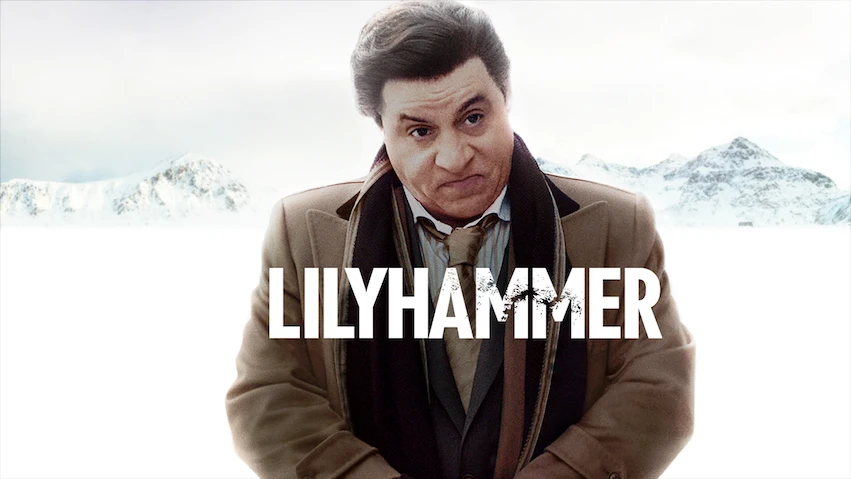
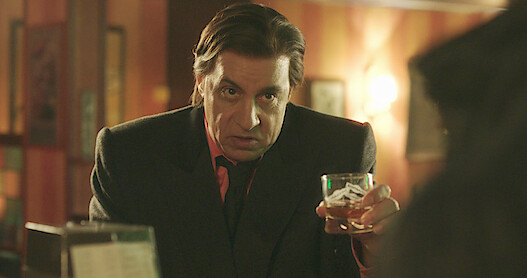
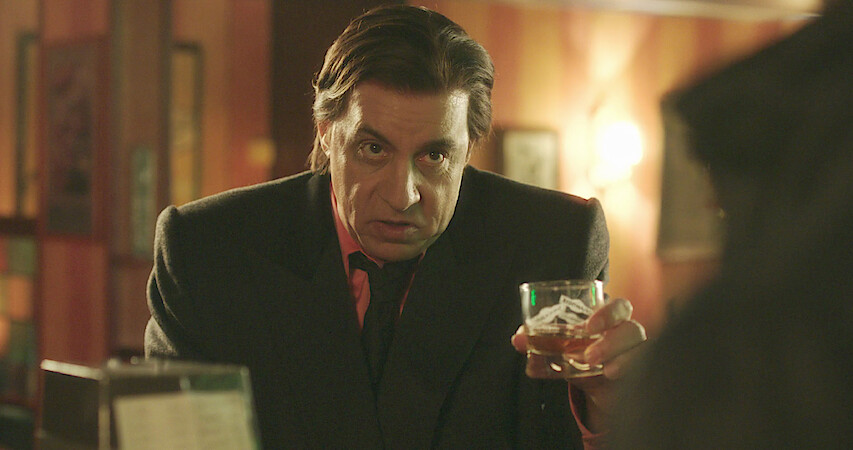
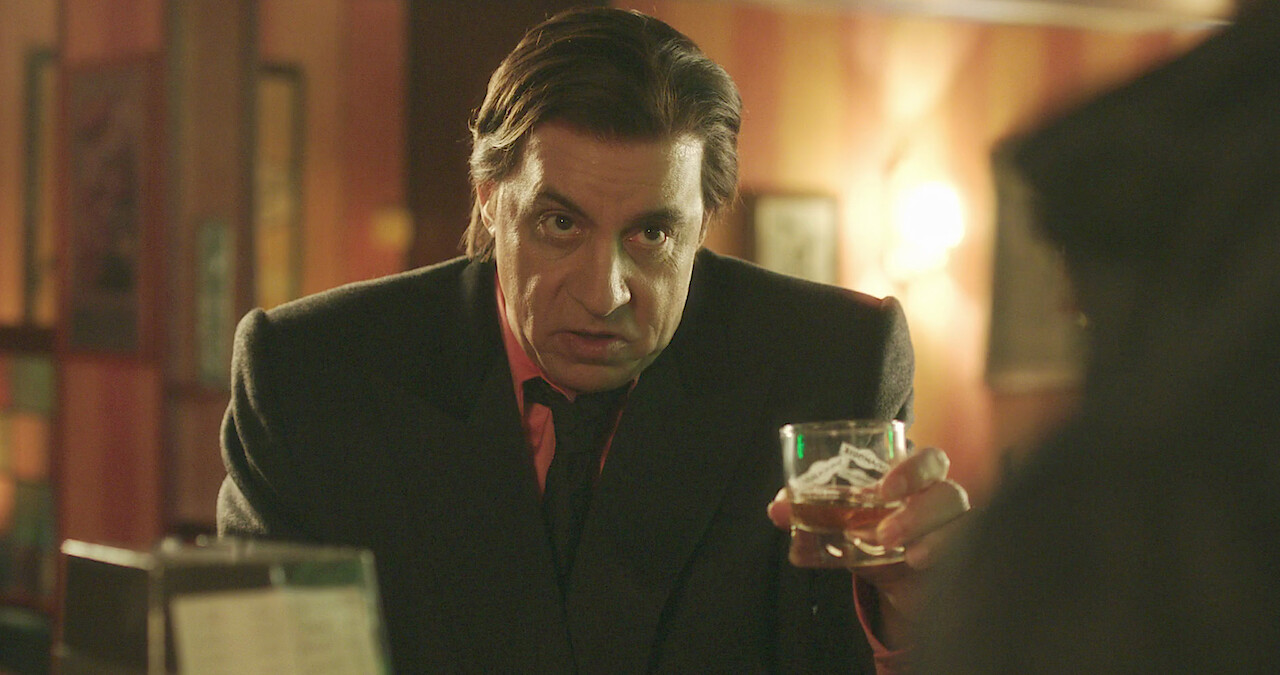
A decade ago, on Feb. 6, 2012, Netflix debuted its very first original series: Lilyhammer, a fish-out-of-water dramedy starring The Sopranos vet Steven Van Zandt as a New York mobster who relocates to Lillehammer, Norway, after giving up some sensitive information and joining the witness protection program.
The fact that the show got made at all is “quite miraculous, really,” star/producer/co-writer/music supervisor/composer Van Zandt, 71, tells Tudum on the eve of the show’s anniversary. A co-production with Norway’s public broadcaster NRK1, Lilyhammer was developed by Norwegian comedy writers Anne Bjørnstad and Eilif Skodvin as a project specifically for the longtime E Street Band member, whom they’d enjoyed watching as club owner/consigliere Silvio Dante on The Sopranos for nearly a decade.
On Lilyhammer, Van Zandt stars as Frank “The Fixer” Tagliano, who enters witness protection and chooses Lillehammer as his new home — because he remembered watching the 1994 Winter Olympics and thinking it seemed like a beautiful town. In his new life, he takes the name Giovanni “Johnny” Henriksen, the American-born son of a Norwegian father who decides to get in touch with his roots. Throughout the series’ three seasons, Johnny grows to love Norway, eventually understanding the language, even though he primarily communicates in English (which most Norwegians also speak).
Below, Van Zandt recounts the atypical route Lilyhammer took to the small screen and reveals whether he’s kept up with his Norwegian after the show wrapped in December 2014.
How did you get involved with Lilyhammer in the first place?
Let’s see. Where does it begin? I was mixing a record in Bergen, Norway, which is on the west coast. I was producing a band from my label, and I was told, “There's a couple in the lobby here to say hello.” I go down, and it’s a husband and wife, Eilif Skodvin and Anne Bjørnstad, and they say, “Hello, we are comedy writers in Norway, and we wrote a TV show for you.”
Now, you don’t hear that every day, all right? I mean, it’s a nice thing for the ego, if nothing else. I said, “Okay, what's the pitch?” and they gave me the one-sentence pitch, which was, “A gangster goes in the witness protection program and chooses Lillehammer, Norway.” So I was like, “Oh, man, anything but that. I just played a gangster for 10 years, and I really shouldn't do that again,” but I kept thinking about it.
They said, “Well, we really want you involved because we want you to be one of the producers, one of the writers, the music... ” The more I thought about it, I’m like, “Well, as an actor, you’re really supposed to be doing different things, but, on the other hand, what I'm mostly concerned with is doing good and interesting work,” and I thought, “There will never be anything more interesting than starring in a foreign country’s local show.”
We spent a year or so writing it and figuring out how much English there should be in it. Okay, the premise is going to be that my character understands Norwegian but doesn't speak it, which happens there because Norwegian is like Klingon. [We also talked about] how funny it should be because I didn't want to do a straight-ahead comedy. I said “I can't make fun of these guys and live in New York City.” You can do it and live in Norway maybe, where there’s no crime, which is part of the whole premise. So, I said, “It has to be a drama. It has to have some dramatic moments, and I don’t want anybody to try to be funny. I want the humor to come from circumstance, from character, but the premise is funny enough.”
After you started filming, you realized you didn’t have enough funding to make the show you had written. What happened next?
It just so happens that this new place called Netflix was across the street, very close. So, we went over there. I just said, “Hi, it’s Steven Van Zandt. Can I talk to Ted [Sarandos] just a minute?” and he gets right on the phone, which was already terrific. I said, “Ted, are you looking for content?” He says, "”Yeah, we’re just starting to make content.” I said, “Well, I think I got something.” He says, “Come on in.” So, I show him the trailer. He’s like, “This is great! This is perfect. I want it.”
I'm like, "Damn, I'm having a good day. Going to the racetrack after this." I almost tried to talk him out of it a little bit. I'm like, "Ted, not for nothing, but you want your first show to have subtitles? I mean, will the American audience buy the premise of this guy speaking English — and will the one guy speaking English be enough to keep people in?” It turns out it did work that way. It was just a wild idea from these two geniuses over there that just kind of worked.
Since then, the entire television industry has changed. But it started with Lilyhammer, right?
My first promotional tour, I had to explain to the people what Netflix was. I'm like, "Well, it's like Blockbuster, but they're going to make their own content.” Everybody thought, “Well, why would they do that?” Nobody quite knew what to make of it.
It was a brand new idea. We had a hilarious moment when [Sarandos] explained to me the whole binging concept. He says, "We're going to put all the shows up at once." I was like, "What do you mean? Geez, Ted! You work on a show for a year. You do all this work and people are going to watch the whole thing at once?" He says, "Oh, you mean it's like a record album?" I'm like, "You son of a bitch! You're totally right.” Damn it!
Speaking of music, at the time this show premiered, you had come off The Sopranos, so a lot of people knew you from that, but is music still your main pursuit?
It got to be about half-and-half.
You did all the music for the show, so how were you able to balance writing, producing, fundraising, being in nearly every scene and also doing the music?
By the way, touring at the same time.
Oh, yes. Just a couple of club gigs, I'm assuming.
It's funny. It was a little easier with The Sopranos because David Chase was just being very accommodating, and, even though my part would've been bigger had I not been touring, he did put my scenes on days off of the tour, scheduled it that way. Now I'm starring in the show, so I couldn't do that, and I missed one month of one tour and one month of another, but in 14 years of filming TV shows and touring the entire time, I only missed two months, so not bad, not bad.
[As for the Lilyhammer music,] there were a lot of challenges. I ran into different sensibilities over there, which was natural. They were not used to the concept of licensing music, and I remember walking into a scene one day, and the guy started improvising, singing “Tears From Heaven,” some No. 1 record, and I'm like, "Stop! Cut! What are you doing? Why? You're singing a $250,000 license. You can't do that!” But I had all my friends help out with the budget. I got the best songs. Everybody was really, really helpful, and it was fun. I got to do the score also, which was fun. I always wanted to do that.
One thing that does come across is the combination of the American and the Norwegian culture, especially how they were interpreting this American mob guy stereotype, and you were able to give your own input. It sounds like you got to collaborate.
Yeah, that was the idea. I mean the concept was, as the show went on, my character would become more Norwegian and everybody else would become more American. If you watch the 24 episodes, you can see it developing that way and why it could have gone forever. It’s one of those shows that was so unique, and we could just make up everything we wanted to make up. I mean, no one knew a thing about Norway, which was really helpful.
I mean, literally, people think of Norway as a city in Sweden, and you can't name one product, you can't name one celebrity. It’s just an odd place. It's a very, very interesting, endlessly fascinating culture. It was just fun to drop in a one-man crime wave into a place where there's no crime.
How's your Norwegian now? How was it then? Did you understand a little bit?
Absolutely not. I know the same two words that I knew my first week.
You were able to spotlight a lot of local Norwegian locations.
I made a point to make sure that Norway was one of the characters in the show, and that's why I filmed in January, where you get six, eight feet of snow in Lillehammer. At a certain point, they stop shoveling and they start steamrolling it because there's no place to put it. The roads just get higher.
I think the show got three times as big during the quarantine. The Sopranos was rediscovered, but Lilyhammer, I think, was discovered for the first time. I get a lot of wonderful reactions. It blows everybody's mind when they see it because there's just nothing like it. It was just a perfect show to start off Netflix because I think it is truly an international show.
Have you been back to Norway since you wrapped?
Yeah, I've been back a couple times.
We were a pretty good-kept secret there for a minute. There was no promotion in place yet. It was all very new. It takes a minute for people to discover things. And just discovering Netflix by itself was a challenge at that time, as opposed to now. Every single day, I get another thing on Twitter saying, "Where has this show been?" I'm like, "Oh, yeah. It's been there."
It’s a fun accomplishment to be able to point to.
Yeah, it is. I'm very, very proud of it. Like I said, just to be able to show that great talent, the great Norwegian actors, the great crews, the directors, the writers. I mean, no one's ever done that. Every single thing gets remade, and I was just very proud to be able to show the real thing, show the original Norwegian talent and show how cool it is when the government supports the arts. So, let's learn from that.
This interview has been condensed and edited for clarity.