Netflix
Explainer
Rewilding Explained, and Why We Should Let Nature Do Its Thing
Our Great National Parks gets up close and personal with rewilding.
By Aramide Tinubu
May 13, 2024
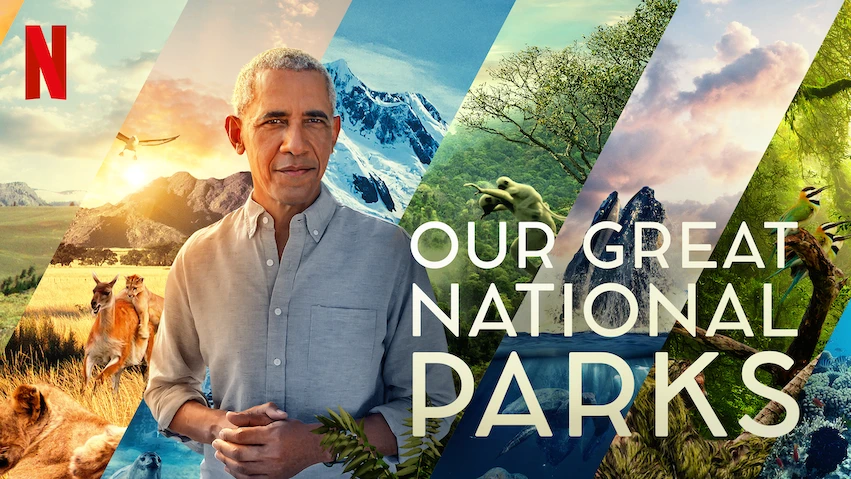
The majestic nature and gorgeous animals on display in the series Our Great National Parks, narrated by President Barack Obama, highlights the spaces and corners of this vast world that are still lushly wild and hold the secrets to our health, our wellness and the longevity of humanity. Some of this is the result of rewilding.
To get a better understanding of rewilding and what it means in our ever changing climate, Tudum spoke with Caleb McClennen, vice president of the Wildlife Conservation Society’s Global Conservation Program.
At its core, rewilding is about restoring what’s been lost. The Canadian Wildlife Confederation explains it as “restoring an area of land to its natural state and possibly reintroducing species that had been driven out or exterminated.”
To break things down further, rewilding introduces specific species — predators or dominant carnivore species like wolves — so that they can help restore the ecosystem of wild spaces. “The bottom line is that rewilding is letting land and sometimes sea, but really mostly land, go back to a constantly changing wild state,” McClennen tells Tudum. “And the idea here is that so much has been lost on our planet. There’s still these amazing places left, but they’re dwindling. About three-quarters of land has been lost. Two-thirds of the ocean has been lost. The idea of rewilding is really on the vanguard of conservation, which is that we should obviously protect what’s left, but what can we do to bring back areas that used to be under some form of economic production, like farming or forestry? It’s not just bringing the land back and having it be returned to nature, but also, what are the species that are missing that they used to be there? These tend to be top predators, larger herbivores, like bison — carnivores like the big cats, puma, jaguar, lions, tigers.”
He adds, “Rewilding is both a combination of returning land to nature, but then also intentionally allowing for species to recover. And sometimes that means even introducing the species back into the landscape once you’re sure that landscape is not going to be under threat anymore.”
While conservation focuses on preserving our current species and habitats, rewilding is about restoring what has already been wiped away. “One of the most important things is to scientifically know what is the future habitat that can be [placed] there,” McClennen says. “And you can learn a lot from the past, but also climate change is happening. So maybe the future ecosystem that’s going to be rehabilitated will be a little different than what was there in the past. Ecological modeling and understanding what the land will look like and what it can support in the future as it comes back. There’s actually a stream within rewilding which is if a species is no longer available, maybe it’s locally extinct; you might introduce them from another part of the country or another part of their region where they’re thriving. Or even from a conservation center, like a zoo or an aquarium, where you’ve had a breeding program so you can repopulate those species back into the wild. But you have to do an incredible amount of science to make sure that the place you can repopulate them is a place where they’ll thrive.”
There is more than one version of rewilding. Typically, when discussing this type of conservation strategy, three different types of rewilding come to mind: Pleistocene, passive and translocation.
The Pleistocene refers to the Ice Age. During this era, massive animals like the woolly mammoth, categorized as megafauna, became extinct. Pleistocene rewilding suggests that scientists should introduce the descendants of the megafauna into the wild, which may reset the original ecological process of nature. However, some scientists believe that looking back to 12,000 B.C. might be a step too far.
Passive rewilding is perhaps the most simplistic and hands-off approach. It essentially asks that humans step away from land we’ve previously cultivated and allow nature to do its thing.
Finally, translocation rewilding is perhaps the most hands-on approach. It requires scientists to introduce specific species into areas where they have become or are about to become extinct. This practice is currently taking place in the Chilean Patagonia National Park, in partnership with Tompkins Conservation.
“There are different phases,” McClennen explains. “One is you could think about rewilding your land, land that has otherwise been for an economic pursuit like agriculture or forestry, and you’re letting it go back to the wild. The second phase of that is targeted restoration. Some people get confused between restoration and rewilding. Restoration is a very specific project going toward bringing back a specific area to a specific place and time. Not really allowing it at a broad scale to adapt to the future. So you might have some targeted restoration within that returns lands to the wild, if an ecosystem has been really out of whack. Then you begin the discussion about species and a lot of this you can passively rewild, which is just protect that land, reduce the threats that were there. We think of it as trophic rewilding, which is bringing back a lot of the high trophic-level species, those large-bodied ungulates or carnivores as well and predators who had been extricated from a lot of the planet.”
The second episode of Our Great National Parks takes place in Chilean Patagonia, home to 24 unique national parks. It is, at present, one of the most protected places on the globe. Thanks to rewilding efforts, it’s also home to the largest population of pumas, the top predator in the ecosystem, in the country.
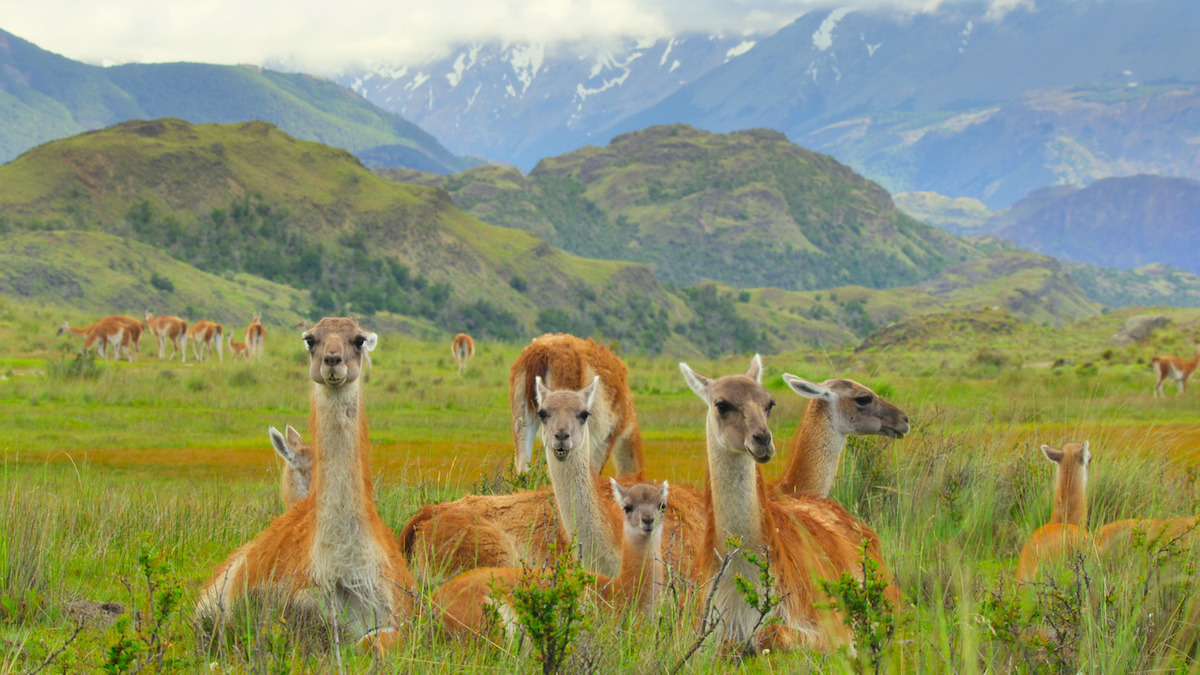
Tompkins Conservation’s rewilding program in Chile has worked to re-establish previously lost interactions and relationships. The scientists at this park, including Director of Rewilding for Tompkins Conservation Cristián Saucedo, have focused on the pumas by introducing guanacos — ancestors of the llama — as prey. They’ve also recently begun reintroducing rhea, a South American ostrich, to the ecosystem to curtail local extinction.
Like the pumas of Patagonia, there have been other rewilding success stories across the globe — namely, the gray wolves at Yellowstone National Park. By the 1920s, wolves had been wiped out of Yellowstone through overhunting. With no wolves, the population of elk deer exploded, thus eroding the soil and vegetation.
In 1995, scientists decided to introduce eight Canadian wolves to the park. After a couple of false starts where the alpha male returned to Canada, one pregnant female wolf remained. Ultimately, she gave birth to eight pups. Today, approximately 100 wolves roam Yellowstone, descendants of that original pack. The wolves have kept the elk deer population at bay, which has allowed the valleys to replenish themselves.
The benefits of rewilding extend well beyond improvements for animals. “It’s quite clear now that healthy ecosystems and well-protected, well-managed, well-conserved ecosystems have a tremendous benefit for people for their personal health, be it water quality, air quality, even be it some sort of level of small-scale sustainable take in the case of fisheries, as well as economic well-being,” McClennen says. “We’re seeing increased evidence around the world of where we’re effectively protecting and conserving nature, and local economies and local populations are doing better as a result.”
Rewilding is not guaranteed to work. For example, it took several tries for gray wolves to resettle in Yellowstone.
“On the carnivore side, in terms of potential herds that are adjacent to areas that are being rewilded, just like successful conservation, you do have a potential human-wildlife conflict,” McClennen explains of another issue. “I would say it’s not a downside. It’s an aspect of successful conservation that just has to be taken seriously and managed. So be it repayment schemes or types of technology that can keep wildlife and domestic livestock from intersecting each other, [we use] any type of different agreed-upon mechanisms to try to reduce that. On the other side, there is a part of rewilding that is dealing with altering genetics and bringing species back from extinction. There are some ethical questions people have about that, and that enters a whole other discussion, but that’s, right now, a relatively small part of the field.”
Though scientists lead rewilding efforts, we can all make an effort to preserve and protect the planet. “Humanity is increasingly urbanizing,” McClennen says. “As we move into cities as a planet, how do we think about returning some of that land to nature or allowing nature and wildlife to coexist? We’re seeing, particularly through COVID, a booming of parks in cities. And we wouldn’t talk about bringing the large carnivores back there, but there are projects on reducing dams and rivers so river herring can go up and down and beavers can come and recover right in New York City in the Bronx River. That’s Pleistocene right in an urban setting, and the enjoyment of that river by the community as it cleans up and as it rewilds is amazing.”
To learn more, visit WildForAll.org.
This interview has been edited for length and clarity.