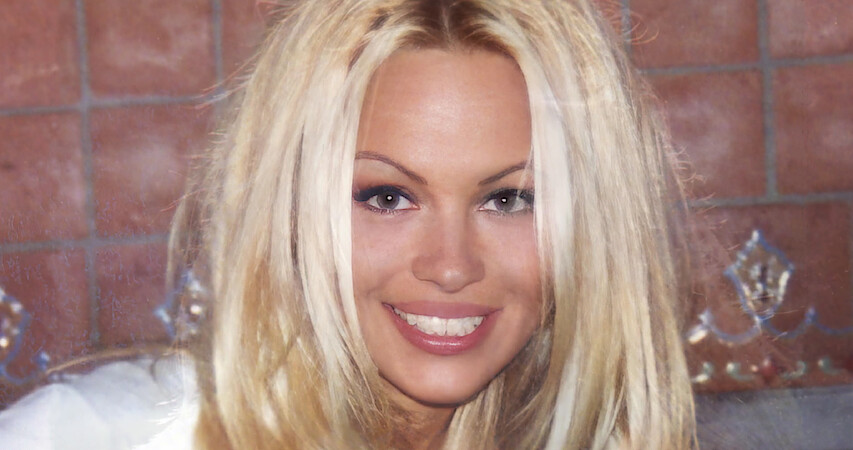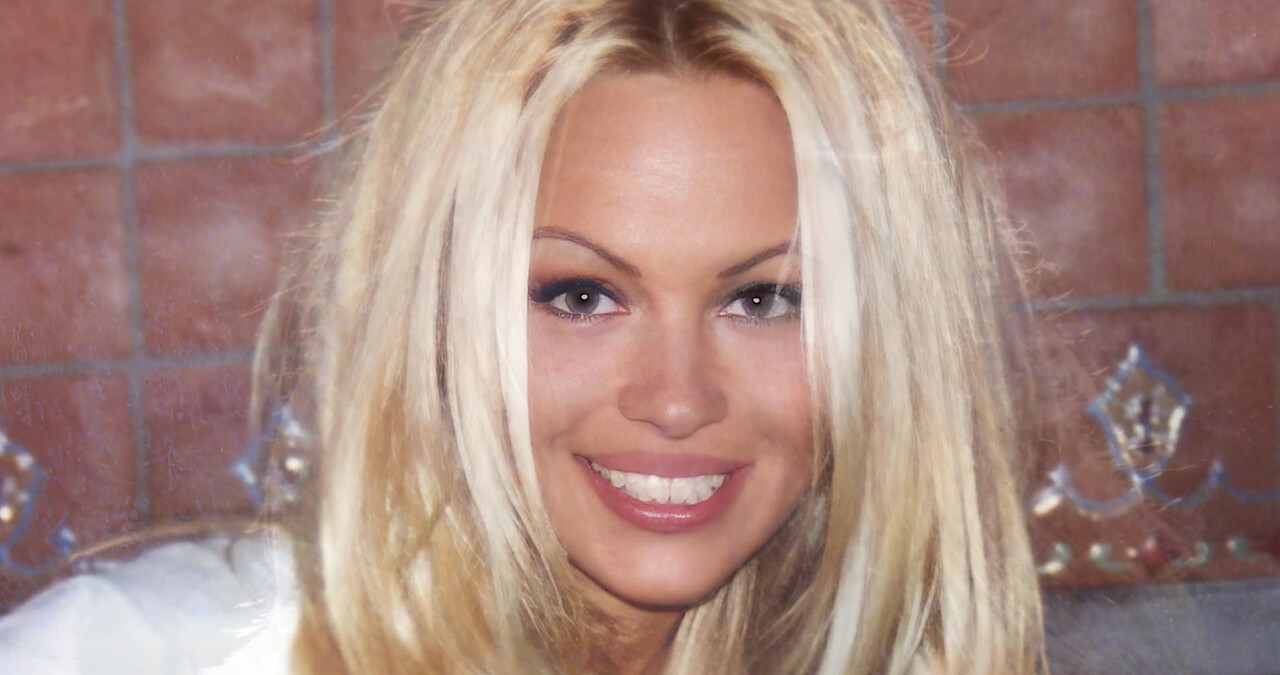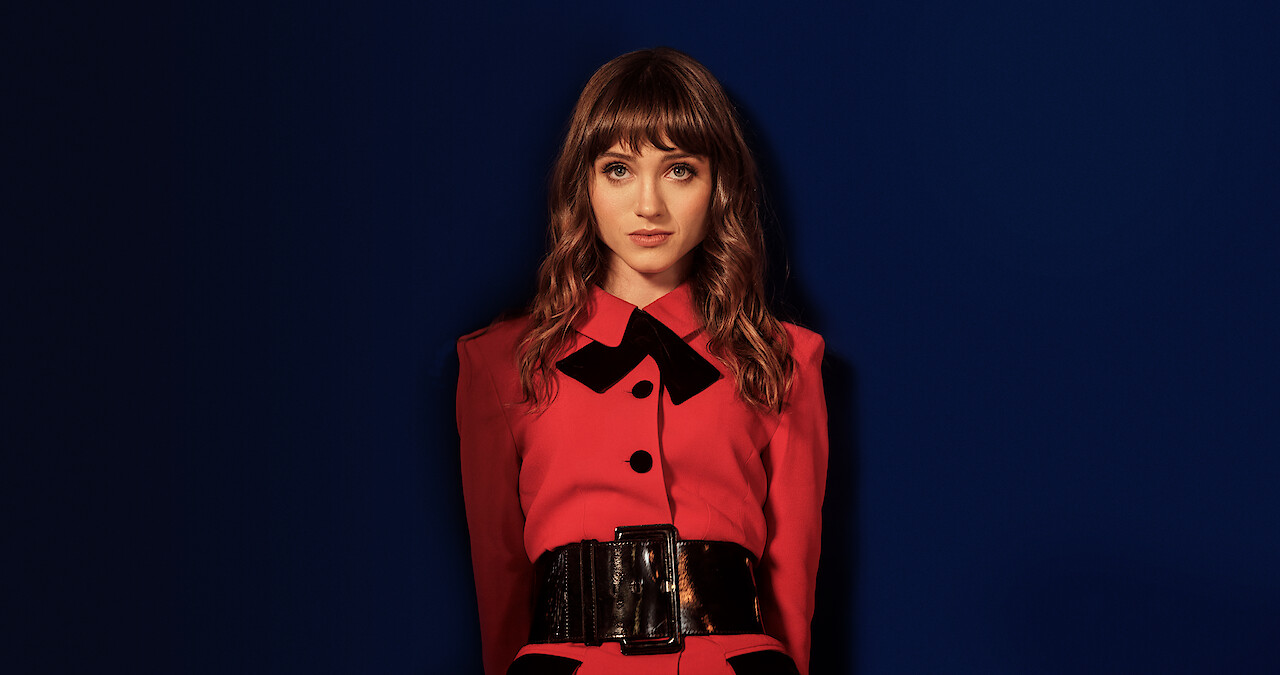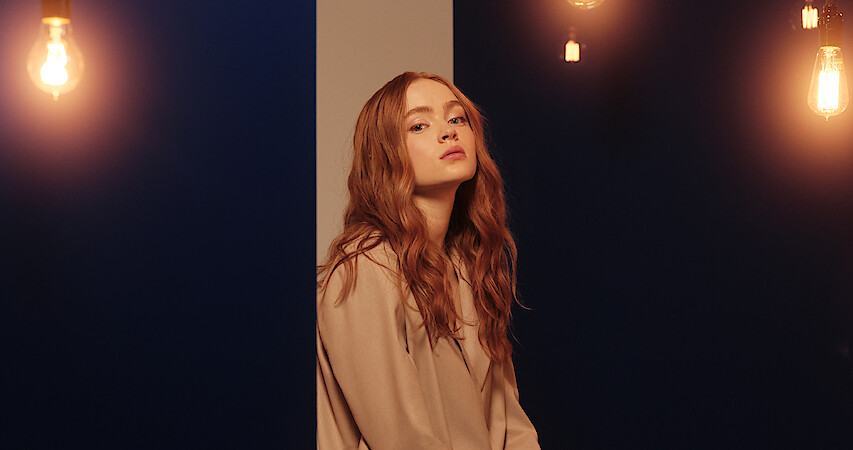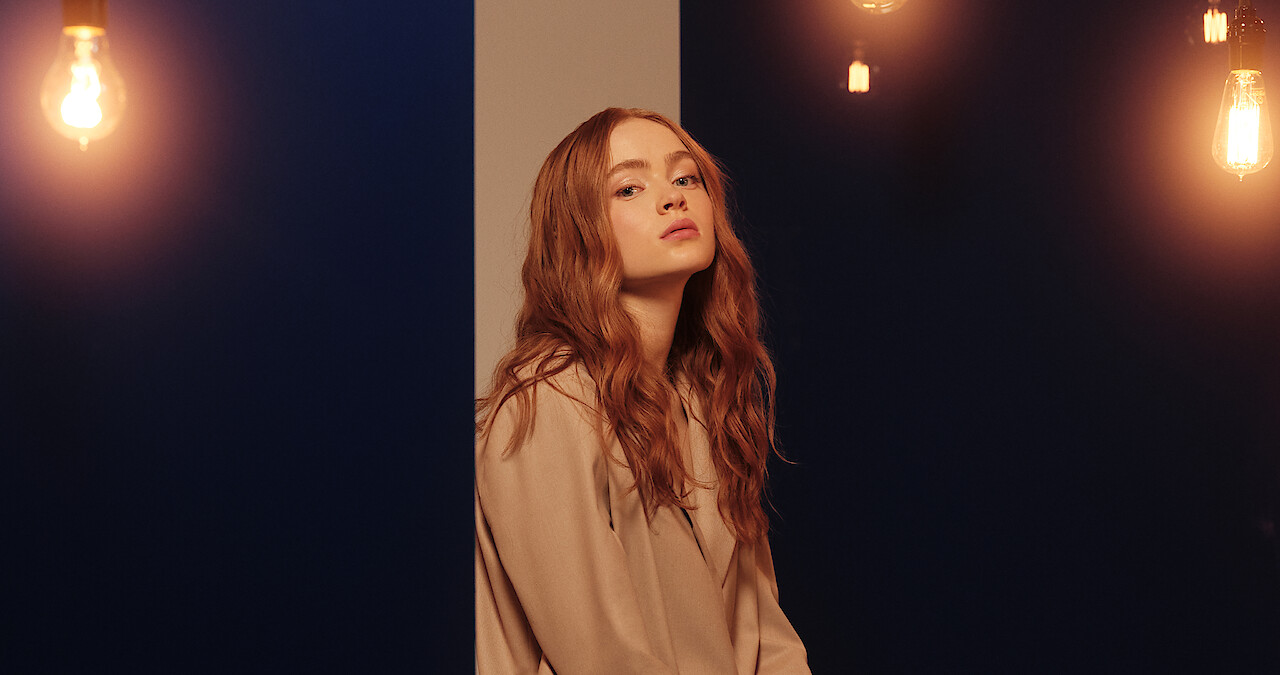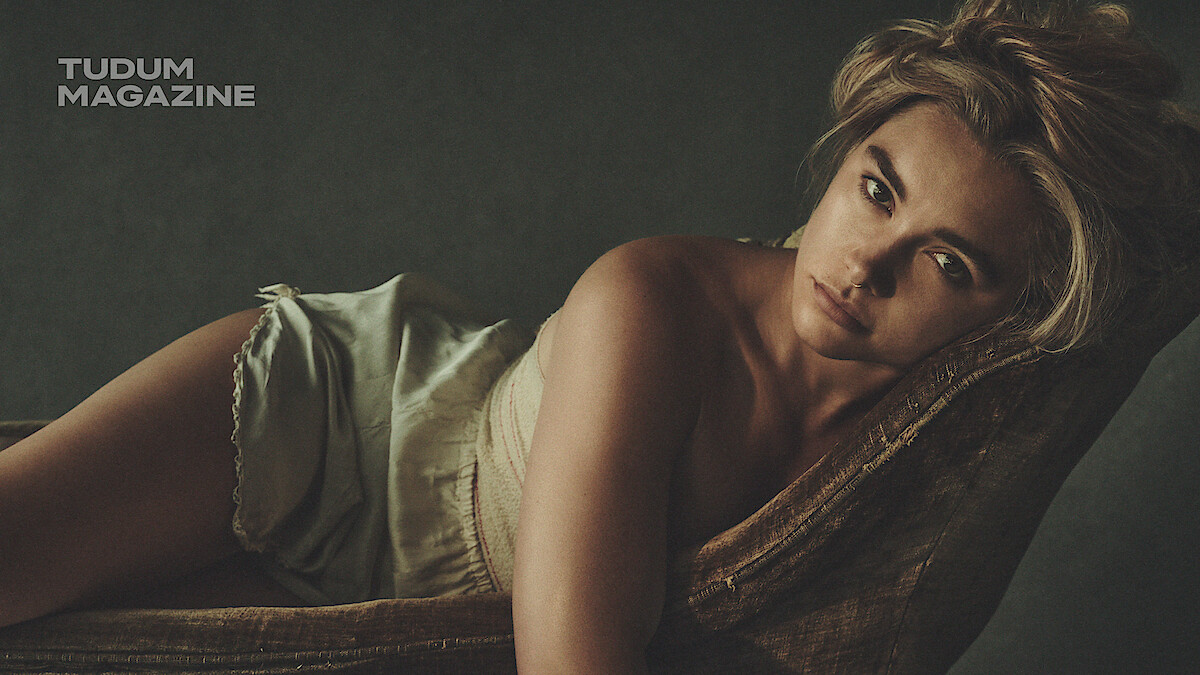
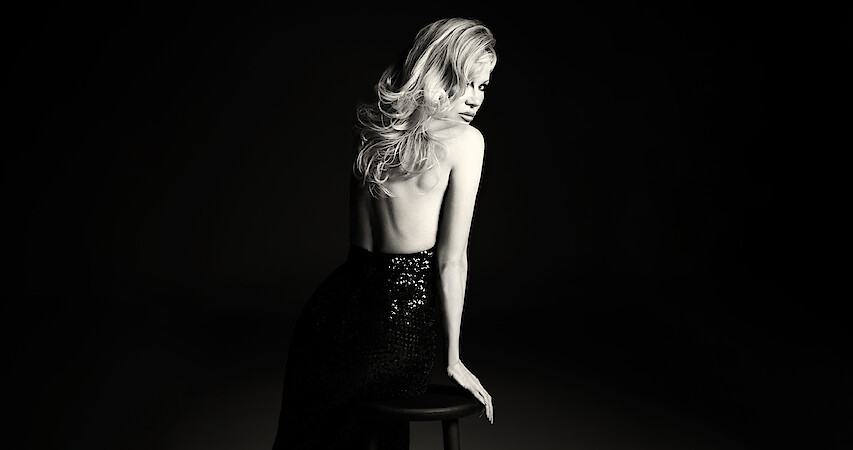
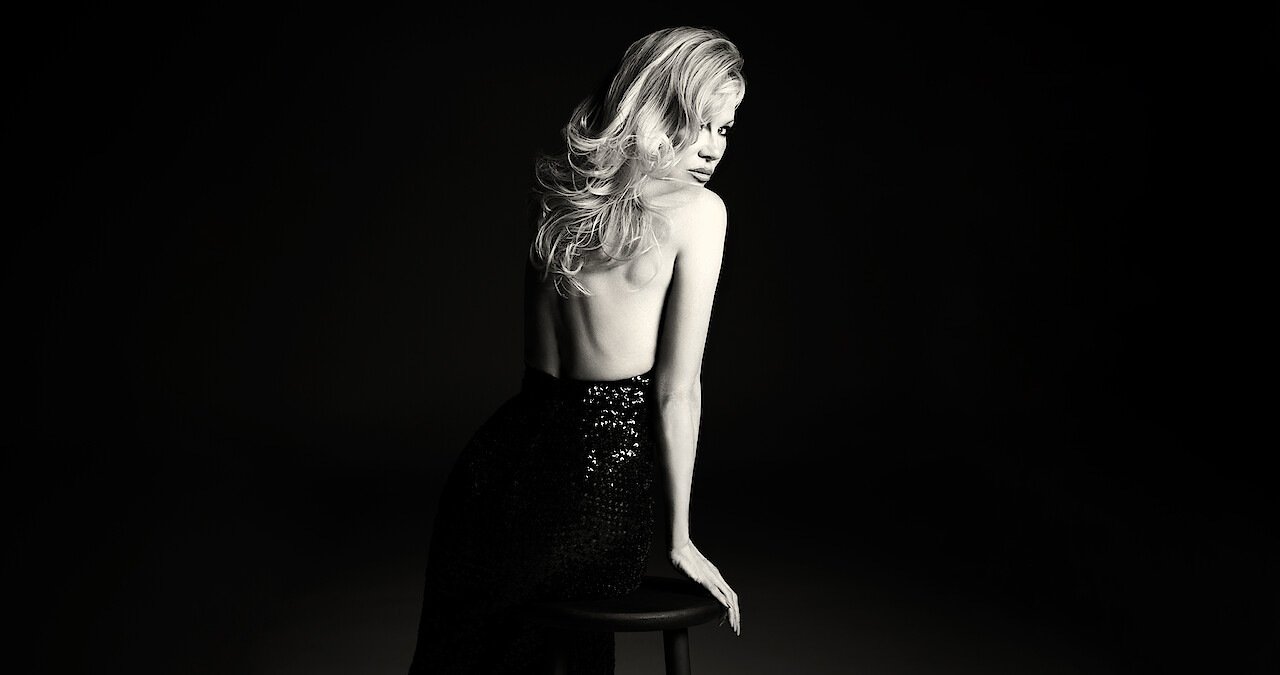
Photograph by Jason Bell
Up Close
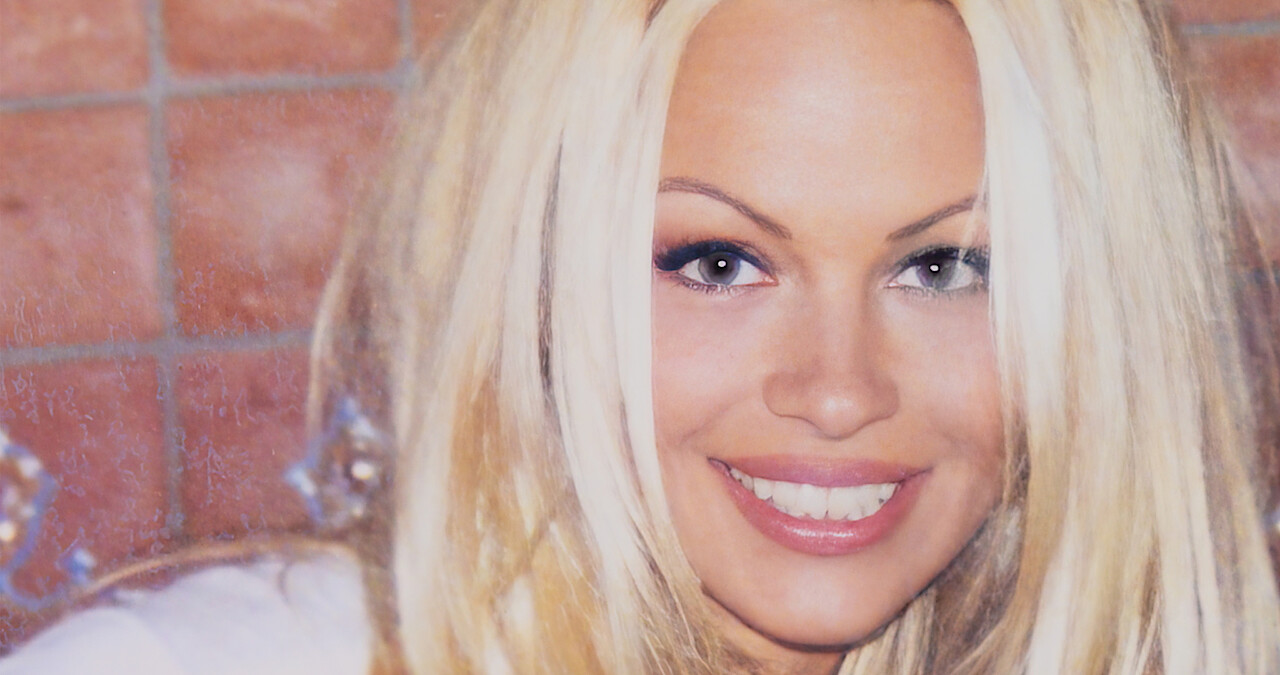
Pamela Anderson Knows How To Tell a Love Story
In her new doc, Anderson excavates her life and (many) loves: “It's like open-heart surgery in public.”
Jan. 31, 2023
The first time we see Pamela Anderson in Pamela, a love story, she’s preparing to watch a love story of her own. Hunting through a stack of VHS tapes, she lands on one labeled “When Pammy Met Tommy.” She sits down in front of an old Toshiba, pops in the tape and takes a trip into her past, a larger-than-life romance complete with a knight in shining armor and a cozy gondola ride down a Venetian canal.
“When I saw those videos, I got so emotional because I thought, ‘That was it. That was my time to really be in love,’” Anderson says in the film. “Right now, it feels almost like I’m looking for something, and I don’t really know where I’m going to go next… I’m looking for a feeling I can’t find.”
Anderson is talking about love, a topic those with a superficial level of insight into her life might find surprising. After all, she’s been married five times, she’s one of the world’s best known sex symbols and her public life has been largely served up by the media as one of smut, scandal and unseriousness. It’s only when one goes beyond the surface that you realize that love — massive, grand, extraordinary love — is the main theme of Anderson’s life, and of her favorite stories. Her most beloved films include classics like Fellini’s La Dolce Vita (“The film is pure eye candy — bombshell movie star Anita Ekberg is wild, uninhibited, sensual… I wanted to be her every day,” she tells Tudum); Jean-Luc Godard’s Breathless (“I wish I could have worked with him, I dreamed that I could be [Jean] Seberg, or Brigitte Bardot in Contempt”) and Jean-Pierre Jeunet’s Amélie (“It’s the sweetest romantic story, full of innocence, comedy and imagination. I love everything about it… it feels like me, and how I survived”).
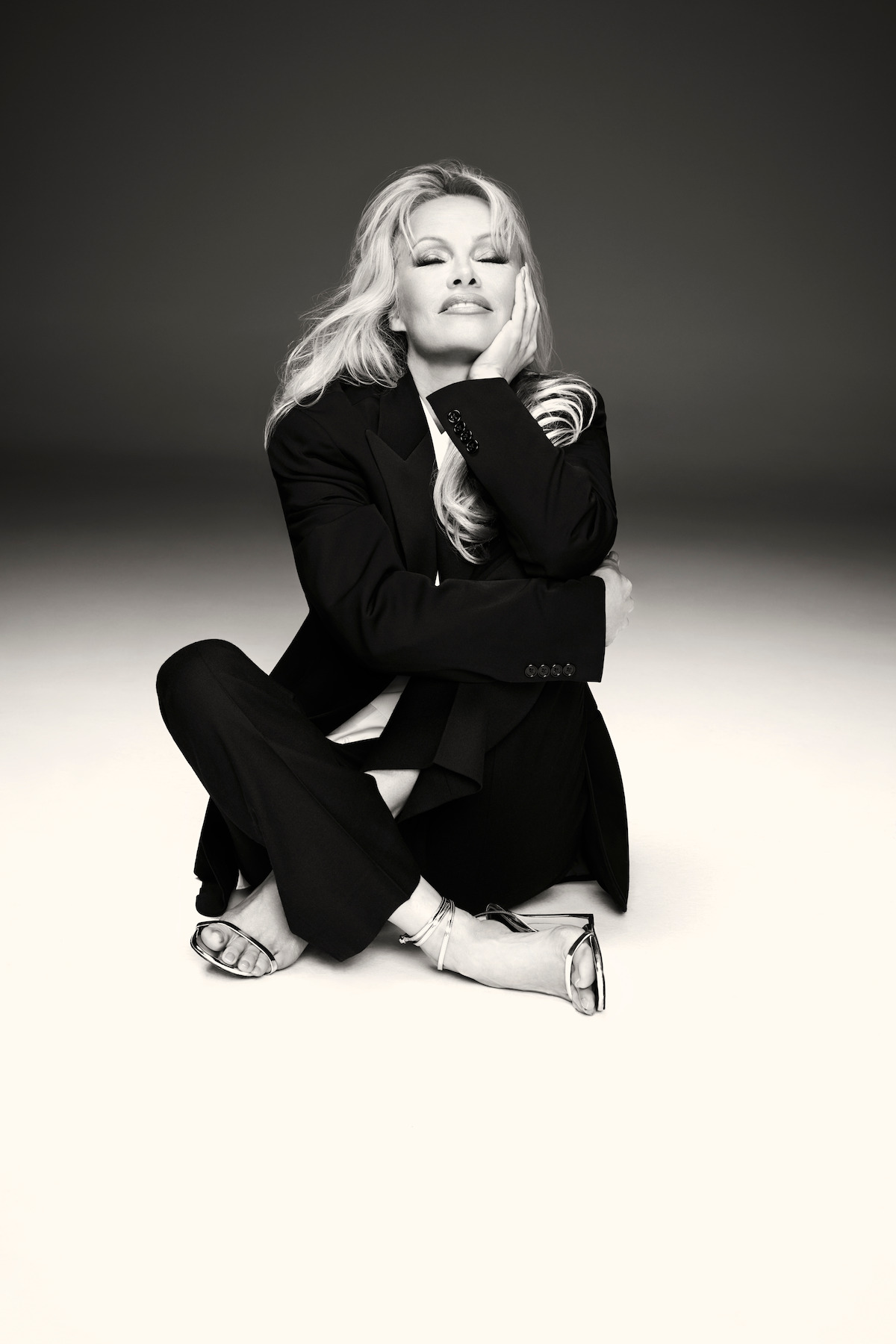
Anderson also sees her own life as one led, defined and shaped by her obsessive pursuit of love. As Pamela, a love story unfolds, Anderson explores her love affairs with thoughtfulness and perspective. Despite the pain and heartbreak, she reflects on her own love stories with fondness and often pushes herself well beyond the highs and lows of the classic windswept romance.
“You have to be brave to be in love,” she tells Tudum. “And brave enough to leave and not tolerate unhappiness or cruelty.”
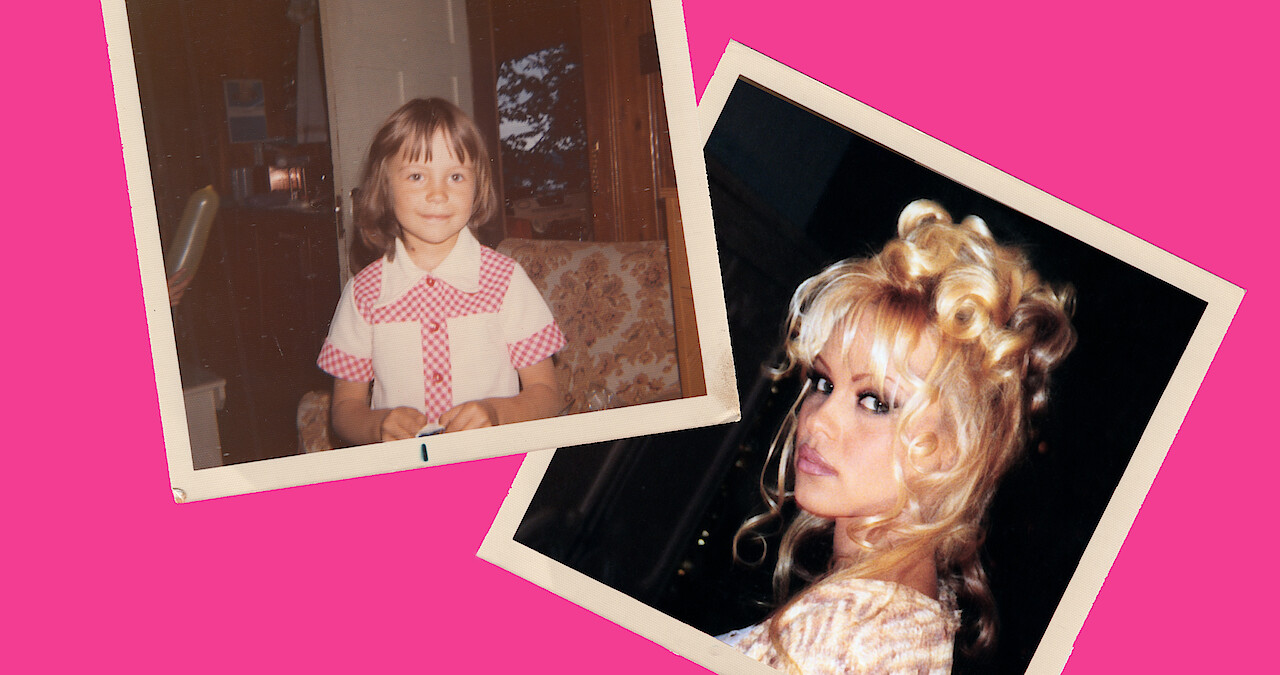
In Pamela, a love story, Anderson reveals herself as a hopeful romantic, and the biggest love story she’s known remains a work in progress: the one she’s piecing together for herself. Over the years, she’s preserved hundreds of home videos and photos, all stored in her childhood home in Ladysmith, British Columbia, where she still lives when she’s between projects.
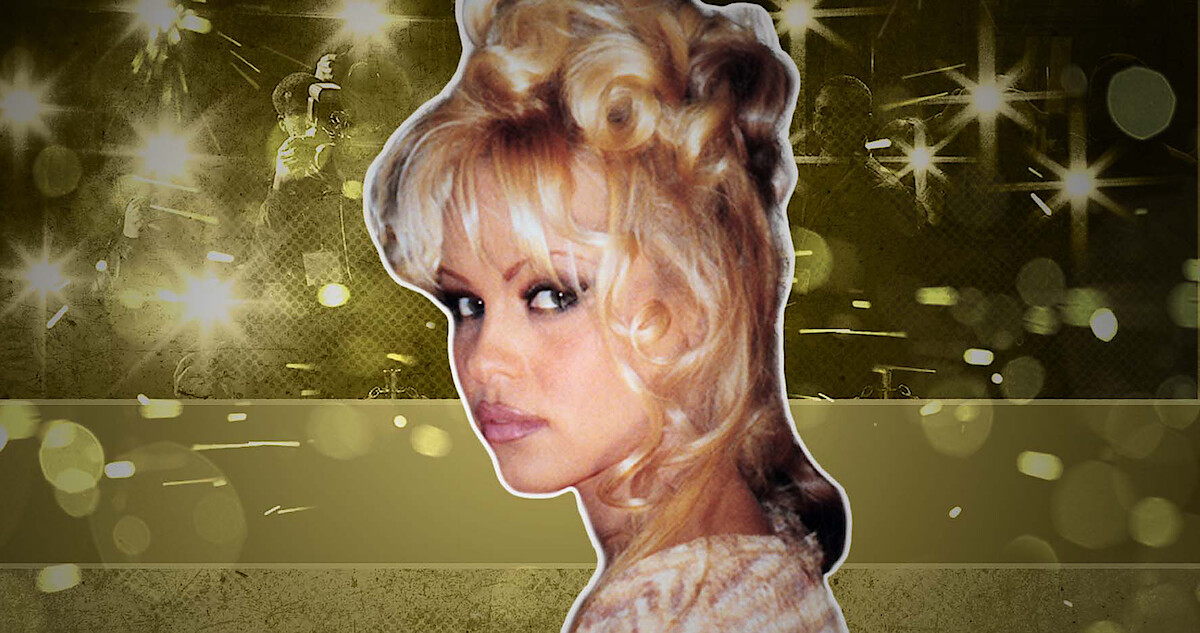
“These things were all locked away for decades,” Anderson says. “I had no idea I had so much.”
Her disciplined self chronicling started early; Anderson’s kept journals since she was a child, diligently documenting her inner world as public opinions on her life dominated the headlines. In the film, Anderson reads excerpts from these journals; her writing style is lyrical and insightful, and no matter which journal or stage of life she’s reading from, her voice has remained just as strong, funny and optimistic. In other words: While everyone in the world was telling stories about who Pamela Anderson really was, she was telling one consistent, beautifully imperfect story about herself.
When looking back on her earliest entries, even Anderson is surprised to see that she’s remained unjaded. “I’m the same girl — the same thoughts and dreams, looking for a feeling I can’t find, trying to understand what’s happening. Writing is my meditation. When I’m not writing, I’m in a bad place, and I always find my way back to it.”
All of these elements — her home videos, photos, journal entries and willingness to offer refreshingly unfiltered insights on her own life — come together to create Pamela, a love story, directed by Ryan White (Good Night Oppy, The Keepers). For the first time, audiences get to hear Anderson’s story in her own words. The film explores the pains and joys of her childhood, the early days of her career at Playboy, her rise to icon status after being cast on Baywatch and becoming a mom. Her sons, Dylan and Brandon, are featured in the film — and Anderson’s recollections of them are in stark contrast to the damsel-in-distress persona that’s been unfairly ascribed to her throughout the decades, whether in online comments or scripted series.
Public image and assumptions aside, Anderson says that going through the artifacts of her journey to motherhood was part of the process that moved her the most.
“I made the boys big scrapbooks of their lives for graduation presents and have family photos around the house,” she explains, “but all these videos of our life when they were babies had me in happy tears.”
Anderson isn’t afraid to get emotional on-screen, about motherhood or otherwise. Throughout the intimate interviews in the film, her vulnerability is one of the many ways she distances herself from the bleached blonde bimbo caricature created by the media. Anderson is self-aware, an intellectual with a voracious appetite for art and literature. She’s as openhearted as she is open-minded, approaching new chapters and evolutions in her life with a refreshingly human balance of honesty and fearlessness. In Anderson’s world, it’s not about avoiding heartbreak, rejection or regret — it’s about welcoming what you can learn from those experiences.
“The year we shot the documentary was a tough year for me,” Anderson says. “It was like a life hangover. It was open-heart surgery in public.”
Filmed in the aftermath of a breakup, Pamela, a love story finds Anderson having just moved back to Canada from France after a split with French soccer player Adil Rami. She describes it as a dark time in her life, but when White came along offering an opportunity to tell her own story, it felt like a chance to heal.
“I was spiraling,” Anderson says. “I wore caftans and gained 20 pounds. I was lost, but found my way back — all on camera. Just talking was like therapy, and writing my book reminded me who I was.”
Who Anderson is today is something of a romance in and of itself. The film concludes with footage from her recent stint as Roxie Hart in Chicago on Broadway, a clever casting choice for a delicious tale of revenge and redemption. Anderson had to learn to sing and dance for the role, and while she admits it was a challenge, her performance was widely praised. In addition to the release of the film, she’s also looking forward to the release of her memoir, Love, Pamela, and focusing on her own happiness.
“I know something even more than my wildest dreams are just around the corner,” she says. “I believe in true love. I believe God has a plan. A raw, honest life is the only way… I love living in the mystery.”
For now, Anderson is taking a beat after her book and film. She hopes that Pamela, a love story clarifies some of the mysteries and misconceptions about her life — it’s her story, in her words, and therefore no one has any choice but to believe it. Raw honesty in such a public space is never easy, but for Anderson, it was a way to finally tell the true story about the biggest love of her life.
“It was a difficult, self-facing process,” she says. “And thankfully, it brought me back to me.”