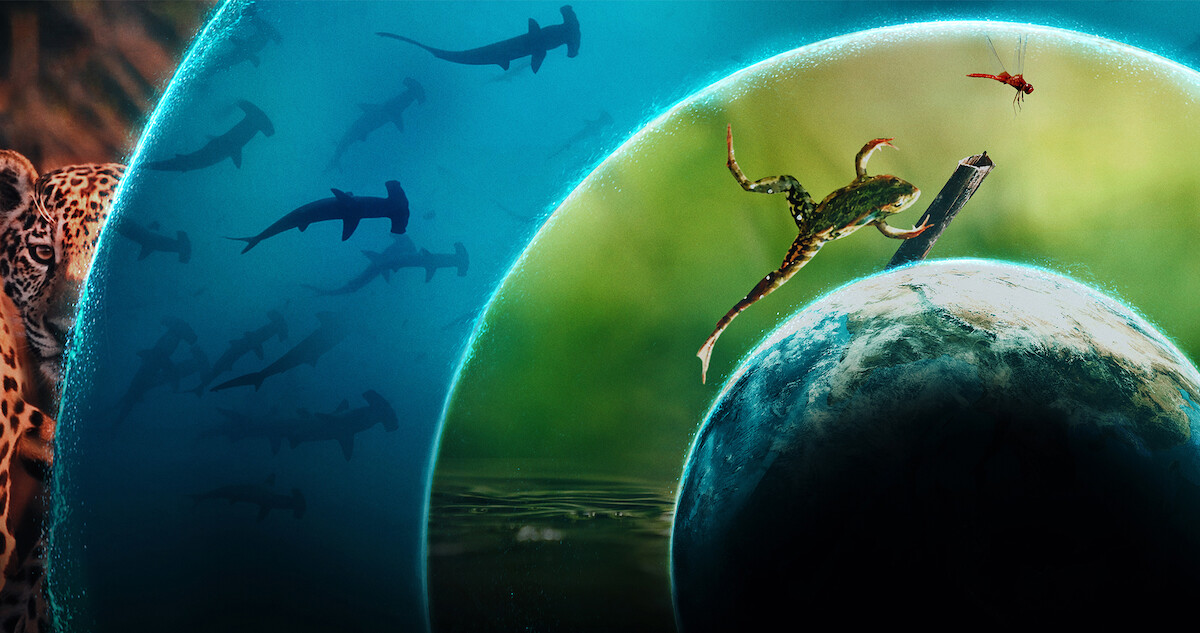
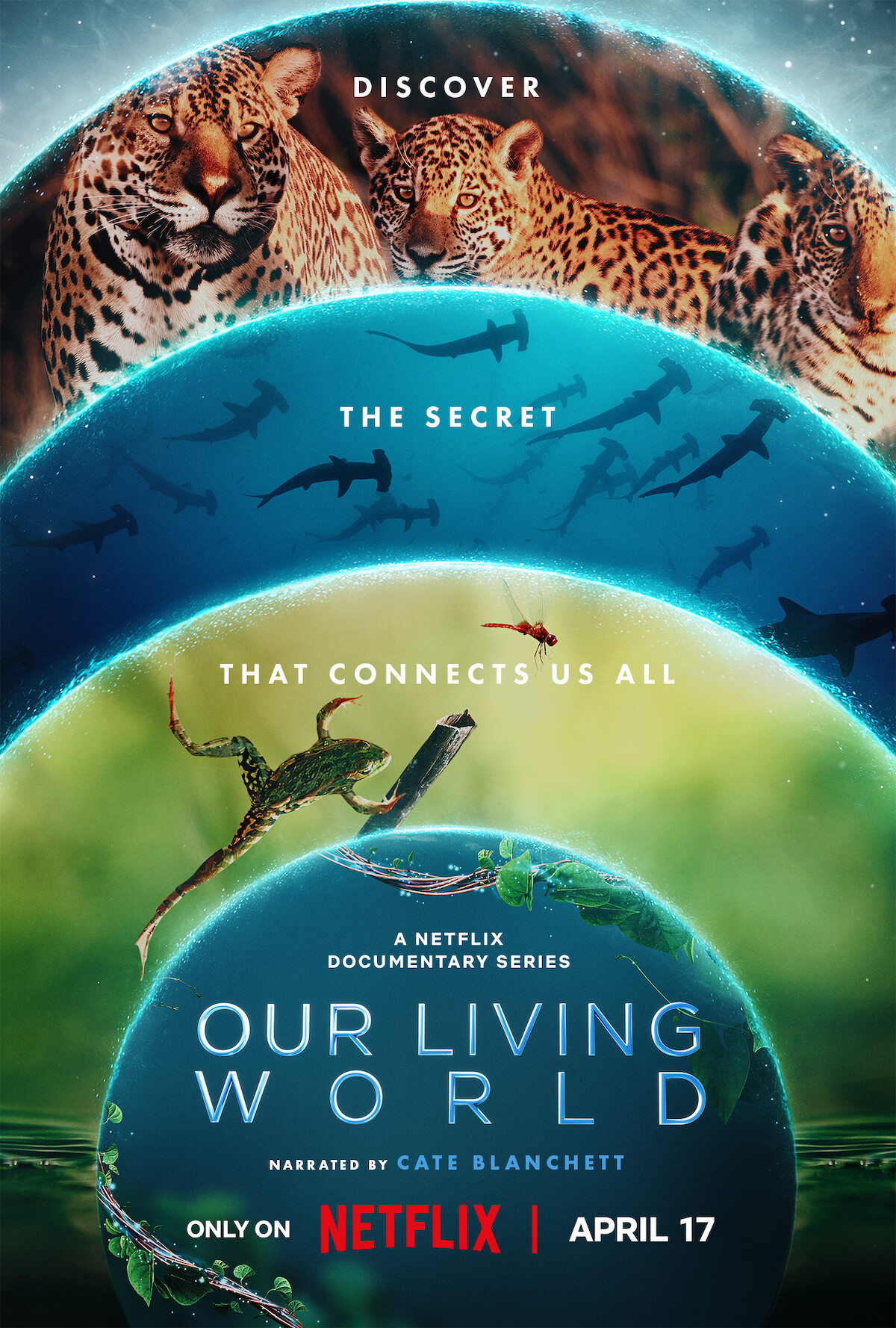
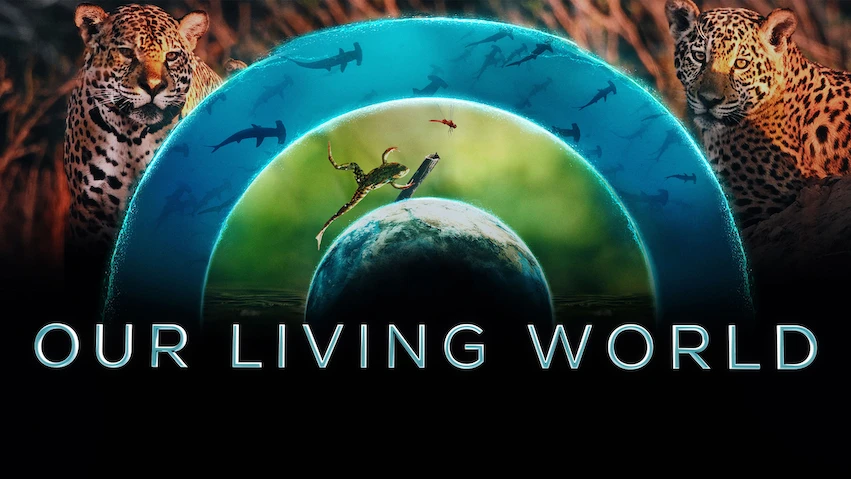
The mission of Our Living World is as ambitious as it is hard to pin down: to capture the living network that connects everything on Earth, including what we can’t see with the naked eye.
This miraculous, largely untold story hides behind every animal and ecosystem. From the Emmy Award-winning team that produced 2022’s Our Great National Parks, the four-episode docuseries reveals the secrets of the planet’s most powerful force — life itself. It’s also about how that planetary life support system –– spanning continents and oceans, fueled by wind, water, fire and the sun and moon –– is imperiled by the unprecedented speed of change to the Earth from human activity.
But hope, as Our Living World shows us, is hardly lost. This is a survival story, illuminating how our living network relies on all creatures great and small to beat the most treacherous odds and survive another day. Here is everything you need to know about the series, dropping on Netflix April 17: its A-list elf queen narrator, its filmmaking tricks, a full episode guide, what to watch for, and the meaning of a certain determined city-bound rhino.
How was Our Living World made?
Our Living World was an undertaking almost as epic as the vast living network it depicts. OK, maybe that’s overstating things — it’s hard to compete with fearsome wolverines and rhinos — but it involved an extremely extended development, filming, and post-production period that makes summer blockbusters look like a cinch.
Why are those multimillion-dollar endeavors relatively easy? “They have more control over their cast,” series producer Ben Roy tells Tudum. Hey, hammerheads can be divas, too.
Our Living World’s production spanned three years. Filming took place in 24 countries, with 133 shoots adding up to 1,252 days in the field and studio. But the series took even longer to make. It was conceived back in 2018, with a year of development in 2019. Shooting took up 2020 and 2021, while most of us were rooted to our couch during the COVID-19 pandemic, and 2022 was spent editing.
All told, the show took six years to come into being.
So what kind of filmmaking tools and tricks do you throw at six years of filmmaking?
For the folks at Freeborne Media and Wild Space Productions, the answer ran the gamut, including classic wildlife photography, alien-like close-ups of the smallest creatures, and digital visual effects that were used to illustrate scientific phenomena we can’t perceive but are essential to the living world. Oh, and there are the incredible shots of numerous underwater species, including a gaggle of hammerhead sharks off the coast of Costa Rica, supplied by diving camera operators who can do a lot with just 30 minutes of air in their tanks.
“That’s a very specialized skill set,” Roy says. “Those guys are part camera operator, part fish.”
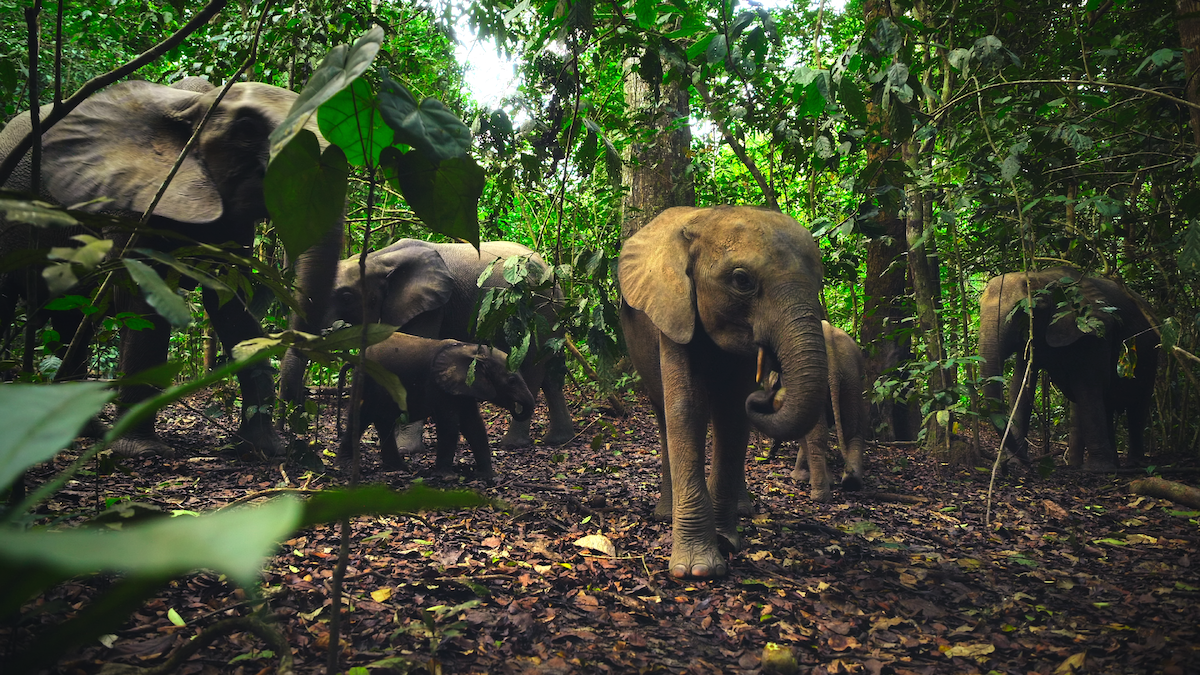
It might seem like the footage of a falling avalanche or shy elephants was captured with stationary cameras that were always rolling, but technology has streamlined those shots, at least to an extent. The crew employed “camera traps” with infrared triggers so when, say, an animal wanders nearby, it records. Then “you go back and it feels like Christmas, you open your presents,” says Roy.
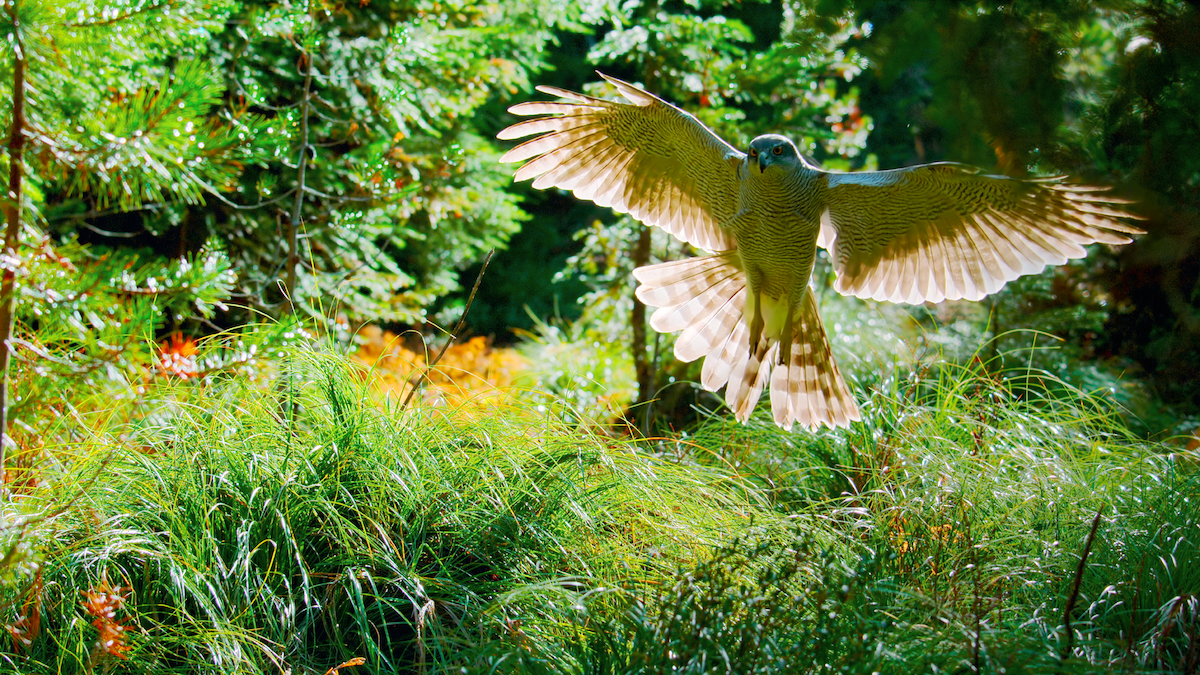
But the lush forest scenes seen from above are owed to human ingenuity. Our Living World had camera operators on platforms up in the trees, living among the chimps as they waited for the perfect cinematic moment.
Who is the Our Living World narrator?
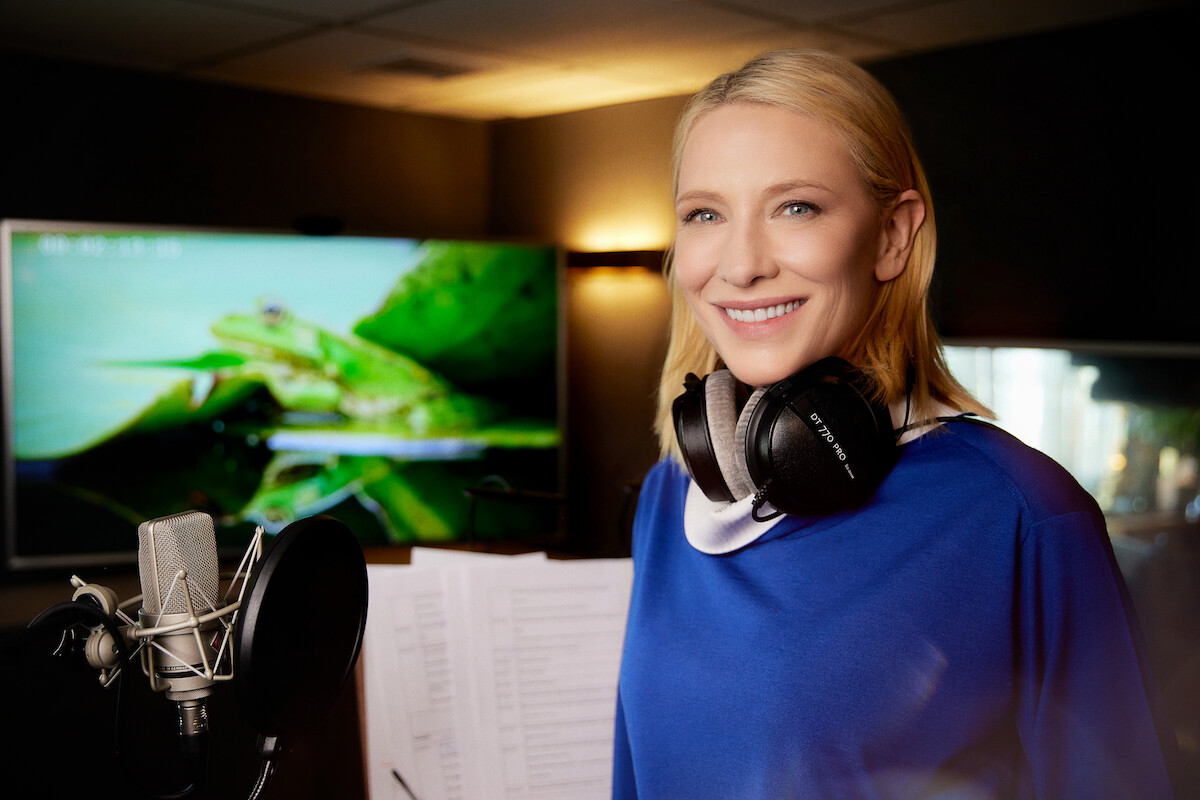
Our Living World is narrated by multiple Academy Award-winning actor Cate Blanchett. It’s not an unusual turn from the woman who has mastered roles from Queen Elizabeth I of England to composer Lydia Tár. First, Blanchett — always full of surprises — is an amateur beekeeper.
“She knows a lot about ecology,” executive producer James Honeyborne told Netflix. “We found it very natural for her to speak with authority on the subject.”
It was another of Blanchett’s signature movie roles that partly inspired her casting here: Galadriel, the Lady of the woods of Lothlórien, in Lord of the Rings. “At the back of our minds, we had the Elven Queen walking through the forest doing magic stuff,” Roy says. “And then when we developed our visuals, we’re like, ‘Oh, yeah, this looks like magic.’ ”
On the first morning of work, Blanchett “felt like she’d been on board for a long, long time,” Roy told Netflix. “She knew the stories, she had opinions, she had views, she had new stuff to add as we went along.”
Our Living World Episode Guide
Episode 1
“Nature’s Amazing Network”
Quick production numbers: 30 shoots across three years, 328 days in 15 countries
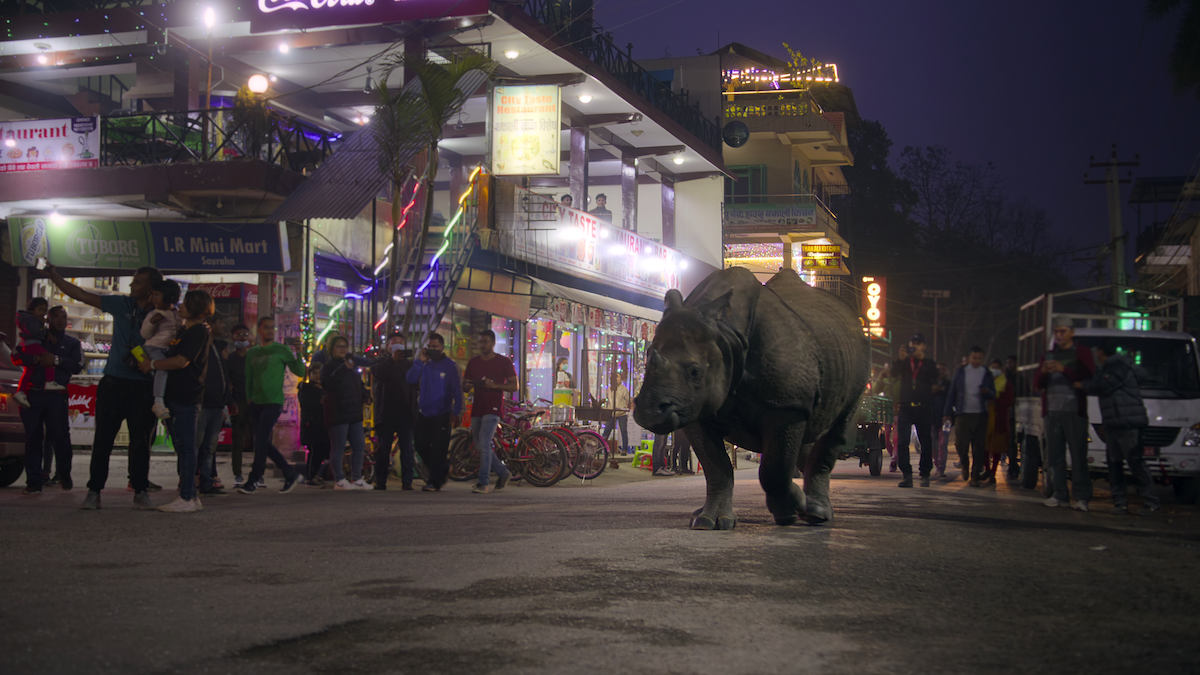
Standout creature: A rhinoceros casually stomping through a traffic-clogged street in Nepal
The Our Living World premiere zooms out to show us striking images of how all life on Earth connects across every corner of the globe. As a surreal symbol of these inevitable links and clashes, we meet a rhinoceros, up-close and personal, in the unlikeliest habitat — a car-choked urban road, where he’s holding up commuters (though with his slow stride and swaying tail, he hardly seems bothered). This rhino is crossing through Sauraha, Nepal, on the border of Chitwan National Park, a major rhino sanctuary. But he’s not interested in puny humans or their rides; he’s trying to get to the best grazing around in the farmlands on the other side of town, so he can reach his daily requirement of 120 pounds of vegetation.
“That was one of the few sequences where the research hadn’t turned up the animal behavior and the story that we decided we wanted,” Roy says. “We wanted a sequence that would very simply and iconically represent the resilience and defiance of the natural world.”
A member of the crew came across an image on (where else?) the Internet of a rhino walking in front of a vehicle. “The takeaway is that nature is unbelievably powerful, and also fantastically resilient. And defiant,” Roy adds. “That’s the whole point of our series: Nature isn’t the victim.”
They had the right image in mind, but getting it is something else. To capture the sequence, a vehicle outfitted with a camera was on standby. “We put the word out to various scouts and people in town to give us a shout when they see the rhinos,” Roy adds. They zeroed in on one who was the opposite of skittish. “He’s just doing what he wants to do.”
Elsewhere in this episode, we witness an epic cycle of actions and consequences cascading through all habitat types: the dance between predator (eagles) and prey (baby reindeer), with snow underneath reflecting the sun’s heat back into the atmosphere, a cooling system that sets off a chain reaction resulting in a rainy season in Mozambique. This forges an oasis for hippos, whose playful behavior affects nutrient-rich rains falling on the Amazon, where Brazil nut trees feed critters that become food for hunting jaguars, whose carcasses allow fungi to lock carbon deep beneath the surface. Every step along the way makes life — including human existence — possible.
Episode 2
“The Rhythm of Life”
Quick production numbers: 30 shoots across three years, 312 days in 6 countries
Standout creatures: A beach party full of horny Geosesarma banana crabs, aka banana fiddler crabs, ecstatic to mate
Just as Earth is ever-changing, different life forms must keep up with those changes to take advantage of opportunities. From fleeting milliseconds to yawning millennia, nature is always in sync.
The moon and sun drive rhythms that creatures rely on. In this episode, we watch a lioness who instinctively understands to hunt at dusk to avoid heat exhaustion. Banana fiddler crabs — it’s hard to overstate how adorable their cheerfully yellow, cumbersomely large single claws are — stage a mating dance right out of Saturday Night Fever tied to the ebb and flow of the tides covering their burrows. While salamanders migrate to perpetuate future generations, crocodiles, confined to the increasingly dry Sahara Desert, have to adapt to a wearying set of options. As human-driven climate change threatens certain natural patterns, creatures like the color-shifting snowshoe hare, stuck between seasons, either evolve or die.
Of that sex-minded crab fête, Roy says, “The moon and the tides might not be the instantly most entertaining thoughts. But when we look at these ridiculous little crabs with that giant banana claw having a beach one day in a year that the tide goes out far enough for them to do it — it’s those intimate moments with very, very cool creatures that let us hopefully draw the audience into all this amazing stuff happening around the planet.”
Episode 3
“Breaking Point”
Quick production numbers: 30 shoots across three years, 377 days in six countries
Standout creature: A wolverine sniffing out dinner in the wake of an avalanche
Some animals don’t just adapt to the fortunes of the planet’s rhythms; they also reap the rewards of its destruction. Rage is built into Earth’s DNA, as Episode 3 makes visually plain: Lava from oceanic eruptions gives rise to new volcanic islands, which then become nutrient-dense hubs for schools of hammerhead sharks. A deadly avalanche likewise signals sustenance for the wolverines spared in the carnage.
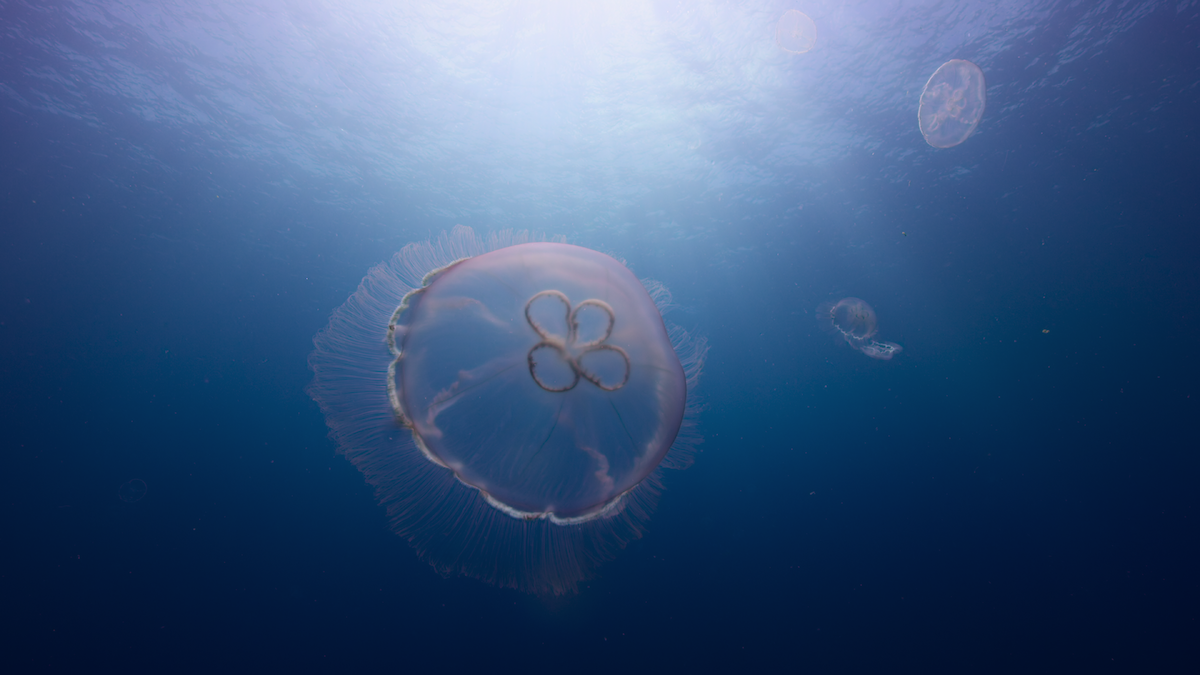
Other disruptions underline the instability of our moment, as human activity throws the planet’s tempo out of whack. We see chimpanzees struggle to find clean drinking water in a fire-ravaged landscape in Senegal. Those flames carry sand far north, melting ice and forcing polar bears to search for new territory and face off against mysterious enemies. Jellyfish are clogging oceans as warming temperatures actually boost their growth, to the chagrin of their competitors.
A sequence in Miami, recording the awesome power of a hurricane hitting land, offers a discomfiting sense of optimism. While the storms are no fun for humans, anole lizards fight to survive and succeed. Their adhesive toe pads become stickier by the generation so they can cling on for dear life.
“That’s the result of a long period of scientific research and various papers that have been published about those lizards,” Roy says. “You see evolution in action.”
Navigating the worst, life persists — though not all creatures will be as lucky as those enduring lizards.
Episode 4
“Road to Recovery”
Quick production numbers: 43 shoots over three years, 235 days in six countries
Standout creatures: Salmon in the Pacific Northwest swimming upstream, dodging man-made obstacles, including cities, dams, and roads
There’s no denying the disturbances of human activity on not just climates but also the plants and animals they affect. But Our Living World is not a bummer. “Road to Recovery” shows how nature is a healing force when given the chance.
The forest needs salmon to survive, but their upstream ascent is more difficult than ever, with urban sprawl in the way. Many endangered species and habitats have their own challenges — African elephants dodge poachers so they can fertilize and maintain the rainforest, Australian flying foxes work to restore bushfire-damaged land with constant pollination. Perhaps more optimistically, conservation of Central Asian saiga antelopes has renewed their native grasslands, and a rewilding project in Argentina has marked the return of jaguars, keeping pesky capybaras in check. Humans can do a lot wrong, but we can also do a lot right.
And the creatures fighting for their futures are ultimately fighting for our future, too.
“All of the creatures in Episode 4 are called keystone species. What that means in storytelling terms is: They’ve got powers, just by doing what they do. The salmon that bring 80% of the nutrients that feed the forests of the Pacific Northwest? Those animals are punching above their weight. That, for me, is the real superhero.”
Salmon might not wear capes, but they sure know how to swim.
Watch Our Living World on Netflix now.