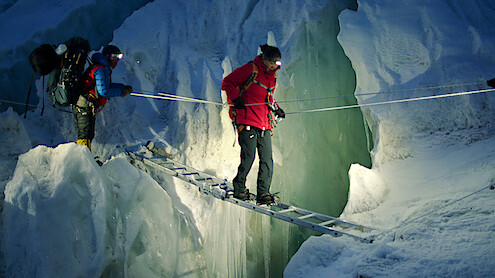
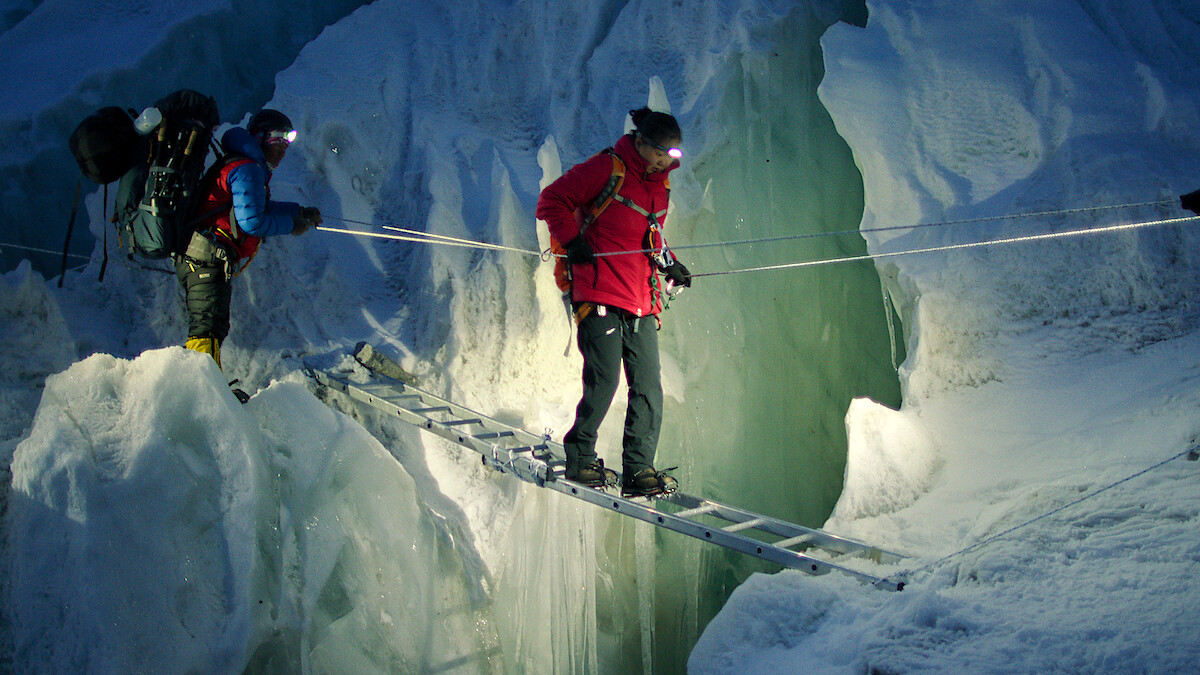
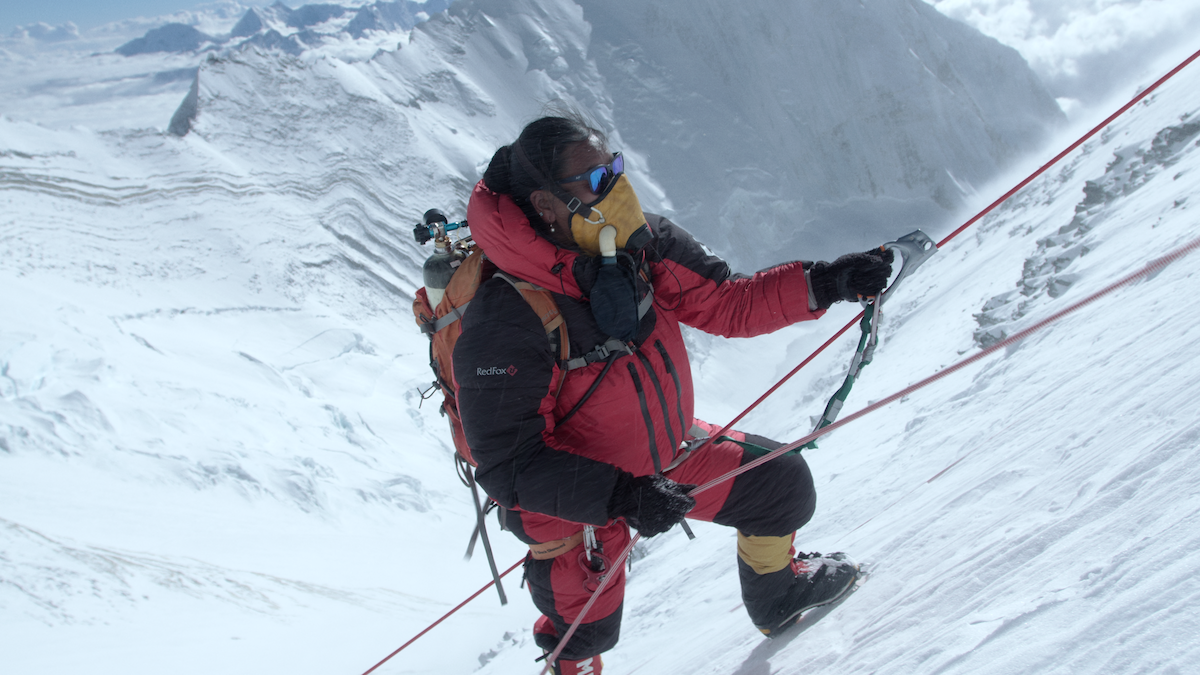
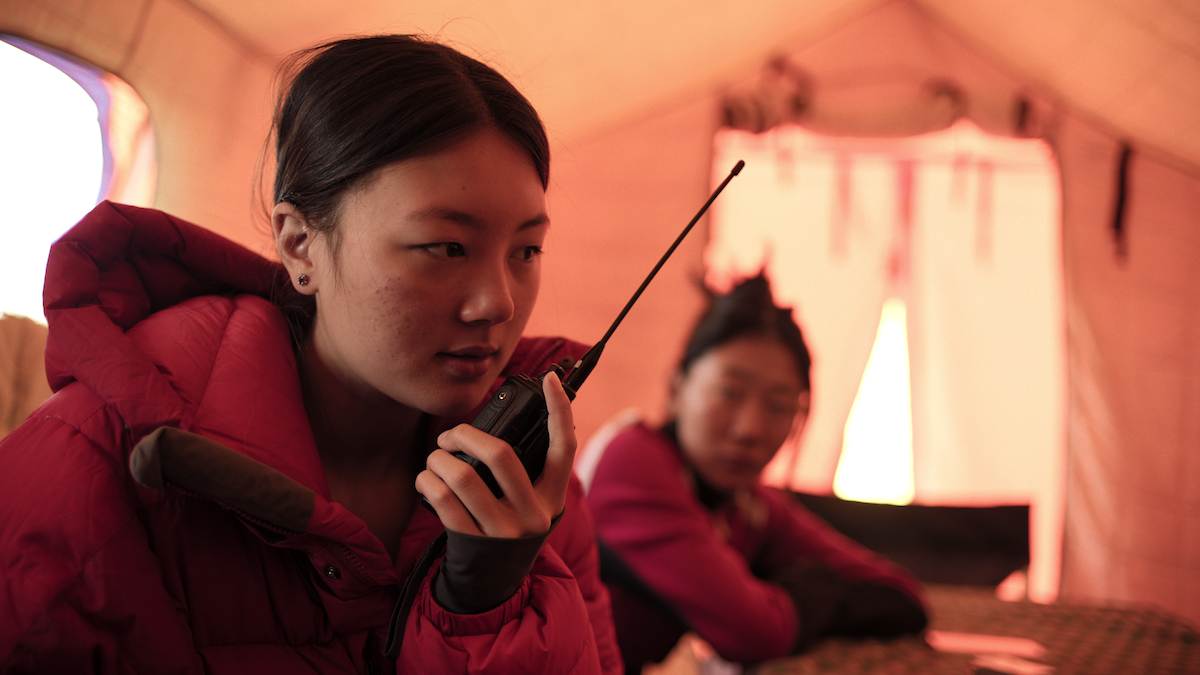
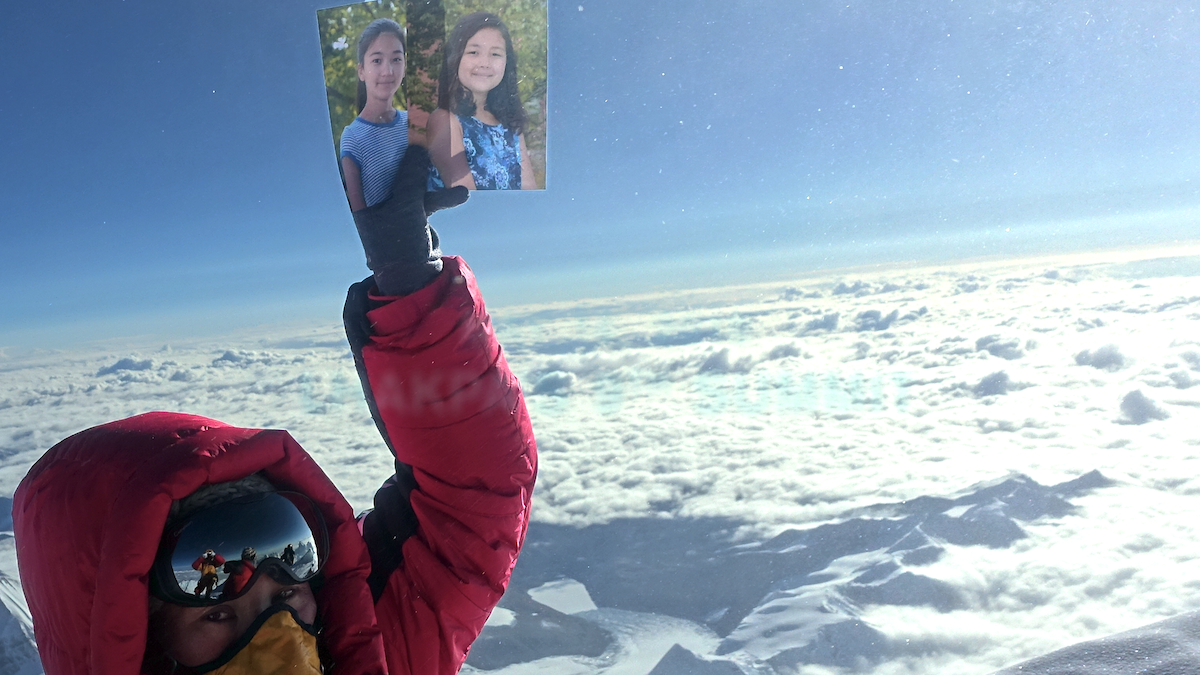
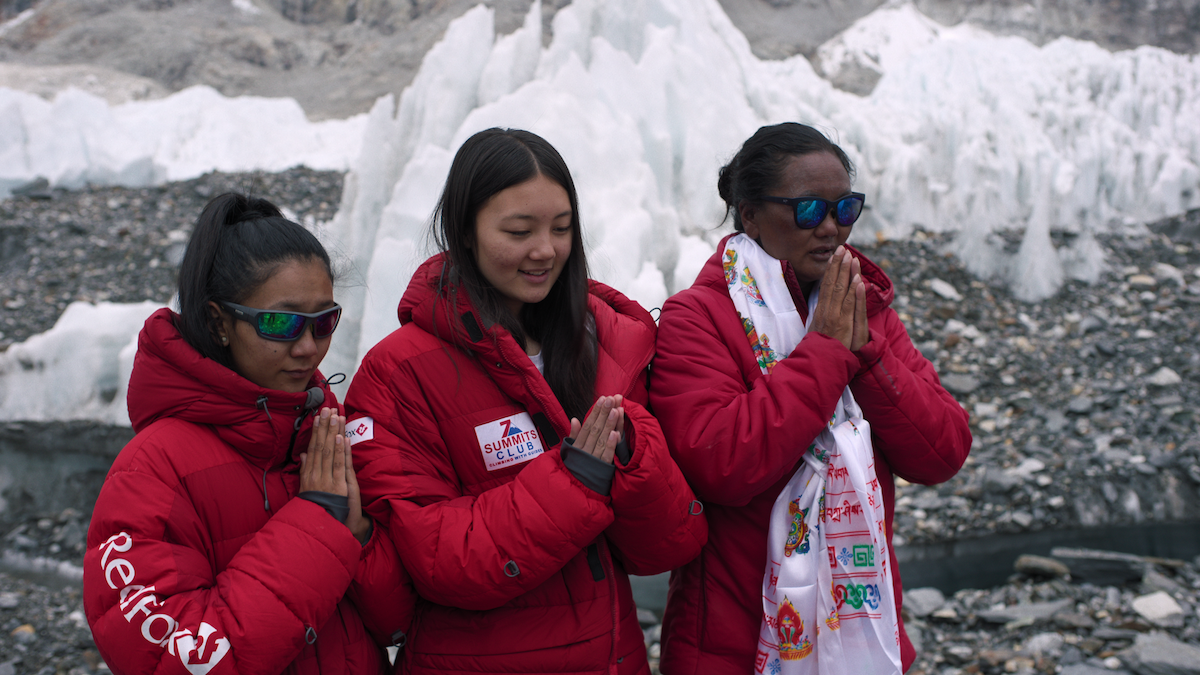
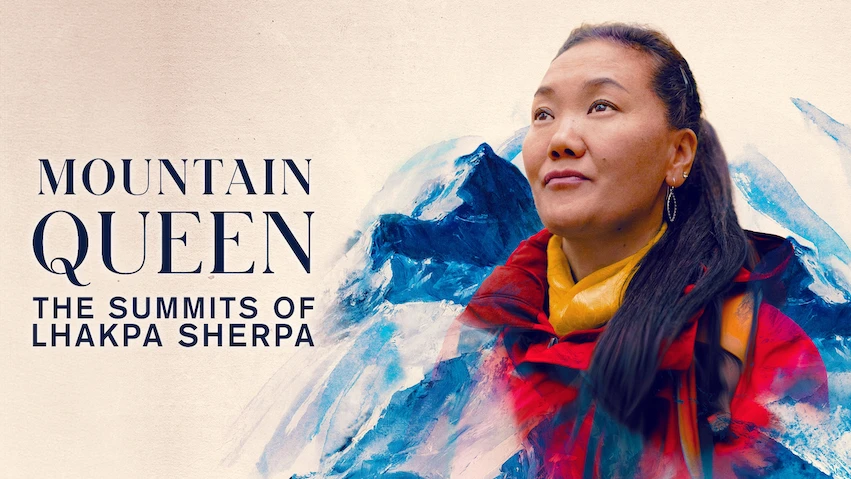
Around 1:30 a.m. on a cold April morning in 2022, Lhakpa Sherpa left her sleeping daughter at Mount Everest’s base camp to begin her summit. Before her departure, she’d watched the weather for a clear window to make her way up. If she succeeded, this would be Sherpa’s 10th summit since 2000, when she became the first Nepali woman to climb the world’s tallest mountain and survive. The journey is strenuous — Sherpa knows she gets sick at 21,000 feet, and by the time she enters the “death zone” at 26,000 feet, her crew will have limited oxygen, food, and water. But she also knows that she has no choice but to continue. When she finally reaches the top, in Mountain Queen: The Summits of Lhakpha Sherpa, she reflects, “My 10th summit. My darkness I leave behind.”
Born in rural Nepal, the daughter of yak farmers, Sherpa never received a formal education because of her gender. “I had such a hard life,” she tells Tudum, adding that nature has always helped get her through difficult times. At 28 years old, she immigrated to the United States, where she survived intimate partner violence. She raised her children in Connecticut while working at Whole Foods and kept her love of the outdoors alive with hiking and camping trips. After 2000, when she summited Everest for the first time, Sherpa completed eight more climbs to its peak (the last in 2018) before filming Mountain Queen.
Read on for an interview with Sherpa, who turns 51 in September, and her daughters Sunny and Shiny Dijmarescu, as well as Lucy Walker, director of the new documentary about the climber’s exceptional life.
Have your climbing adventures taken you anywhere else since your 10th summit?
Lhakpa Sherpa: I love the outdoors. I love hiking, camping, and kayaking. That’s my life. I did K2, the second-highest mountain in the world. K2 is a very technical, very dangerous, and very difficult mountain. Some people say it’s a killer mountain, and I did the killer mountain, and it looks like I win my sport.
Lucy, what inspired you to make this documentary?
Lucy Walker: I first heard about Lhakpa’s story in 2004 when I was on Everest making another movie called Blindsight. I like to make character-driven narrative movies that are thrilling — but true to life — about people who, when the going gets tough, find this superhuman courage and strength and resilience to do the most fascinating and extraordinary things. Lhakpa is an astounding, phenomenal woman, and her story is larger than life. I love weaving together the summits of her life with the summits of her climbing career. She is an incredible mountain climber, and I wanted to give a big-budget sports movie a female character for a change. And I also wanted to do it with a Sherpa woman. It’s really rad that this Everest climb is Lhakpa and her Sherpa climbing team, but they’re not working for Western tourists. They are the stars of the show on their own. And so I wanted to tell the story not just of this thrilling Everest climb that we get to go on with her, but also the incredible life that she’s led. There was so much richness to putting those stories together — letting the mountain be its own climb but also a kind of metaphor for the emotional journey of her life and what she’s climbing through emotionally.
What have you learned about yourself in this process?
Lhakpa Sherpa: I have never been in school. I’m learning to be a leader and that I can do whatever I want to do. It’s a difficult life, but I learned not to give up. Many people go through bad things; I heal by nature. We feel hurt in our hearts, and nature can build us back. Nature builds me back into a strong woman. Every woman has a soul, every woman has a heart. We are tough. But sometimes I’m not so humble because I’m going to sleep with the rock and fighting with the ice.
You speak a lot in Mountain Queen about working with the mountain. Can you talk more about that?
Lhakpa Sherpa: We respect the mountain like we respect the people. Everest is my childhood friend, my best friend. Just like my children have a best friend, Everest is mine. I never had a television and computer; I lived in the mountains. I’m not scared of the mountain. My children are scared of the mountain but not of the phone — but I’m scared of the phone. I’m not scared of hiking. Nature is my healer. Nature and hiking in the mountains is my best friend, my doctor, my healer. I cannot fight the mountain. It’s much stronger than me; it’s my leader. When the mountain says come, I go. When the mountain says don’t come, I don’t go. I’m very patient. We need patience in hiking. We cannot fight with this giant mountain; we have to respect it. On the mountain, we follow the road, we follow the directions, and if there is bad weather, we must stay. If there’s raining and snow coming, we must wait. We cannot fight the mountain. It’s like a teacher, and you respect the teacher.
Shiny, what was it like being out there with your mom during this 10th summit?
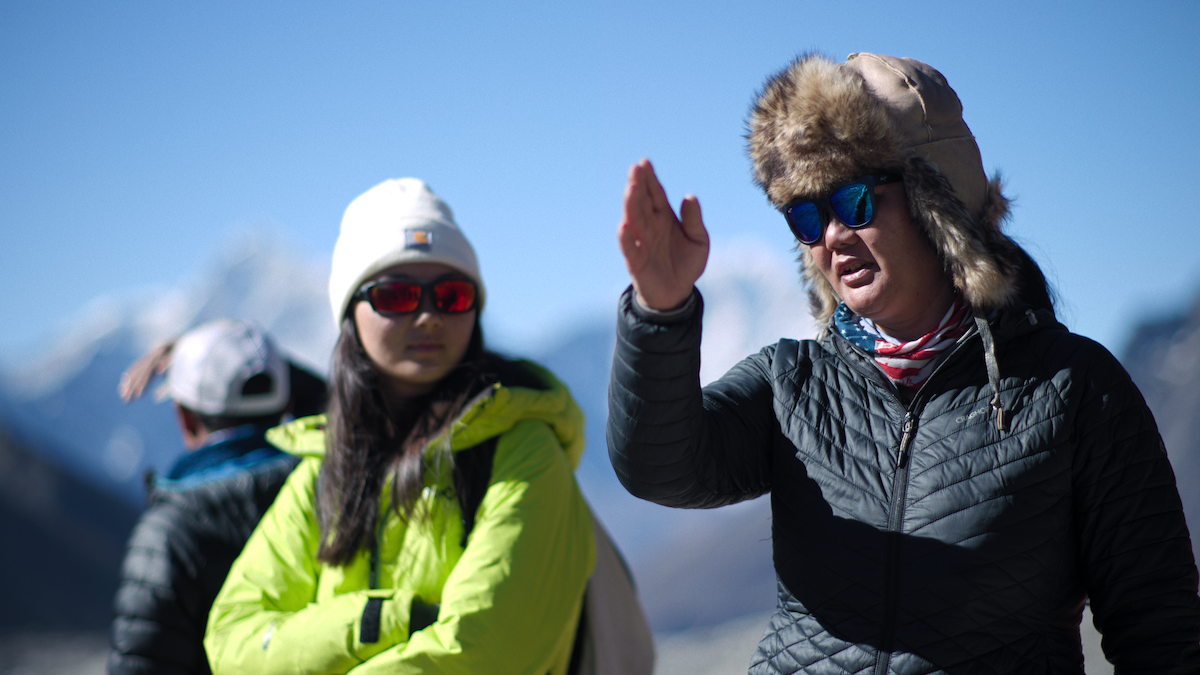
Shiny Dijmarescu: It was really different, because all the other times my sister and I would be home. We wouldn’t know what she was doing or be able to communicate with her as much, and so I remember waiting for her, and we were all excited and she was coming down from the ice fall, and it was so emotional and she looked completely different. Her face was burned and — oh my god, it was so bad — but I was so happy that she did it. I know the 10th summit, we wanted it to be the summit where everything changed for our lives, and I know she was happy, and that gave me confidence too.
Lhakpa Sherpa: Yeah, I had such a big responsibility. Some of the movie team had never been to Everest. [I thought,] “I must stay healthy. I must take care of Shiny.” There was so much responsibility — and it was my 10th summit. I was really, really stressed out. I must care about you, Shiny; I care about Sunny and what happens to Sunny. I must care about my movie team. I must care about the camera, and I must care about my Sherpa. Everything was so hard. But I did it. My god, I did it. I was totally exhausted.
There are some incredible shots of the expedition in Mountain Queen. How do you get a film crew up Mount Everest?
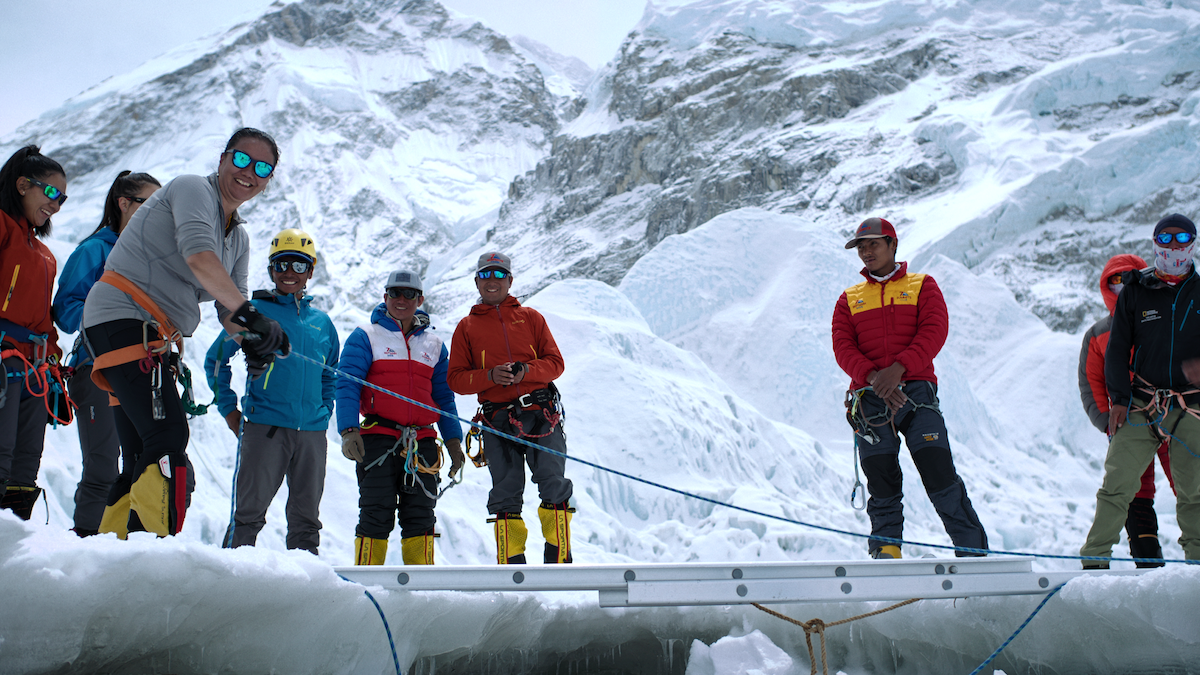
Lucy Walker: It’s a difficult environment to film in because at that altitude, you can’t have vehicles, you can’t even have yaks — which are the animals they use to carry stuff at lower altitudes. There’s nothing you can do apart from carrying the equipment on your back. We gave cameras to all the Sherpa team, and we also trained them in what kind of shots we wanted and didn’t want. We really worked with the team and trained them to become filmmakers themselves, because the teams might get split up and there could be an important moment that we wanted to capture, and so I wanted everybody to have a camera.
Are there any particular favorite moments while filming the documentary that stand out to you?
Lucy Walker: At the beginning of the movie, Lhakpa is inspired to go back to Everest to restore her own power but also to inspire her girls to be courageous and to connect with their own inner sources of healing. And so she embarks on this trip to Everest and Sunny stays behind, and Shiny goes with her and sort of gets to see her mom in action and experience for the first time what it’s actually like to go up there. So there’s a moment toward the end of the movie that I absolutely love when Sunny looks in the mirror on the way to an awards ceremony and I could just see the way she was looking at herself. And I said, “Sunny, what do you see when you look in the mirror?” And she looks in the mirror and she says, “I see someone that could be somebody.” And you realize that Lhakpa’s whole mission of inspiring young women is actually now inspiring her own daughters. As a human being, I’m overjoyed. I care so much about these people that I’m filming with. And as a filmmaker, I am also overjoyed because I think, “This is the ending of our movie.”
Sunny and Shiny, what inspires you about your mom?
Sunny Dijmarescu: My mom inspires me to be my own leader and do what I want to do in my life. She’s always motivating me to keep following my dreams. She knows I like drawing and taking pictures and editing videos, and she always wants me to have the best for myself.
Shiny Dijmarescu: She just makes everybody positive. She has such good energy all the time, and despite everything that she’s been through, she’s always had a smile on her face. She never wants to bring anybody else down with her even when she’s at her lowest, and I admire that.
In the documentary, as a family you end on this really powerful note of beginning to talk more openly about your lives and experiences. How are you all doing now?
Shiny Dijmarescu: I think we’re doing a lot better from the beginning of the documentary to now. I feel like it shows, as well, and I feel like we’ve all been improving, and we feel more comfortable talking about the things that we went through and learn to accept them and use that as motivation to keep going and not a reason to be sad or hold us down.
Sunny Dijmarescu: We don’t feel the need to be shy or hide our story. It’s already said and done, and to bring such a powerful message along with it is a great gift.
Lhakpa Sherpa: And I want to say, young boys and girls can do whatever they want. Follow your dreams, chase your dreams. I tell Sunny, chase good dreams, and whatever I can do, I’ll help you. You children want to do it, let me know. I won’t try to stop you. Parents must give hope to their children. I never say, “No, you cannot do this.” You can learn, you can figure it out. If you don’t understand, let me know.
What do you hope viewers take away from your story?
Lhakpa Sherpa: I’m so happy that I can give all the women the message, “Don’t give up.” To the men and women, the young girls and young boys, keep going. Keep doing whatever you want to do. Don’t give up. If you have a dream, keep going. Work hard at it, even if it’s not easy. Every young girl and young boy has their own Everest. You’ll reach your Everest. Keep going step by step — work hard, it’s not easy, but keep going step by step.
Sunny Dijmarescu: And you’re never alone. When you’re going through the toughest battle you’ve been through, someone else has gone through the same thing.
Lhakpa Sherpa: Life isn’t easy, but don’t take it too seriously — and keep the positives. We must help each other. If you can’t make it on your own, I can help. That is the people power — if I cannot make it alone, someone can pull me back up, and if they can’t do it, I can help pull them up. We need a bunch of people together to build something beautiful. Teamwork is the best. People can work together if they want to find happiness.
Watch Mountain Queen: The Summits of Lhakpa Sherpa on Netflix now.