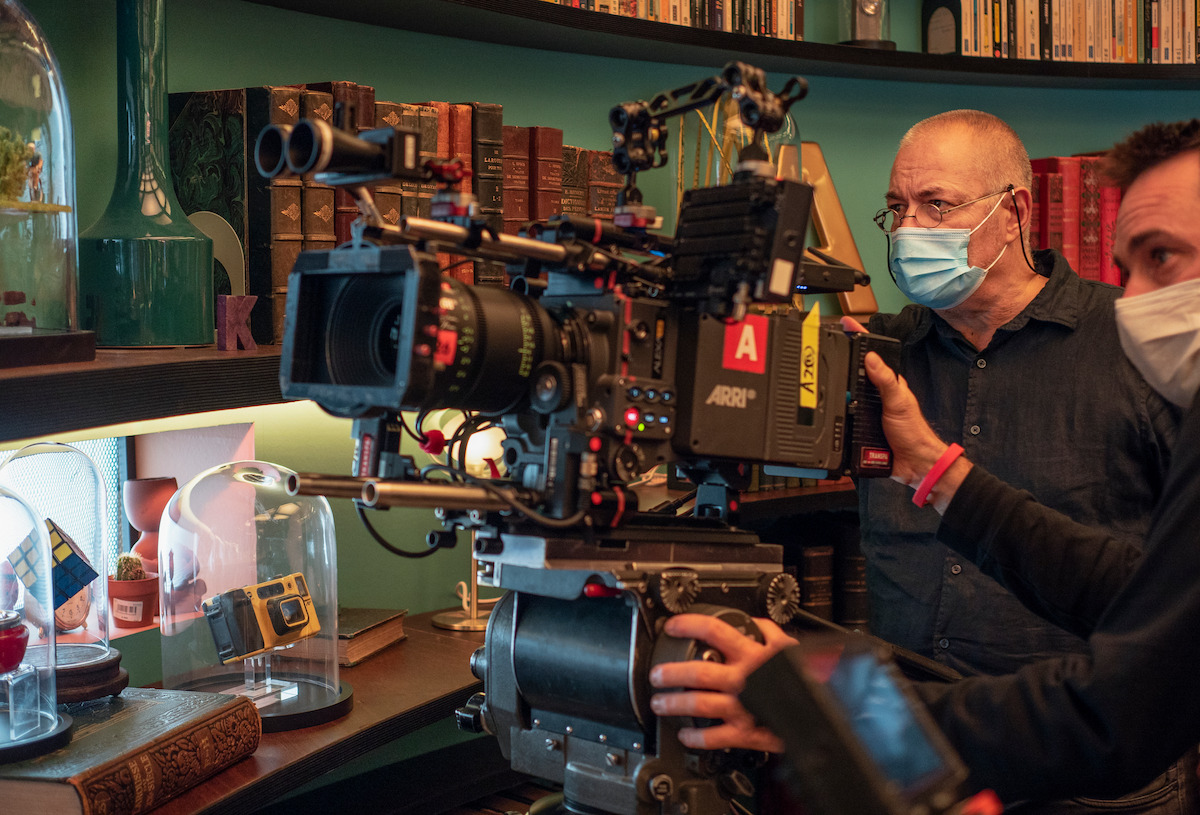
For the French writer, director and producer Jean-Pierre Jeunet, the craft of moviemaking often involves lots of physical work.
“I take great pleasure in making toys, in making things, and I storyboard most of the scenes because I’m a hard worker: I like to sand, varnish, then sand and varnish again,” Jeunet tells Tudum. “In my eyes, a film is objects, costumes, a screenplay, dialogues, and the idea is to play with all these parameters.”
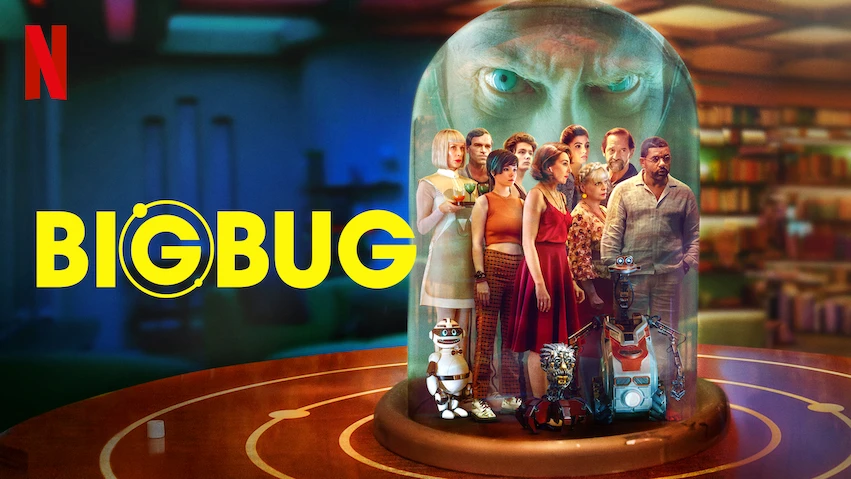
There’s plenty to play with in his latest film, Bigbug, which is set in a future where robots have taken over most human work. Those robots are brought to life by a mix of mechanical props and human actors.
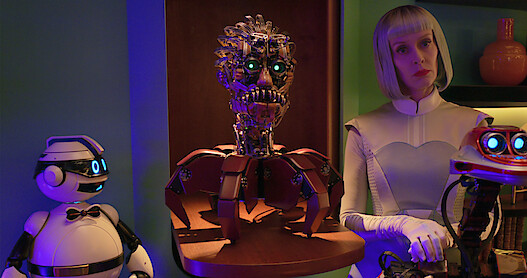
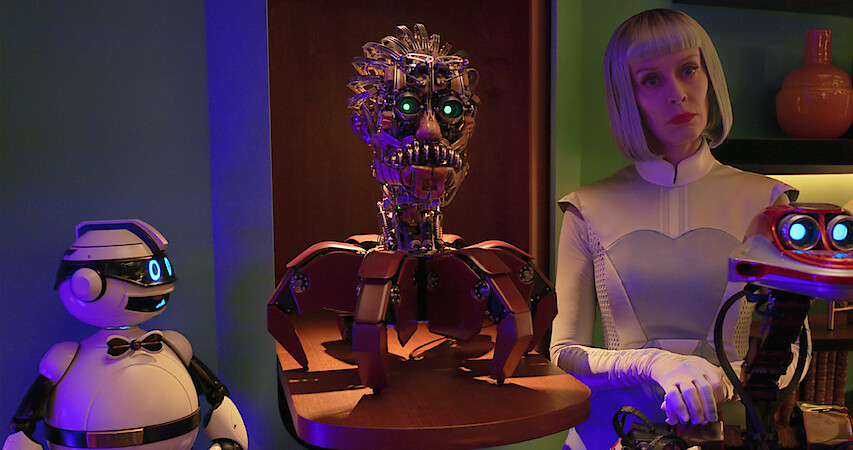
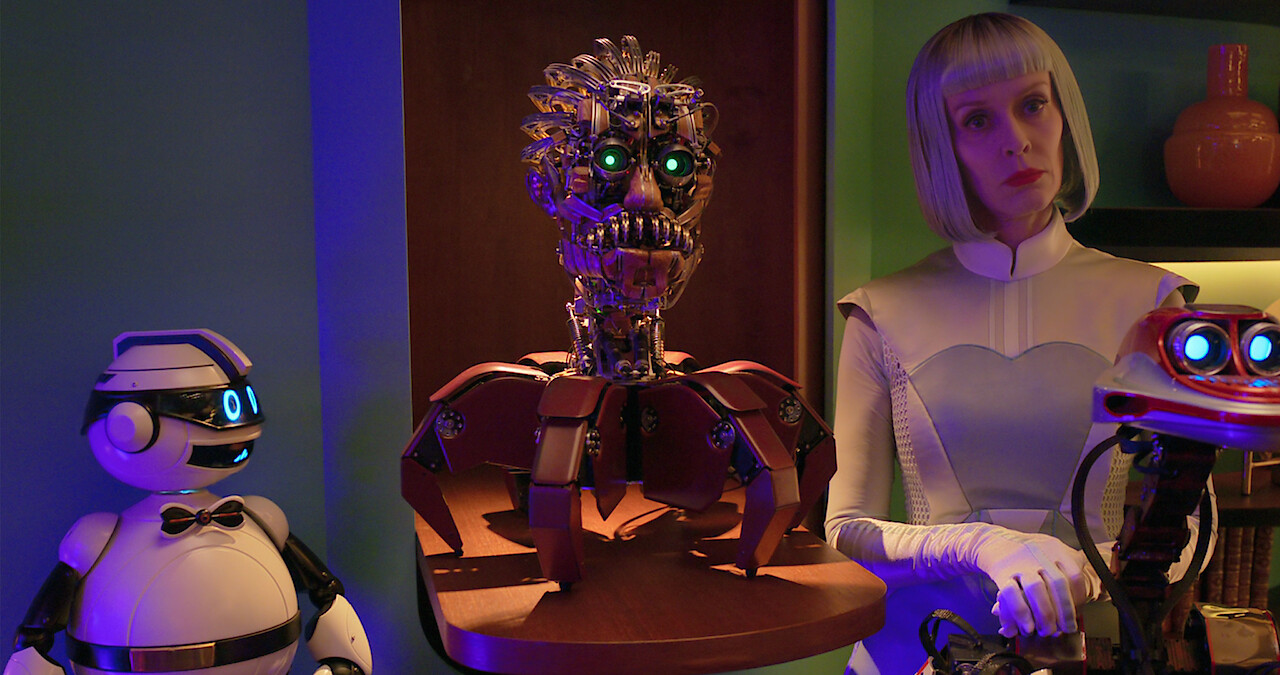
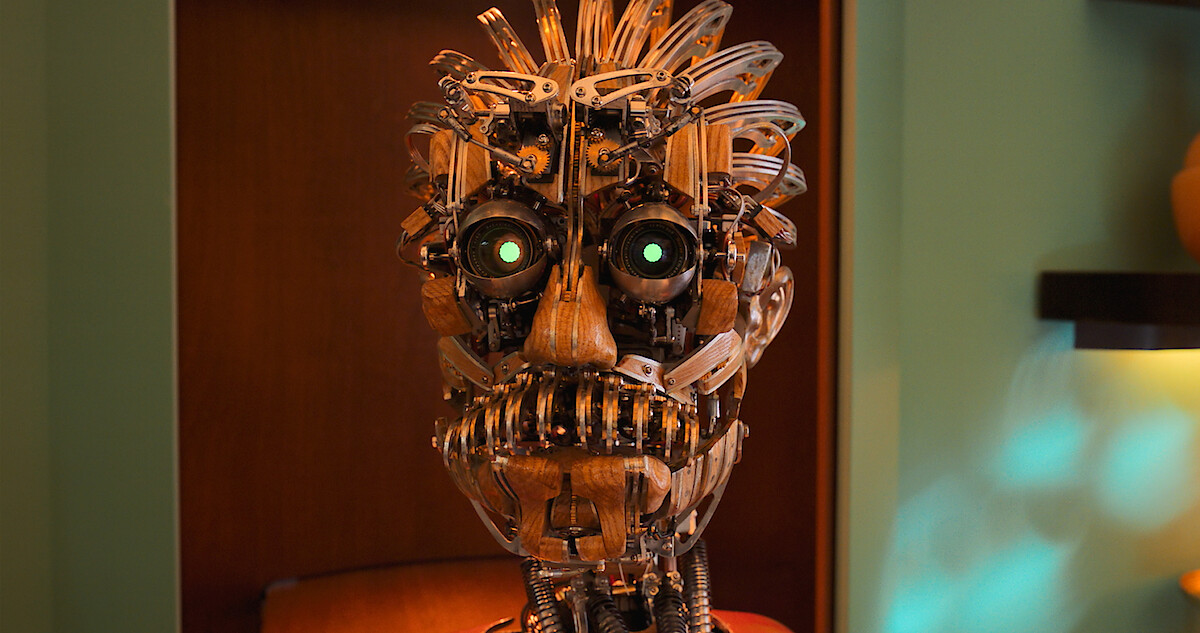
Special effects supervisor Pascal Molina previously worked with Jeunet on The City of Lost Children and A Very Long Engagement. For Bigbug, Molina built Einstein, the brilliant leader of a group of household robots. Jeunet originally imagined Einstein as a robot head mounted on a piece of furniture and wanted the robot to run using just three or four motors. But when the COVID-19 pandemic delayed shooting for five months, Molina used the time to build something much more ambitious. Made from wood and metal, the final product used 82 servomotors to power both complex facial expressions and a set of six legs that let the bust move around the set.
“Einstein is my greatest triumph as a robot designer,” Molina tells Tudum. “I took advantage of the lockdown to perfect it. Although I was only expecting to spend around two months on it, in the end it took me more than five, or 1,500 hours. That’s unheard-of for a movie prop.”
Jeunet directed Molina to make facial expressions in front of an iPad, and the robot reproduced his movements in real time while replaying dialogue recorded in advance by Einstein voice actor André Dussollier. Jeunet says he was amazed that the complex robot never broke down, though he complains that it “made an unbearable noise like a beehive.”
“I asked myself the whole way through whether it would work artistically, and it was a huge relief to see it completed,” he says.
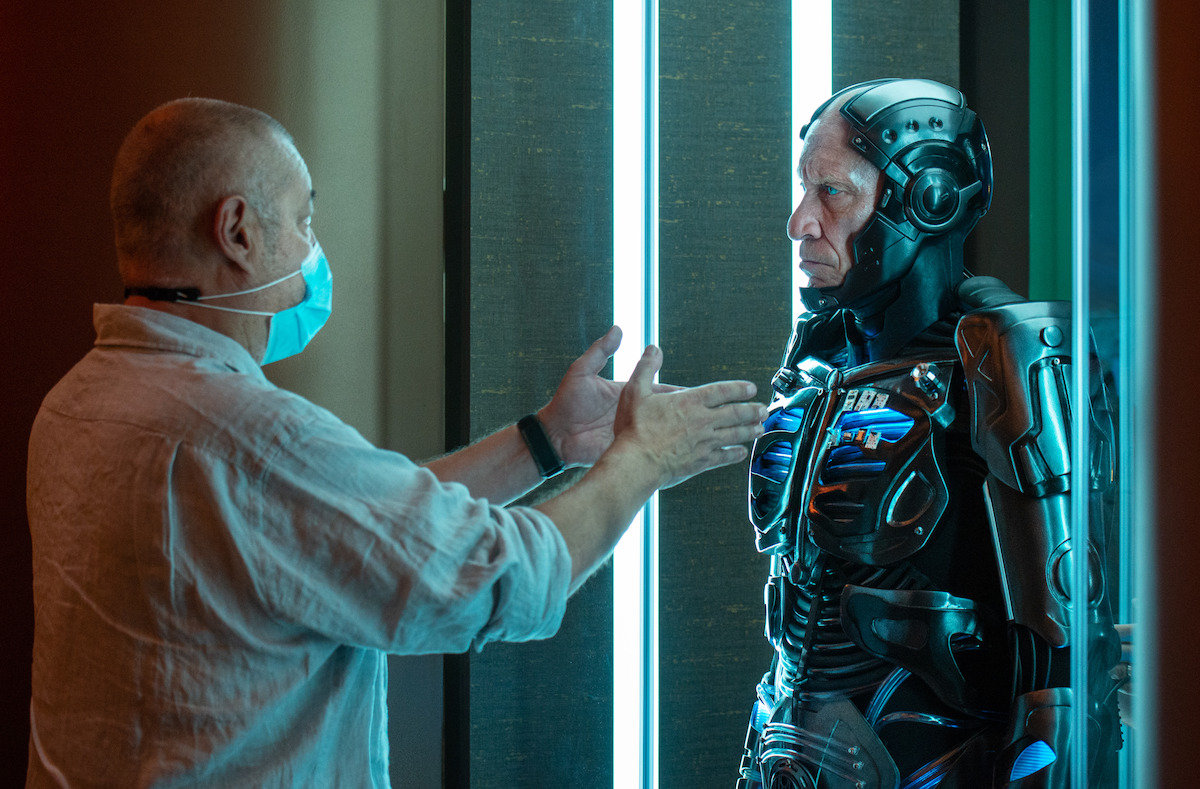
Jeunet wanted a subtle approach for the humanoid robots, working with visual effects supervisor Alain Carsoux on animations like electricity moving under their skin. Jeunet also demanded similarly subtle performances.
“For the actors, we made sure that they didn’t move in a mechanical manner, because audiences aren’t idiots and would have felt that the acting was forced,” Jeunet says. “They had to find the right balance between slightly stiff gestures and caricature.”
Alban Lenoir, who plays the sports robot Greg, worked hard to master a series of tics for the character and physically trained for six months to prepare for a scene where his butt is exposed. In order to embody the limited emotional programming of the robots they were playing, Claude Perron and François Levantal were given a catalog of expressions they could use and were told which to adopt during each scene.
Costume designer Madeline Fontaine, who worked with Jeunet on The City of Lost Children and Amélie, designed the style for Perron’s robot chef Monique to embody a 1960s version of the future.
“We developed materials that didn’t crease, so that they looked plastic and didn’t get dirty,” Fontaine says. “These materials were technically tricky to develop. We also covered Claude’s body in a blueish catsuit to make her look less human. The process was long, and it was done in stages to achieve the result we wanted.”
Fascinated by special effects? Catch a behind-the-scenes video for the Western The Harder They Fall.