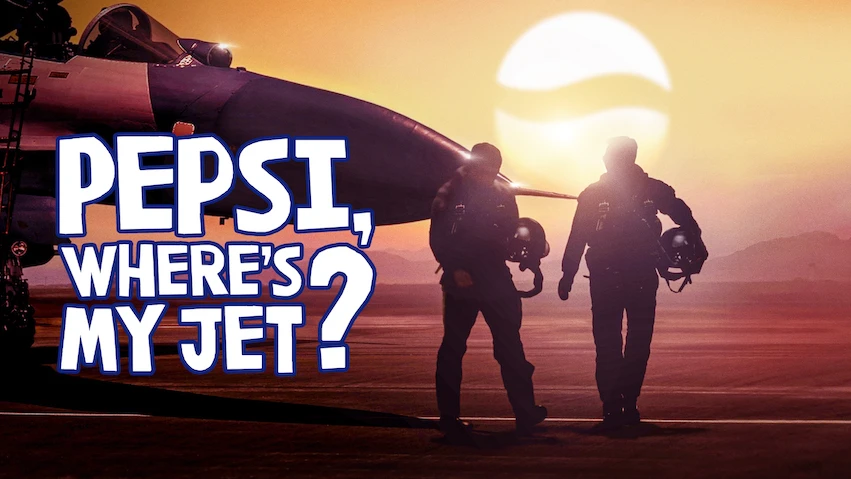
First-year law students spend many hundreds of hours learning the ins and outs of laws that shape modern society, but the landmark cases that discuss basic legal concepts tend to be the most memorable. One that’s forever seared into the minds of young lawyers, thanks to its improbability, is the case at the center of the new docuseries Pepsi, Where’s My Jet?: Leonard v. Pepsico.
“It’s a case that easily captures the public imagination because it’s relatable,” said Dean Sudha Setty of the City University of New York (CUNY) School of Law. “Unlike a lot of cases in contracts that you read in law school where it’s two businesses fighting about a clause and a contract that’s obscure or difficult to understand, Leonard v. Pepsico is about an advertisement that was seen by millions of people.”
In 1995, college student John Leonard was eager to go on his next adventure, and he’d finally found a way to do so: by taking advantage of the wildly popular “Drink Pepsi, Get Stuff” marketing campaign that gave consumers a way to earn Pepsi Points from their purchases and then redeem those points for some super-fashionable merchandise plastered with the Pepsi logo.
Leonard was struck by a Pepsi TV ad that featured a slick young man who’d won himself a bunch of Pepsi gear, including a $32 million Harrier jet for only 7 million points. Without disclaimers or fine print, the only legal language Leonard found was within a clause in the Pepsi Stuff catalog that detailed the process for consumers to purchase Pepsi Points for 10 cents apiece. Armed with 15 Pepsi Points and a $700,000 check supplied by investor friend Todd Hoffman, Leonard sent the money and points to Pepsi, awaiting word on whether the company would come through on the alleged promise it had made on TV.
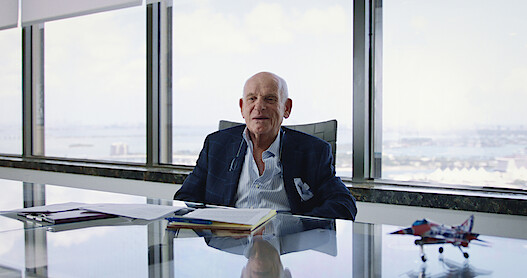
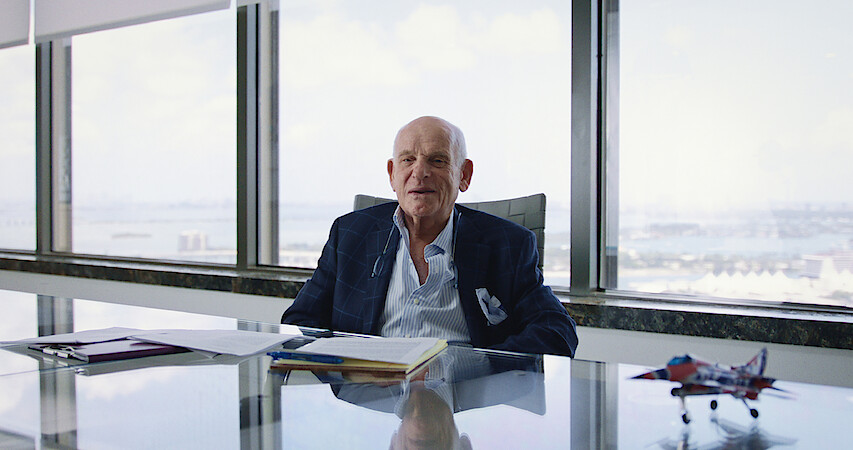
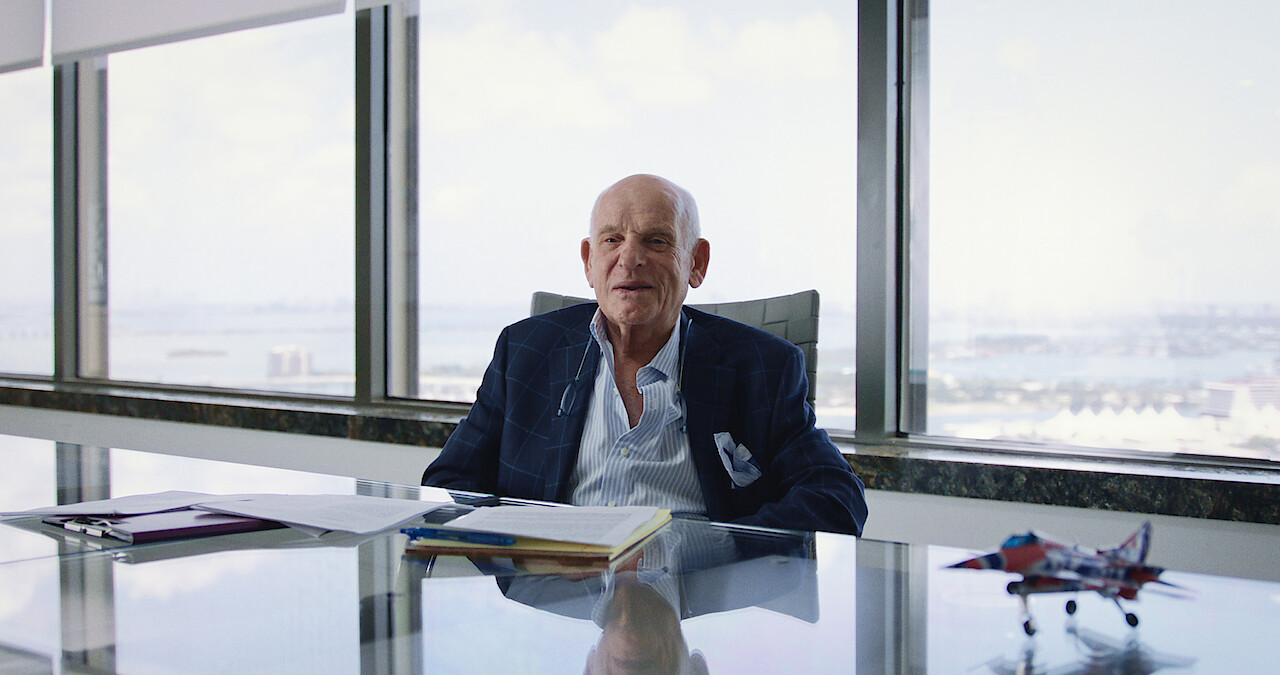
Spoiler alert: Pepsi didn’t make good on its apparent offer. The company sent back Leonard’s check, offered him two coupons and relayed that the commercial was meant to be a joke. As Jeff Mordos, account manager for Pepsi’s ad agency at the time, says in the docuseries Pepsi, Where’s My Jet?, “Hundreds of millions of people saw the ad, and there’s one guy who says this was a serious offer? That was ridiculous.”
That’s when the legal battle began.
Leonard refused a settlement offer after Pepsi initially sued him. In the lead-up to the court case, Michael Avenatti even made an appearance. (Yes, that Michael Avenatti.) Avenatti eventually left the legal team, and complex litigation attorney David Nachman was brought on board. “Holding Pepsi to account really motivated me and my team to pursue this,” Nachman said.

A young Michael Avenatti around the time he worked with John Leonard.
The case was assigned to Judge Kimba Wood, who ultimately decided to grant the summary judgment in Pepsi’s favor. “[N]o objective person could reasonably have concluded that the commercial actually offered consumers a Harrier jet,” she wrote in her opinion. “If it is clear that an offer was not serious, then no offer has been made.”
“There’s no question in my mind Judge Wood thought she might’ve been writing for the law books,” Nachman said of the decision, noting that it was a “rather lengthy opinion for a straightforward contracts case.” As it turns out, she was: Leonard v. Pepsico is now one of the most well-known contracts law cases in America.
The case is often used to teach law students about mutual assent and how the reasonable-person standard influences if and when an advertisement can be considered an offer. “What would a reasonable person think about this? Would they understand it to be a joke, or would they understand it to be a serious offer that’s being made?” Setty asked.
Law students sometimes debate whether Leonard’s belief that he was accepting a valid offer was actually reasonable or if he had reason to know that a serious offer hadn’t been made. “I think that there’s a distinction between someone who’s relatively young but is reading the fine print and trying to get away with something as opposed to someone who goes out and buys a ton of Pepsi products with a group of friends and collects all of the points,” professor Matthew Charity of CUNY School of Law tells Tudum. “I think that the second person would have a better indication that they were actually fooled by how the product was advertised in a way that Leonard was not.”
Twenty-five years have passed, but John Leonard still thinks Pepsi’s offer was real. “From a long-tenured federal judge’s perspective, it may not have seemed like a legitimate offer, but I can tell you, millions of my peers saw the commercial and thought it was an offer,” he says in the docuseries.
Fair or not, Leonard v. Pepsico reaffirmed the clear-cut rule that advertisements are not ordinarily considered to be offers, and further emphasized that, in general, an advertisement cannot be considered an offer if it is taken in jest by a reasonable person. For what it’s worth, maybe because lawsuits can be quite costly — perhaps even as costly as a Harrier jet — to avoid any possible confusion in the future, Pepsi’s ad agency later updated the commercial to list the cost of the Harrier jet as 700 million Pepsi Points and added the words “Just Kidding” beneath the price.