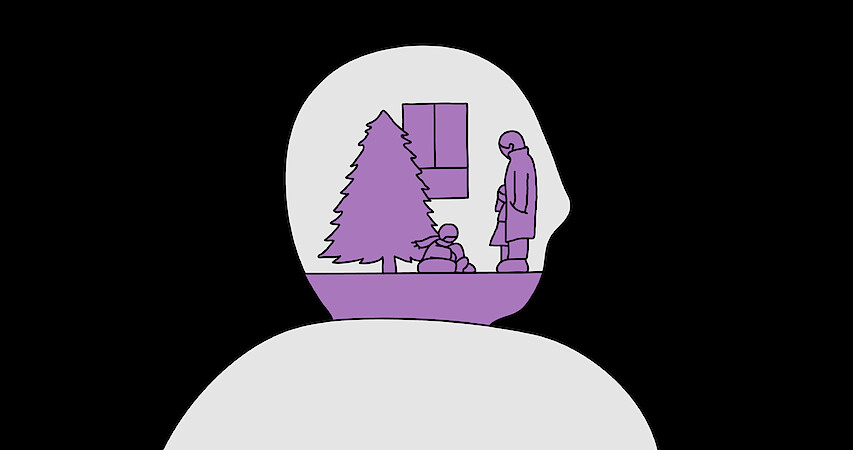
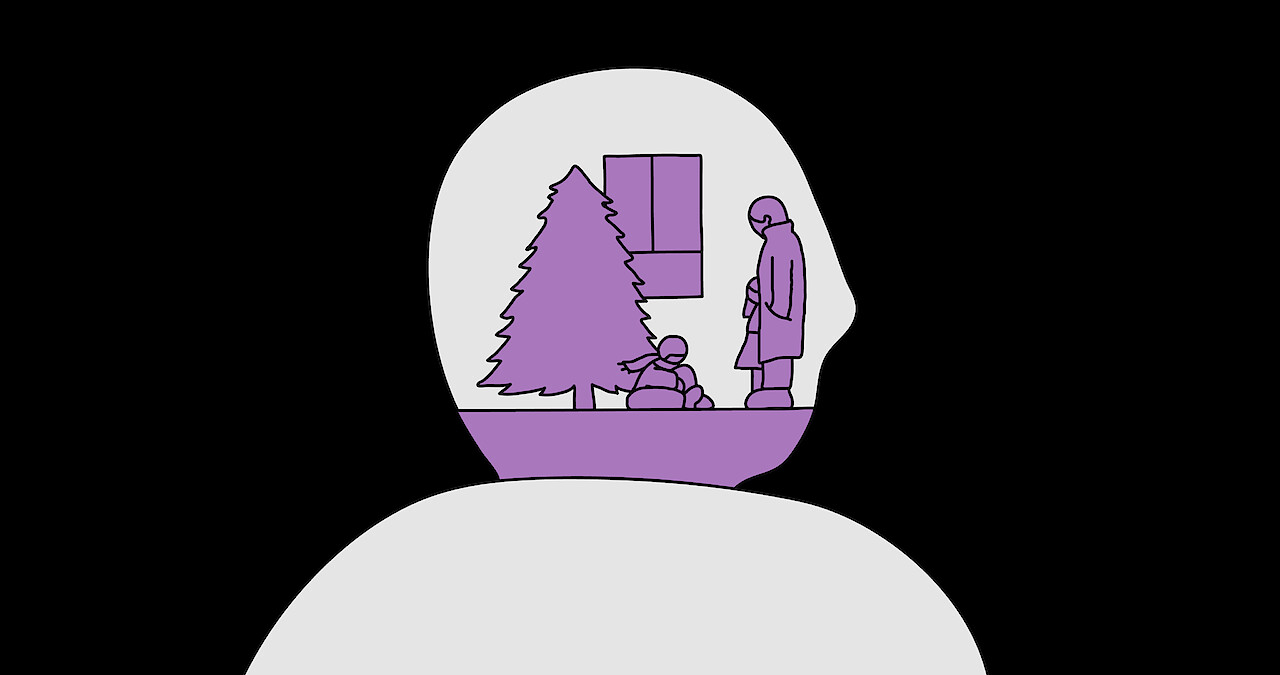
Illustration by Igor Bastidas
My Daughter, a Christmas Movie and Transcending Family Loss
Discussing hard topics with your kids over the holidays.
By Clint Edwards
Dec. 17, 2021
Hi there. Welcome to “Screen Time,” a weekly column about the positive side of family streaming written by father, author, and blogger Clint Edwards.
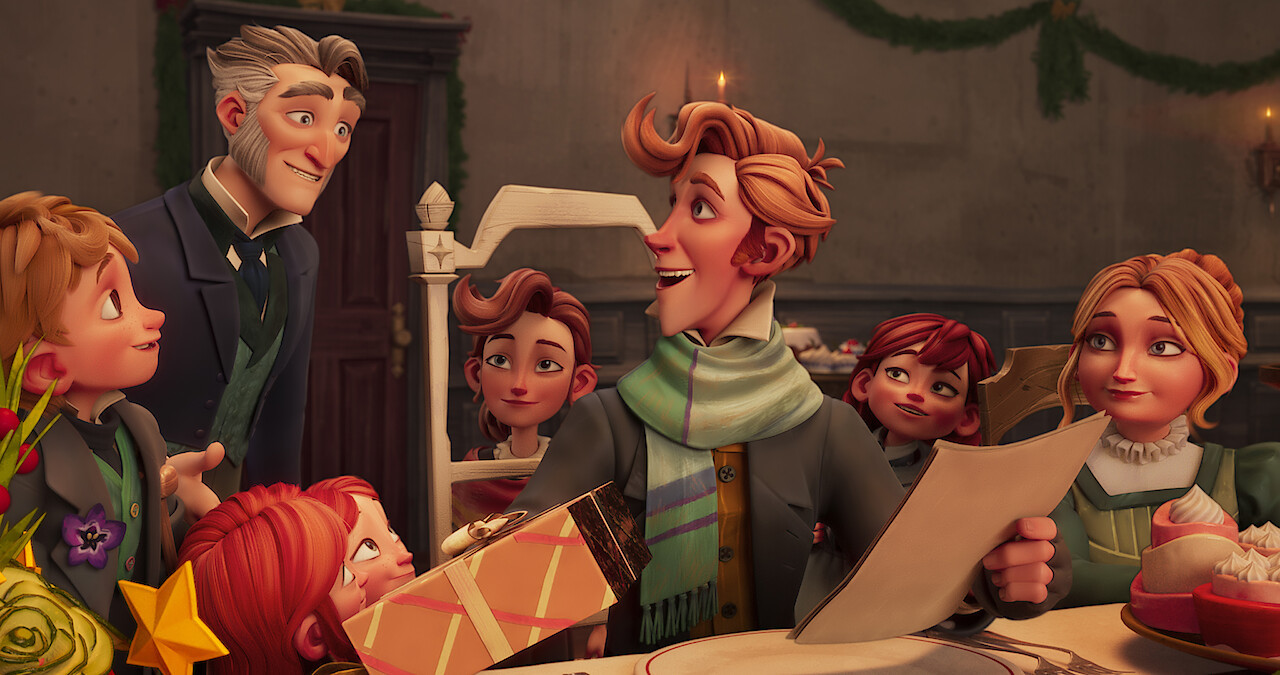
Just after Thanksgiving, my 12-year-old daughter Norah and I sat on our sectional, just the two of us, and watched The Claus Family as a way to get into the Christmas spirit. Thirty minutes into the film, as Norah, wearing pink horn-rimmed glasses, a pink llama print T-shirt and jeans with llamas on the knees (she’s in a llama phase) was snuggling into my side, she looked up and asked a question that led to a conversation I didn’t expect. We’d just learned that the main character, Jules, hates Christmas, and Norah said, “How could anyone hate Christmas?” She asked in a completely flabbergasted tone, almost like hating Christmas was as absurd as hating baby dolphins or Steve from Blues Clues.
“No one hates Christmas... right?” she said with a giggle.
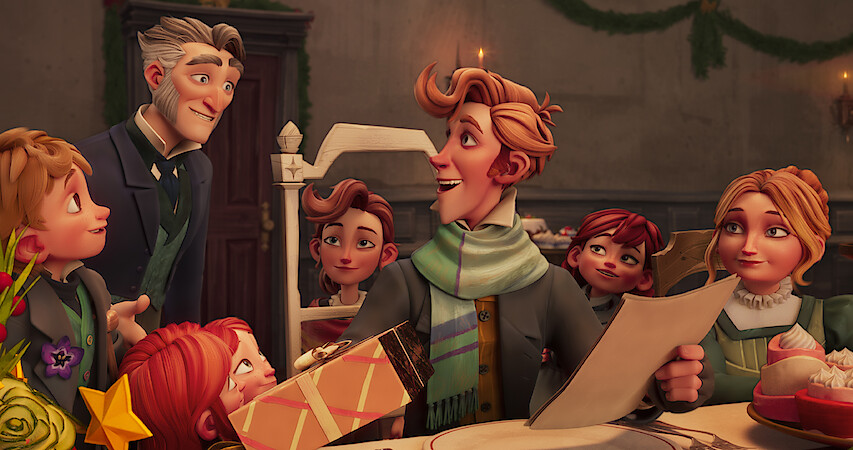
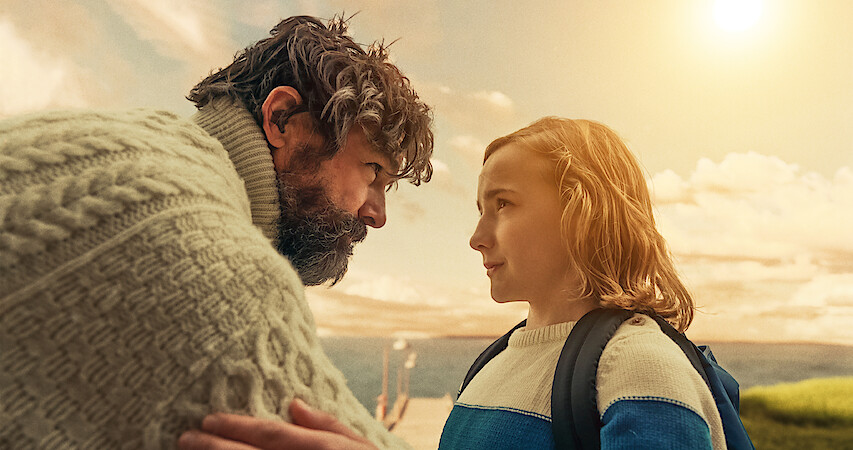
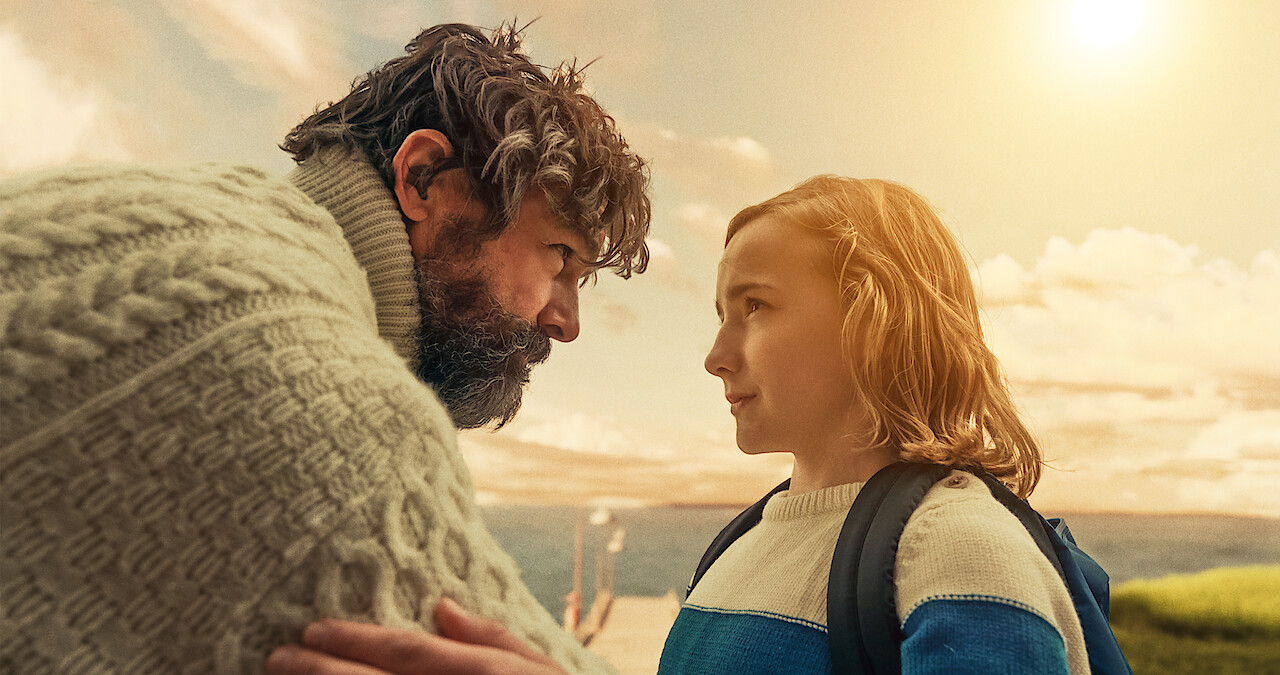
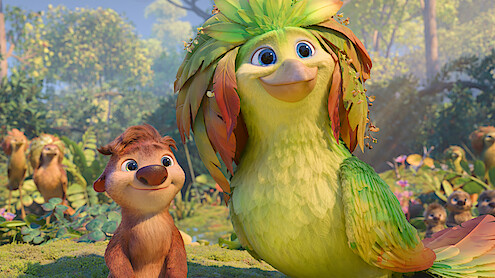
For those of you who haven’t seen it yet, The Claus Family tells the charming story of young Jules Claus, whose family moves closer to his grandfather after the untimely death of Jules’ father, only to discover a pretty tantalizing family secret: His grandfather is, in fact, Santa Claus. However, there’s one problem. Jules absolutely hates Christmas, and honestly I couldn't help but feel a connection with his reasons. Like Jules, my father died just before Christmas too, and sadly, that’s why Jules and I both hated Christmas for a time.
So I gave Norah my confession: “For a while, I kinda hated Christmas for the same reasons Jules does.” And I’ll admit, she looked a little surprised, so I reminded her of how my dad left when I was 9, and I had a pretty sparse relationship with him until he died, from a long battle with drug addiction, when I was 19. “He died in December,” I said. “A few weeks before Christmas.”
Naturally, I’ve talked with my daughter about my father. I’ve told all three of my children about how their grandfather was an early victim of the opioid epidemic; and about his time in and out of jail; and how my overall hope, my goal, my mantra, when I became a father was to be there for my kids the way I always wished my father could have been. But it’s hard for a child to understand the challenges of their parents, and I doubt Norah will ever really understand the loss I felt around the holidays when I was her age.
“You know, I can remember many Christmases before my father died, wondering where he was, and longing that he’d be there. And after he died, it felt like I’d lost the hope that he could turn things around and be the dad I always wished for, and honestly, that loss hurt worse than losing him,” I said.
And as I looked at Norah half watching The Claus Family, half listening to me, I realized that she’s never experienced longing like that. Her father was always there on Christmas morning, sitting next to her on the sofa in a pink bunny union suit like a middle-aged Christmas Story Ralphie, holding a black garbage sack and asking for her used wrapping paper so she won’t “make Christmas a mess.” The closest she’d ever come to longing for a parent during the holidays, and hopefully ever will come, was watching it play out in the movie we were watching together.
And as I had that thought, Norah asked me another question, only this one gave me much more pause than the first. Jules was out with his Grandfather, doing the Santa thing, secretly giving gifts to kids. They get a letter from a child asking Santa for his dad to come back from the military for Christmas, and Norah asked, “Did you ever ask Santa to bring back your dad?”
I paused for a moment, and then I nodded and said, “Yeah. I did. Particularly when my dad was battling addiction and I didn’t know where he was. But even after he died,” I shrugged. “When I was far too old to write letters to Santa, I’m pretty sure that if I thought it would work, I’d have asked Santa for my dad.”
It was quiet for a moment. Finally I said, “There’s something about not having a loved one around at Christmastime that really changes things.”
She paused and looked at me with soft-weighted eyes, and said, “Oof. I’m sorry dad.” Then she leaned in and gave me the most heartfelt squeeze, the kind of hug fathers live for. And as I held her, I said, “But do you want to know the best part of all of this?”
Norah pulled away and looked up at me through her pink glasses, and I said, “Each Christmas that I spend with you, well... it feels like I’m getting the chance to have the holiday I always dreamed of as a kid, only I’m on the other side of the equation now. I’m the dad. And I’m loving it. You’ve completely changed the way I feel about Christmas. So... thank you.”
I smiled at her, and Norah hugged me again. I squeezed her a little tighter, and we just kind of stayed that way until the end of the movie. And once it was over, I couldn’t help but realize how powerful this moment was. This simple Christmas film helped my daughter better understand the struggles of my childhood, while also making me incredibly grateful to be there, next to her, experiencing the moments I’d loved to have shared with my father.