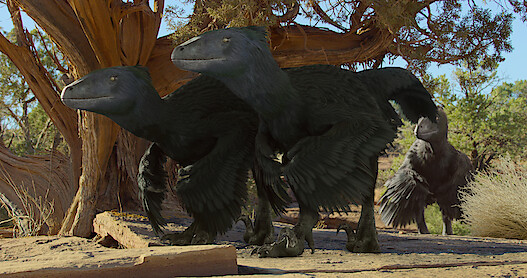
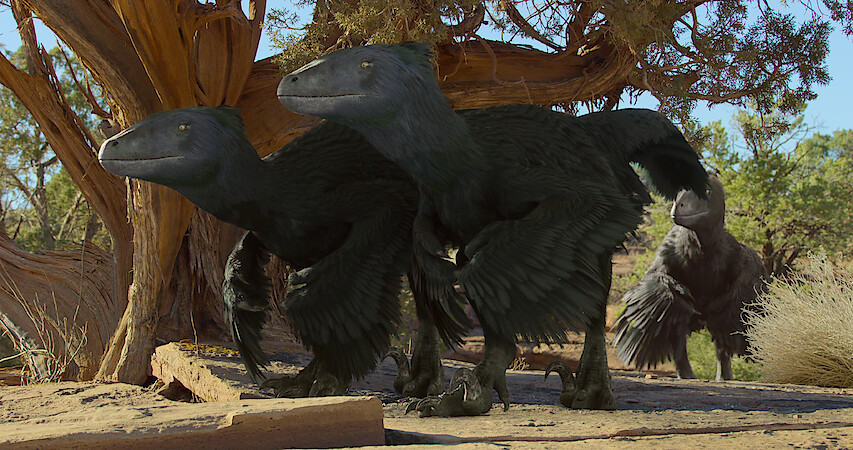
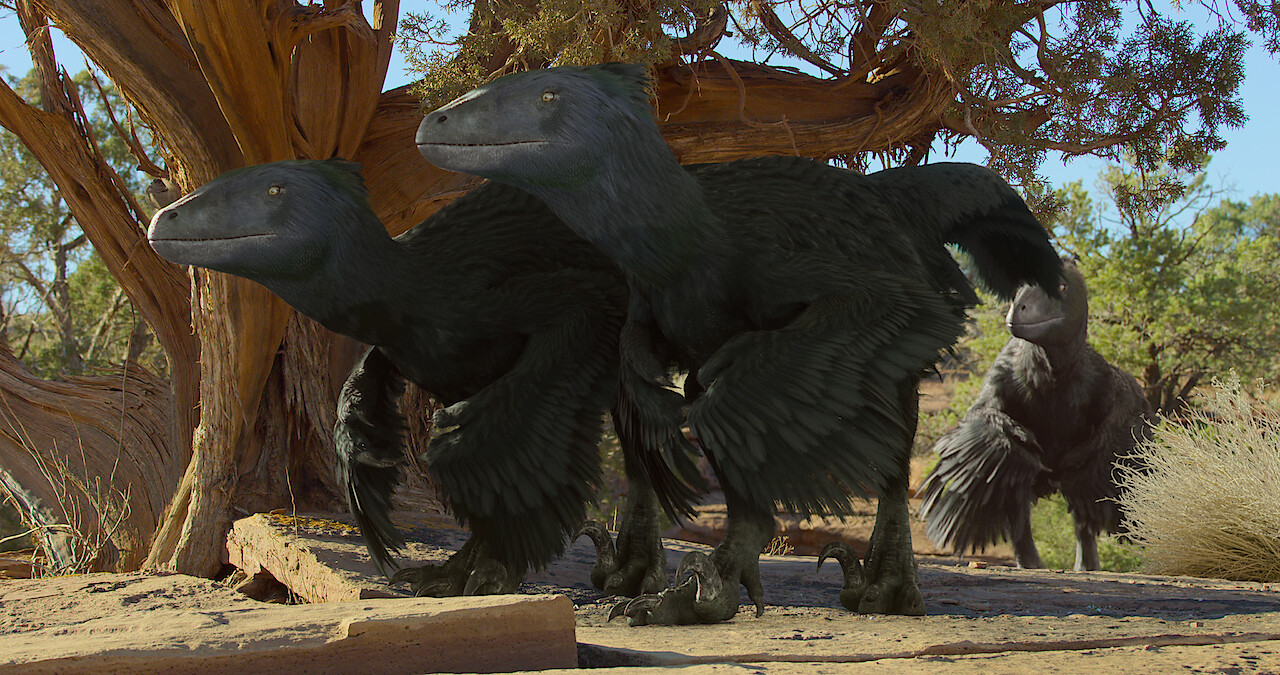
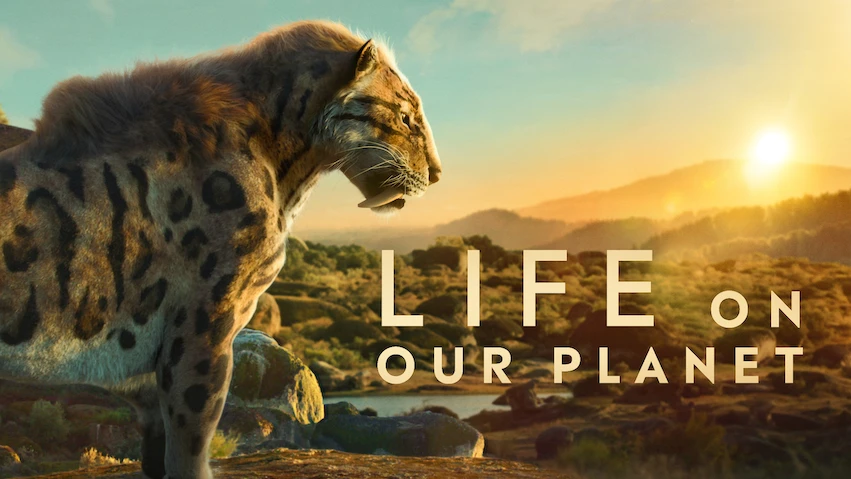
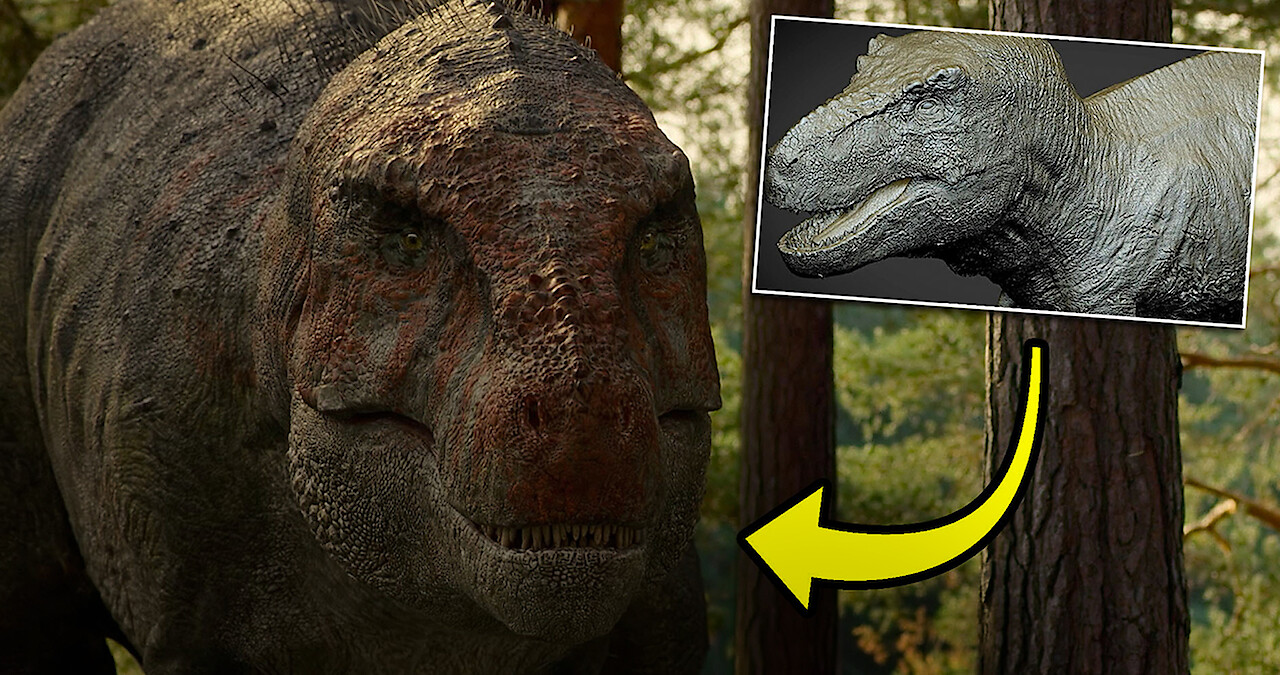
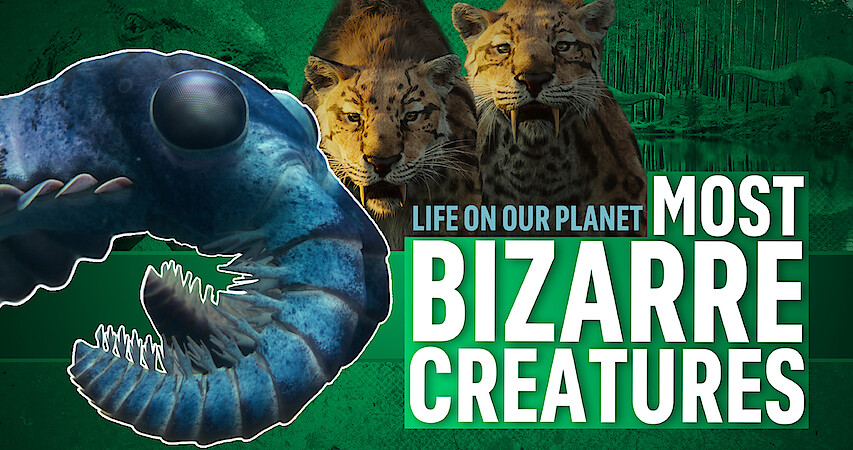
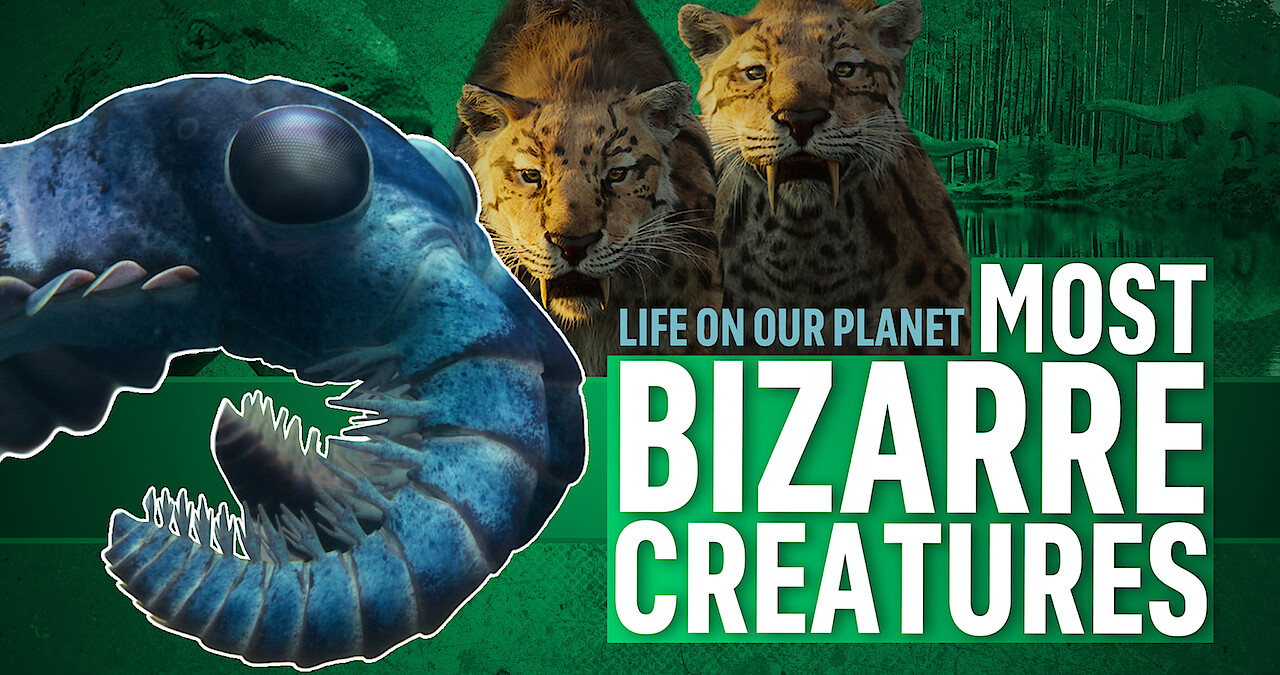
A Tyrannosaurus rex and Triceratops battle it out, so scaly you want to reach out and touch them. A giant squidlike sea monster floats ominously in the brine, more freaky and menacing than any puny great white shark. A woolly mammoth, 12-feet tall, weighing over 7 tons, stomps through the snow. All as seemingly real as the actually real live-action shots of familiar insects and birds and mountains and rain forests that surround these long-extinct creatures and persist among us today. The new eight-episode docuseries Life on Our Planet, from the producers of Our Planet, is a nature documentary with a difference, augmenting its footage of the world around us with hyperrealistic renderings of long-extinct creatures, brought (back) to life by bleeding-edge technology.
Life on Our Planet aims to tell no less a story than life on Earth. All of it — not just the currently living species you’ve seen in the Our Planet series. As narrator Morgan Freeman tells us in the first episode, while there’s a dizzyingly diverse 10 million species of plants and animals alive now, that represents only 1% of all life that has ever existed on the globe.
When the Our Planet folks first conceived their dream project Life on Our Planet six years ago, they thought it might be impossible to pull off.
“Someone floated the idea of having a go at the story of life. And, to be honest, they almost got ridiculed because of the idea,” Life on Our Planet series producer Dan Tapster told Tudum. “[The thinking was,] ‘There’s a reason no one has tried to do it. It’s too hard.’ ”
But VFX and other filmmaking tech evolves rapidly, and the folks who pitched the series had a secret weapon on their side during production: Steven Spielberg. The director of the OG dino blockbuster Jurassic Park — a groundbreaking film in 1993 for its use of new computer technology to render prehistoric beasts — came on board as an executive producer and brought along the enviable resources of his production company, Amblin.
On top of that, Lucasfilm’s legendary VFX studio Industrial Light & Magic, also responsible for Jurassic Park’s digital dinos, provided the computer wizardry behind the sequences of Life on Our Planet — starring ancient species.
“[ILM] wasn’t just a company that did the graphics,” Tapster says. “They really lived and breathed the entire series and became an absolutely integral member of the team.”
Finally, Tapster hired cinematographer Jamie McPherson, who’d worked on Our Planet and Frozen Planet II and had experience blending real-world nature shots with digital VFX. “When the opportunity came up to film T. rex,” McPherson says, “I couldn’t say no, really.” (As he says this to Tudum, he’s wearing a vintage Jurassic Park T-shirt.)
In parallel to the makers of movie magic, Life on Our Planet needed academics, and so tapped lead scientific researcher Tom Fletcher, a paleontologist and honorary fellow at the University of Leicester in England.
Fletcher set about reading thousands of papers and trading notes with the 165 other scientists who consulted on the series. The team sorted through thousands of color-coded Post-it notes on the many different animals and ecological, geological, oceanographic, and meteorological eras covered in the show. “The fact-checking that went into this was mind-blowing,” Fletcher says.
All in all, across six years of planning and production, the series would involve a crew of 440 people; visits to six continents; portrayals of 500 species, some still living and some very dead; 868 VFX shots; and 2,181 hours of footage filmed. Oh, and along the way, a global pandemic necessitated 26 weeks spent in quarantine hotels.
Read on to see what the makers of Life on Our Planet had to say about how they pulled it off, the sneaky filmmaking techniques they used, the references and Easter eggs they planted, the Morgan Freeman and Spielberg of it all, and more.
It all started with the story of life.
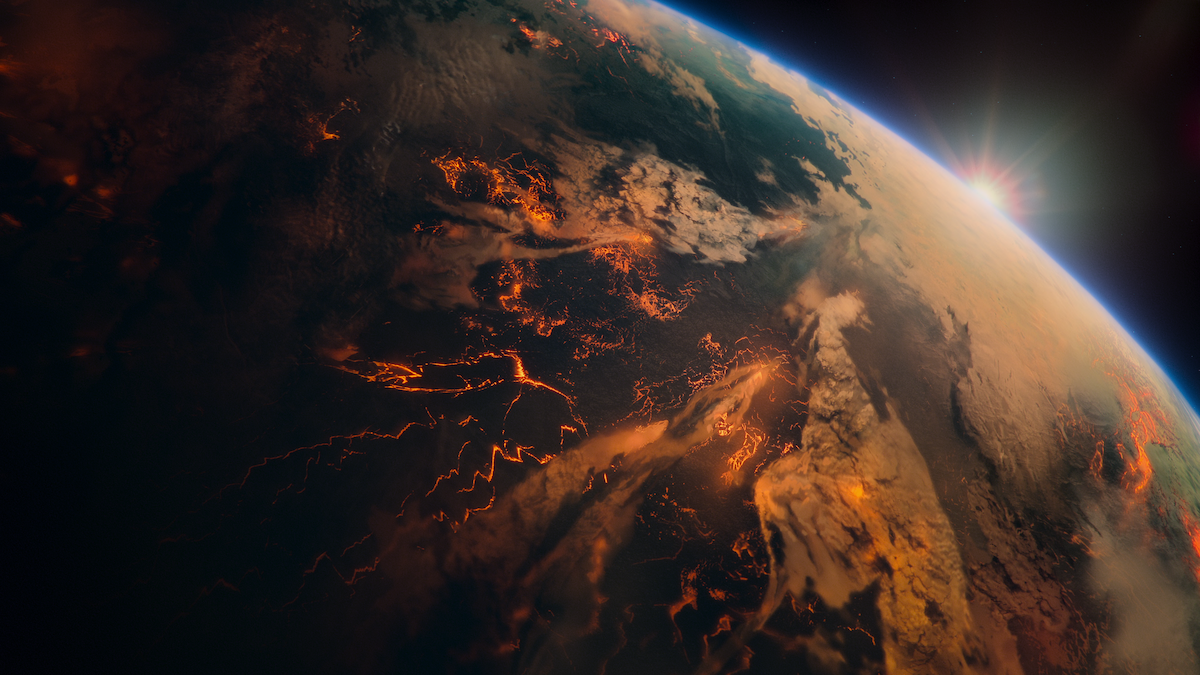
When you’re examining all of life, beginning 4 billion years ago when Earth was a volcanic mess with a single cell from which all future living things flowed, what do you not include? Or more to the point, how do you even attempt to frame that story?
“We found a way to turn the story of life into a kind of serialized drama, really,” Tapster says of finding the through line in the plot. He and his team attuned themselves to those frankly melodramatic moments far before our own time, with “underdogs planning their rise in the background and dominant dynasties losing because they were overconfident.” In other words, there’s something positively Shakespearean about watching delicate butterflies beat out dinos in the race to simply keep repopulating.
That high-stakes drama extends to the Ice Age 2.5 million years ago, the time of emergence for previously weak-seeming mammals — i.e., our grandest of parents.
In some ways, Life on Our Planet was harder to create than Jurassic Park.
Fletcher and company won’t argue that they’re better directors or arbiters of cinema than, ahem, Spielberg. But they’re happy to tell you that they overcame challenges he didn’t. Because Life on Our Planet is a nature documentary, even its most fanciful scenes had to be filmed like one. That means no close-ups, quick cutting, or other cinematic tricks to save the labor of rendering the whole animal, frame by frame.
“The effects in Life on Our Planet are harder to achieve than in, say, something like Jurassic Park because there is absolutely nowhere to hide,” Fletcher says. “Whereas if you watch a Hollywood blockbuster, they tend to use some trickery.” No cutting away to Jeff Goldblum and Laura Dern talking about chaos theory this time.
And there were other cinematic references film geeks can get behind...
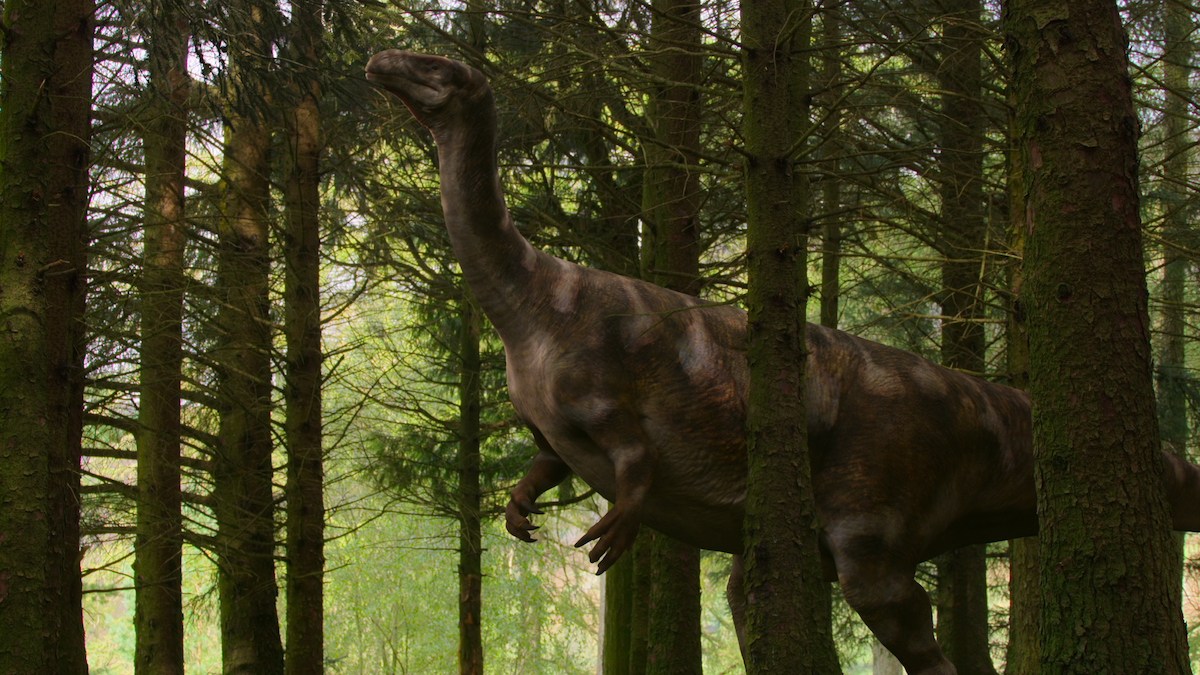
Film scholars might be tickled by how Life on Our Planet playfully nods to cinematic history. Among the sly Easter eggs is a camera move showcasing a Plateosaurus — a tilt-up that Spielberg nuts will recognize as a loving allusion to Jurassic Park.
Another nod is less expected. In a scene involving a gorgonopsid, McPherson was delighted to add his own reference to the moment in Shaun of the Dead when a zombie bites down on a pigeon. You’ll know it when you see it. Likewise, there’s the trilobite that gets “taken” (albeit by a predator that does have a very particular set of skills).
There were toys involved.
The occasional CG mosasaur or Smilodon aside, most of what you’re seeing across the eight hour-long episodes of Life on Our Planet is really there.
The camera crew traveled across the whole globe to film ancient creatures that still flourish in certain areas, from plankton to Komodo dragons and inextinguishable bugs. (The cliché that insects are perpetual survivors is not wrong — they go back hundreds of millions of years and handily outlasted the dinosaurs.) The crew also carefully selected the terrain where they’d film the vast widescreen landscape shots that the CGI boffins would populate with T. rex, terror birds, and everything in between.
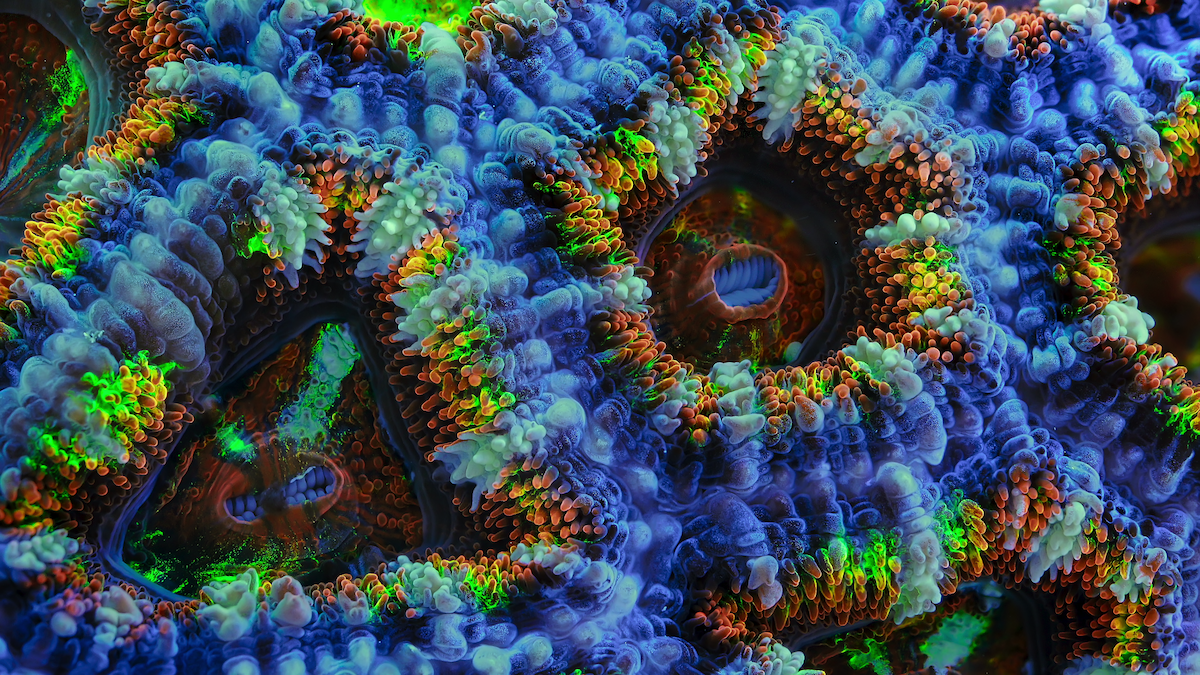
The location scouting proved arduous. Fletcher and his fellow researchers put their red pen to any spots that proved too welcoming to historically inaccurate organisms. Many natural “sets” had to be eliminated, or at least digitally scrubbed of contemporary plants in post production. “We said, ‘I’m sorry, coral hasn’t evolved yet,’ or grass, wow, don’t get me started on grass!” Fletcher remembers.
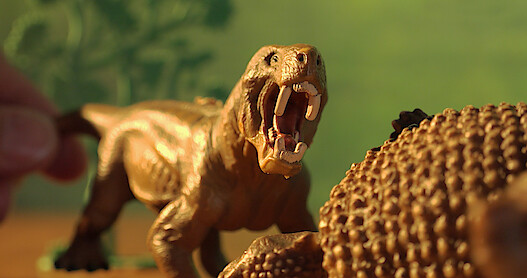
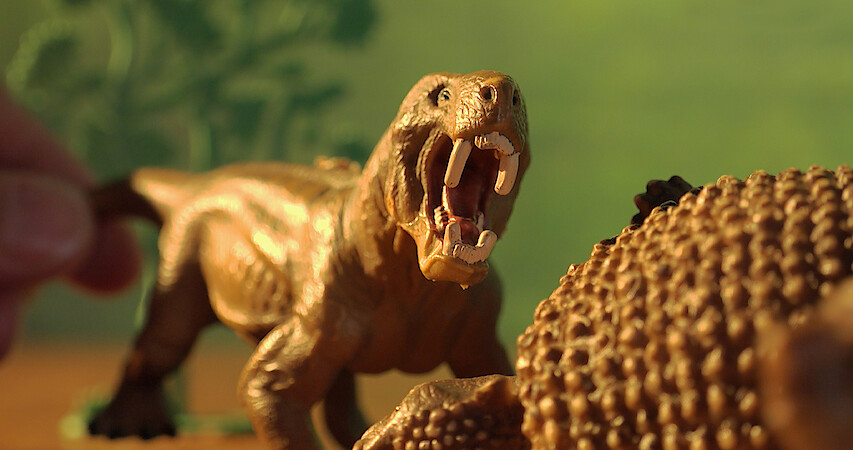
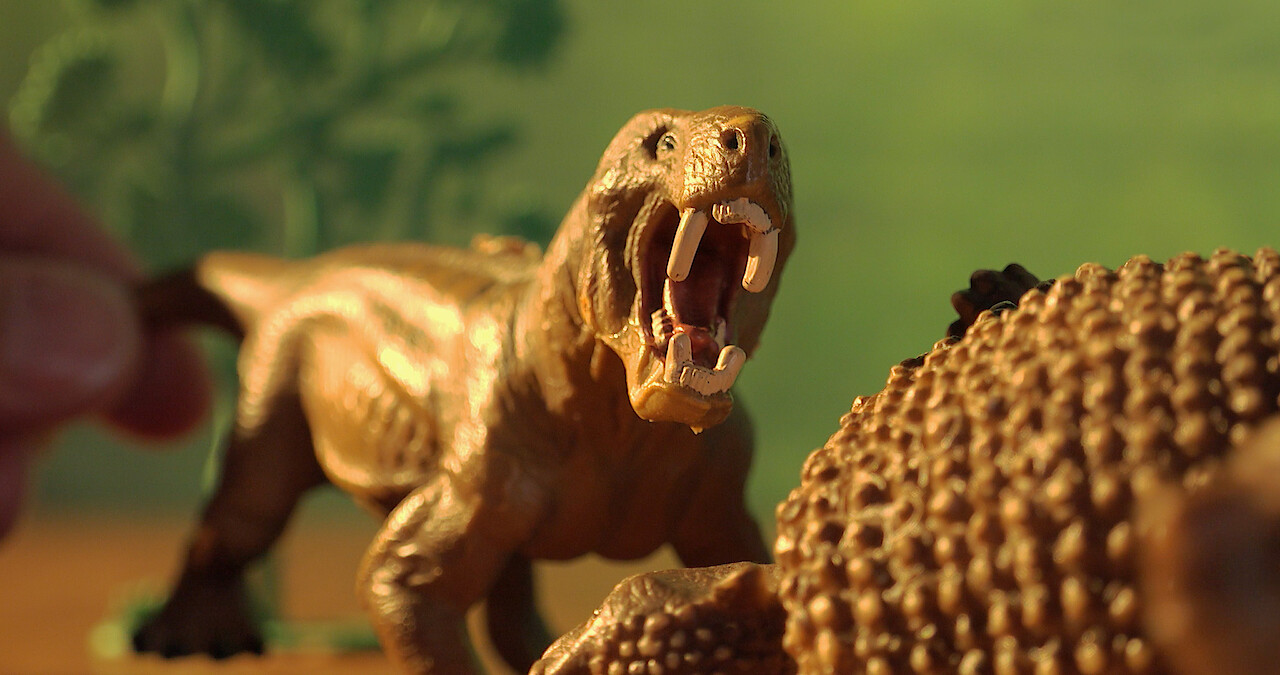
And for those deadly dinosaurs? At first, they were action figures. While pre-visualizing the dino battles, McPherson says, he often relied on little plastic toys to stage what would happen once all the VFX came together. “It wasn’t exactly “Hollywood, but we started with plastic toys — mostly dinosaurs but the occasional Scooby-Doo cameo — and we’re working out the choreography for nearly all our VFX scenes,” the cinematographer affirms.
Life on Our Planet even made the “Boring Billion” entertaining.
Life on Our Planet doesn’t shy away from what we’ll call the “plant stuff.” While it’s difficult to make inanimate organisms shine like raptors on camera, plants were central to the formation of life as we know it. Episode 2 begins with how, 2.4 billion years ago, a cell that developed the ability to photosynthesize kick-started the production of oxygen. It was a slow process, but eventually, more than a billion years later, the planet’s atmosphere was revved up enough for complex life to step up to the plate. Which ultimately includes us. Think of that next time you wade through murky-green algae during what was supposed to be a snorkeling expedition through crystal-clear waters.
“There were definitely some eyebrows raised [about the plants],” Tapster recalls of production meetings. “ ‘Bear with us, we’re going to start the episode with plankton.’ That sounds awful. But then, when you realize plankton changed the world, the power of that story gave us confidence.”
It helped that even the paleontologists had a sense of humor about this slow-going phase of evolution. “[The period] where it was basically just microbes doing their thing has been referred to as the Boring Billion,” Fletcher says. Though, he notes, it’s mainly the scientists who study vertebrates who think this way. Those studying geochemistry “would say it’s fascinating.” And any self-respecting green thumb, surely.
Blending science and VFX worked (mostly) fine.
The job of the artists on Life on Our Planet was to spend all day painstakingly creating elaborate visual models on a computer, and the job of the paleontologists was to tell them, “No, actually, that’s wrong.” But as Fletcher tells it, the trading of notes between the two groups went off largely without hiccups.
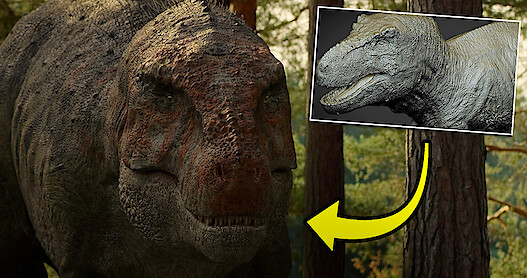
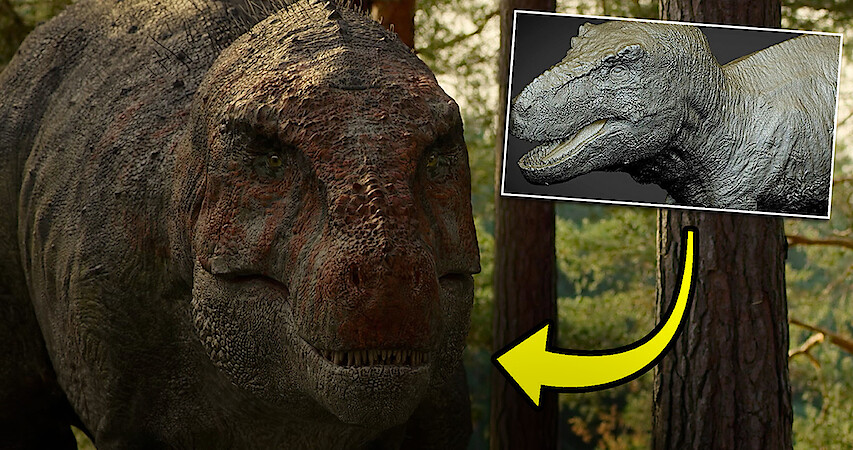
“We would build a fact file [text database], which usually numbered around 100 pages per creature and would include all of the known evidence. We’d then turn this over to ILM saying, ‘This is what the skeleton is like, this is what the teeth are like, how they should be walking, what color they are’ — basically everything. At first, I think they were a bit overwhelmed, but they soon began to cherish the fact files as much as me. At least I think they did…”
Surprisingly, that collaboration was close and productive throughout. Consulting scientists would go through clips frame by frame when giving the animators notes. Finalizing creatures could take up to four months.
The end result isn’t just another natural history doc.
Life on Our Planet is not a typical nature doc in terms of form — or, often, in terms of content.
“I suppose the biggest hope I have is that it punches above natural history. It’s the most unbelievable story that happened to us,” Tapster says, and the team tried to flip the usual natural-history script when possible. If you’re expecting another shot of a predator swooping in to swallow its prey, you’ll frequently be surprised. Sometimes a fierce carnivore doesn’t manage to snag the herbivore it’s after, for all sorts of reasons true to the nuanced ways in which animals interact.
The stalemates “felt at times like the most novel approach,” Tapster says. The messiness of life as we know it trumped storytelling convention. “Plus it was always the bigger-picture point of the story that would dictate the fight scenes — especially who wins and who loses.”
Finally, Spielberg’s dedication and Morgan Freeman’s giggles put the cherry on top.
Dinosaurs are awe-inspiring, sure. But Spielberg is cinematic royalty, and narrator Freeman has played God on-screen — more than once. Yet their collaboration on Life on Our Planet was low-key and thoughtful.
“He was way more involved than I thought he would be, which was exciting and terrifying at the same time,” Tapster says of Spielberg. Though the mogul was understandably a little too busy to attend the weekly VFX meetings, he approved all visual choices along the way.
In contrast to his voice of omniscient wisdom, Freeman got a tad excited while recording his narration.
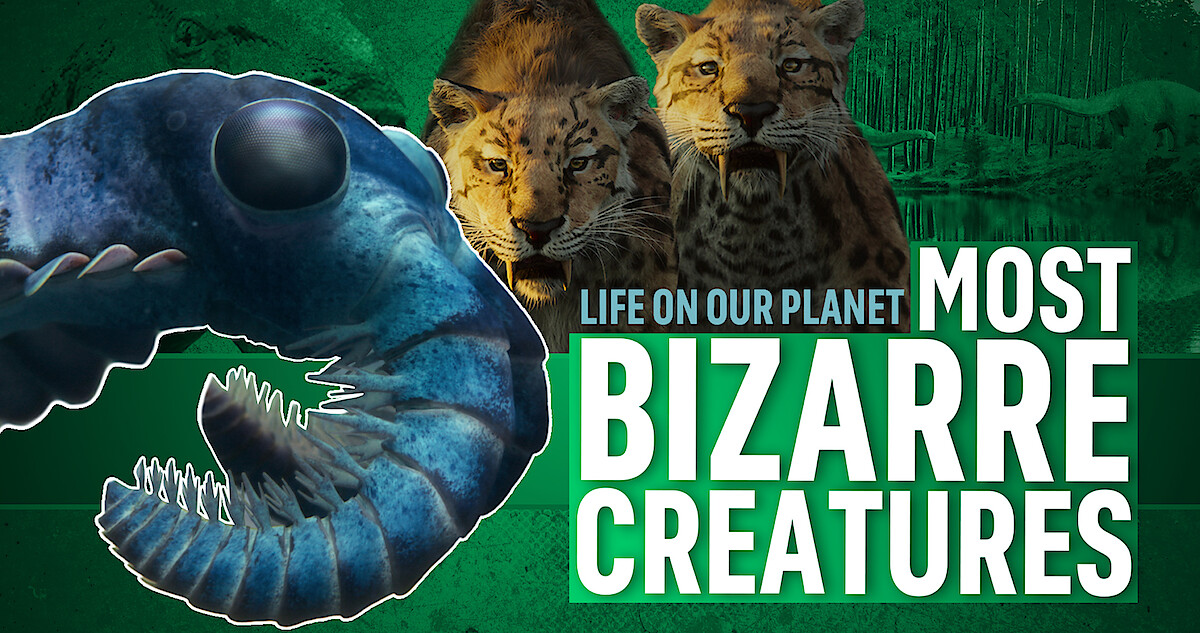
“When we did the commentary, what was really great was how he absolutely loved the subject. He was really into it — super knowledgeable and definitely passionate. But every now and then when looking at the creatures, he would suddenly suffer from a bout of the giggles,” Tapster says. “Which was often entirely justified. I mean, have you seen Arandaspis?” But Freeman also had deep reverence for the story Life on Our Planet, particularly the dreadful possibility that, given current startling facts, Earth may be headed for another extinction event.
“Early on, he did say, ‘I hope you guys are doing the sixth mass extinction. Not just leaving it as everything is all fine and dandy.’ Then when he got to that bit — the very end of Episode 8 — he got quite emotional reading it. And for us, that was a fitting way to end because, well, that’s the reaction I hope we get from the audience — it’s quite the series finale.”
Watch Life on Our Planet on Netflix now.