Adam Rose/Netflix
News
David Chang’s Dinner Time Live Has Holiday Cooking Plans Covered
It’s that time of year, after all.
By Tudum Staff
Dec. 17, 2024
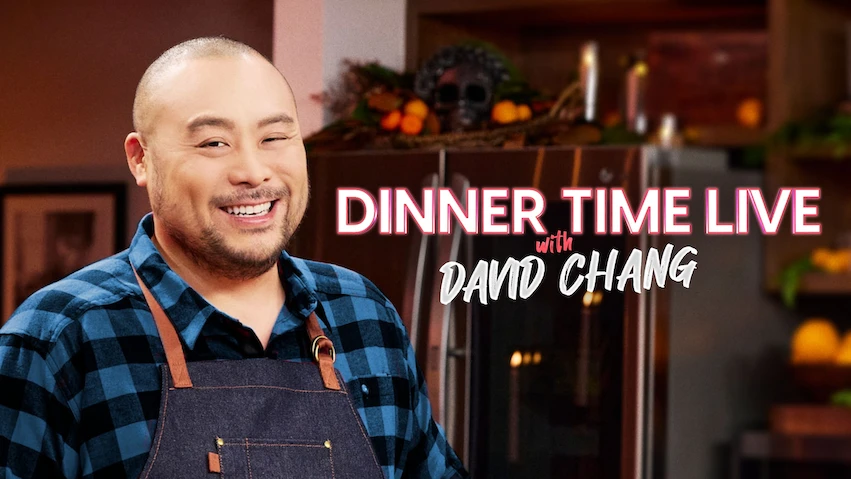
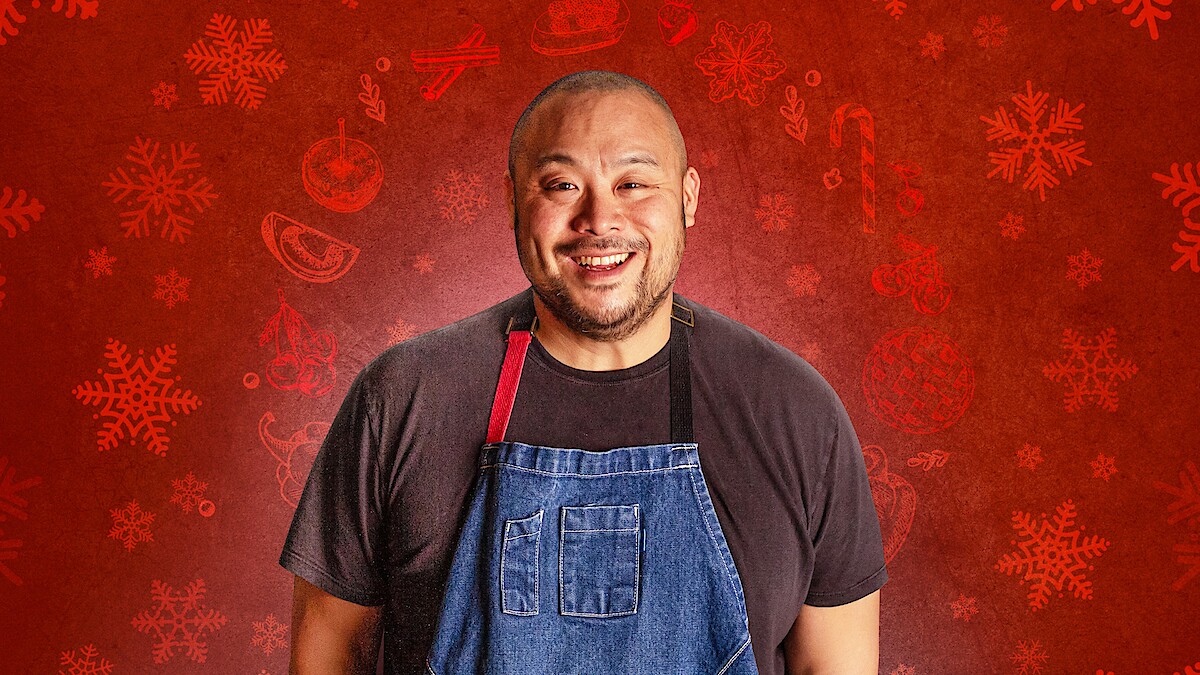
Chefs, prepare your seasonally themed cookware: Dinner Time Live with David Chang is back for a collection of holiday-themed episodes. World-renowned chef David Chang has plenty of experience cooking on camera — and that’s how he knows that 99% of what you see on TV is a lie. Now he’s ready to show the world how a glorious, professionally prepared meal actually gets made, without the assistance of swap-outs, food stylists, cleanup crews, and well-timed camera cuts to make it all look seamless.
Dinner Time Live with David Chang Holiday Edition airs weekly starting Oct. 8, every Tuesday at 4:00 p.m. PST / 7:00 p.m. EST, and each week, Chang will share one of his marquee holiday recipes on Tudum. Explore recipes below — written in Chang’s own words — and if you’re still hungry, explore all the recipes from Season 1 here.
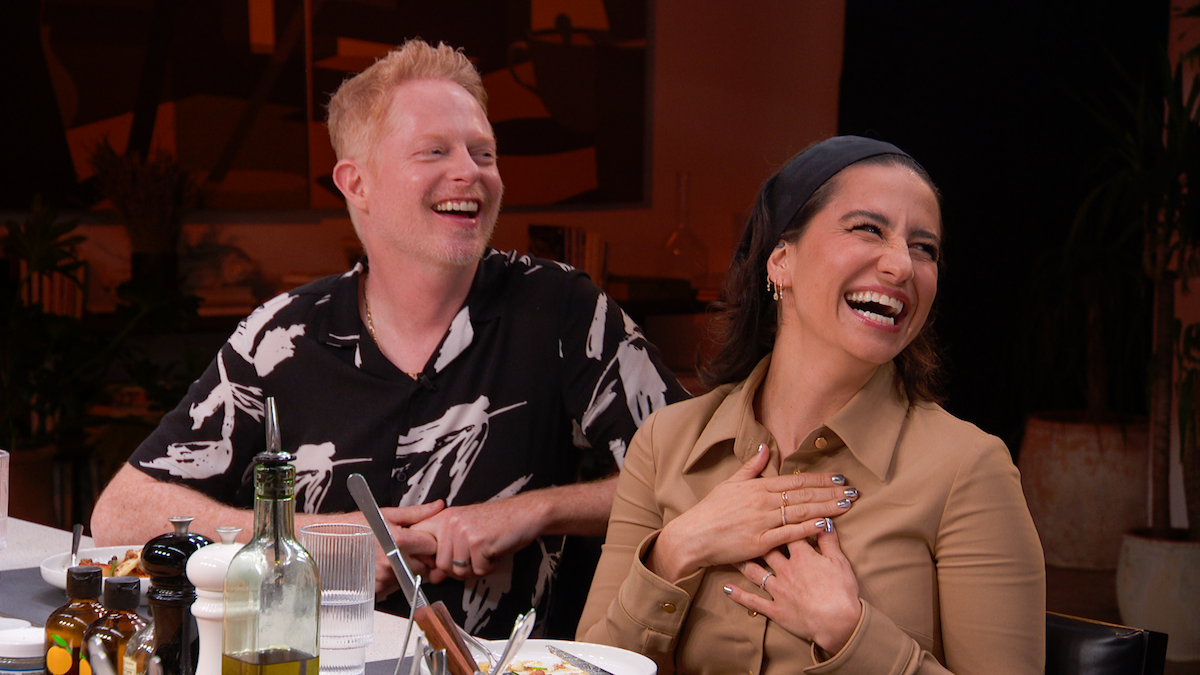
Pumpkin-pie spice is nothing but a marketing run amok. An incredibly powerful campaign to start the holiday season earlier and get you to buy more stuff… which is exactly why we chose pumpkin spice as our theme for the premiere! Watch Dinner Time Live! Drink lattes!
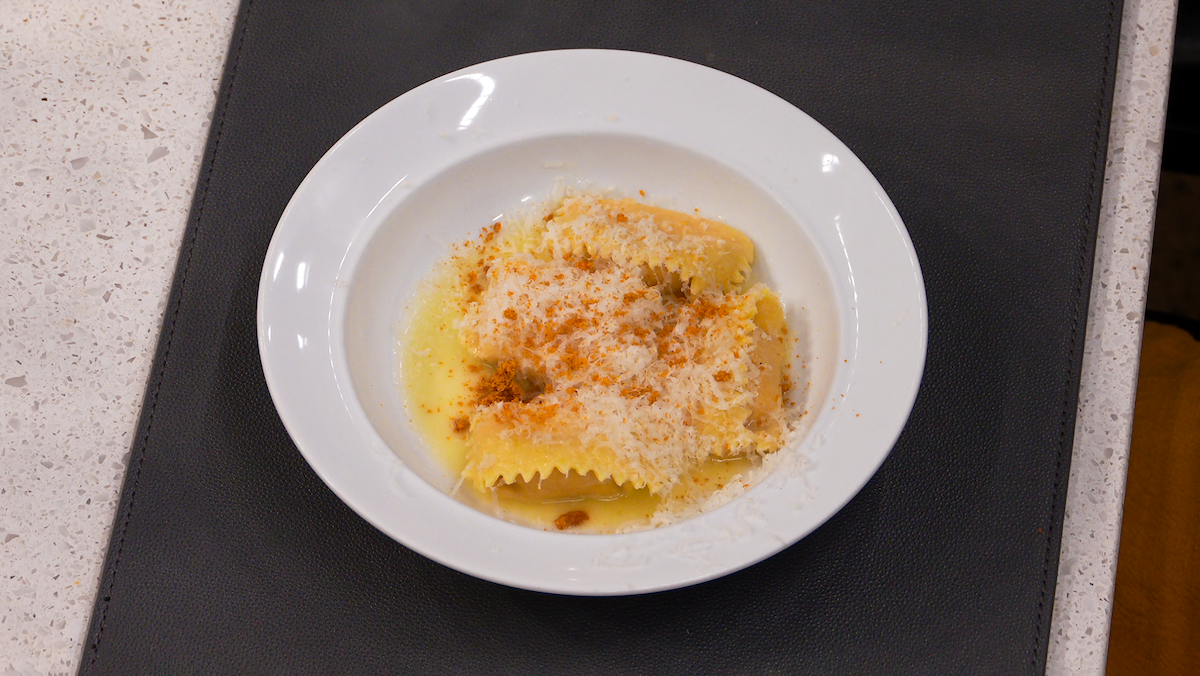
Here’s the thing. There’s absolutely nothing wrong with warming spices like cinnamon, clove, allspice, ginger, and nutmeg. They’re the basis of some of the most delicious things in the world. I just don’t want them in a sickly sweet coffee drink. My goal for this episode was to show our guests — Jesse Tyler Ferguson and Ilana Glazer — how close pumpkin spice is to deliciousness. If you don’t sanitize it and sugarize it, pumpkin spice is reminiscent of curry spice. If you add chili, it’s practically jerk seasoning. Even those seasonal pumpkin-spice cookies that are all over the grocery store right now can be used to make something delicious and traditional: tortelli amaretti, an Italian holiday specialty pasta that combines cookies with roast squash.
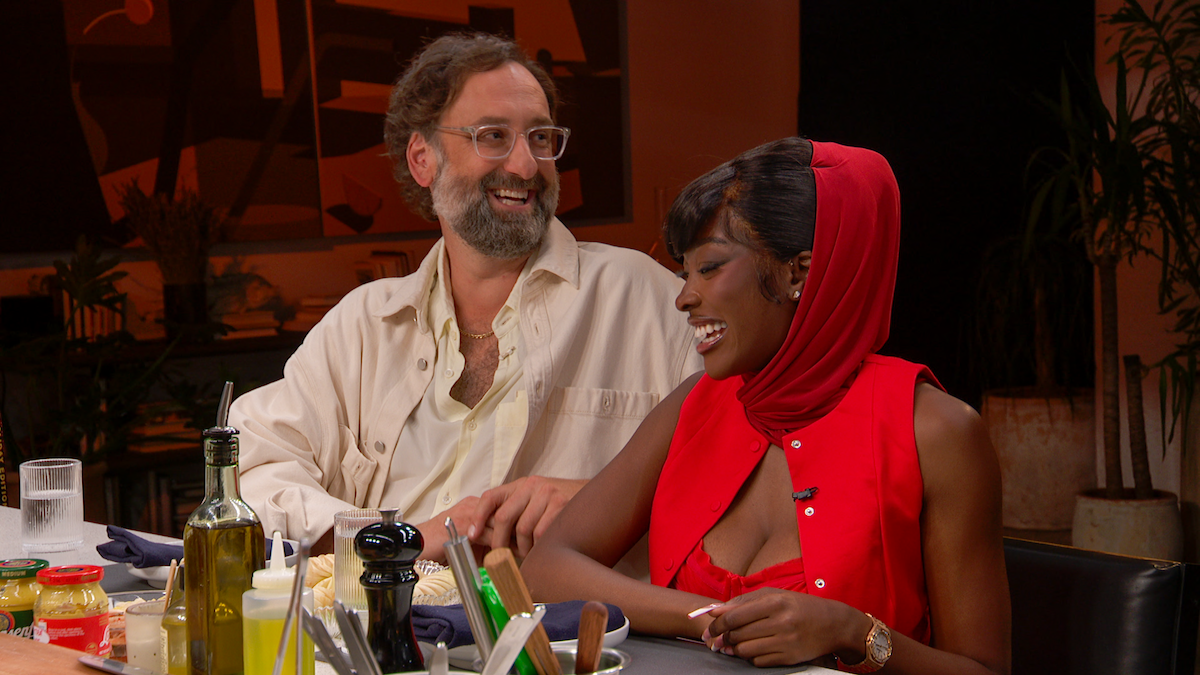
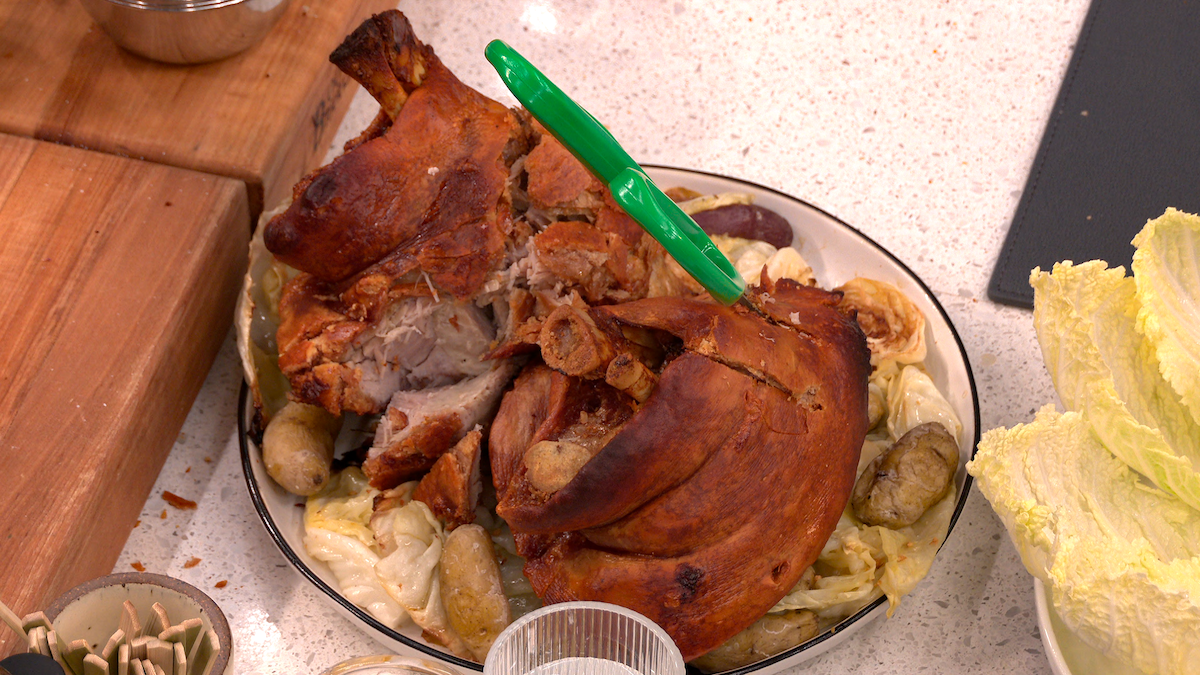
Oktoberfest: a holiday dedicated to pork, potatoes, cabbage, and beer. Not bad. And, surprisingly, while I’ve never made German food, I found the cuisine has a lot of overlap with food I’m more familiar with. For instance, sauerkraut is identical to kimchi, except without the chili. And while there’s no such thing as schweinshaxe in Korean food, the idea of cooking a big piece of crispy pork is very familiar to me.
For the show, I decided to serve the traditional crispy pork knuckle with some nontraditional accompaniments. Instead of potatoes, I opted to make potato pancakes. And rather than sauerkraut, I spritzed some fresh cabbage leaves with sauerkraut juice. The idea was for our guests — Eric Wareheim and Chelsea Lazkani — to make wraps (ssam) out of the pork, just like you’d find at Korean barbecue, or the way we serve our bo ssam at Momofuku.
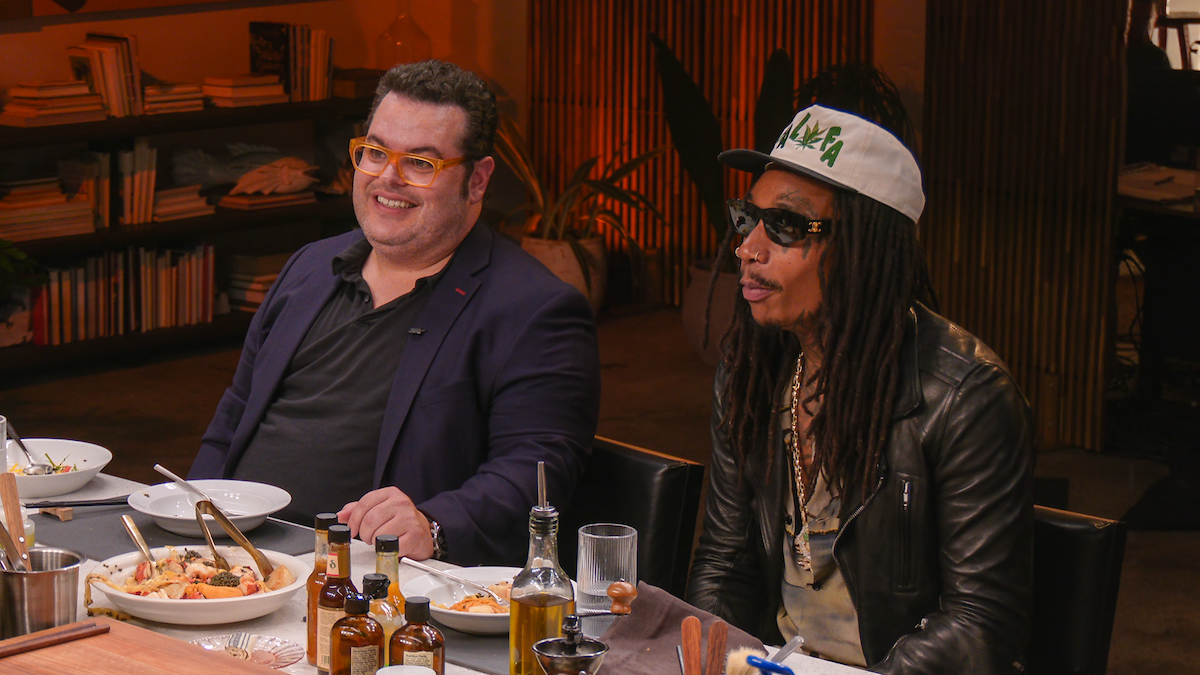
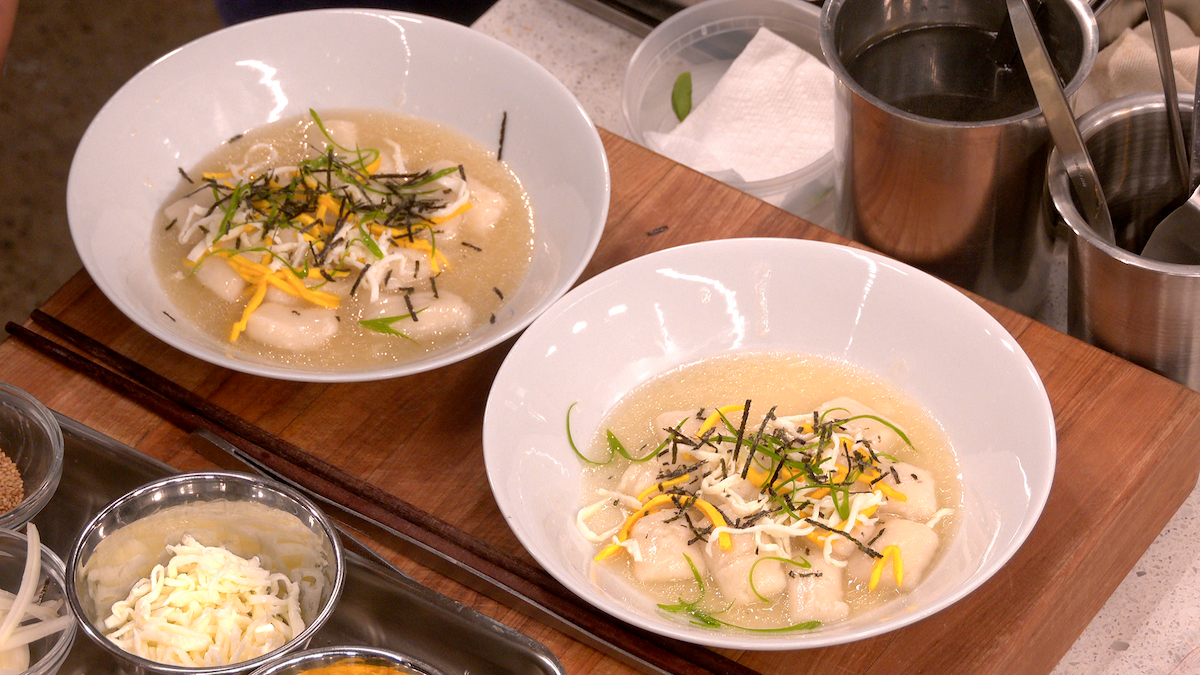
There are lots of delicious things happening in this episode, but this is probably the holiday noodle that’s closest to me personally. Koreans eat tteokguk (rice-cake soup) on New Year and Lunar New Year for good luck. The rice cakes (tteok) are similar to mochi or Shanghainese nian gao, in that they’re all made by pounding cooked glutinous (aka “sweet” or “sticky”) rice into a smooth, uniform paste. In Korean cuisine, it’s then rolled into cylinders and sliced into oblong coins or little rods.
I don’t usually make my own tteok at home, but for our guests, Wiz Khalifa and Josh Gad — and with Evan Funke in the house for the episode — I decided to mess around with a few different ways of producing them at home. One is the microwave.
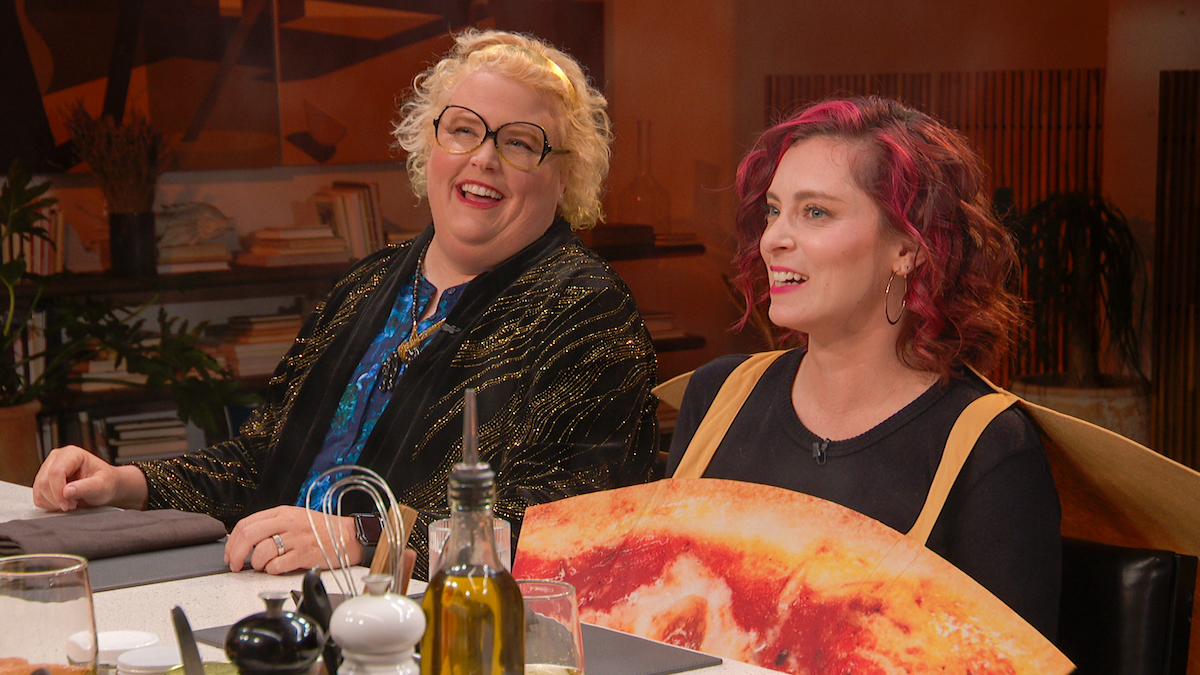
Halloween is the worst food holiday. There’s no traditional meal, or really anything other than sweets, so for our guests Rachel Bloom and Fortune Feimster, we decided to use Halloween movies as menu inspiration. This proved to be tough too, since so many eating scenes in scary movies are either about the food being grisly or alive or otherwise terrifying. But, at the end of the day, I think we found a few well-known movie references that allowed me to make really delicious dishes.
The first course was an ode to what’s probably the most famous scary food scene in history, when Hannibal Lecter says he ate a liver with a side of fava beans and a nice Chianti. I’m not a huge fan of liver, with one exception: foie gras. We brought in a grade-A lobe of foie, sliced it thick, coated it with Wondra flour, and seared it in a ripping hot pan. I served that with fava-bean purée, whole favas, and a gastrique made of reduced Chianti.
The second course was an ode to the popcorn in Scream and a few chef friends — Daniel Patterson and Sean Brock — who first showed me how to make grits out of popcorn. The recipe is below.
The last savory course was steak and eggs, but it was really an excuse to play a sinister Squid Game–style game with our guests. In Squid Game, the contestants get to eat this nice steak dinner before the final competition, but throughout the show they’re eating these incredibly bare-bones meals. We made Fortune and Rachel compete in a test of chopstick dexterity, then rewarded the winner with a beautiful piece of A5 Wagyu beef. The loser… got an egg in the shell. Of course, this being Dinner Time Live, I turned that egg into a nice, composed dish of eggs, onions, potato, and caviar that we used to serve as one of the signature courses at Momofuku Ko.
Turns out Halloween can be a pretty decent food holiday after all.
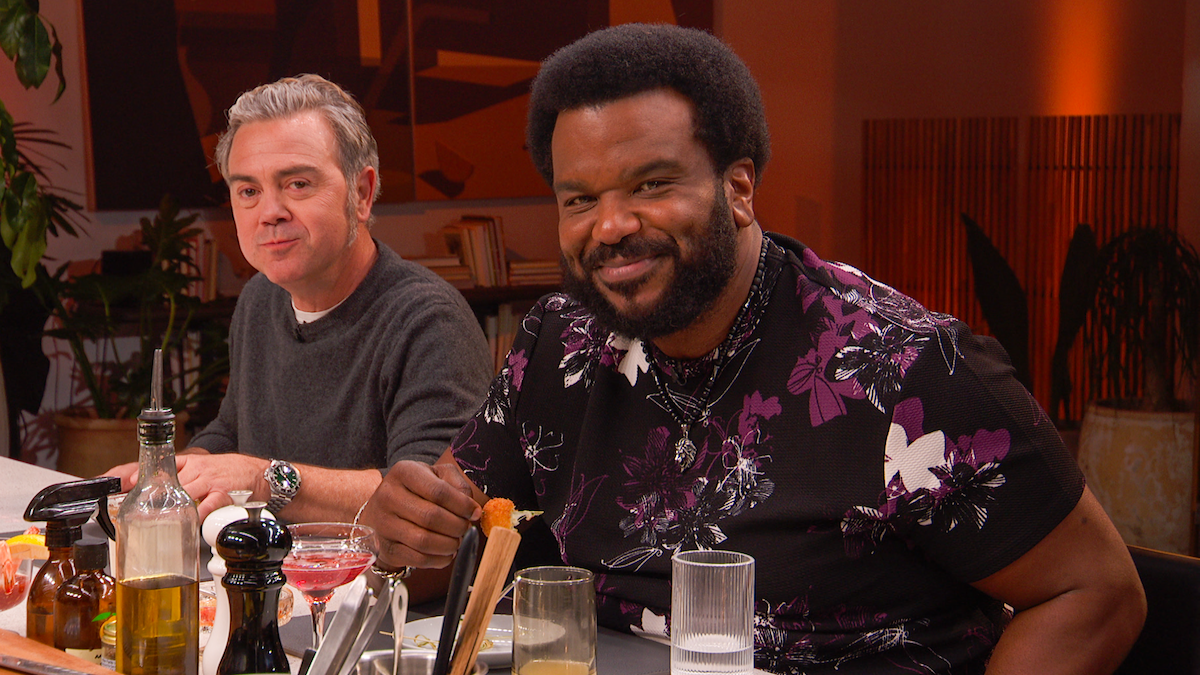
I love hors d’oeuvres. Pigs in a blanket? Delicious. Crab Rangoon? Deliciously inauthentic. Shrimp cocktail? Undefeated. The only problem is that for a live TV show, there’s really not much to see when it comes to preparing hors d’oeuvres. The whole point is that they have to be done in advance so they can be served by the dozen to your booze-soaked guests. So, for this “Holiday Hors D’Oeuvres and Drinks” episode, I had to re-engineer some of the classics to make them into full courses I could make on the show, without sacrificing the spirit of the originals.
We started our guests — Craig Robinson and Joe Lo Truglio — with a personal favorite of mine. Chris Ying’s mother-in-law makes these little brown-sugar-coated, bacon-wrapped kielbasas that I can’t get enough of. So, we put a batch of those in a Crock-Pot for the guys to grab on their way to the counter.
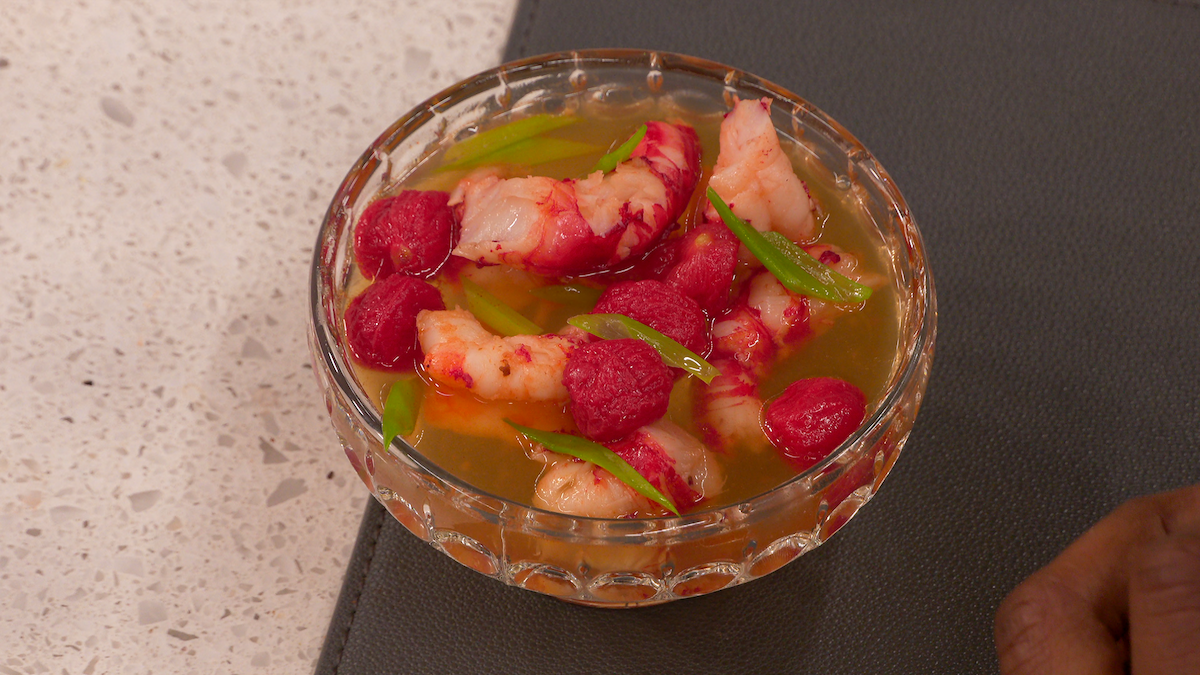
After that came the shrimp cocktail course. Shrimp cocktail is amazing and really hard to improve, so I wanted to take it in a different, warmer direction. Instead of cocktail sauce, I clarified tomato juice seasoned with horseradish, sugar, vinegar, and Tabasco sauce. (See below for more on that.) Then we seared some really beautiful Carabinero prawns from our friend Ian at Regalis. While they were still hot, I poured the “cocktail sauce” on top and served them with the heads on the side for slurping.
Next, we did a whole passed course of classic appetizer balls: Swedish meatballs, arancini, goat cheese balls, and takoyaki (octopus balls). Really, this was to see what kind of eaters we had at the counter and also to buy me time while I attempted something really dumb: Crab Rangoon Cannoli. I say it’s dumb because making cannolis from scratch is not something I recommend. Usually, resting the dough of shortening, flour, wine, and sugar is important so you can roll it thin and fry it crisp. Without the rest, it’s nearly impossible. But, in the restaurant business, you gotta make things happen. Instead of the typical filling of cream cheese and surimi (imitation crab), I used fresh Dungeness crab and mascarpone. I gotta say: It’s insanely delicious.
The main course for tonight’s menu was a play on pig in a blanket. Someone at rehearsal referred to it as “hog in a duvet,” but I think of it as Pigs Ramsay, because the great chef Gordon Ramsay has become so closely associated with Beef Wellington. It’s really a classic Wellington, but instead of a beef tenderloin, I meat-glued (transglutaminase) two pieces of mortadella together to form one giant hot dog. Around that, I wrapped spring-roll wrappers, mushroom Duxelles, prosciutto, and then puff pastry. I had to slip it in the oven before the show started, and pray that it finished in time to serve Craig and Joe.
Finally, for the cocktails in this little cocktail party, I made something I absolutely hate but everyone else seems to love: eggnog. My primary motivation for making it was to show exactly how bad this drink is for you. It’s really amazing. Nothing but eggs, sugar, cream, and booze. I thought it would turn people off, but during practice, everyone loved it. Insane.
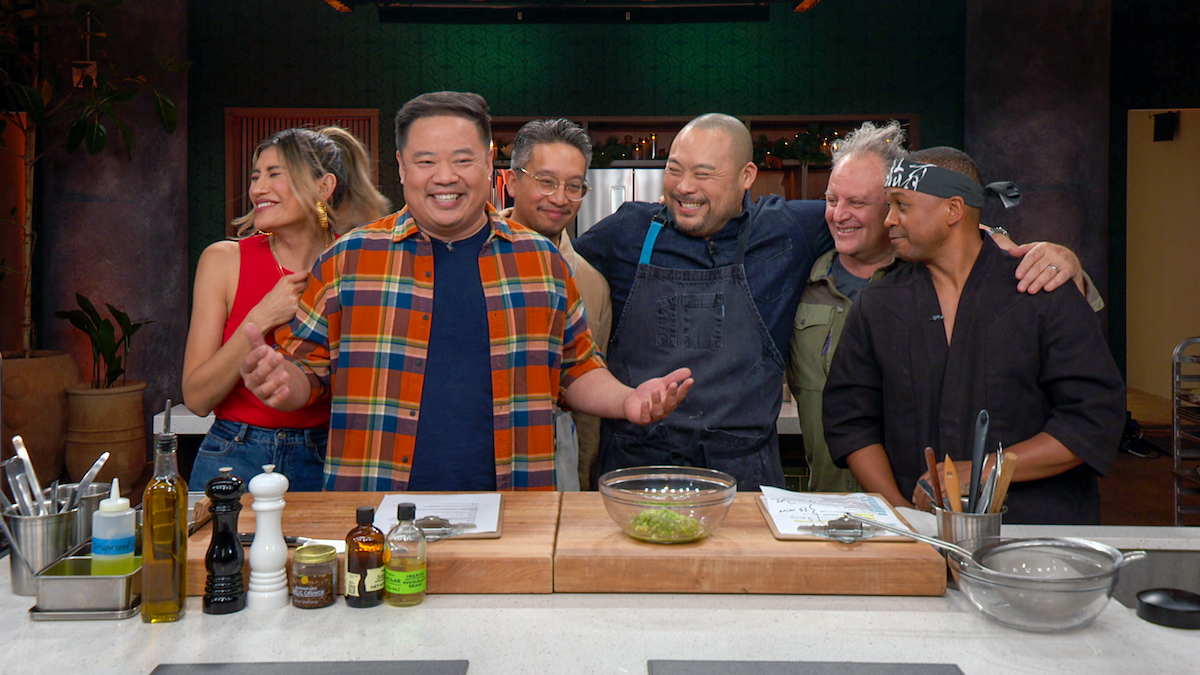
While I’ve never been invited to a Friendsgiving, I can see the appeal. You don’t have to eat turkey or yams or any of the traditional dishes. You don’t have to fight with your relatives. It’s just a big potluck with friends. Great. Sign me up.
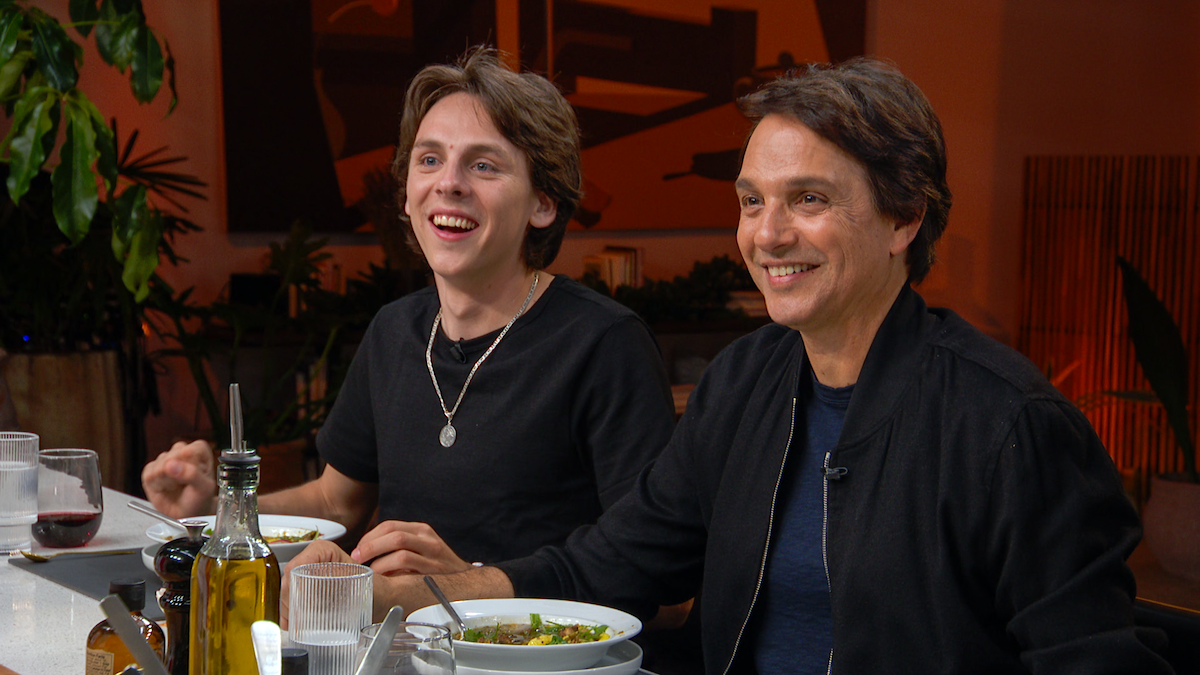
For our “Friendsgiving” episode with Jacob Bertrand and Ralph Macchio from Cobra Kai(!), we invited a few friends (who happen to be some of the best chefs in LA) to pitch in. Our neighbor Chris Bianco showed up with antipasti. Bricia Lopez from Guelaguetza made her family’s famous mole tamales. Justin Pichetrungsi from Anajak Thai made Southern Thai–style fried chicken. And world-class pastry chef Malcolm Livingston II made a cashew milk cheesecake with blueberry topping.
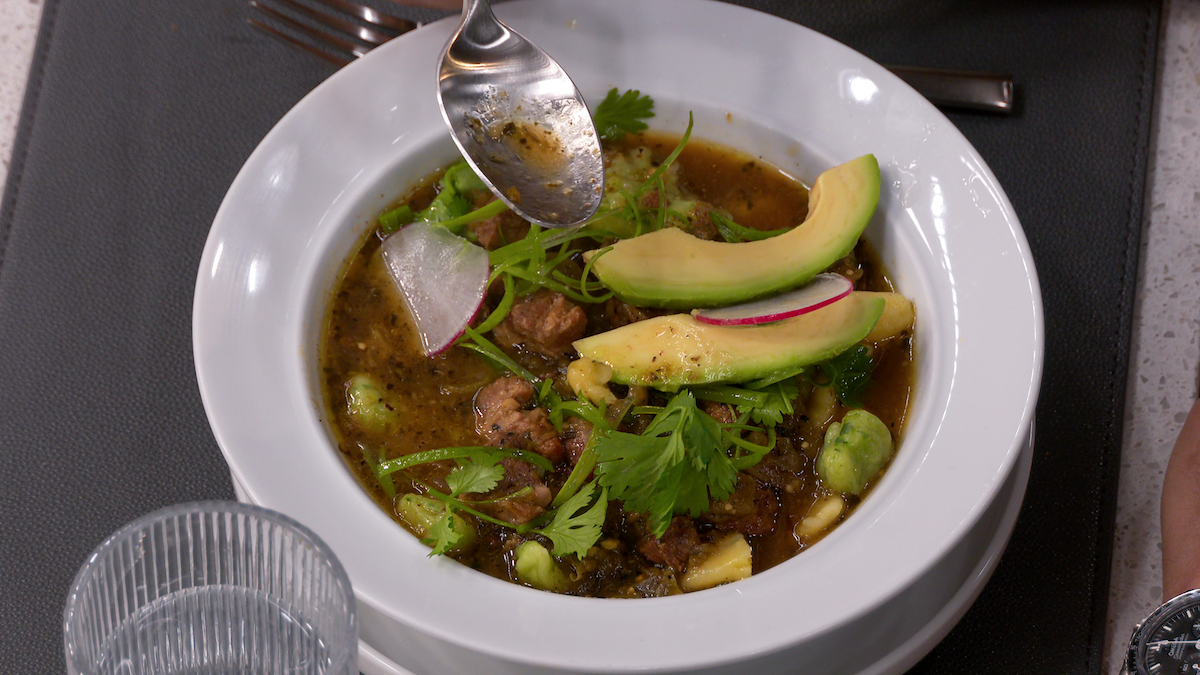
I contributed an appetizer of shrimp rolls that my aunt used to make by the hundreds for every holiday gathering. Plus, a dish I think makes for a great potluck contribution: green chile stew. It’s a riff on similar stews you’ll find in New Mexico and Colorado. I’ve only made it once before for a friend, who requested it. The actual version uses Hatch chiles, which are the pride of New Mexico, but if you can’t find Hatch chiles, Anaheims will do in a pinch. Or any other fruity, not-too-spicy green chili. Just don’t use bell peppers, please.
I don’t know what I was thinking. At first, Chris Ying and I were going to team up to make Thanksgiving dinner for our guests, Billy Eichner and Bobby Moynihan, in 45 minutes. But then I thought, I’m pretty sure I can do this by myself. Ten courses — all the classics — in 45 minutes. That’s mashed potatoes, stuffing, green-bean casserole, creamed spinach, cranberry sauce, sweet potato gratin, mac and cheese, Brussels sprouts, and gravy. Plus turkey in a style that I guarantee nobody’s ever made before.
If I pulled it off successfully, then the show is full of tips and hacks for cooking Thanksgiving more efficiently, but there aren’t really many of “recipes” to speak of. Except one. For my stuffing, I turned to the recipe I use every Thanksgiving. It belongs to my friend Dave Arnold’s mom, and I truly think it’s the greatest stuffing recipe in the world. Nothing too crazy or exotic. It’s a white-bread stuffing with lots of butter, and the addition of two key ingredients that everyone can find: canned mandarin oranges and poultry seasoning. Poultry seasoning is the flavor of Thanksgiving in powdered form. I was skeptical of the oranges at first, but they add a really nice background note of sweetness. You don’t notice them otherwise. She does some crazy thing where the immersion circulates the stuffing and then cooks it under the carcass of a turkey, but you can really cook this however you like.
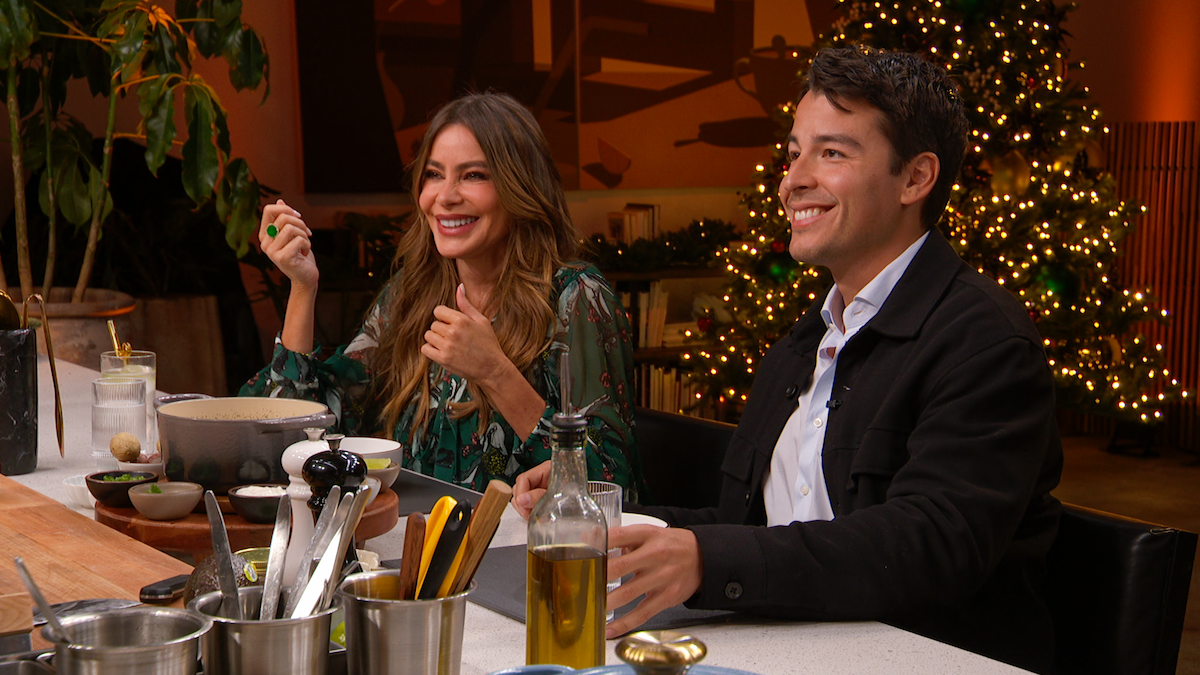
This menu was largely new territory for us, but with Sofía Vergara and her son, Manolo, sitting at the counter as guests, we wanted to try our best to approximate a traditional Colombian Christmas. This show is always a challenge, but it’s even harder when I’m trying to cook dishes I’ve never made before — especially when it’s for people who know those dishes well. Unfortunately, I love learning about different cuisines (and I’m addicted to doing things the hard way), so here we are.
Based on what our guests told us — and what we found through our own research — there are a few keys to Christmas in Colombia: 1) Lechona: A roast pork leg (or whole pig) stuffed with rice and peas. 2) Tamales wrapped in banana leaves. 3) Empanadas. 4) Buñuelos (sweet-savory corn fritters) and natillas (custard) for dessert.
To start, we made tamales. Manolo mentioned that he loves rice tamales at Christmastime, except that they’re a pain to make. Typically, the rice tamale (pastel de arroz) is a banana leaf stuffed with rice and various meats and vegetables. It reminds me a bit of a Chinese zhong zi. It’s definitely a departure from the typical Colombian tamale that’s filled with corn masa. We saw a couple other variations in our research that actually had both corn and rice in them, which piqued my interest. What we ended up with was a tamale that combines all these traditions, plus a little touch from Japan and Vietnam. I made a thick paste of mochiko (sticky rice flour) and water that I spread on a banana leaf and filled with corn pudding (pureed, strained, reduced corn). We steamed that and then, in honor of the coastal variations of Colombian tamale we saw (and because the menu had so much meat), I topped it with dry-roasted mussels.
Next up: ajiaco. Nearly every cuisine (that eats meat) has come up with a version of chicken soup, and is the most popular one in Colombia. I made mine the way I always make chicken soup: by boiling a whole chicken. From there, I added guascas (potato weed), which is the signature flavor of ajiaco, plus onion, corn, plantains, and yuca. I served that to the Vergaras in the typical ajiaco style, which is with all sorts of garnishes on the side, including capers, crema, and avocado.
The fish course was based on a dish called Sancocho de Pescado, a fish stew that’s often made with coconut milk. I love cooking with coconut, so I included it twice in this dish. First, I poached a nice fillet of sea bream in coconut oil. On top of that, I made a quick coconut sauce, and served it all in a crunchy rice crepe. The rice crepe was a total accident: I left some of the rice tamale filling in a nonstick pan for too long, and it basically turned into a crisp cake. It tasted pretty great, but then Chris Ying found something in a food journal about how rice arepas in Colombia are called orejas de perro (dog ears). Evidently it’s a traditional recipe in parts of Colombia, and it’s made very similarly to the way I made ours in the studio. I love these kinds of accidental connections.
For the lechona, our oven isn’t big enough for a whole roast pig, so we went with the nontraditional belly and rolled it up like an Italian porchetta. Whether you’re in Colombia, Hong Kong, Puerto Rico, or Indonesia, the whole point of roasting a pig is to get nice, crisp skin. Cooks who roast pigs on the regular have their methods for pulling it off. If you don’t do it every day, it’s hard to get right the first time. Typically, what you want to do is get the skin dry, raise the pH, and render out the fat. Our method, which worked pretty well, was to prick the skin a few hundred times with a thin metal skewer, then poach it to render fat and tighten the skin. After that, I rubbed it with salt and baking soda mixed with vodka (which evaporates more quickly than water). An overnight dry (and a little time in front of a fan) dried the skin out. I butterflied the meat and seasoned it with salt, MSG, cilantro, parsley, lime zest, and garlic confit. Finally, I rolled the whole thing up and tied it off with twine, then popped it in a 350 degrees Fahrenheit oven for a few hours. While it was still hot out of the oven, I hit it with a Searzall torch to puff the skin up like chicharron. Since I didn’t stuff the pork with rice, I served it with rice and pigeon peas, arepas, and a side of fried plantains.
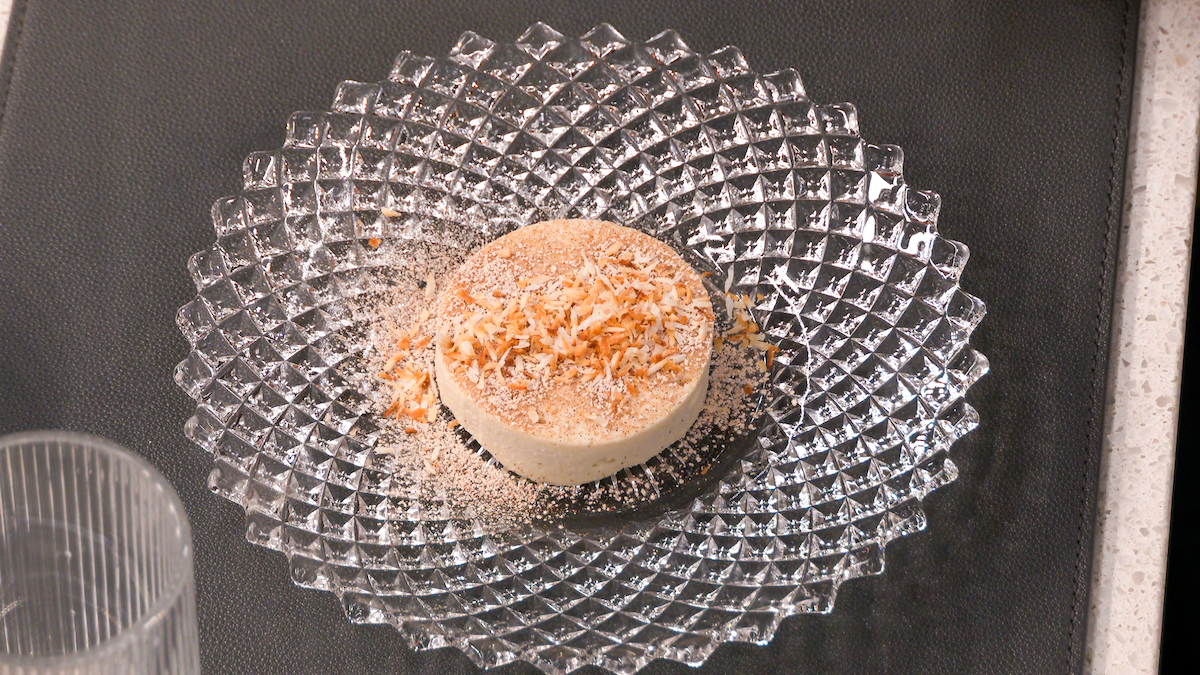
Finally, for dessert, we went with the very traditional buñuelos and natillas. Buñuelos appear in various parts of Latin America. In Colombia, they’re cheesy fritters that are lightly sweet and get served with natillas: a milk custard that’s set with cornstarch. Since one of our guests has a dairy sensitivity, we made our natillas with coconut milk. Honestly, I was skeptical of a dessert that’s set firm with cornstarch, but it turned out awesome.
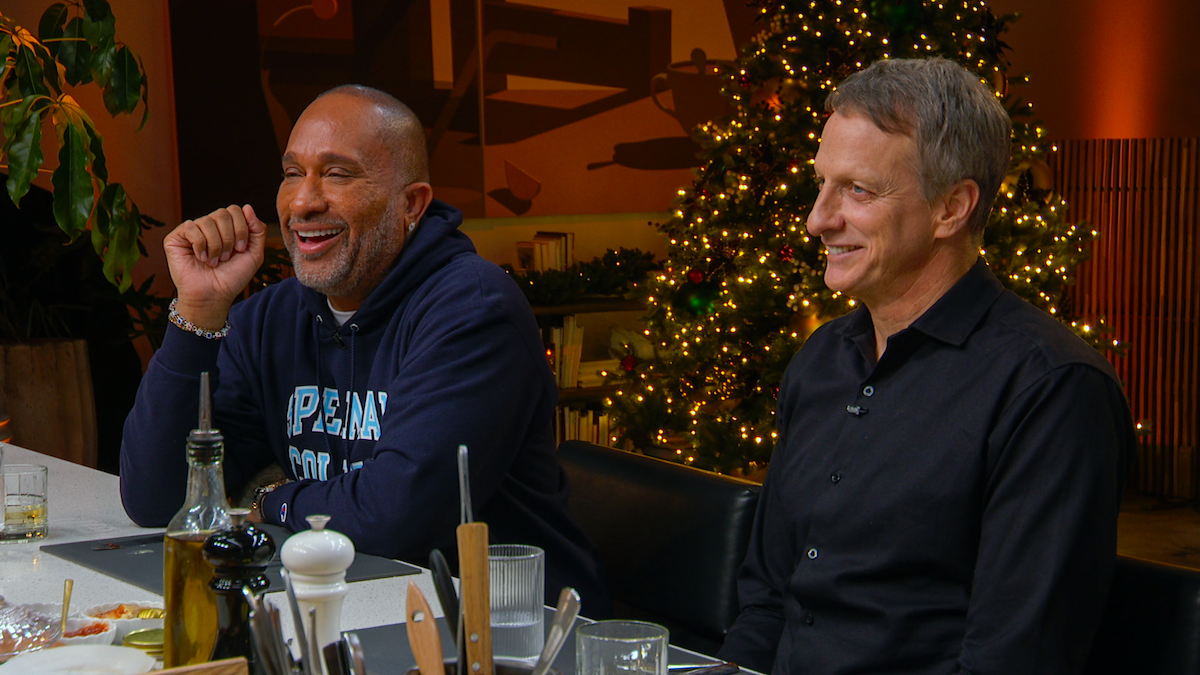
For the grand finale of Dinner Time Live’s holiday-themed episodes, we leaned into the most iconic of Christmas images: A Christmas Carol. Whether or not he meant to, Charles Dickens has pretty much defined the Christmas vibe since the Victorian era. The story itself contains a lot of food references — as do a lot of Dickens’ books — but more importantly, it gave us the model of past, present, and future to build our menu for our guests, Kenya Barris and Tony Hawk.
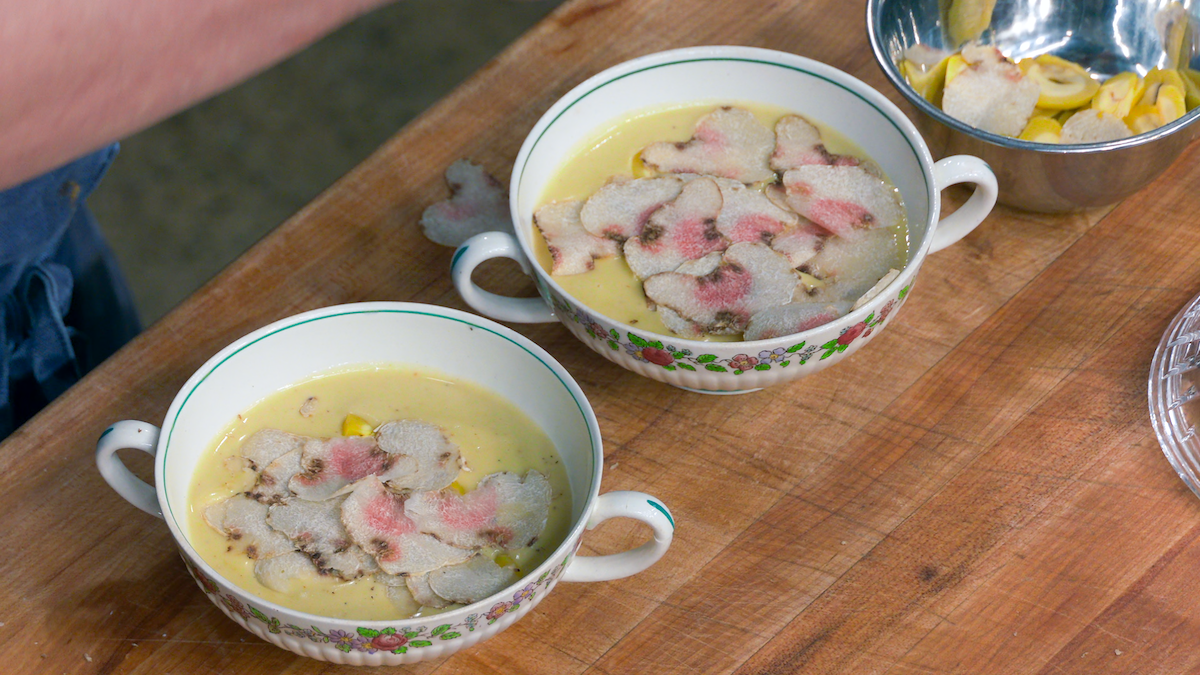
For the past, we dove into the history books and came out with something I’m not especially excited to eat: mince pies. These are still popular in England today, but they date back to the Middle Ages, when they were originally made with up to 50% meat and fat, in addition to dried fruits, nuts, and spices. We made a pretty accurate version, just to get Tony’s and Kenya’s opinions on a meat-based sweet treat. I really didn’t want them to take more than a bite. Fortunately, we also served it with another Dickens favorite: soup. Evidently, the man was big on soup. In honor of Christmas — and Victorian era — cooking, we went with a chestnut velouté. Basically, it’s a superrich, roux-thickened soup of cream, leeks, chicken stock, chestnuts, brandy (which gives a nice foie gras-like taste), and a little truffle butter to finish.
Next up, a raw seafood platter to represent the barrels of oysters that the Ghost of Christmas Present is sitting on when he first appears in A Christmas Carol. And with that, we’re done with the Christmas dinner of the past.
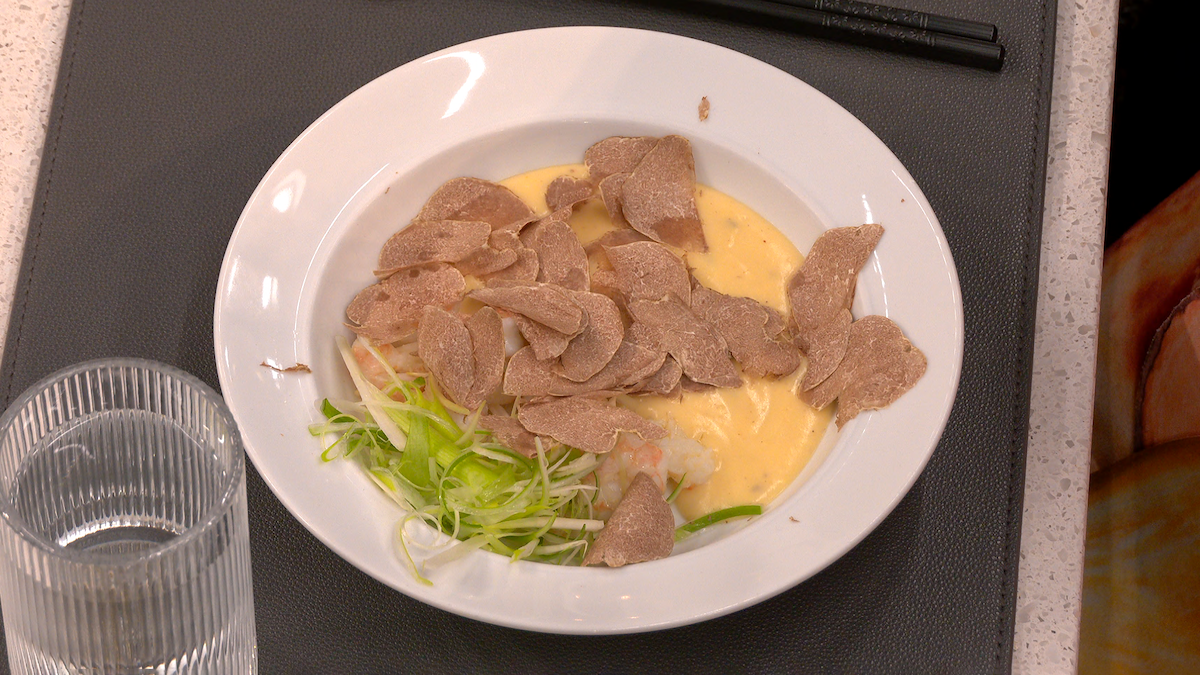
For the present, I made two dishes: an update on the old-school French dish, coquille Saint Jacques, which was first popularized in the 1950s by New York City restaurants like Le Pavillon. Traditionally, it’s a dish of gratinéed scallops served in the shell. For mine, I shucked a fresh scallop, holding onto the roe sacs to make a sauce. I spooned a little bed of leek fondue into the bottom of each shell, then topped it with the scallop meat and a piece of lobster tail. I sealed the shell with a ring of dough around the rim, then baked it for 10 minutes at 450 degrees Fahrenheit. Hot out of the oven, I pried open the seal and topped the seafood with a sauce I made by reducing lobster broth with the scallop roe (and adding a lot of butter). And then just to gild the lily, a little spoonful of caviar to finish.
The other part of the Christmas present portion of dinner was the meal that I think most people think of when they think of Christmas these days: roast beef and Yorkshire pudding. Nothing crazy here. Just a nice standing rib roast slowly cooked on a bed of bay leaves, rosemary, and thyme. A quick blast of heat at the end to brown it, and then a nice long rest. The Yorkshire pudding gets cooked in the drippings, and everything gets soaked in gravy.
Finally, for the future portion of Christmas dinner, I wanted to focus on the bird that I love best: duck. I know Dickens was a goose and turkey guy, but I really prefer the duck. A lot of people are intimidated by cooking duck at home, so I wanted to show that it’s totally possible to make something celebratory and special without too much trouble. The futuristic portion of these courses is the experience. I feel strongly that the future of restaurants is in the experiential: places you have to visit in person, whether because there’s an exciting service element or the food simply can’t be replicated at home.
My right-hand man, Andrew Miller, suggested we roast a crown of duck (just the breasts) in citrus leaves. He’d done it before and promised that, when we opened the pot, the guests would be hit by a cloud of unbelievable aromas. He wasn’t wrong. We salted and dried a duck for a few days in the fridge, then removed the legs (they’ll come back later). I scored the skin of the duck, then stuffed the cavity with a huge chunk of butter. I seared it in a big Dutch oven for eight or nine minutes to render some fat and get some color on the bird, then removed the duck and replaced it with halved oranges and a pile of clean orange leaves. The duck went back on top, at which point I closed the lid and sealed it with dough. After about 15 minutes in a 450 degree Fahrenheit oven, I removed the duck, peeled off the dough seal, and opened the lid to let Tony and Kenya inhale the aroma. While the duck rested, I worked on the sauce. The duck legs and the rest of the bones went into a pan earlier in the day with aromatics — onion, leek, thyme, garlic, parsley, carrot, celery, and oranges — and simmered until it was a really rich broth. That was the basis of the sauce, which I finished with a flambé of Grand Marnier and a bit of shredded duck meat.
The dish was partly inspired by my actual favorite dish in the world: Peking duck. Maybe you already love Peking duck, but I’m not sure you appreciate just how much work goes into making this dish. I can’t even imagine the process by which Chinese chefs first came up with a way of raising ducks, separating the skin from the meat with air, sealing the bird, filling it with water, coating it with sugar syrup, hanging it to dry, then blasting it in a hot oven to create a perfectly lacquered, crackly skin that’s more fragile than glass. It’s beautiful, and we got one of LA’s best practitioners (the fine folks at Ji Rong Peking Duck) to come in and carve one for us. I wasn’t about to try to make that myself on live TV.
Last but certainly not least, an ode to my 1% Ashkenazi Jewish heritage: a Hanukkah-themed dessert. We made chocolate rugelach. Simple and delicious.
Watch Dinner Time Live with David Chang on Netflix now, and tune in each Tuesday at 4 p.m. PT to watch live.