Guide
What Are the Biggest Differences Between ‘Anxious People’ and the Book
There’s an entire character missing.
Dec. 29, 2021
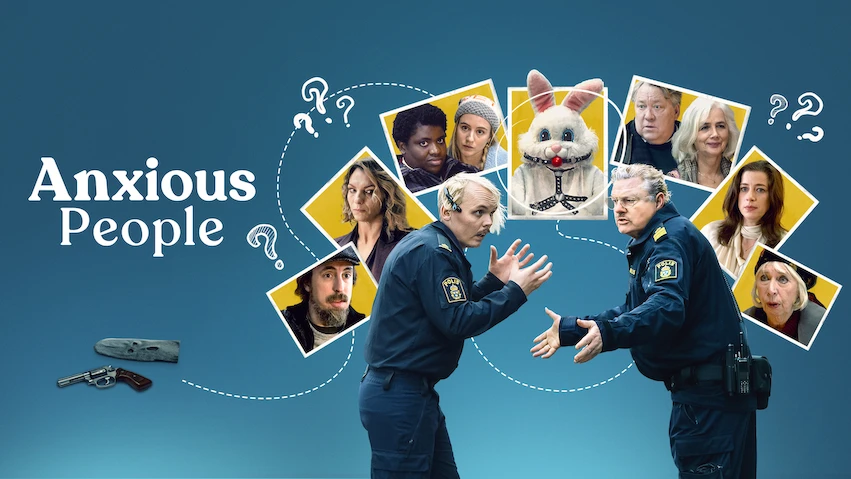
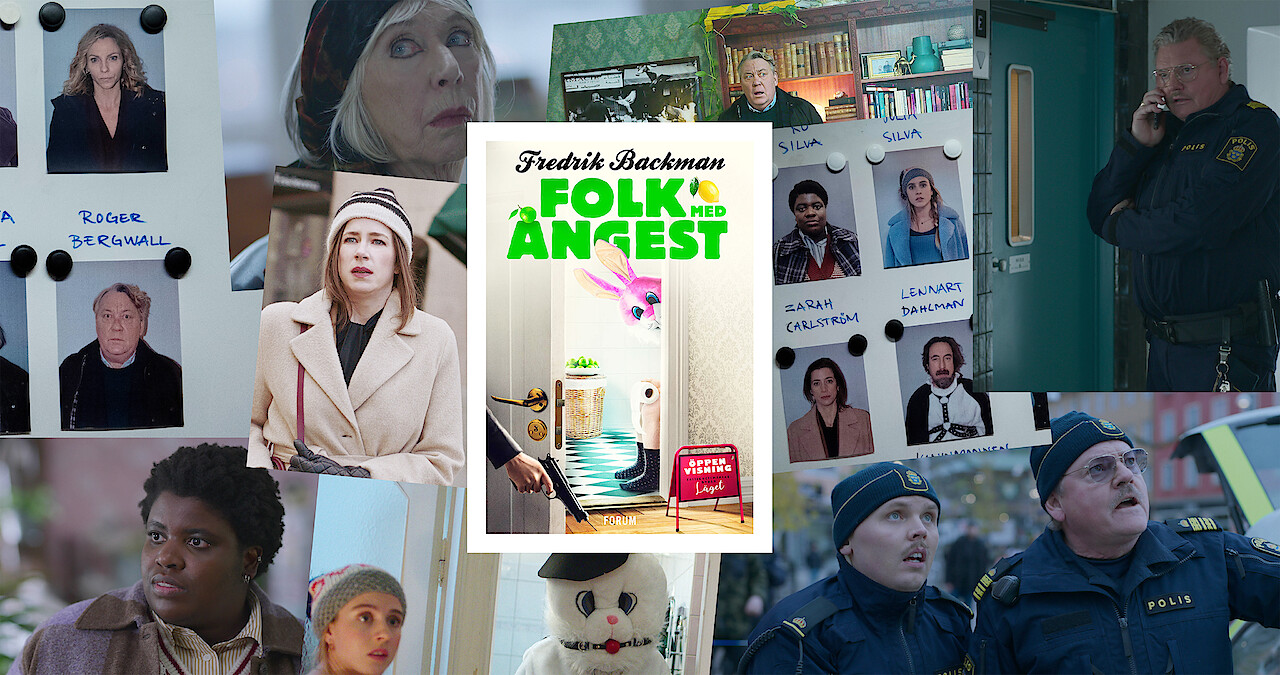
As far as book adaptations go, the Netflix limited series Anxious People hews closely to the original bestseller by Fredrik Backman: A group of people attending an apartment open-house are forever bonded when they’re taken hostage by an inept bank robber fleeing a botched bank robbery. But when transferring a story from one medium to another, a new — and hopefully equally compelling — version often comes to life. While the Swedish series made it to screen with much of its original content intact, several key shifts by writer Camilla Ahlgren helps move the story along at a more TV-friendly pace. Below, we review the story’s biggest changes as Anxious People moved from book to limited series.
Backman's book is a slowly unfolding story about a disparate group of people who become forever bonded by a traumatic event, with each chapter revealing more ways in which the group is connected — and the circumstances that led each person to that fateful open house. And each of these stories connect back to a tragic incident when a man jumped off a bridge in their small Swedish town years prior. In the show, that man turns out to be the son of Estelle (Lottie Ejebrant), pretending to be an interested buyer viewing the apartment (but is actually its owner, lonely after the death of her husband). But in the book, the man on the bridge is connected to an entirely different character who doesn’t appear in the show.
The character cut from the show is the therapist of Zahra (Anna Granath), a high-powered banker. In the book, Zahra’s therapy sessions reveal more about her inner life and the circumstances that brought her to the apartment. In the show, these details are made clear when father-son police officers, Jim (Dan Ekborg) and Jack (Alfred Svensson), eventually question her about being held hostage.
In the book, Jim and Jack are both in the process of mourning the loss of Jim’s wife (and Jack’s mother). In the novel, Jack's sister, Jill, has a substance abuse problem and is only in touch when she needs money, but she’s not much of a character beyond that. In the show, however, the mother is the one not mentioned, and Jill becomes a much bigger character. Despite arguing about how to handle her addiction, Jack and Jim quickly come together to pick her up when she experiences an overdose, illustrating their love and support.
In the beginning of the show, Jack is sporting a (very unfortunate) asymmetrical hairstyle. Why? Well, he was mid cut when the hostage situation happened, and so he spends the rest of the show with a quite jarring grooming choice. This motif, while hilarious and light-hearted for the viewers, was actually never in the book.
The overarching theme of both the book and series is the importance of treating all people — no matter how brief your interaction or how disparate your lifestyle or how egregiously they may have wronged you — with kindness and understanding. But there’s an entire storyline in the book dedicated to the financial collapse of the late 2000s and the participation of corporate institutions in a predatory lending structure that ruined so many people’s lives. This is largely absent in the show, which instead chooses to hone in, Ted Lasso-style, on the value of treating people with respect. Anxious People might be about a tragic incident, but it is also a very funny, feel-good take on the best and most redeeming aspects of being human.