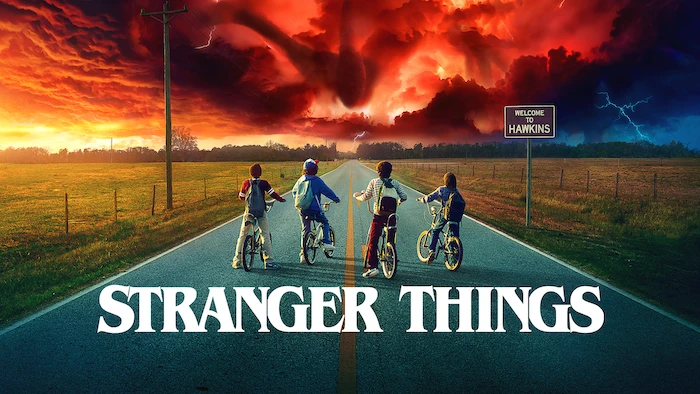
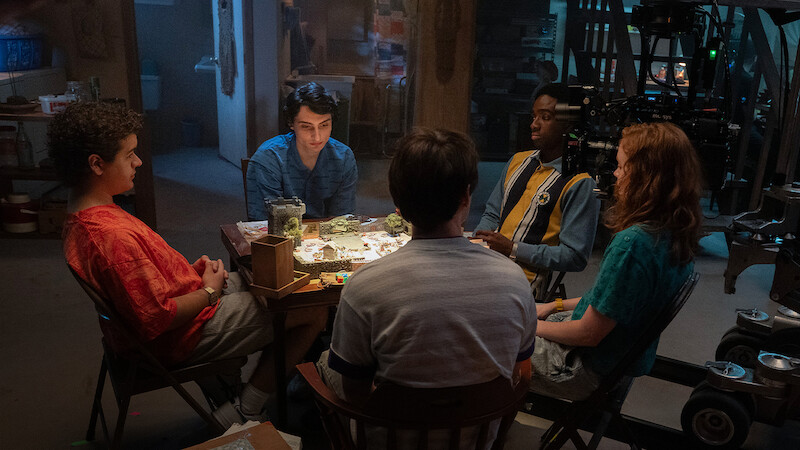
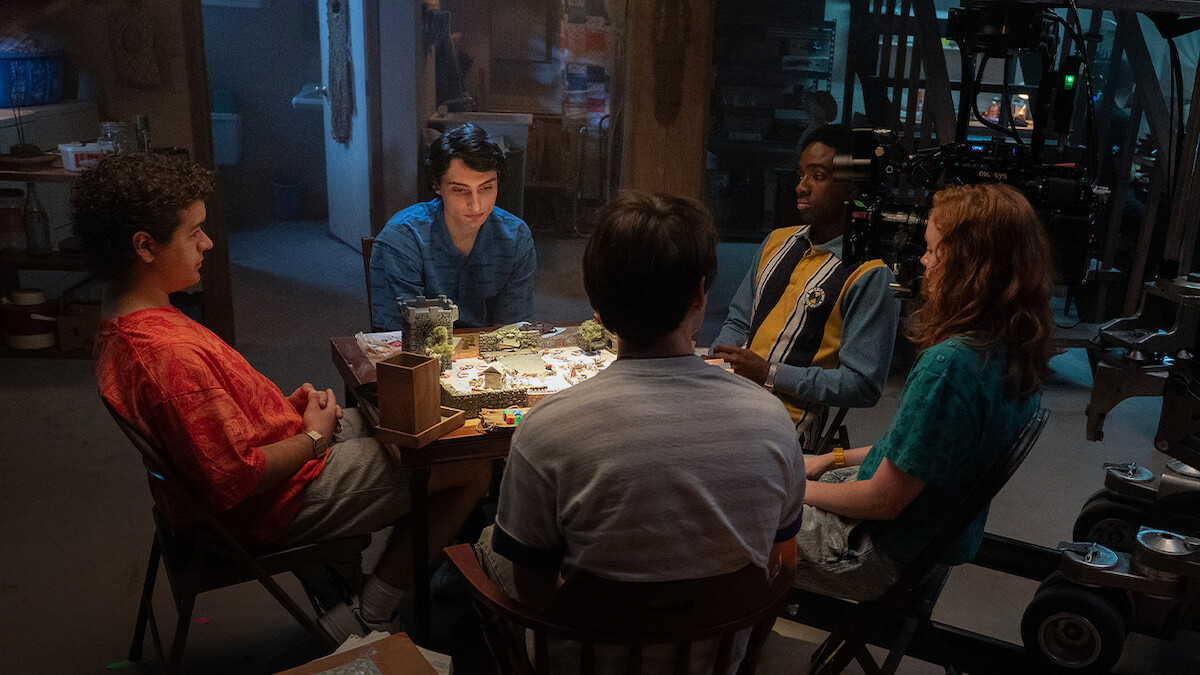
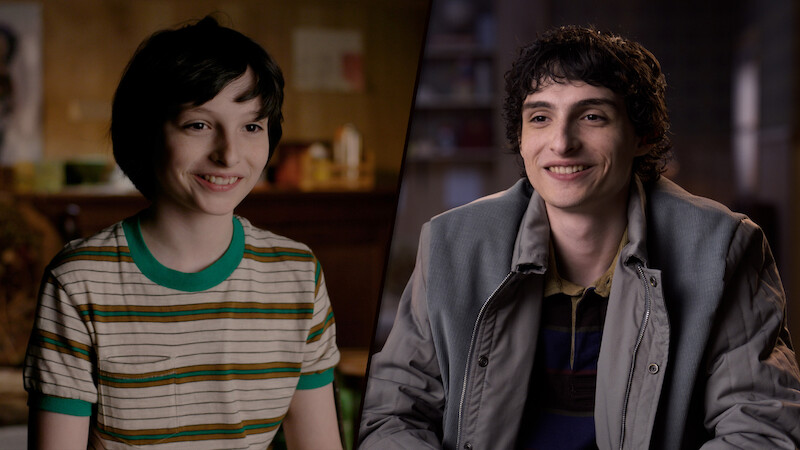
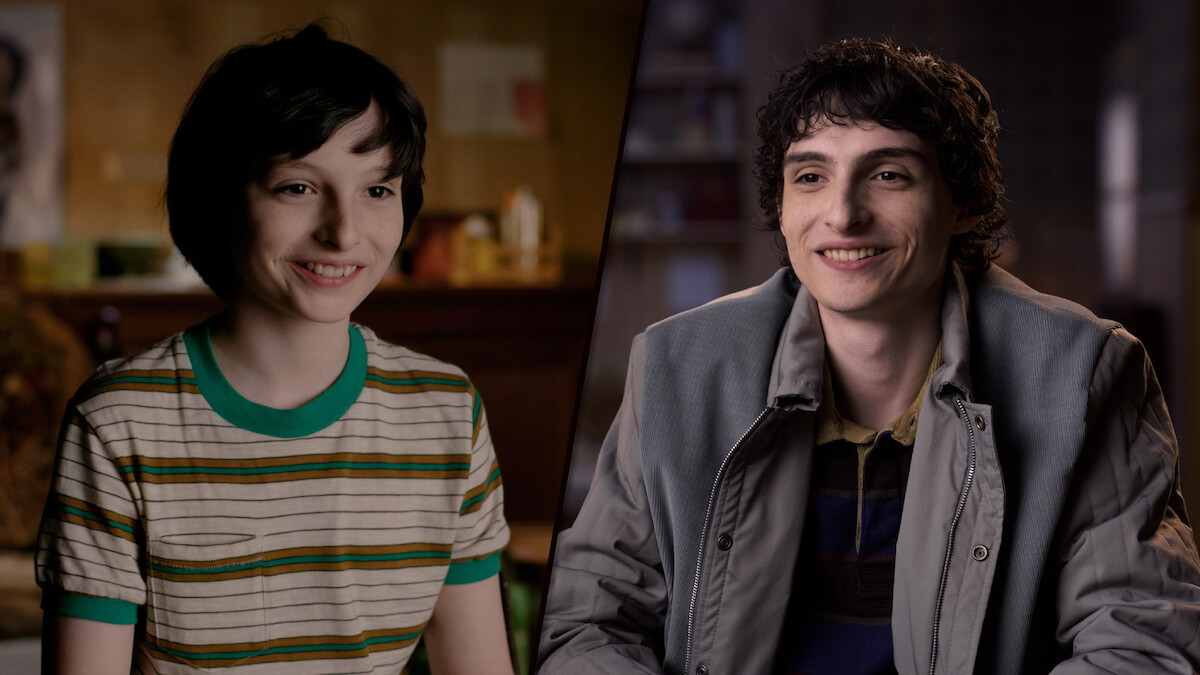
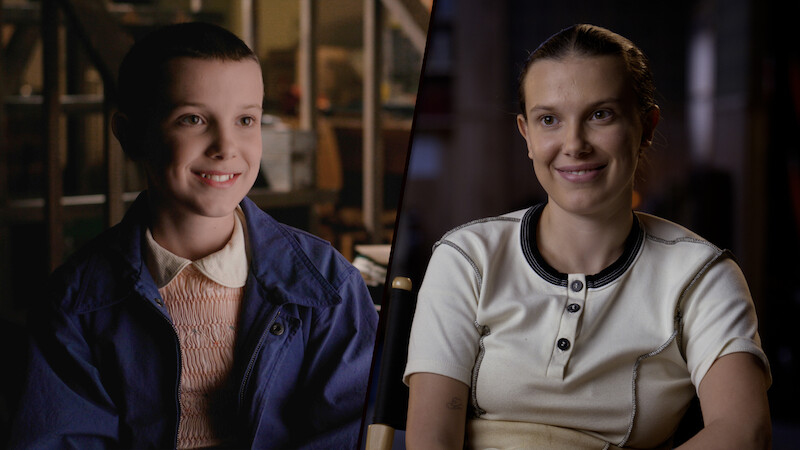
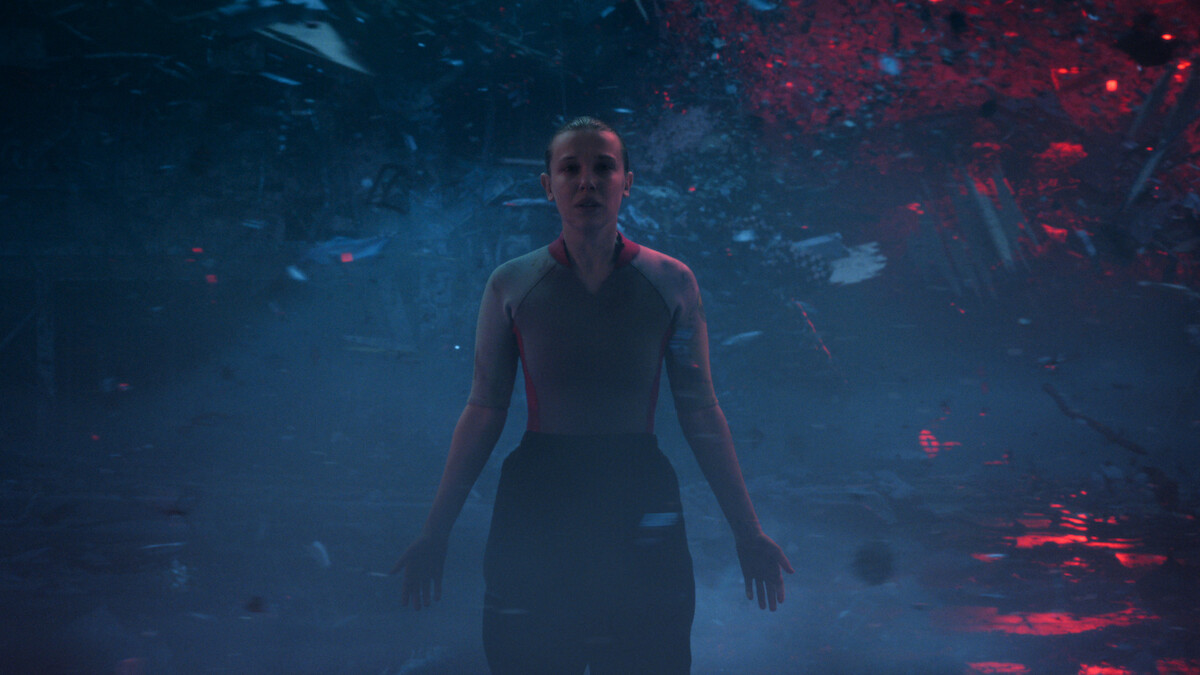
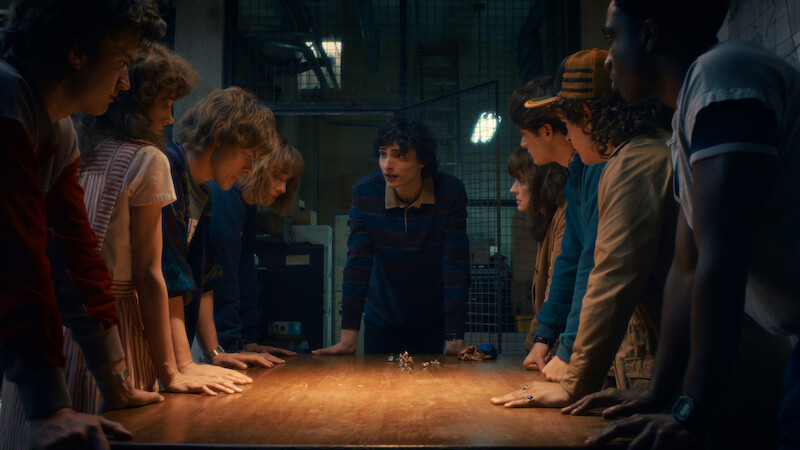
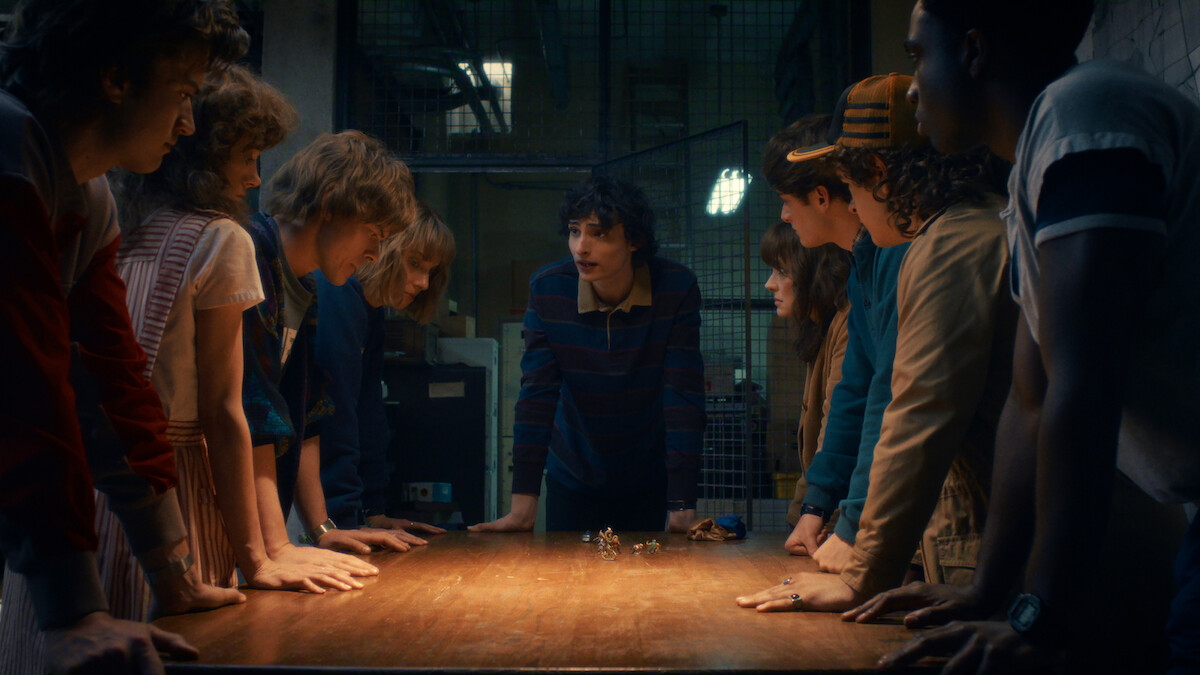
[narrator] The very first time we meet Mike, Will, Lucas, and Dustin, they're rolling D20s in the basement of the Wheeler house. Fast forward a few years and there's an official Stranger Things D&D set, and people can talk about Demogorgons without fear of being spitballed.
[gasps]
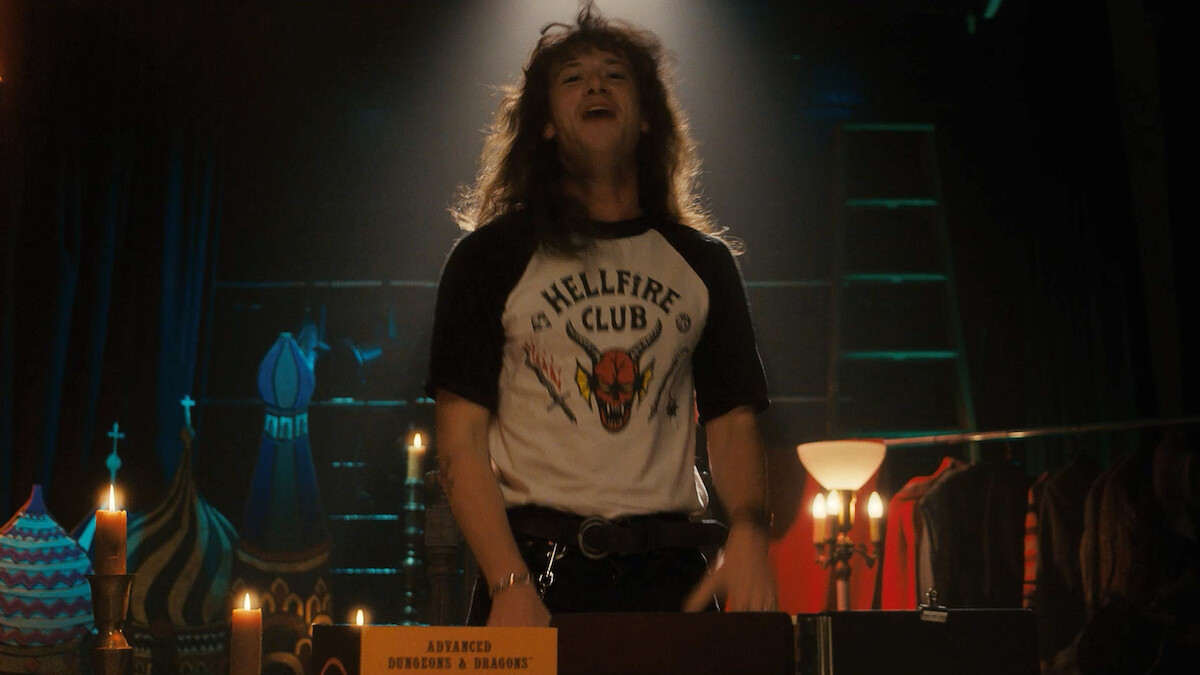
What you might not know, however, is that outrage surrounding D&D in Stranger Things 4 is not a dramatic invention. It seems unreal that a community could become suspicious of a game that encourages people to spend time together, use their imaginations, and even learn some arithmetic on the side.
[clip] Fireball him!
I'd have to roll 13 or higher.
Too risky. Cast a protection spell.
Don't be a pussy.
[narrator] But sure enough, the show gets plenty right about the disproportionate reaction to the popularity of Dungeons & Dragons in the early 1980s.
[mysterious music plays]
[dice rattle, roll]
It began in 1979, five years after D&D was first published. 16-year-old James Dallas Egbert III disappeared from his room at Michigan State University. His family hired a private investigator, William Dear, to find him. The truth is that Egbert, suffering from depression and drug addition, had gone into hiding in the utility tunnels under the university. But Dear believed that Egbert's interest in Dungeons & Dragons was the cause of the problem, especially since students allegedly played live action D&D sessions beneath the school. The story captured public attention, and the nationwide focus on Egbert's disappearance actually led to soaring sales of Dungeons & Dragons. Suddenly, millions of people were playing instead of just thousands. Egbert was found two months after he disappeared, but committed suicide a year later. This, however, was just the beginning of public scrutiny of D&D. In 1982, a high school student in Virginia named Irving Lee Pulling II committed suicide by shooting himself in the chest. His mother, Patricia Pulling, believed her son's interest in D&D was to blame. Pulling first tried to sue her son's high school principal, claiming a curse placed on her son's character during a game run by the principal was actually real. She also brought an action against TSR, the game's publishers. After her lawsuits were dismissed, Pulling formed an action group called Bothered About Dungeons & Dragons, otherwise known by its somewhat unambiguous acronym, BADD.
[dice roll]
[rock music plays]
What began as simple condemnation quickly became a full-scale moral panic, similar to the outcry surrounding gory comic books in the '50s.
[clip] "At first, regarded as a harmless game of make-believe, now has both parents and psychologists concerned."
[narrator] Pulling went so far as to describe D&D as a fantasy role-playing game which uses demonology, witchcraft, voodoo, murder, rape, blasphemy, suicide, assassination, insanity, sex perversion, homosexuality, prostitution, satanic-type rituals, gambling, barbarism, cannibalism, sadism, desecration, demon summoning, necromantics, divination, and other teachings.
[clip] So you fight with dice?
Yes. But these aren't your normal dice. They have up to 20 sides.
[narrator] It sounds shocking now, but the campaign gained widespread, uncritical coverage via conservative Christian outlets and the mainstream media. BADD even published a series of warnings designed to help identify the first signs of teenage Satanism. These included creativity, curiosity, under-achieving, over-achieving, and intelligence. Adolescents from all walks of life aged between 11 and 17 were considered the most vulnerable. Rock concerts, parties, and even school clubs were all considered hotbeds of potential malevolent influence. Nobody tell Mr. Clarke.
[clip] When Will sees this, he's totally gonna blow his shit!
Lucas.
[narrator] It wasn't limited to the US either. BADD documents were distributed to schools, churches, and local governments in Britain, Canada, and Australia. The widespread coverage even led to feature films portraying D&D in a negative light being produced, made with support and consultation from BADD. These included 1982's Mazes and Monsters, a made-for-TV drama notable for starring a 26-year-old Tom Hanks in his first leading role.
[dice roll]
Over time, the moral panic subsided. No legal action ever succeeded in implicating the makers of Dungeons & Dragons, and there was almost no academic evidence to support BADD's claims about the malign effects of D&D. In fact, when prevalence of suicide in RPG players was investigated by the American Association of Suicidology, the Centers for Disease Control, and the National Safety Council, the report found that suicide amongst RPG players was actually significantly lower than national averages for their age demographic. Meanwhile, BADD and their supporting organizations made increasingly grandiose, unsupportable statements. They suggested RPGs were actually a form of satanic worship, which involved things like human sacrifice, real-world spell casting, and a belief in lycanthropy and vampirism.
[clip] The Juju bites your arm. Flesh tears! Aah! Seven points of damage.
[narrator] Lurid comics were printed, warning of D&D mind bondage and occult training. Some BADD documents even focused on whether or not RPG-playing kids had been exposed to the Necronomicon, which would be difficult since it's a fictional book invented by H.P. Lovecraft.
[dice roll]
Ultimately, the outlandish nature of BADD's claims eventually alienated the people who once supported them. And now, 40 years on, D&D is more popular than ever. Google Trends showed a 20% increase in D&D as a search term between the first and second seasons of Stranger Things, and an additional 50% in the two years between the second and third seasons. Demand for old-school D&D books has driven prices to an all-time high. Now, perhaps the uplift isn't just because of Stranger Things. The likes of Critical Role, Adventure Zone, and the release of D&D's fifth edition all helps, but whatever the reason, pen-and-paper role-play is no longer a guilty secret…
[clip] If I play, do I get one of those cool T-shirts?
[laughs] Yes!
[narrator] …no matter what Max says.
[clip] Are you being sarcastic? Are you being sarcastic? She's being sarcastic.