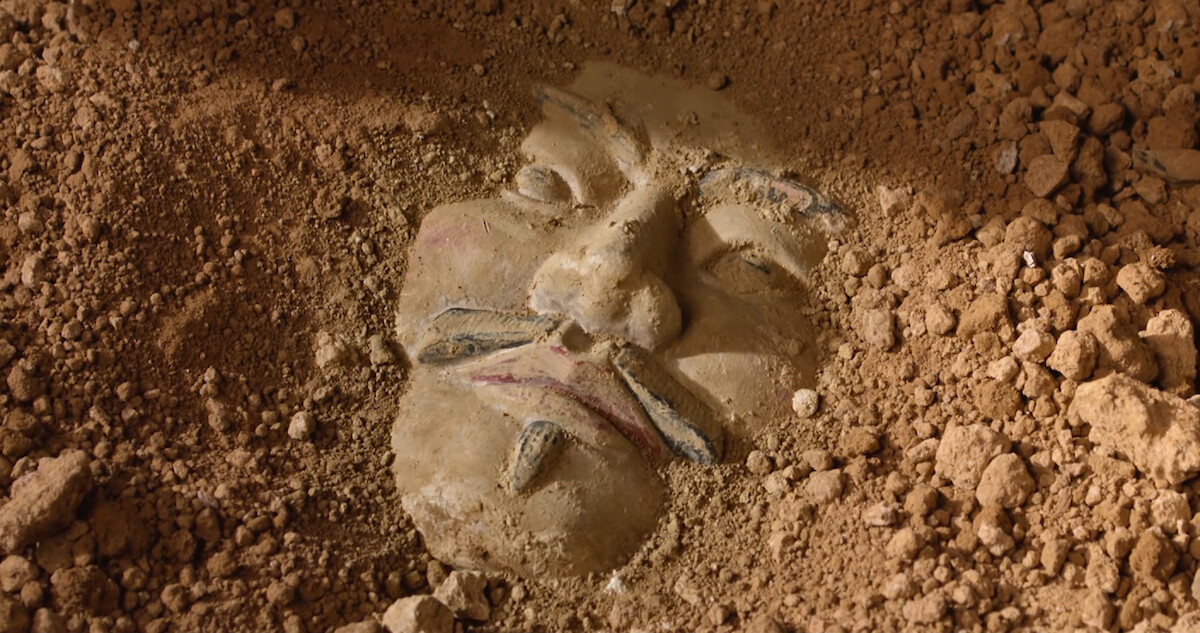
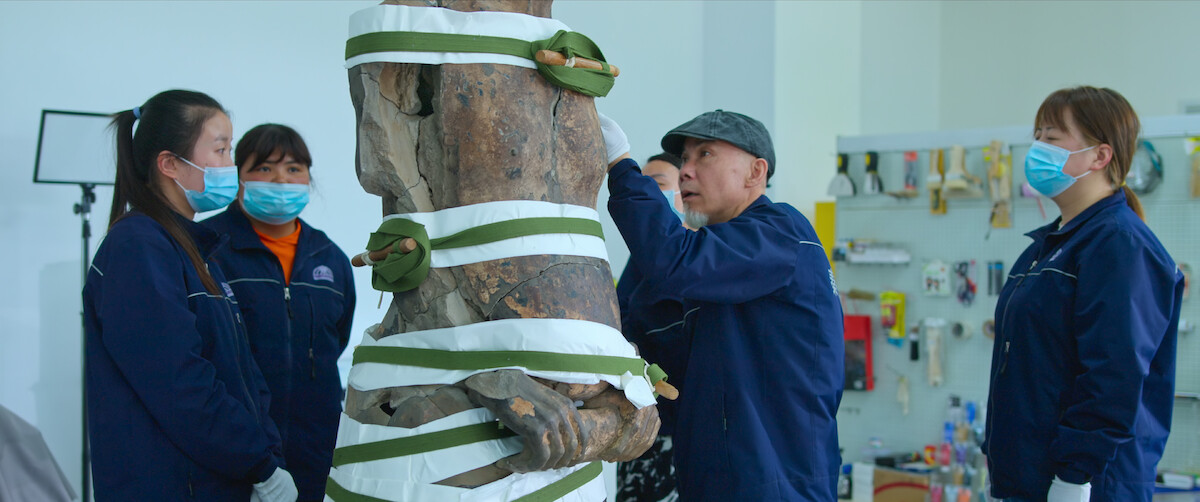
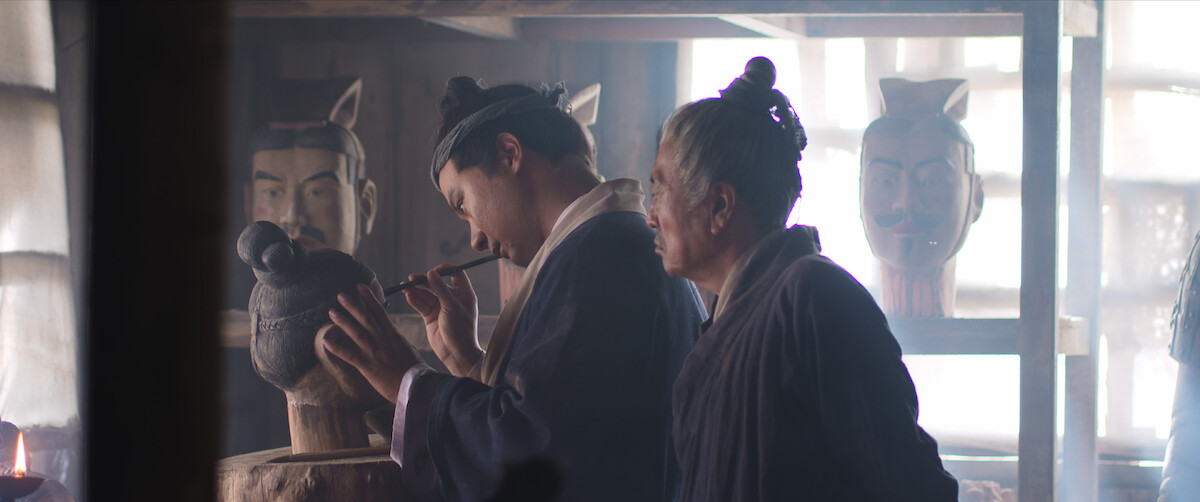
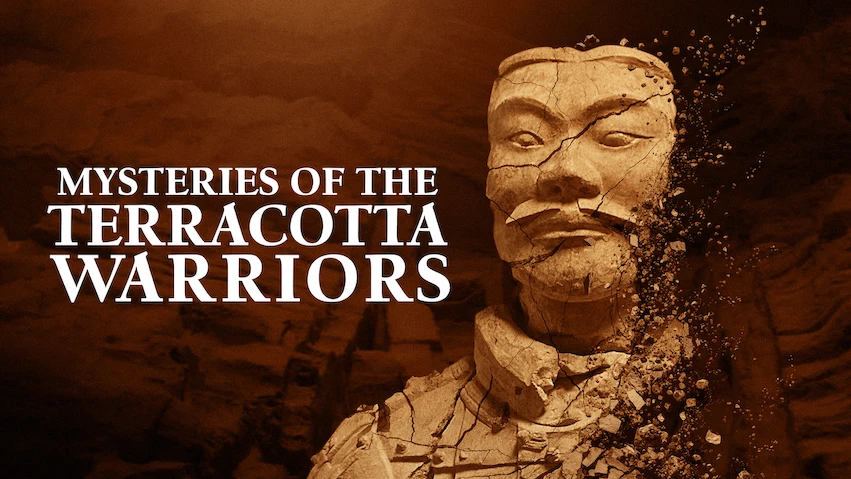
China’s terracotta army is one of the biggest archaeological finds of the 20th century. The clay sculptures, which date back two millennia, were discovered 50 years ago and continue to be unearthed today — all 8,000 of them and counting. The documentary film Mysteries of the Terracotta Warriors, from director James Tovell (Secrets of the Saqqara Tomb), delves into the legacy of Imperial China’s first emperor, Qin Shi Huang, whose obsession with immortality is said to have led to the creation of this expansive mausoleum: a vast Manhattan-sized complex guarded by thousands of life-sized statues. The film explores the excavation efforts and the history behind the ancient tomb, including the rise and fall of the Qin dynasty.
When will Mysteries of the Terracotta Warriors be released?
Stream it now.
Where can I find the trailer for Mysteries of the Terracotta Warriors?
Check it out at the top of this page.
What happens in Mysteries of the Terracotta Warriors?
The film, which traces the history of China during the Qin dynasty, interviews archaeologists, historians, and excavators about the leader who first unified China, Qin Shi Huangdi (aka Qin Shi Huang), and about the tomb in which he was enshrined. The mausoleum was completed shortly before Qin Shi Huang’s death and a few years before the rapid collapse of the Qin dynasty. The documentary details what the archaeological research reveals about China’s history and its first emperor.
Where does Mysteries of the Terracotta Warriors take place?
The documentary film takes place in Xi’an, the capital of Shaanxi province in China, where the terracotta warriors were found in 1974.
How many terracotta warriors are there?
According to Mysteries of the Terracotta Warriors, there are 8,000 sculptures. Each one is about six feet tall.
Who was Qin Shi Huang?
Born Ying Zheng, Qin Shi Huang established the Chinese empire in the third century B.C. and was the emperor of the Qin dynasty. In his efforts to unify all seven states in the country during his reign, he’s largely credited with creating the Great Wall of China. Qin Shi Huang died at age 49 from unknown causes in 210 B.C.
How old are the terracotta warriors?
The warriors are more than 2,200 years old.