This article contains major character or plot details.
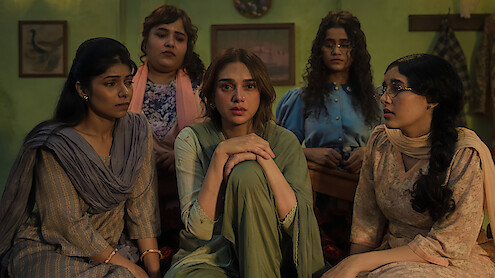
Since premiering on Sept. 7, the dark psychological thriller Dear Child (Liebes Kind) has been a breakout hit that’s remained a fixture in the upper reaches of the Global Top 10. Based on the bestselling novel of the same title by Romy Hausmann, the series traces the harrowing story of one woman’s escape from captivity — and her connection to a long unresolved missing persons case.
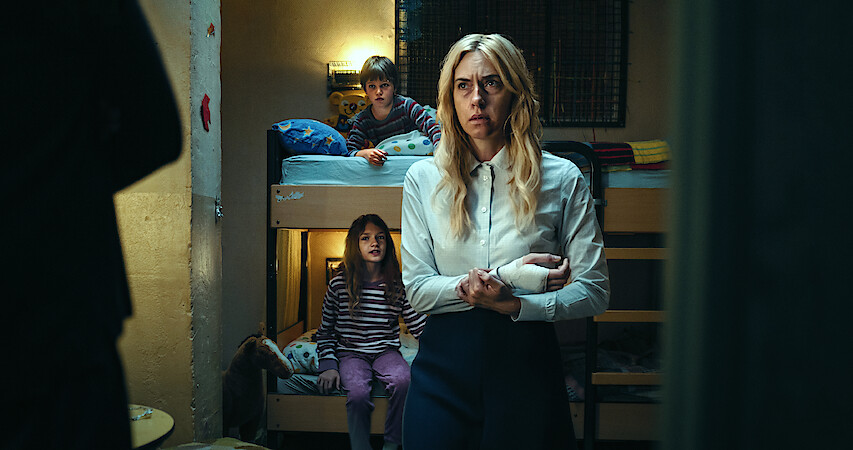
And, as Glamour wrote recently, “It’s the women who give the series its biggest tension.” In particular: star Kim Riedle, who we first meet as Lena, severely injured after a hit-and-run in the middle of a German forest at night, accompanied by an eerily prescient (and physically unscathed) little girl (Hannah, played by Naila Schuberth). Over the course of six episodes, in which the story surrounding their true identities dramatically unravels, Riedle’s protagonist is revealed in complex layers — a woman abducted, brainwashed, broken, and yet still possessed of remarkable power, refusing to remain a victim. As author Hausmann told Netflix’s Queue recently of the cast who brought her novel to the screen, “And the one who really blew me away was Kim Riedle. I swear, that’s exactly how I saw Lena.”
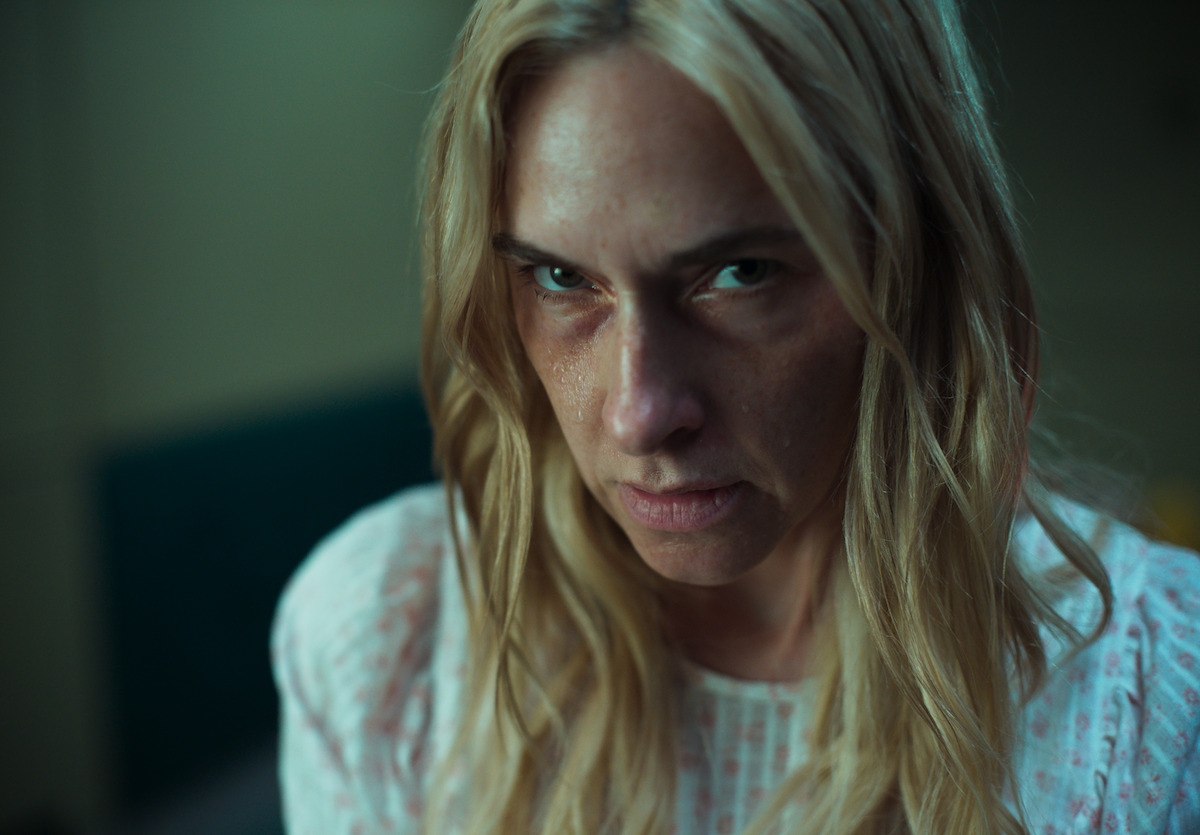
In Dear Child, Riedle undergoes multiple transformations, including dyeing her dark hair blonde, to portray a character who’s forced to drastically alter her physical appearance as well as every single other aspect of her life. Born and raised in Bavaria, Germany, the actor is known for her work in Skylines and Back for Good, which earned her nominations for a German Film Award and a German Screen Actors Award.
“I didn’t get to do any interviews yet because of the subject matter,” Riedle told Tudum recently from her home in Berlin. “We didn’t want to spoil anything, so I’m only starting to talk about it now. I felt like a lot of things I couldn’t remember because it was such an intense process and I’m really [just now] finding the words to describe what happened.”
Read on for the full interview — one of the first Riedle has granted for Dear Child — below.
Congratulations on the success of Dear Child and your incredible performance in it. How are you feeling about the overwhelming international response to this series?
Quite overwhelmed! I haven’t really been able to process it yet, to be honest. You hear all these numbers, and we’re all super excited, but at the same time, it seems, like, very abstract.
But I’m so flattered about Romy saying that because that’s something you really want, right? That the author of the original material can still find her truth in your interpretation of the character. That’s really moving.
What drew you to this role and to this story?
There was a point in the shoot — I’m going to start there because that was really interesting — a scene when she gets picked up from the hospital and we’re in the car, and one of the makeup artists was watching the monitor. And she said to me, “You look like a soldier coming home from war.” I found that very interesting. I think with a role like that, in general, we talk a lot about what happened to her: She’s being raped and mistreated and abused — terrible things happen to her. So she’s a victim. But really, for me, it was someone who was fighting for her life and just gets through it and survives it by the skin of her teeth. I found her incredibly strong. We focused on the whole PTSD of [her story] and the things that were going on inside of her and that battle that she had to fight to find freedom again, because she’s literally stripped of her identity.
How did you prepare for the role? What did you and directors Isabel Kleefeld and Julian Pörksen talk about in terms of your character when you first signed on, and in rehearsals and filming?
Because it’s very plot driven and it’s a thriller, you need to really talk about the journey of each character and obviously which secrets you keep and what you reveal to an audience. As an actor, you kind of have to find a way to ground that in your character so that she reacts in a certain way and that she hides things.
In terms of preparation, I reread Romy’s book a lot — because it has so much in the dialogue, it really helps to find the subtext for so many things. Just from those thoughts on the page, [you] find your own thoughts about the situations, if that makes sense. And there’s a really great book, The Body Keeps the Score, that is written by an expert for traumatic stress disorder patients. That was very helpful for me as a way to feel myself into the character.
Were there any performances in film or television that influenced the way you prepared for this character?
I honestly don’t think there were, though I remember talking to Julian [Pörksen] about Vertigo at some point. I think it’s one of the greatest films that was ever made, just in terms of there being a man who is trying to model a woman after another woman that he obsesses over. So that’s why we thought about it. And Kim Novak [who stars in Vertigo] is also the reason I have my name because my parents really love that. But it didn’t really inform the performance.
Was it hard for you to leave this character and turn off at the end of a day of shooting?
I’m someone on set who’s really focused, and I have a strong concentration. But once the scene is done, I really try to find joyful moments and laughter with the team, because I don’t want to disturb everyone around me — also it helps me to get that energy back again and feed your soul a little bit. But there were days, of course, when I went home and I couldn’t quite shake it. I don’t think there was a day in our schedule where my character isn’t in intense distress.
Just to give you an idea — because I know it’s kind of abstract what actors do — I have an osteopath who’s known me for a couple of years and knows my body quite well. And I had a little accident and went to her. When she was working on my body — because I wasn’t allowed to talk about the role or the project, she didn’t know what I was doing, but she knew I was working on something — she asked me if someone was strangling me in the shoot I was doing. And I just said, “No, but [my character’s] in captivity. She’s not free.” And she said to me, “Because your body is completely different than it normally is.” Like, it was completely like this [wraps her body inward], like someone who’s constantly protecting herself. She found that so fascinating, knowing my body so well, that it had changed completely and that she was working on a different person.
Truly. And so often your character is unable to speak — whether because she’s fighting for her life, as she is when we first meet her in the early scenes, or when she’s struggling to survive in ways that are also psychological, when it’s safer for her to remain silent. That meant your performance had to be really physical — you had to communicate and express so much without words. How did you approach that?
I’m generally a very physical actor — I trained to be a dancer in my youth, so I’m coming from movement. But because of what happens to her and because it’s about survival, it becomes so animalistic. It’s about finding strategies — different strategies — to get through this. I had this picture [in my head] of a trapped animal very early on. Do you know this poem by Rilke, about a panther in captivity? It describes the different cages [holding] this majestic animal and this very free spirit that is trapped, and how the will is more and more broken, and the light is leaving the animal’s eyes. And that was the picture I had of her — so it becomes very physical automatically if you think in those terms.
Absolutely. And when you announced the streaming premiere of Dear Child on Instagram, you also posted some lines from Tennessee Williams that speak to this.
Yes, it’s from Stairs to the Roof: A Prayer for the Wild at Heart That Are Kept in Cages. And it speaks to not only the physical aspect of being kept in that house but also just being unfree in your mind and under psychological stress and trauma.
You also had the challenge of playing a character who has to essentially become another character, so you go into a kind of double transformation. Also, the way the novel and script are written, layers of information are revealed and shown from different perspectives. How did you navigate that balance of withholding and revealing as an actor?
I honestly never thought about it in that way. The directors and I, we just spoke about the character’s journey and really took it bit by bit, scene by scene. But looking out of the character, it does seem logical that she’s not revealing things. I think she’s unable to. I really felt that the relationship with the cop [Gerd Bühling], played by my wonderful colleague Hans [Löw], is interesting, because I always felt he would be the person that she would want to open up to. But she even withholds information from him, and I think that just has to do with the trauma. There is such a big gap between her and the real world. She can’t trust people now, she can’t see clearly who is an enemy and who isn’t. And there’s also the aspect of her being afraid that she’s losing her mind.
What was it like working with the child actors Naila Schuberth and Sammy Schrein?
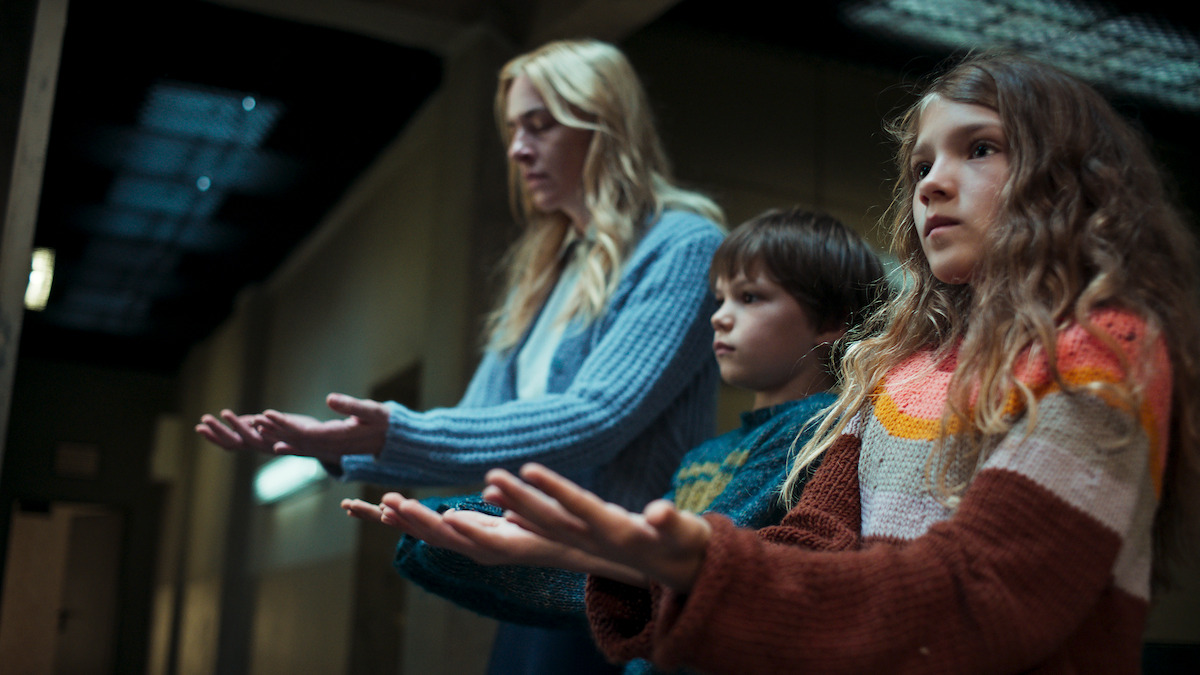
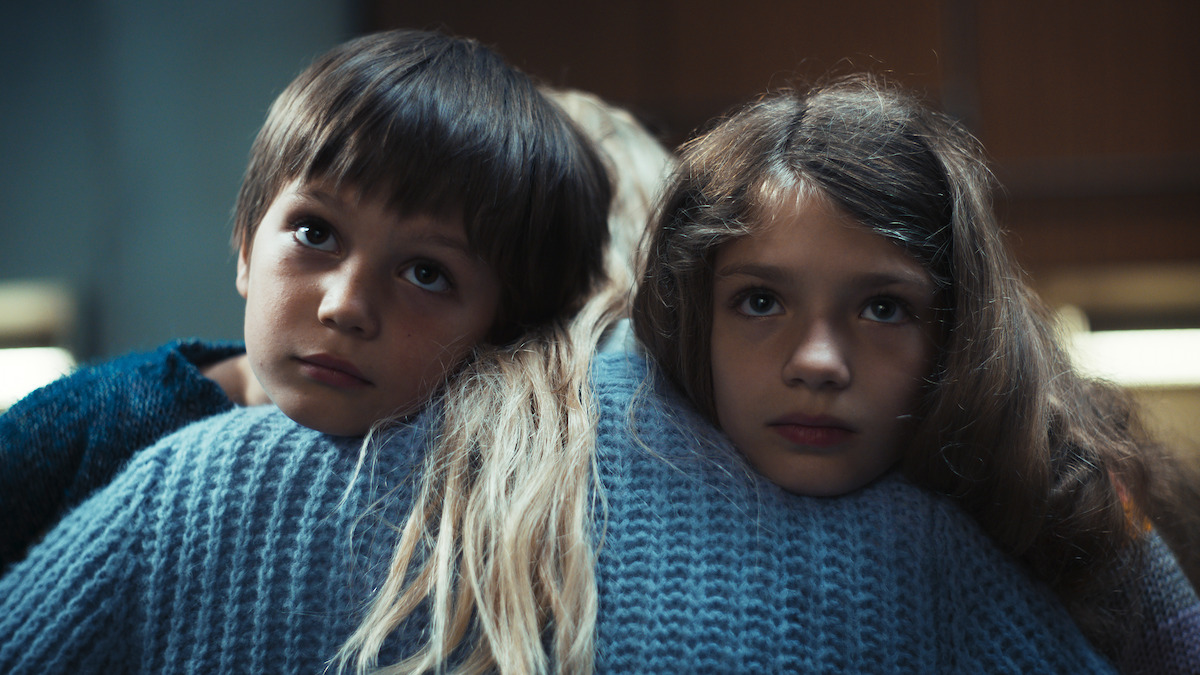
They’re really sweet and bubbly kids, actually, and very talented. It’s always joyful to have kids around, but also challenging, especially when you play what I had to play, because the natural instinct is to take care of [them]. At some points I had to keep my distance a little bit while we were working, in order to be preparing my thing and concentrating on what I had to do. And we had a wonderful children’s coach on set.
How do you interpret the ending? What do you think will become of Jasmin now?
I think it should be everyone’s own interpretation. There’s definitely a shift in the character in the end that makes me happy for her. But I think, as you can see on her face, and understand from what she’s been through, there will always be a scar in her life.
Do you think there could be or would be a Season 2?
Oh, I don’t know. It was never on our minds, to be honest. I do feel the need to say something about my actor colleagues, because, as brilliant as the kids are, my partner who is off-screen most of the time doesn’t get the credit he deserves. Christian [Beermann, who plays the villain] was such a joy to work with, really, in these very gruesome scenes. It’s not an easy part to play, being this horrible man; and it always informs your own performance, whatever the other actor does, so that was a great collaboration. I only wish I had scenes with the other females on the show. They’re all amazing. I’m very proud to be part of that strong ensemble.
There must have been such a shared understanding among all of you.
Yes, and something else that was very interesting with this role is that, before we started, I felt so much resistance in my body. It was very difficult to prepare for that reason. I wrote a lot about it in my little diaries and whatever — like, your body knows, and it doesn’t want you to go there. And then once you jump in, you’re in, and you are so immersed that I think you don’t really know anymore what you talked about in prep — it’s all very intellectual. That role is so visceral and emotional, that the intellect is good [for preparing], but then when you’re in it, you just have to get in it — you’re swimming.
This interview has been edited for clarity and length.