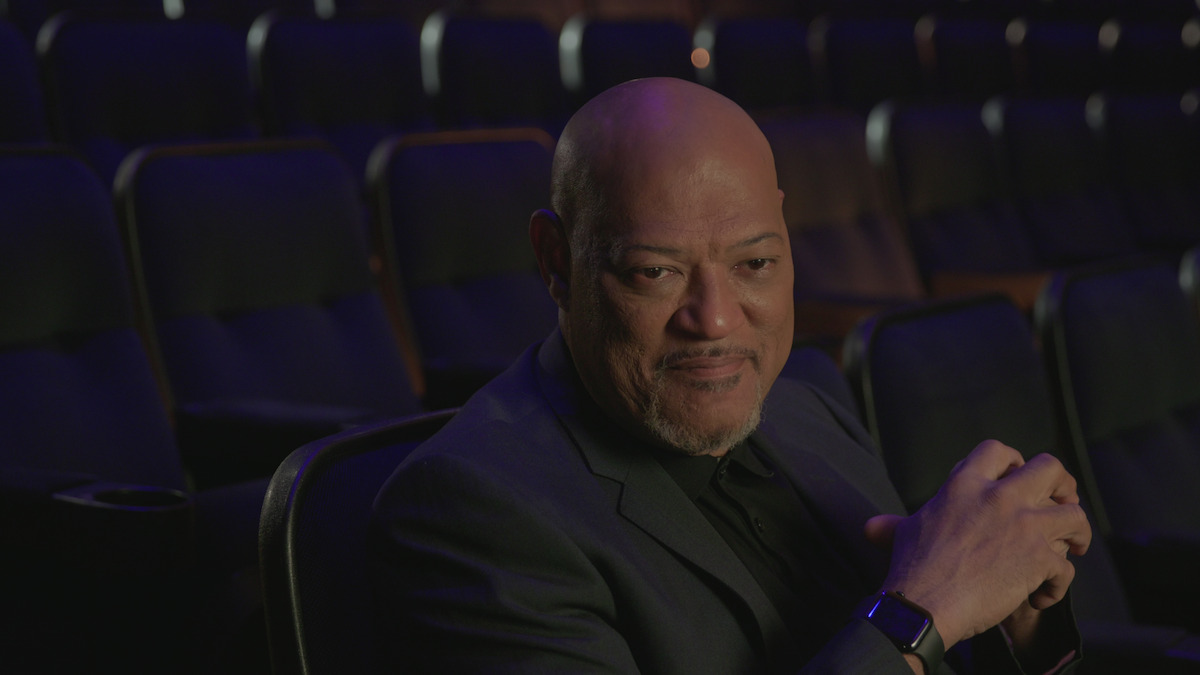
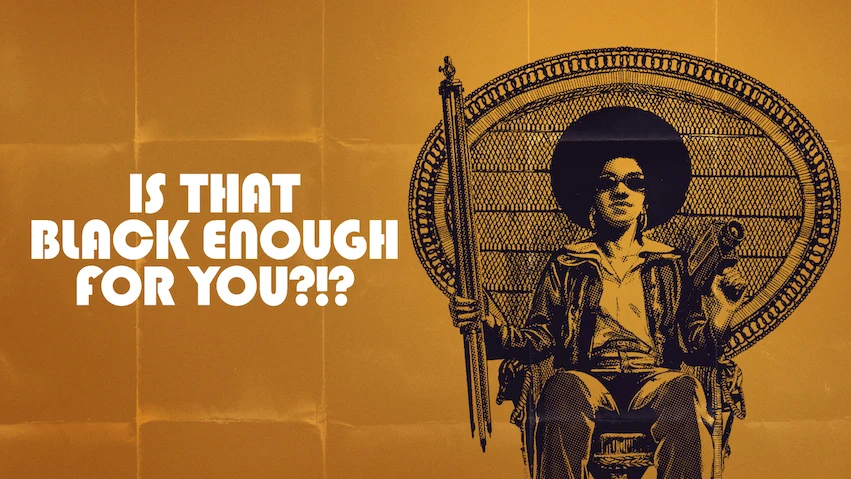
The ’70s were an era of American cinema which featured Black actors in roles that pushed boundaries like never before. Written, directed and narrated by Elvis Mitchell, Is That Black Enough for You?!? examines the “blaxploitation” films of that decade, so named for their controversial subject matter that ultimately proved profitable for Hollywood. This documentary includes interviews with Samuel L. Jackson, Laurence Fishburne, Whoopi Goldberg and others who were influenced by this period, as well as some of the filmmakers and talent who defined it. It premieres on Netflix Nov. 11.

Hannah Kozak/Netflix
Elvis Mitchell
A film critic and historian, Mitchell traces the evolution of Black representation in American cinema through the ’70s and draws connections to society at-large. He explains that while many blaxploitation films were considered controversial in their representation of African Americans — often sensationalizing the grittier elements of urban life in Black neighborhoods — they nevertheless told stories that centered on Black characters, and showed a complexity and depth that hadn’t been seen before.
Mitchell produced the documentary series The Black List and Elvis Goes There, as well as the superhero series Black Lightning. He also appeared as himself in the Netflix series The Politician and BoJack Horseman. Additionally, he hosts the weekly radio program The Treatment on NPR.
You can follow Mitchell on Instagram.
Samuel L. Jackson
Jackson recounts growing up in the era of segregation and not seeing Black characters in films that he could identify with. It was in blaxploitation movies like 1971’s Shaft where he first saw a Black man presented not only as a hero, but as a sex symbol, too.
Jackson was nominated for an Oscar for his role in Quentin Tarantino’s Pulp Fiction and received an honorary Oscar this year for a lifetime achievement in film. He recently starred in the dramatic mini-series The Last Days of Ptolemy Grey and the Netflix mockumentary Death to 2020.
You can follow Jackson on Instagram and Twitter.
Laurence Fishburne
Fishburne recalls the 1970 blaxploitation film Cotton Comes to Harlem and how it authentically captures the essence of the famed New York City neighborhood while using it as the backdrop for an unbelievable story.
Fishburne was nominated for an Oscar for his role in the 1993 biographical film What’s Love Got to Do with It? He’s won three Emmys, one for his role in the crime drama series #FreeRayshawn. Fishburne recently appeared in the fantasy series The School for Good and Evil and the thriller The Ice Road, both Netflix productions.
Whoopi Goldberg
Goldberg observes the significance of casting Black actor Duane Jones in the lead role of George A. Romero’s 1968 horror film and blaxploitation precursor, Night of the Living Dead, where the theme of survival has a deeper resonance for Black audiences.
Goldberg was nominated for an Oscar for her role in the 1985 film The Color Purple and later won an Oscar for her role in Ghost (1990). She’s won two Emmys, one for her role as a host on The View. Goldberg recently appeared in the biographical drama Till.
You can follow Goldberg on Instagram, Twitter and TikTok.