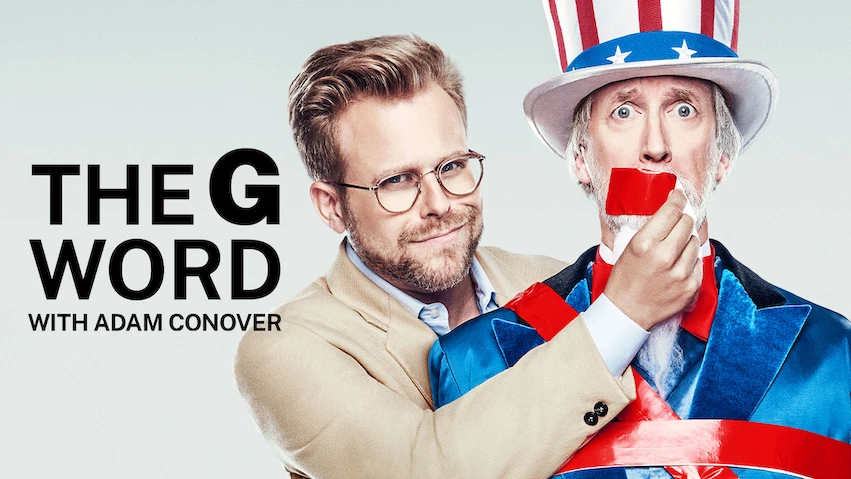
Barack Obama isn’t just an ex-president, he’s also a television producer. Obama’s latest project is The G Word with Adam Conover, in which he also appears. But how did Conover get mixed up with the former first family, and how much input did the one-time leader of the free world really have in The G Word? Tudum sat down with Conover to find out.
How did you hook up with Barack Obama, and how involved was he with the project?
I had read Michael Lewis' book, The Fifth Risk, in 2018, when it came out. Then, about six months later, I got a call from my manager saying Barack and Michelle Obama’s production company had optioned the book, and they wanted me to pitch a take on it — what would I do with it? “They want to make a comedy show about the United States government. That’s the only idea that they have. They don't know anything more than that.” And so I went in and pitched a show that would use my own comedic, investigative style to uncover everything that the federal government does to affect our lives, both good and bad. They liked it, and they bought it. They brought it to Netflix, and they loved it as well. So, we started making the show.
At the very beginning, I made it really clear to them that, “Hey, the only way that this show works is if it’s my perspective, not Barack Obama’s perspective, that’s front and center,because otherwise the show won’t be credible to the audience.” Audiences are very smart. They’ll see his name in the credits, and they’ll say, “Hey, what's up?” So, we need to be clear about that. They were on board with that, and they gave me editorial independence.
Over the course of making the show, I had, I think, two phone calls with Barack Obama, where he had read some scripts and wanted to share his thoughts. But [those thoughts] were very much like, “Hey, take ’em or leave ’em,” and, respectfully, we took some and we left a bunch, just to be quite honest. There’s some points where he added clarity, and there are points where I had to say on the phone, “Respectfully, we disagree. This is what our investigation has found.” They gave us the room to work, which was really wonderful.
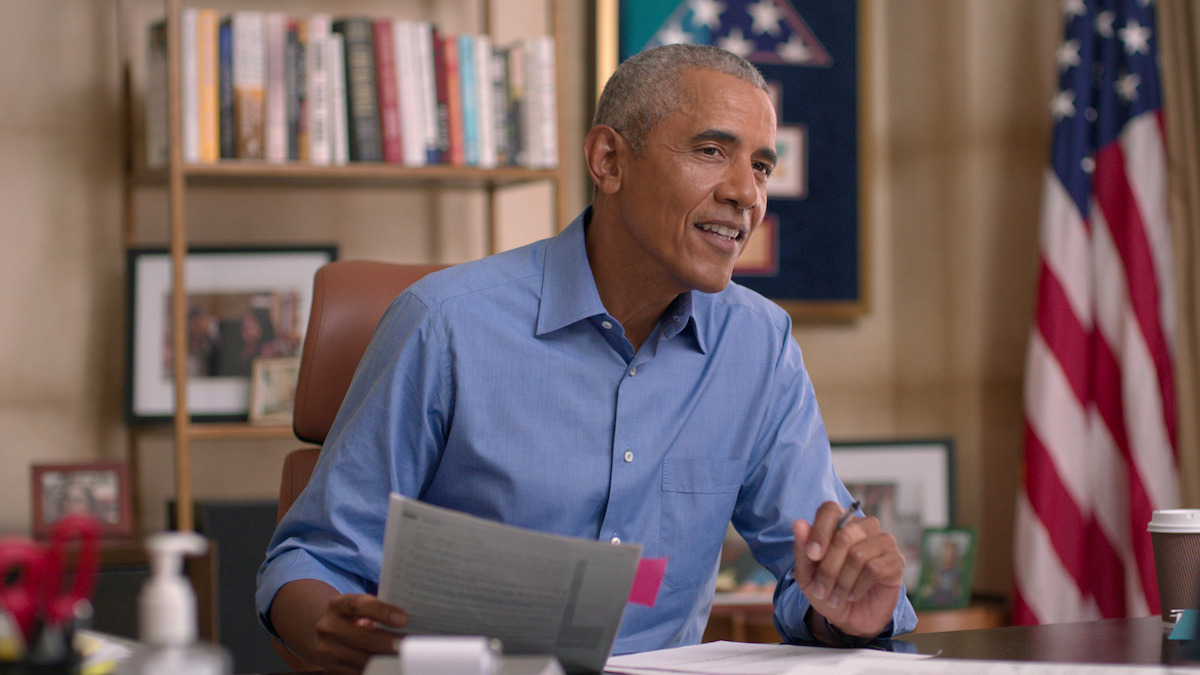
He also agreed to participate in the show to do the scenes with me that bookend the show, and sort of establish for the audience what our relationship is. He’s saying, “Here's the project. Go do what you want, go make the show you want to make.” He also engaged with me in a really challenging conversation at the end of Episode 6, when I'm sort of at a low point. I’m not feeling great about our ability to change the government, and I have kind of a challenging conversation with him about that. I was really grateful that he was willing to go there with me and have a conversation with me that's a little bit more candid than what he normally has.
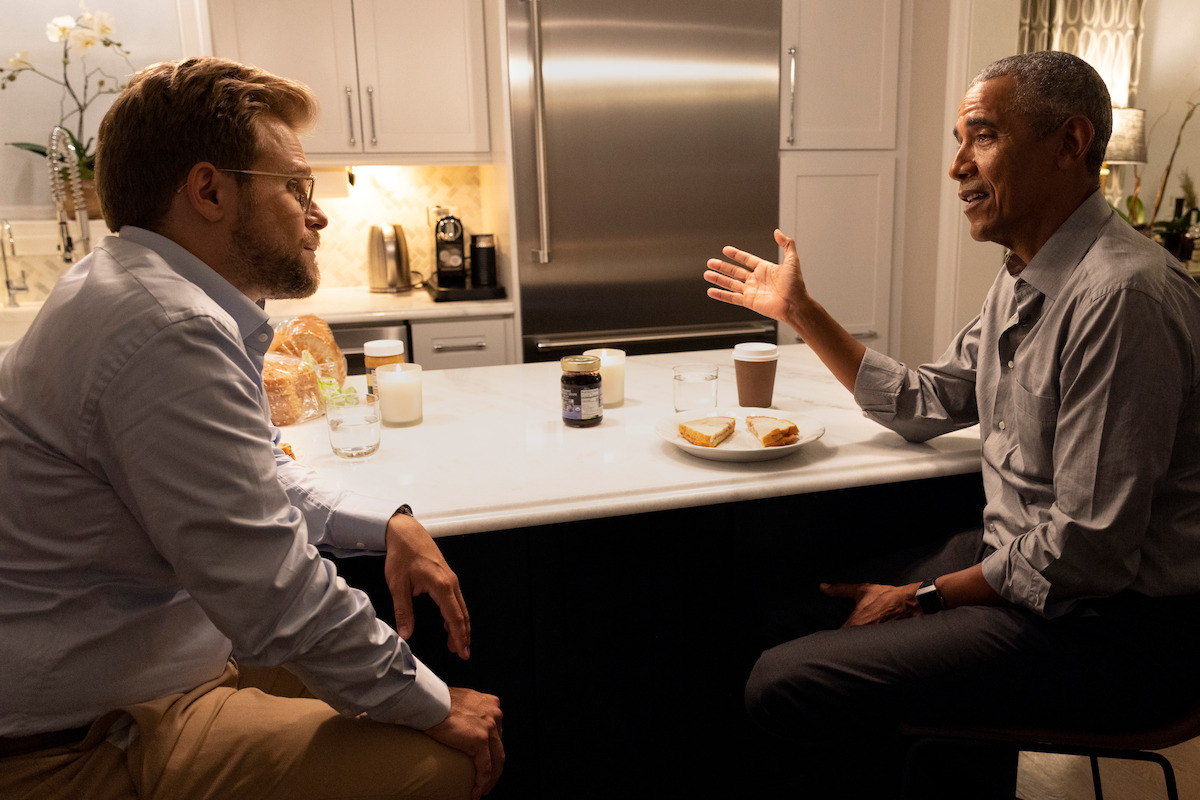
The final conversation does seem more off the cuff. It’s like two friends talking — except one is the former president.
They had asked for what the conversation would be about, and I was clear about it, but I didn't go in with a list of questions. The questions I asked him are questions that I have wanted to ask him since 2010, basically, or since midway through his administration, so they’re very organic. And, as a result, it’s a very organic conversation.
The man is a masterful speaker, and he spends all day talking to people. He’s an incredible communicator, but he’s got his themes, and he’s got his things that he hits. After seeing him on television since 2008, I felt that I had heard them, so one of my goals was to move the conversation into a place that was a little bit more unexpected and get past that first answer to the second one. So, to the extent that I had a plan, it was to say, “OK, I think I know what he might say, but how do I get us into that conversation mode that you mentioned?”
Where did you shoot with him, and is he really that specific about his peanut butter sandwiches?
The opening segment was shot in his actual office in DC. The second segment, I will pull back the curtain a little bit since this is Tudum. It was shot in the kitchen of a friend of his. As far as the peanut butter sandwiches, I mean, you see him make the sandwich on the show. It was very precise. He cut diagonally and there wasn’t a blob of jelly anywhere. I had jelly all over my hands. He seemed to really relish making that sandwich. That was that guy making a sandwich for the first time in years and saying, “I'm going to enjoy every second.”
I was really impressed with the access that you got on the show, just in terms of how you got into places we don’t normally see. You went into a meatpacking plant, for crying out loud. Were some places harder to get into than others?
It was hard to get into that Cargill beef processing plant. That is the first time that a camera crew has been allowed inside one of those plants in, perhaps, decades. Animal activism groups have done so much surreptitious recording in those places that they really lock them down. The only reason that we were able to get in was because we were focusing on the USDA. So, they opened the doors to us so we could see how the inspectors there do their work. It was a very intense place to be and I had an emotional reaction to it. You can see it on screen like, it was definitely one of the more discomforting places that we went.
A lot of people have a lot of opinions about factory meat farms like that, as do I. I sort of leave it to the audience to draw their own conclusion, based on what they see there. I definitely draw the conclusion that, at the very least, it’s incredibly important to have those meat inspectors be there because there’s so much meat going by, and the possibility for infectious disease to spread is so incredibly high.
That segment took about two years of planning to get in terms of just emails and going through bureaucracy. Our incredible field producer, Suzy Beck, who I will shout out every day to the end of my life, secured that for us and did amazing work doing it. It was the very last thing that we shot for the show, I believe. It was either that or the hurricane plane because, [for] the hurricane plane, we had to wait until hurricane season of 2021. I forget which one we did first, but those were the two most important segments and those are the last two things that we did.
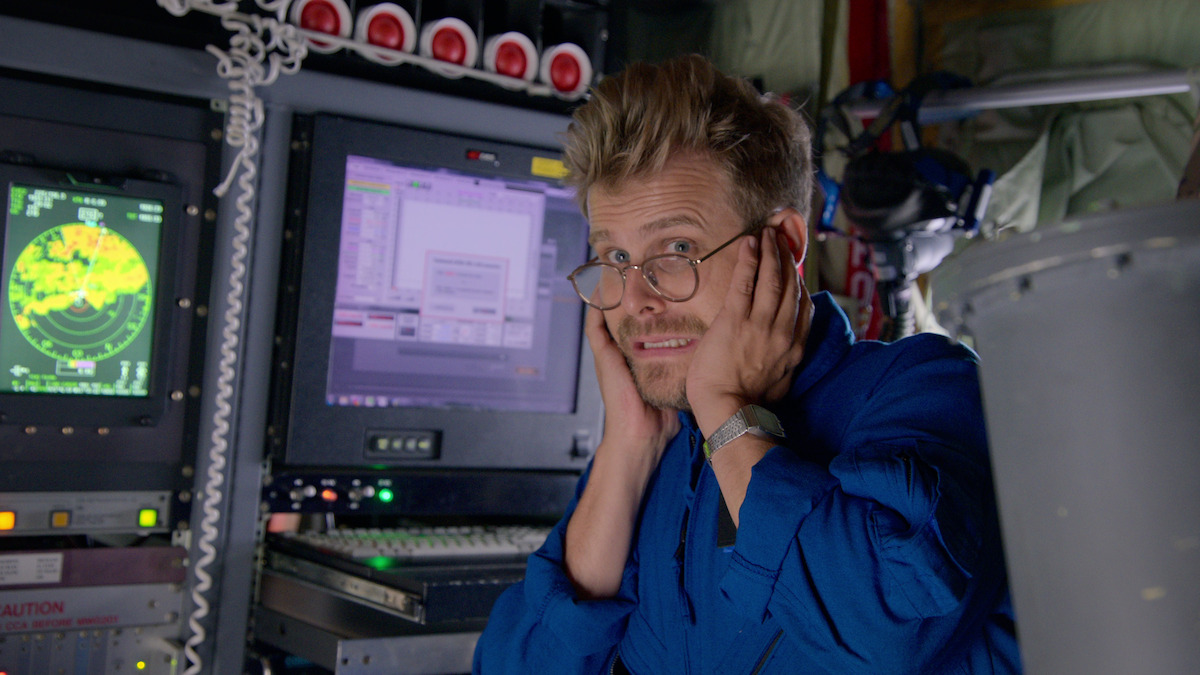
How did the hurricane plane work? Do you just keep an eye on when there’s a hurricane coming and then go sit in a hotel in Miami and wait? How did you time it out?
Yeah, that’s basically what happened. We knew when hurricane season was, and they could give us an update a couple of days in advance, saying, “This is starting to look like a hurricane, and we’re going to start doing missions.” We ended up actually going twice, because the first time we went, the hurricane never really formed. It didn’t turn into the type of mission where they flew into the hurricane. It was more sort of, “Let’s go look and see the general surroundings,” but it never formed into a proper cyclone. Everyone on the plane was so disappointed like, “I’m really sorry that you didn’t get to see. It’s great when we get to go into a hurricane.” We landed knowing we were going to have to do it again, which was not fun after doing a 10-hour flight over the Atlantic in stormy conditions.
Why do you think a place like Cargill let you in the door? Do you think being able to drop the Obamas’ names helped?
Absolutely.
I can’t imagine the stuff you saw that didn’t make the show.
We didn’t go through the rooms that would be most traumatizing to show. But the room that we show on camera where they’re doing the inspections and they’re going through the guts, and there’s these gigantic carcasses traveling, that was one of the most intense places I’ve ever been. The smell was overpowering and not just the smell of the meat and the viscera, but also the disinfectant cleanliness smell. It was very humid from all of the work being done, you always want moisture in the air.
The sound was really intense, too. It was actually really hard to capture for the show, because it was this sort of pneumatic sound like [makes clicking, humming sound]. It was really, really intense and overpoweringly loud. What’s striking is this is where the workers for Cargill and the USDA go every single day. This is their job for 8 to 10 hours a day. And that is something that I felt really privileged to be able to see. It’s a part of American life that I never had access to before, and it’s something that I felt was really important to bring to the public so that they can see it and understand that this is where the meat comes from and that there are real people who do the work.
You know, I’m not a vegetarian, but I avoid eating meat. I only eat it once or twice a week, and part of that is because I know how cruel our meat system is. It was really fascinating to see it firsthand. I did not eat beef for about four months after doing the segment.
You talk about this at the end of the show, but did making The G Word help you feel better about government? Or at least about what you can do?
Look, I’m interested in everything, right? As a comedian, I could make a show about bugs. But making a six-episode series [about the government], I was aware that I’m gonna have to come to some sort of conclusion... and that was really difficult because the government is so enormous. All of these things are true about it all at once. The same DARPA that put our GPS satellites in the sky also created Agent Orange and the combat drone. These things are both true.
How do you make a single statement that’s true about the largest single organization on Earth? It’s very, very difficult. And so, in Episode 6, I’m really working through my own thoughts and feelings, trying to parse it out. What we arrive at is that the most important thing about the government is that it is a human institution. It is people all the way through, people from the top and people to the bottom. That means that it is something that we can participate in, especially at the local level. That’s why we focus on local government specifically.
Something that’s happening all over the country is that people are starting to run for their local offices, because they’re realizing nobody else is running for these things. There’s one incumbent who sucks and hasn’t had to run against anybody. If I can knock on doors and give them a challenging race, I can win and I can change my government. That [gives] me a lot of optimism.
Also, I got to see the individual people who make our government who really give a shit about the well-being of Americans. Jamie Rhome from the National Hurricane Center is helping analyze the data coming from the hurricane plane and figures out where the hurricane is going to go. This guy has devoted his life to saving people from hurricanes. He’s not doing it for the money. He could make more money working for the Weather Channel, but instead, he's working for the National Hurricane Center because he loves that mission and he loves doing that work so much.
To see people throughout our government who are that committed, that mission driven, who care that much and are that competent was really, really reassuring to see, because we have this really negative narrative about our government. It was wonderful to see those counter examples that we almost never talk about. So, yes, it did make me very optimistic. And now, I do this myself. I’m involved in local government, and I’m involved in local politics. It’s very easy to be pessimistic and fatalistic when all you’re doing is scrolling on Twitter at your house.
I really encourage everybody to do that, because it’s a liberating experience to see that you really can have that impact.
This interview has been edited for length and clarity.