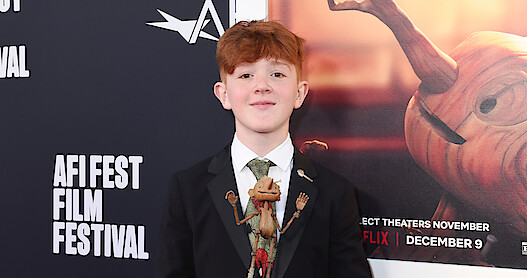
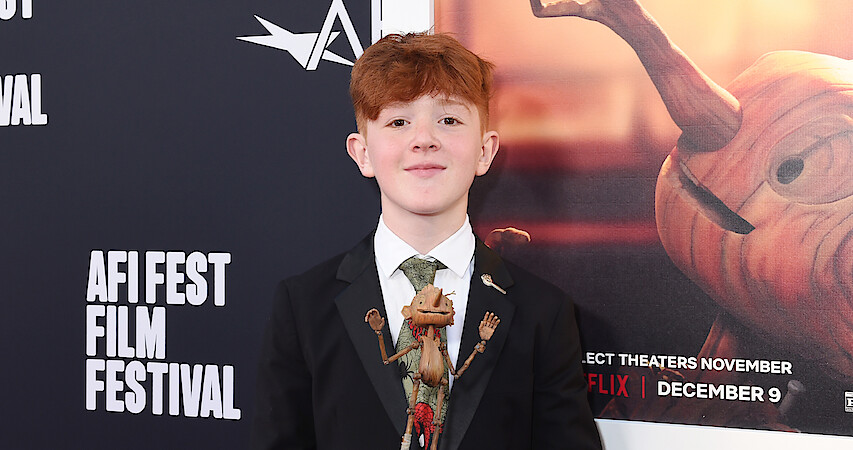
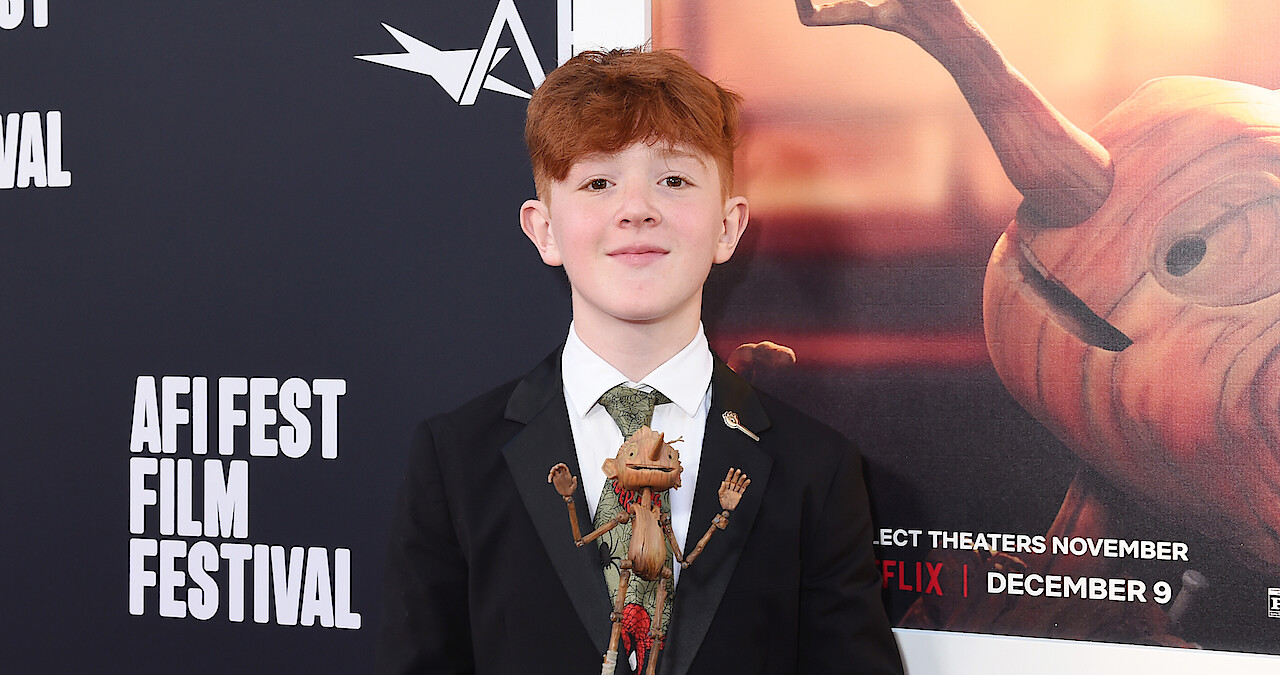
Gilbert Flores/Variety via Getty Images
Introducing
Pinocchio’s Voice Has Cracked
Gregory Mann provides the voice of the iconic puppet in Guillermo del Toro’s new film.
Dec. 1, 2022
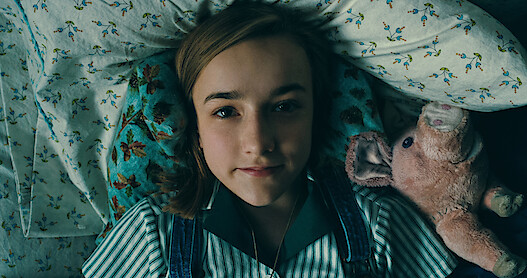
When Gregory Mann’s friends heard his performance as the title puppet in Guillermo del Toro’s Pinocchio, a few of them didn’t recognize his voice. You might not either. In the three years since Mann started recording his lines as the wooden boy with the borrowed soul, quite a few things have changed. A global pandemic shook the film industry, and a heat wave swept through Portland, Oregon, where much of the film was produced. But perhaps most importantly, for our purposes, is a much smaller change: Mann’s voice.
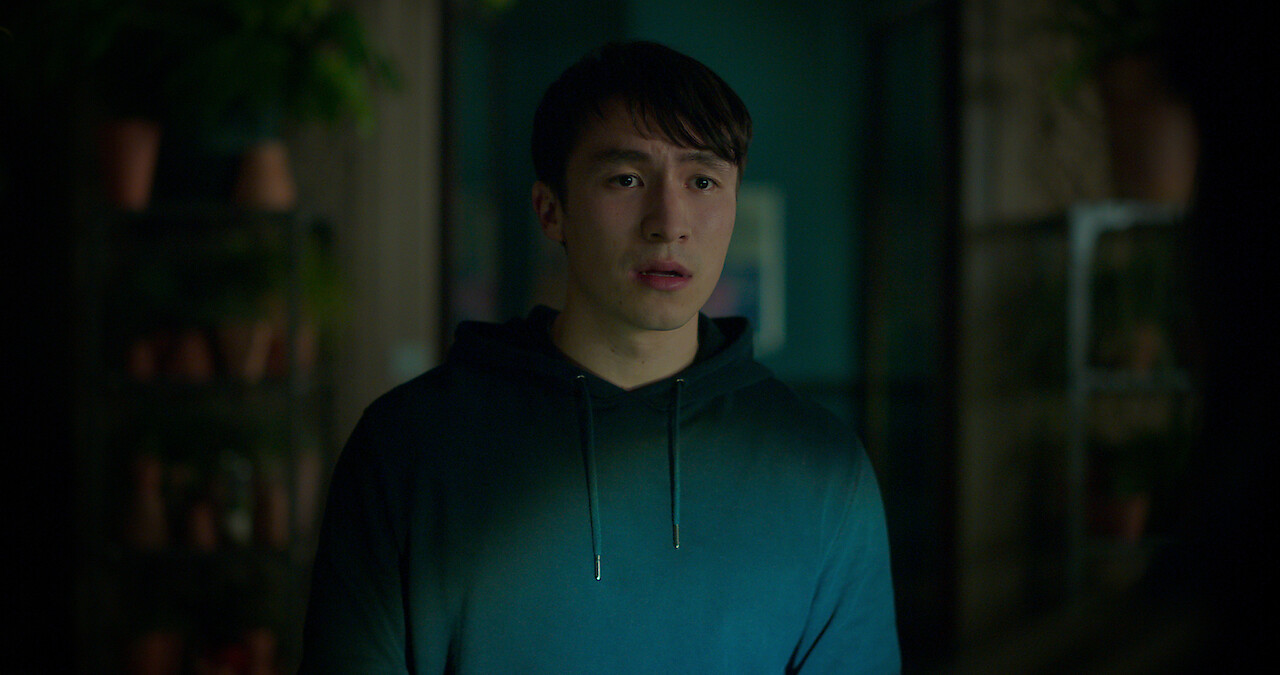
“My voice has got a whole octave deeper,” Mann tells Tudum. The Pinocchio Mann voices is essentially a newborn, with a squeaky high pitch and an all-too-energetic nature. Three years on, Mann is a thoughtful teen whose voice sounds, well, more manly. “I don’t think I can even speak that high,” Mann laughs. “I tried to do the voice and my voice ended up cracking.” Unlike Pinocchio, the puppet’s off-screen alter ego is growing up.
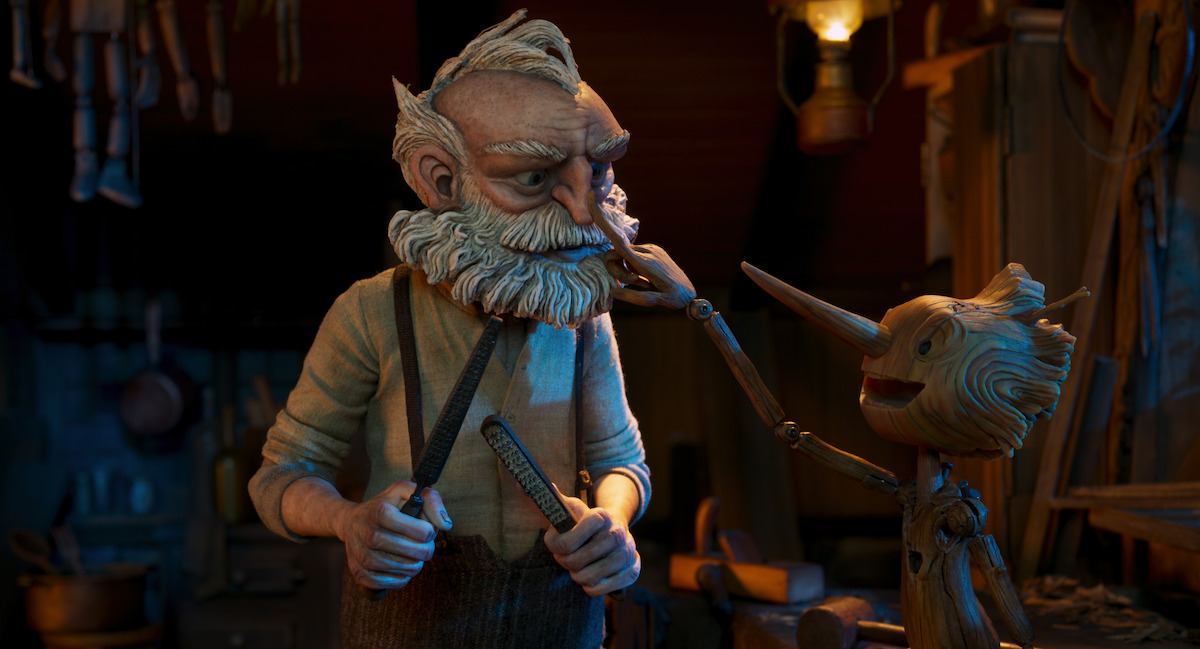
In del Toro and Mark Gustafson’s new film, Pinocchio is a gnarled, boisterous little creature who sets out on a journey to make his father, Geppetto (David Bradley), proud. Many of the familiar elements of the classic story are present (some drawn directly from Carlo Collodi’s original book), but others are twisted just so, revealing new angles and different features. Mann was familiar with the story from earlier in his childhood. “Just the outlines of it,” he says. Just the outlines is a good place to start.
In the film, Geppetto’s first son, Carlo, is killed by a falling warhead, leaving the old man grief-stricken and bereft. Mann also voices Carlo, whose grave becomes Pinocchio’s birthplace. The wooden puppet is carved by Geppetto from a tree that grows above Carlo’s tombstone. Mann’s performance as Carlo is similar to his turn as Pinocchio, if a little calmer. “Guillermo and Mark told me that they wanted a resemblance,” Mann says. “Obviously, Pinocchio’s more energetic, but the souls are the same.”
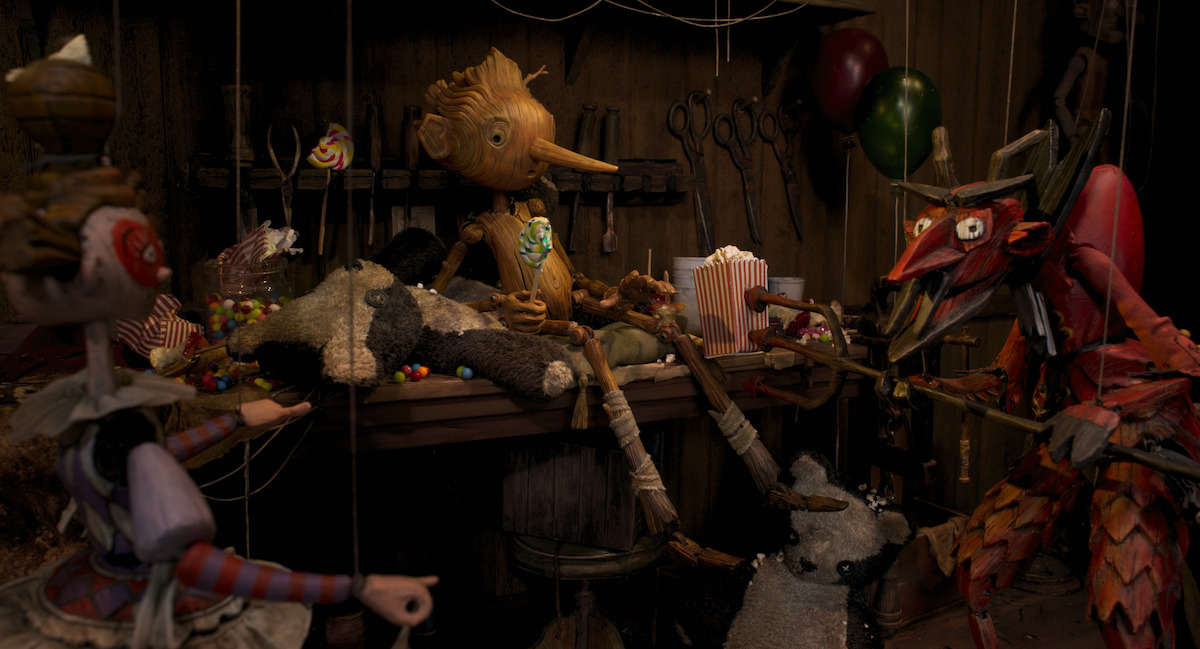
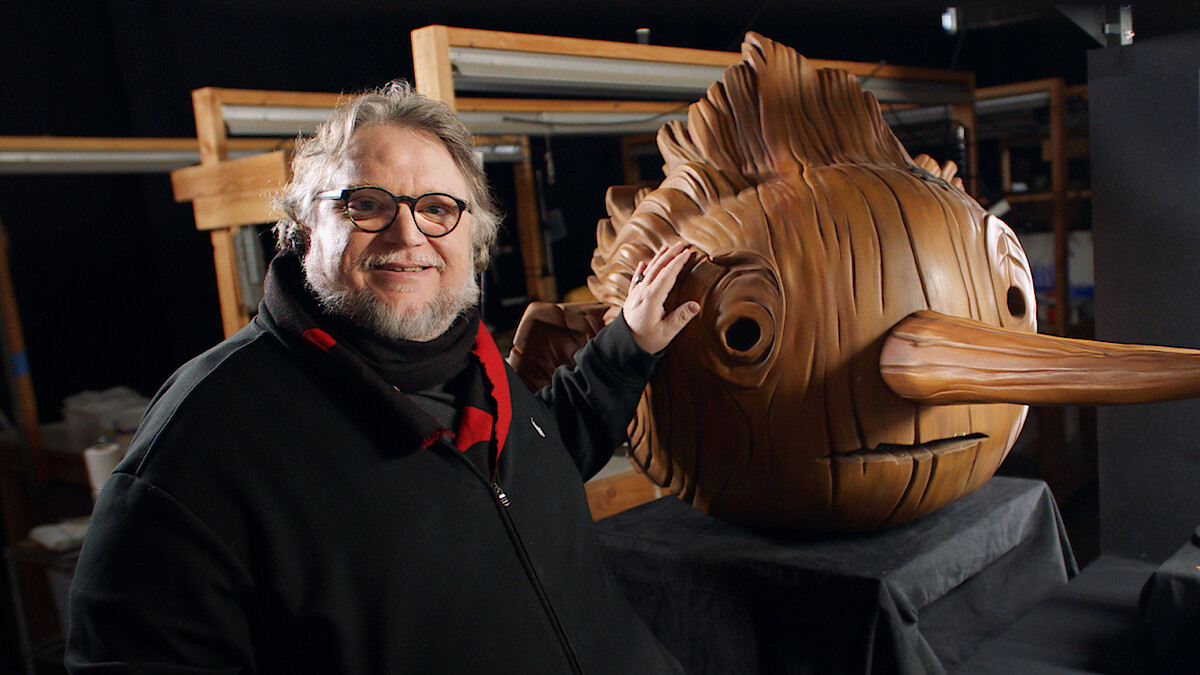
Mann auditioned for the film without knowing it was a Pinocchio story, let alone one from the mind of the Oscar-winning director of The Shape of Water. “It was anonymous, just for a voice animation, and I’d always wanted to be in one,” he says. “I think it’s such an incredible thing how, even though [Pinocchio’s] not me, I’ve kind of become him.” As a lover of animation, Mann was also thrilled to learn that the film would be produced via the painstaking process of stop-motion.
“I’ve always thought stop-motion was just such an incredible thing,” Mann says. “It’s like in a piece of art, if there’s a few smudges or scratches, and you could see that that’s where the artists rubbed it out and put something in. It’s like the same with stop-motion. The artists are actually doing it with their hands instead of on a computer.” Mann even has memories of making his own stop-motion films as a young child. “Me and my brother, we used to get a Lego and we used to move his leg a little bit, take a picture,” he recalls.
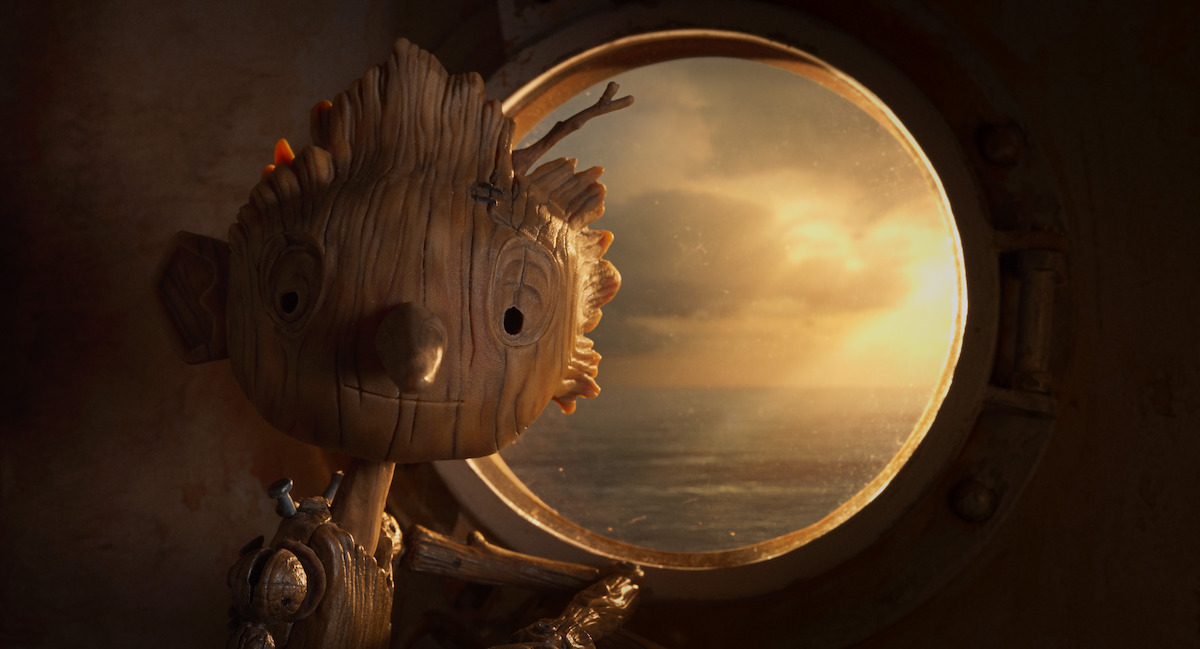
Of course, Mann’s work on Pinocchio is a far cry from filming plastic toy bricks. Pinocchio is also a musical, with songs by composer Alexandre Desplat. “I was the voice of the songs, which was such an incredible experience because I got such incredible voice coaching,” Mann says. “There was a point where they were deciding whether or not for me to be the singer, because naturally my voice doesn’t go as high as it has to go, but I put in the effort, and I’m so thankful that it got to be my voice singing.” Pinocchio’s introduction song, “Everything Is New to Me,” took 80 takes, but Mann ultimately nailed it.
And just in time. As recording sessions were wrapping up, the young actor’s voice was getting farther and farther away from Pinocchio’s boyish falsetto. “Towards the end of recording, my voice had got a lot deeper so I kind of had to strain it,” Mann says. “But luckily, we got there in time and we got everything done before I got this deep.” Thank Geppetto for that.
This interview has been edited and condensed for clarity.