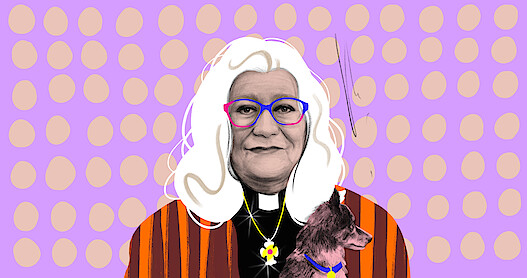
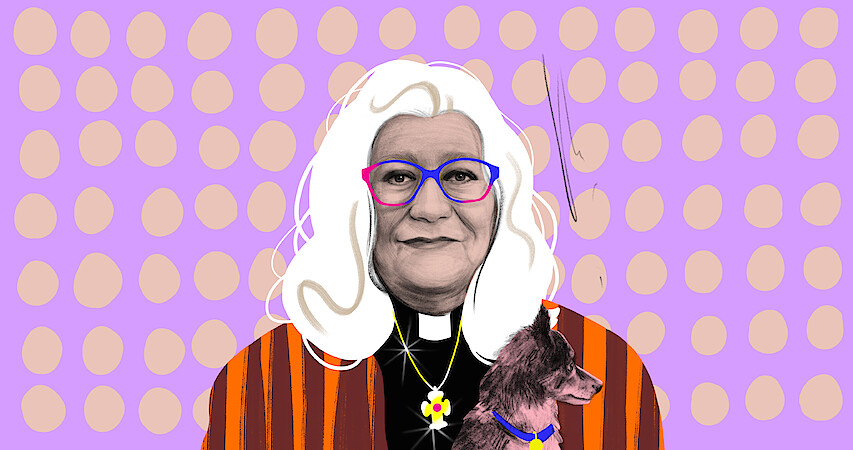
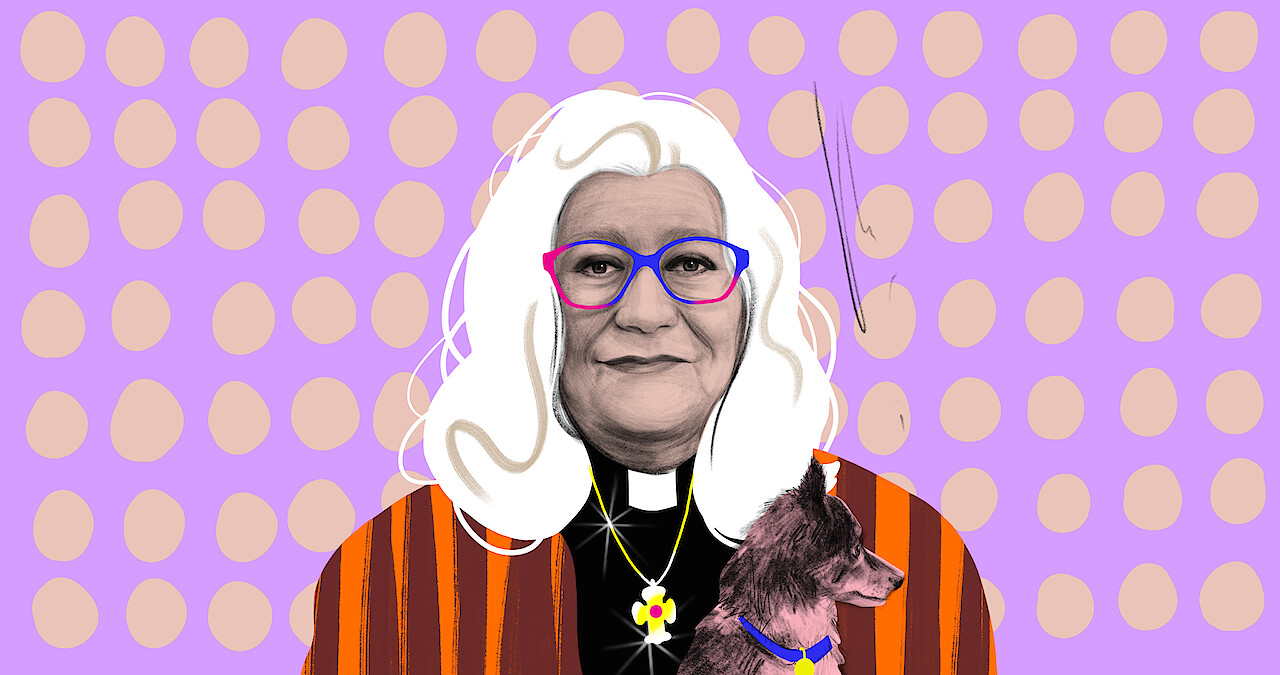
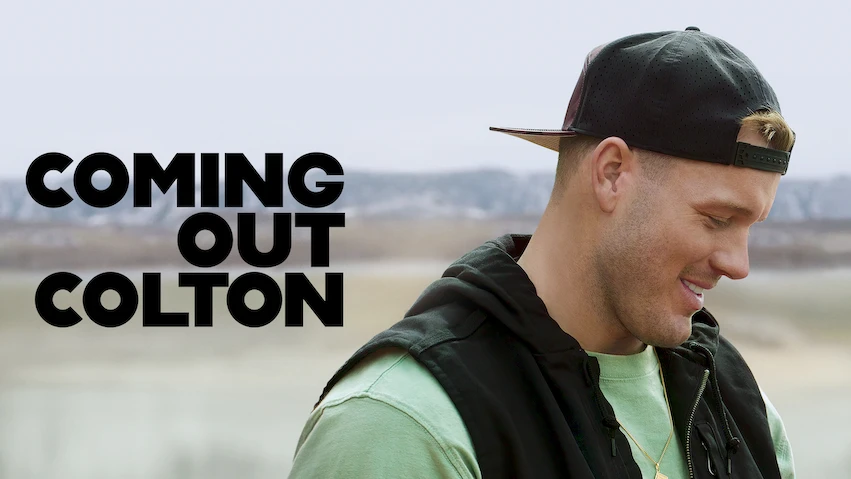
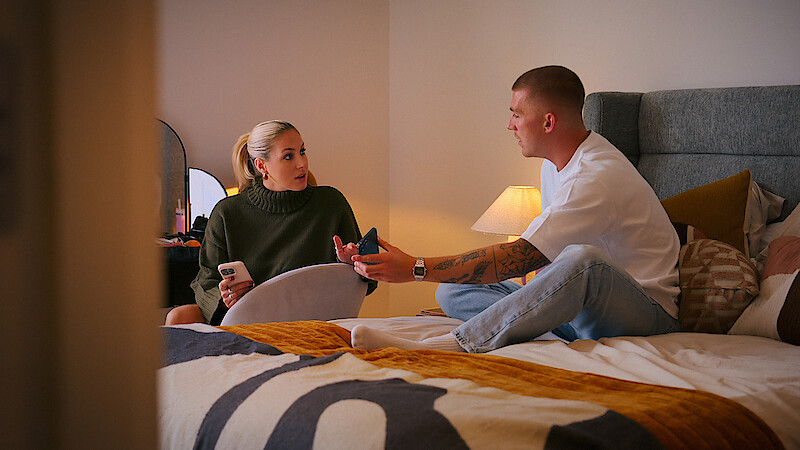
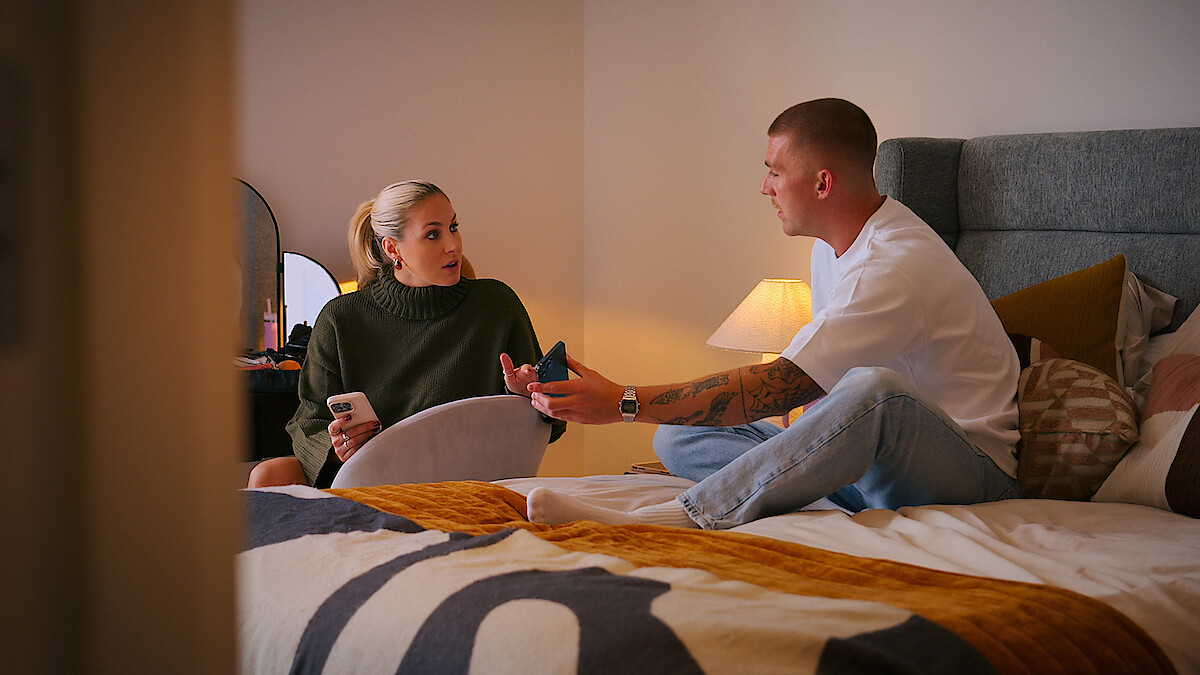
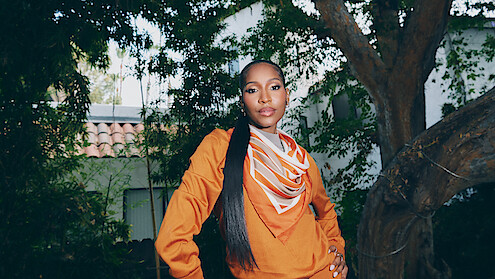
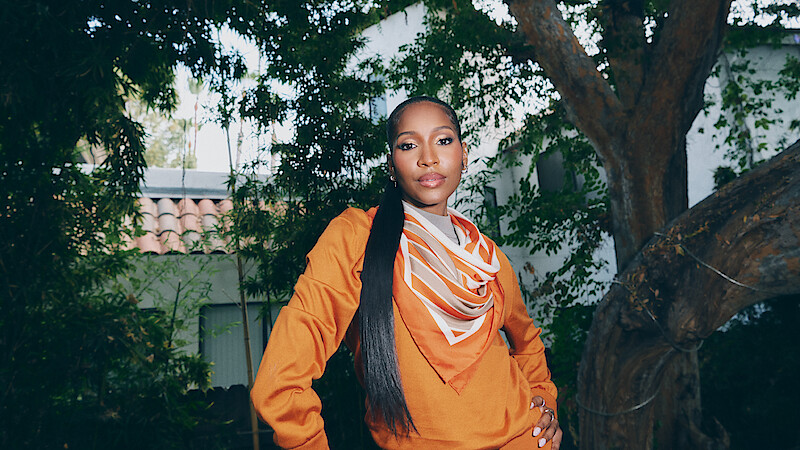
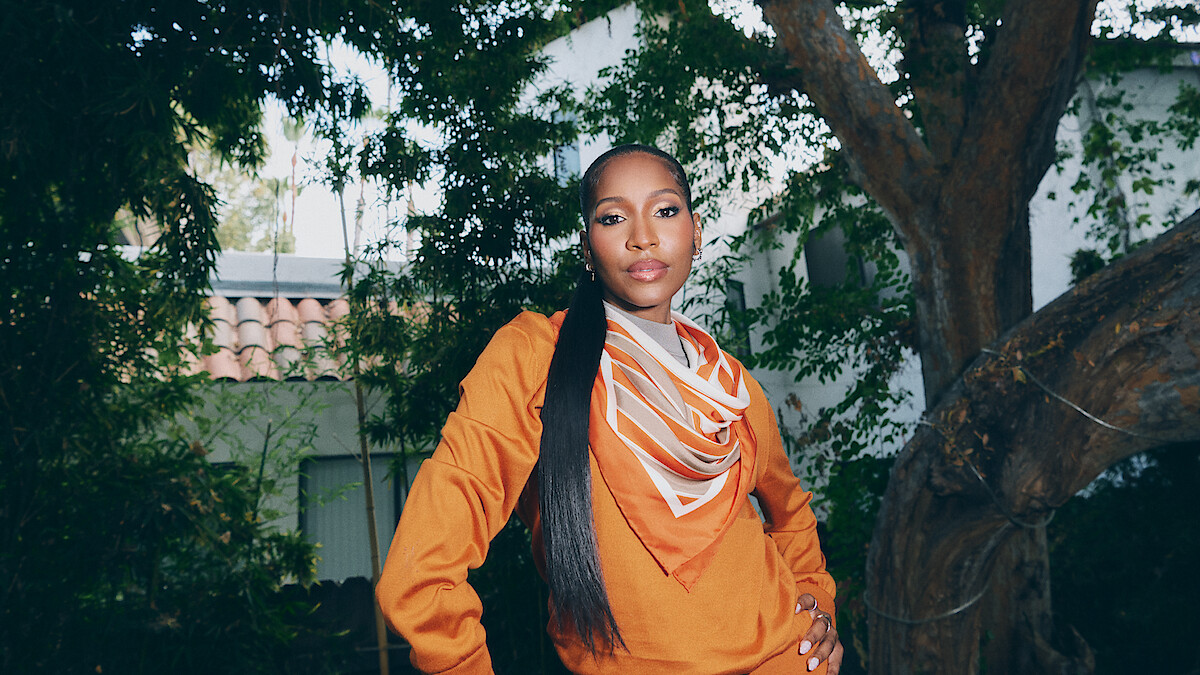
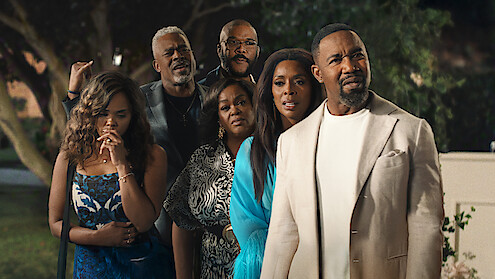
By her own admission, Reverend Nicole Garcia is direct. “Sometimes church people are a little bit too passive aggressive,” she says. “They’re nice to your face, and then they’ll say something behind your back. I'm just aggressive.” In her appearance on Coming Out Colton, Garcia lives up to this self-label, never failing to share her thoughts. In one of the show’s more notable moments, she urges former Bachelor Colton Underwood — who came out as gay in April 2021 — to hold himself accountable for stalking and harassing ex-girlfriend Cassie Randolph after their 2020 breakup.
“The best thing you can do is work on you and face up to what you’ve done before you get into your next relationship,” she tells him in Episode 6. “Before you go in and fuck up somebody else’s life, take responsibility for what you’ve done and then work on not doing it again. Who are you called to be? What’s in your heart?”
But her conversation with Underwood isn’t Garcia’s first time in the spotlight. In 2019, she made headlines when she became the first transgender Latina pastor in the Lutheran church. Now she’s left Boulder, Colorado’s Westview Church, where she was ordained, to begin her own “radically inclusive” church in the same town. Tentatively named Imago Dei, which translates to “Image of God,” Garcia’s church will be a place where everyone is welcome to be as aggressive (or passive-aggressive) as they please.
“How do we really, truly welcome people into a space where they feel connected to God and connected to each other?” she asks. “Truly developing a relationship with your creator means you also have to develop and nurture a relationship with God's creation.” And to no surprise, Garcia has a lot more to say about life as a pastor and her experience on Coming Out Colton.
What does a day in your life as a pastor look like?
Well, to be honest, right now, the church I was serving, Westview, and I had a difference of opinion, and so I actually left that church on July 4, 2021. I wanted to be much more radically inclusive than they were prepared to be, so I just decided it was time for me to leave. I am going to be planting a church here in Boulder that I'm going to build from the ground up with people who truly want to be radically inclusive.
Can you elaborate on that? What exactly does it mean to be “radically inclusive” in the church?
Part of what I really like about being Lutheran is the liturgy. I was raised Roman Catholic, so I'm very comfortable with liturgy — basically the order of service — and I'm also keenly aware that the services that the vast majority of churches use are steeped in the patriarchy, steeped in the gender binary. So what I intend to do, and was doing at Westview, [involves] taking out all the male references to God our Creator. So, using terms like “God the Creator,” “God the spirit,” and utilizing they/them pronouns for God.
I truly believe that each of us is made in the image of God, and if I look in the mirror, and my mother looks in the mirror, and my brother-in-law looks in the mirror, we all are made [in] the image of God. How can God be just a male or just a female? God really reflects the entirety of who we are as human beings, and then continues on being the creator of all that is. So God can't just be contained in one pronoun, but rather they and them, and I also use non-gendered language. So, instead of brothers and sisters, I use phrases like “siblings,” “we are the offspring of God,” “we are all created.” I try to encourage more of a rounded view. I am more gender nonspecific and nonbinary in all the language that I use.
It’s true, those linguistic changes make such a difference.
What I'm finding so often in churches is that people will say, “Yes, we will open our doors, and welcome people of all sexual orientations and gender identities into our church and into our [lives],” and it essentially comes down to “please come in, have a cup of coffee, we'll show you how we do things.” And it's a willingness to be able to change and incorporate new ideas, new identities into who we are as children of God that really is our strength. Our diversity is our strength, and we can't just rely on the traditions we've been using for the last 500 years to carry us to the next 500. I truly believe we are in the next stage of the reformation of the church, coming out of this pandemic.
It’s clear, based on your work, that you were brought in to advise Colton Underwood not just as a pastor but also as a member of the LGBTQ+ community. How did you get involved with the show in the first place?
I received a phone call from a dear friend that I've worked with for years through a group called Lutherans Concerned. They asked if I would be interested to talk to a producer about a project. And I trust this person implicitly. So [the associate producer and I] had a very open and frank conversation about what was happening. I was talking to one of the producers about the controversy — a white man comes out as gay, he gets a docuseries, whereas so many people who are BIPOC come out and lose jobs, lose families. The suicide ideation rate is so high [in this community], and far too many people don't find the support that they really need and anticipate. So to have Colton come out, and not only get a lot of support — which I really, really am glad — but get a Netflix series? We talked a lot about that, and, basically, I agreed to appear as long as I could tell my truth. If I get this opportunity to speak, I'm going to speak the truth, and I believe that's what I did.
How do you think speaking that truth affected him?
I really, truly hope that [conversation] helped Colton — helped him open his eyes a little bit. He did make a big commitment that he wanted to use his coming out and the series as a springboard for social action, for letting people know about the trans BIPOC community, as well as everything that he's going through. So, I do appreciate it.
One thing we have to ask is: Were you a fan of The Bachelor before jumping into this project?
Honestly, no. I really don't watch much. I'm a primary caregiver for my mother, who is now 87 years old, and Mama and I love soap operas. So we watch the three big ones — Days, Young and the Restless and The Bold and the Beautiful — every day, and then, I like to try and work on my Spanish a lot. I finished La Reina del Flow. The second season is coming out on November 17. Now we're watching La Reina del Sur, so I like watching novelas.
In your episode, you talk a lot about taking accountability. How do you recommend others start on that path?
I'm a therapist, and I believe in therapy — I also have a therapist. I really believe it's important for each of us to be able to have someone to talk to, so they can hold a mirror to us, and that we know (1) what's going on in our head and (2) how we’re interacting with the world. And so developing and having a strong support network is crucial and critical for everything. As a pastor, I also have a spiritual director, and I use spiritual direction to be able to sit down and say, “Am I meeting the needs of the people who are around me? Are my needs being met?’” So, constantly taking inventory of how we are acting in the world, how we’re interacting in the world. How do we want to be seen and how are we actually being seen?
It’s clear that you are a resource for exactly that. But how can people who aren’t necessarily in Colorado find a church like yours? What resources can they turn to?
Most major church denominations have some sort of LGBTQ+ advocacy group attached to them. So with the Lutherans, we have a group called Reconciling Works. Presbyterians have More Light Presbyterian, Integrity [USA] for the Episcopal church, Dignity [USA] and a few others for the Catholic Church. So try and find the LGBTQ+ advocacy organization that is attached or affiliated with your denomination and their website.
And what is next for you? Are you interested in starring in any future reality projects after this experience?
Oh, my gosh. That would be so much fun. I would definitely consider it.
Let’s say you got your own Netflix reality show. What would you call it?
[Laughs] She Said What?
I love that. Tell me why!
I’m like my mother. I tell you what I think, which I've had to learn how to temper. I've gotten much better at trying to be less direct. As a pastor, we have to be very pastoral. But if there’s something I don’t like, I’ll let people know about it. If there’s something I like, I’ll let people know about it. And I think having direct, open honest communication is the most important thing. I should say it was a dark, dark day when I realized I don’t know everything. I do have to sometimes stop and listen, and try and learn from other people.
I’m assuming the answer here is yes, but are you going to watch Coming Out Colton when it comes out?
Definitely, and all my friends and my family [will too]. I really, really hope we have a lot of positive impact. The goal is always to help individuals become comfortable with who they are, and who God created them to be. So I really hope this show can do that, give people a picture of what coming out can be, and that they find it within themselves to live their true, honest, genuine selves.
This interview has been condensed and edited for clarity.