SPOILER ALERT
This article contains major character or plot details.
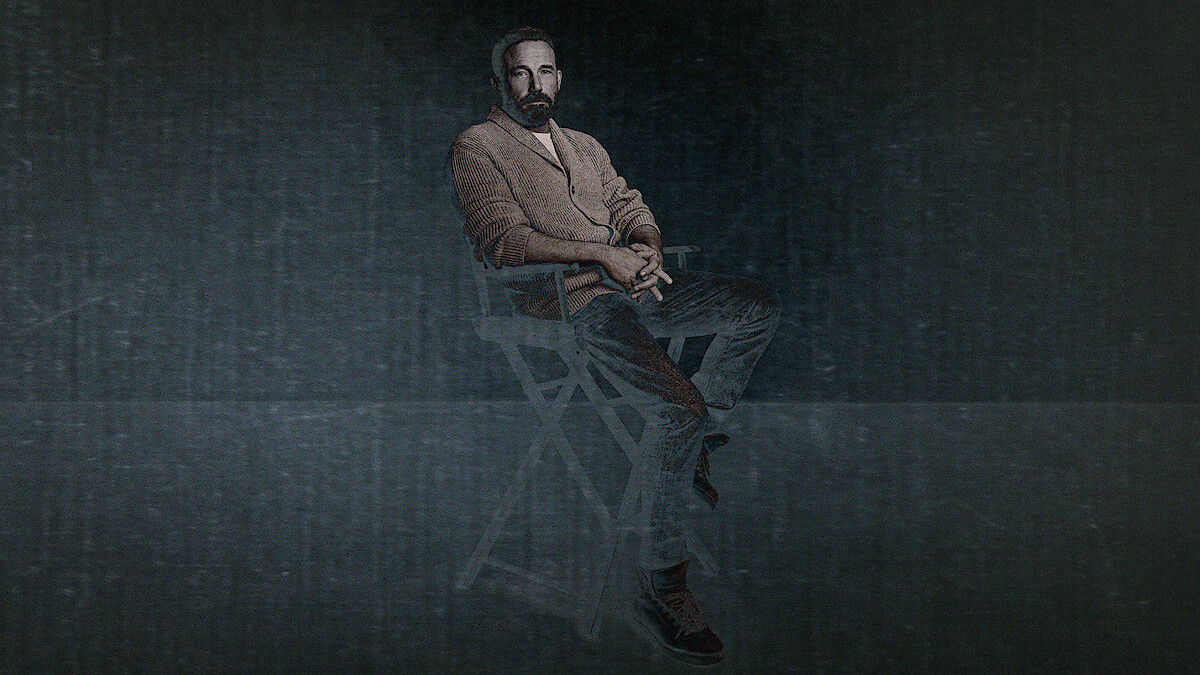
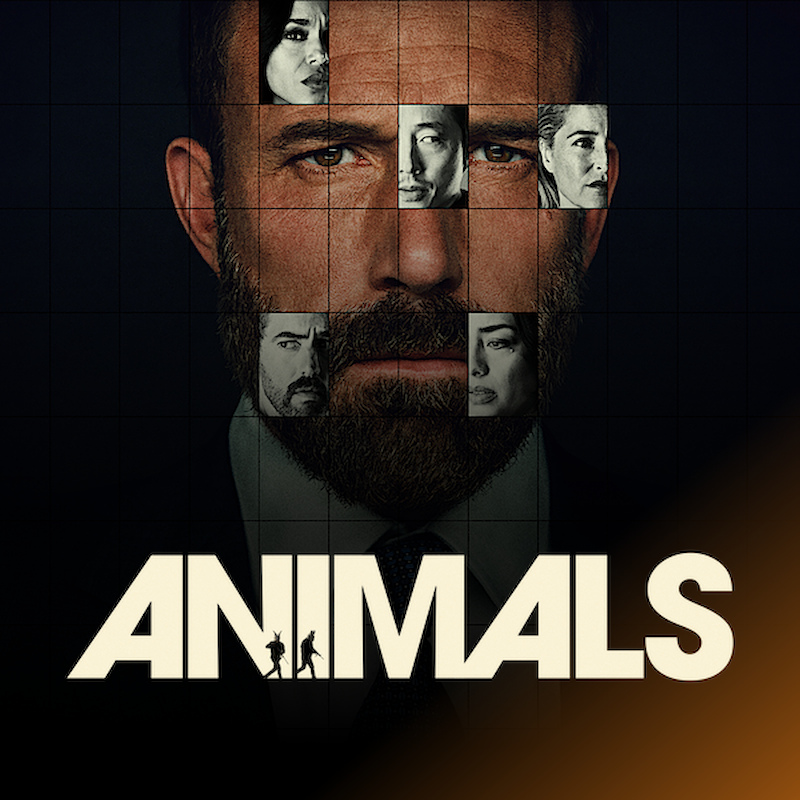
Ben Affleck wants to know what happens when our masks slip off and the animal underneath is revealed.
The co-writer, director, and star of Animals, streaming now on Netflix, was eager to explore the thriller’s sticky questions about humankind’s most primal state. “Ultimately, this is a story about whether people have a real moral compass, or [if we] seek to do what’s in our best interests, and build a story around that,” Affleck tells Tudum, adding that the film asks, “Who are we, really?”
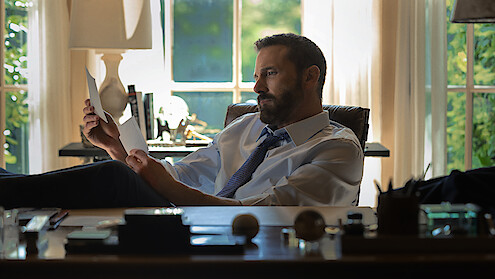
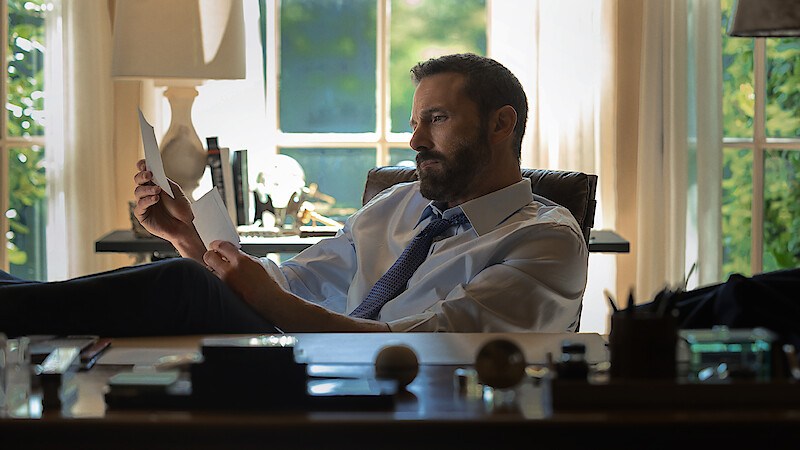
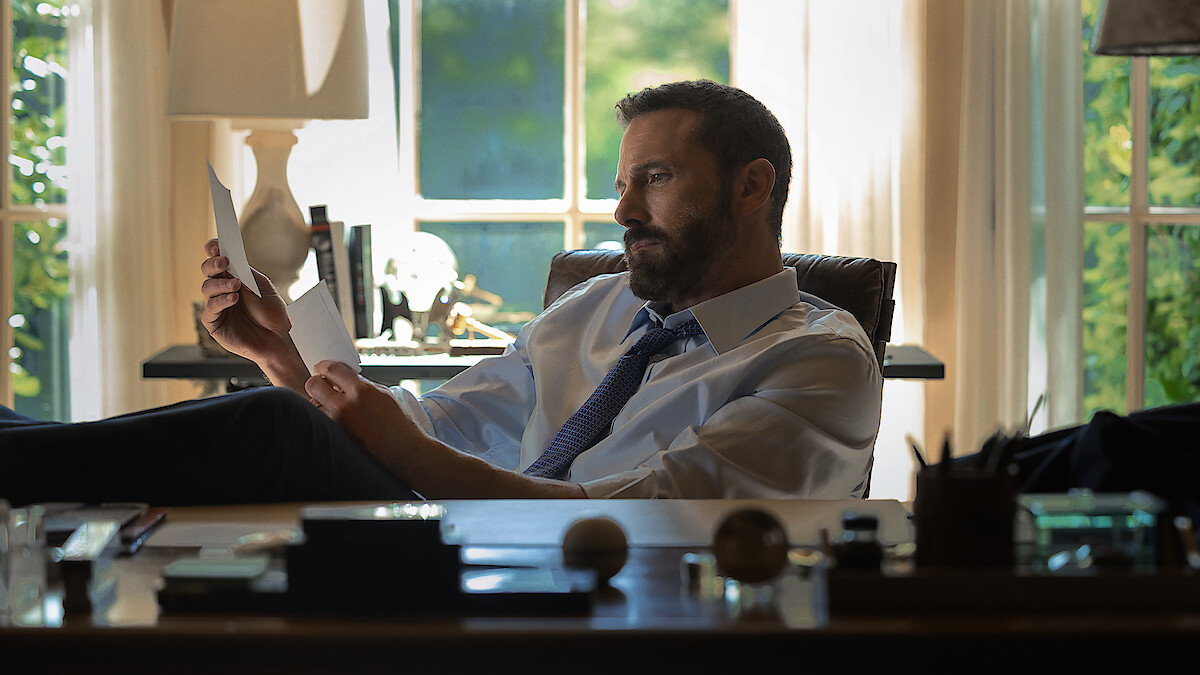
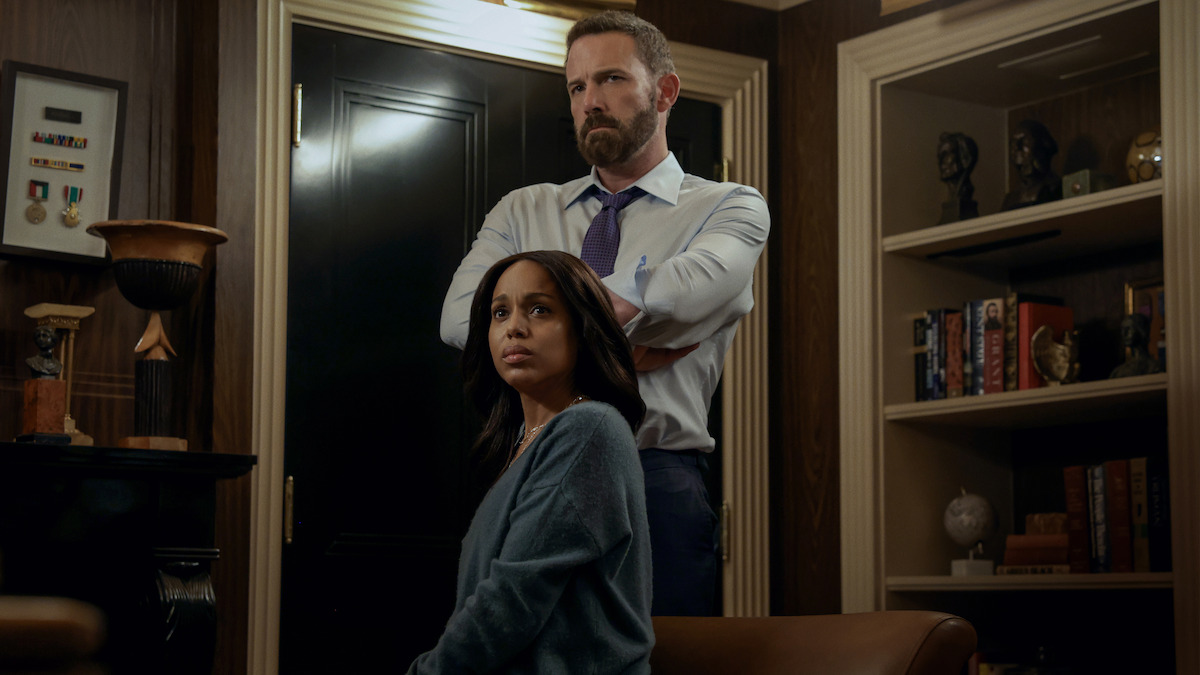
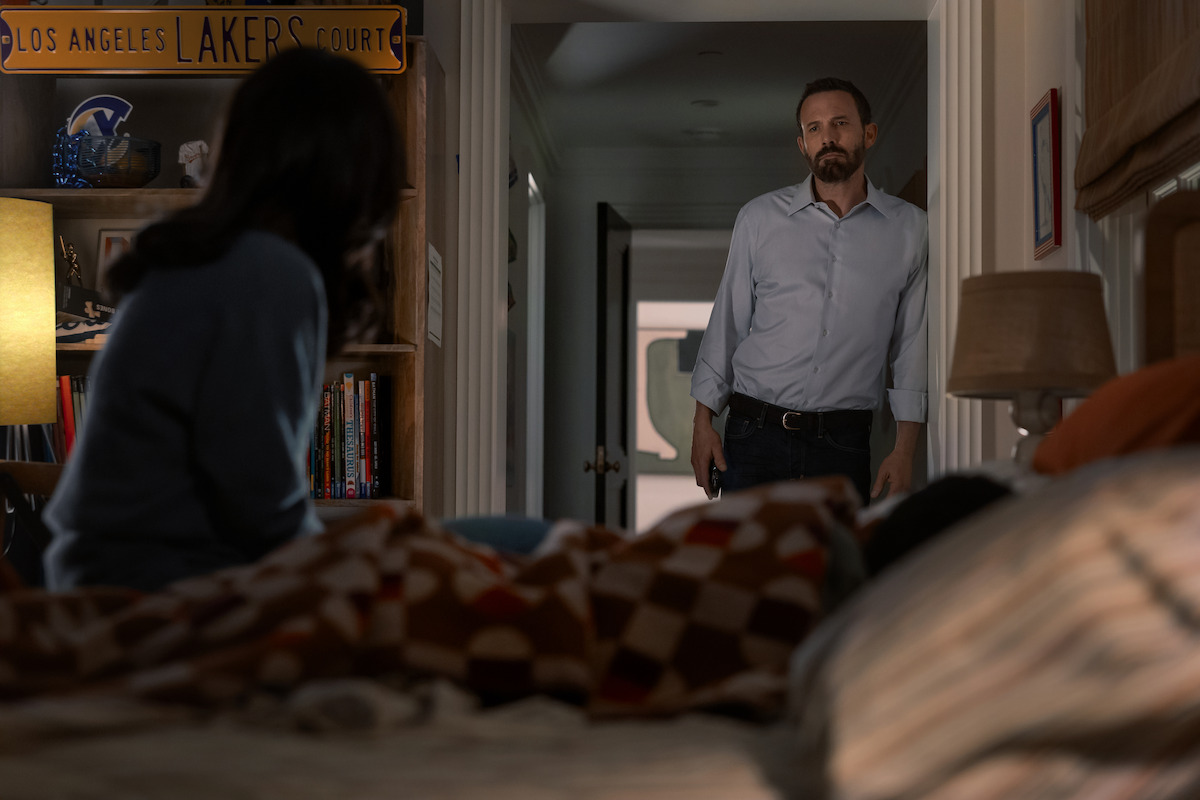
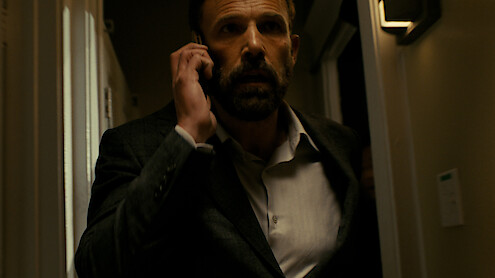
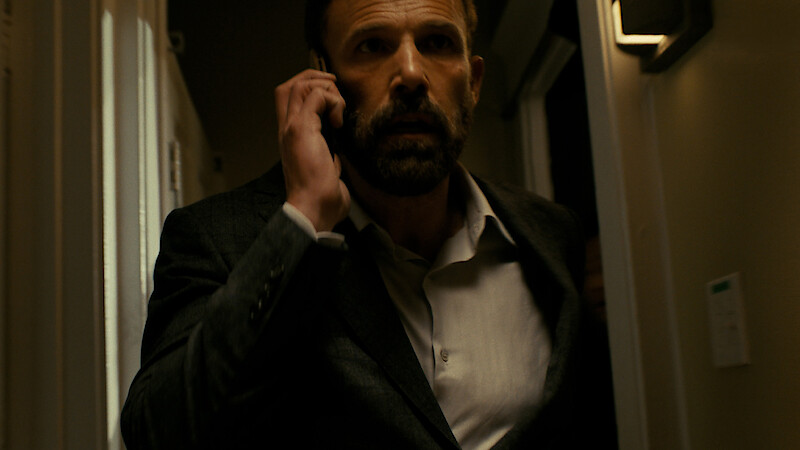
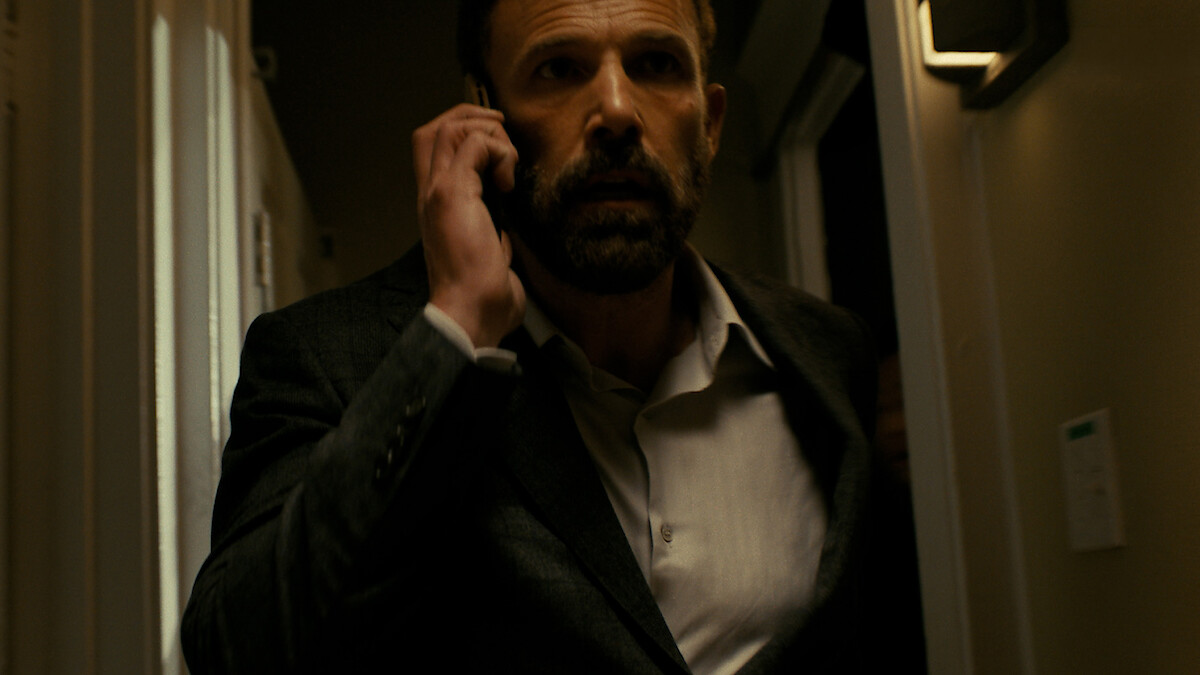
When it came to Affleck’s character Mark Kimball, a charismatic candidate for mayor of LA, there was plenty of rich terrain to explore. The wealthy lawyer with political aspirations lives in a big, beautiful house with his wife Abigail (Kerry Washington) and young son Denny (Christopher Woodley). Underneath that shiny facade, Mark has been quietly pilfering money from their bank account to help bolster his flailing campaign, and Abigail, unfulfilled by her marriage, is having an affair.
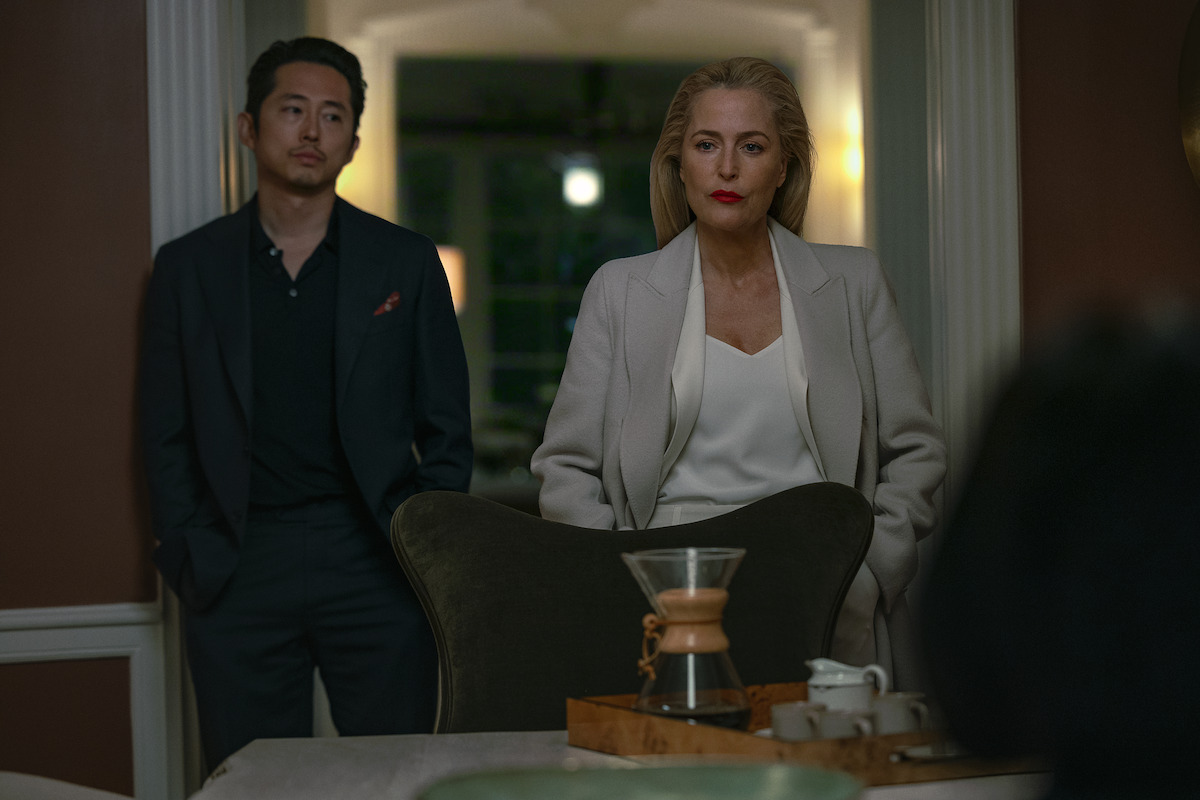
When the phone rings and an unknown man on the other end informs Abigail and Mark that he kidnapped Denny — and won’t bring him back until he receives $7 million — the couple is willing to do anything they can to save their son. That means agreeing to the caller’s terms and getting involved with a shadowy woman named Dayle (Gillian Anderson), who assumes the deed to Mark and Abigail’s home as a down payment on the steep fee she demands to help free their son.
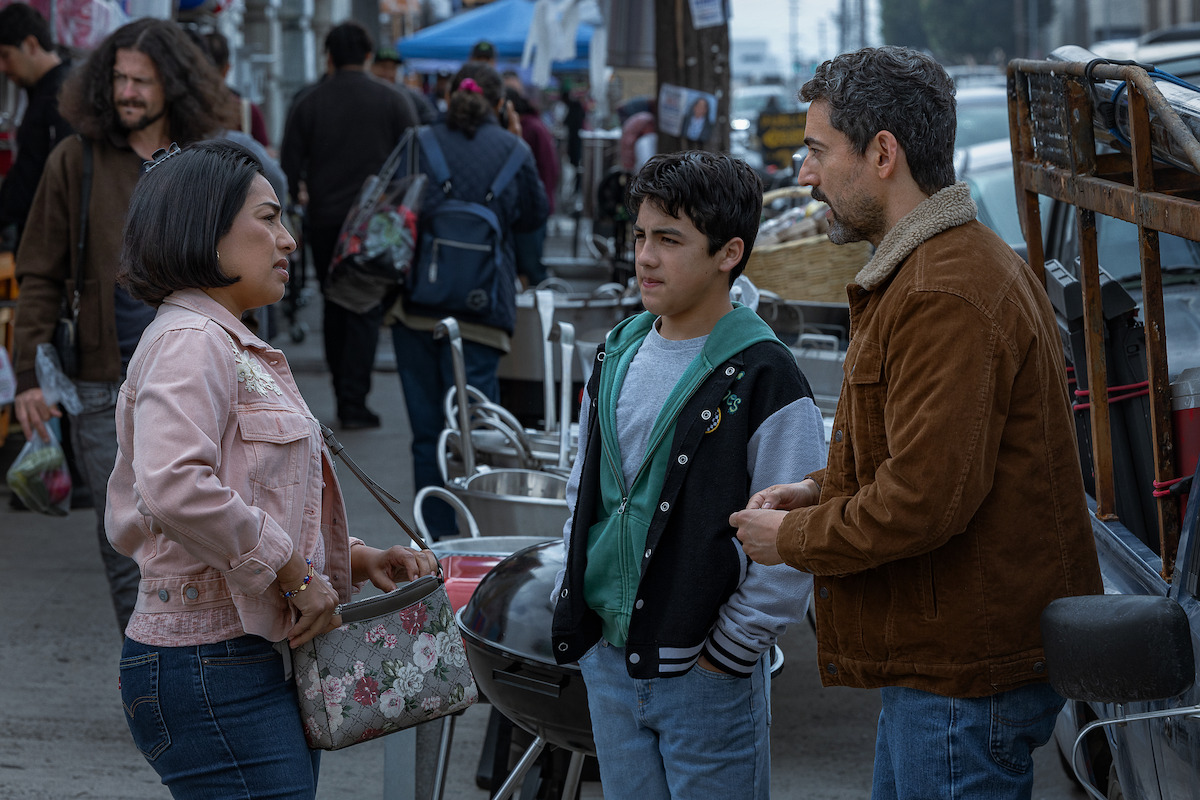
But, in a midmovie twist, it turns out the abductor accidentally took the wrong child. Instead of kidnapping Denny, he took Hector (Jacob Estrada), the son of Ramon (Luis Gerardo Méndez), an undocumented worker who is in a relationship with Mark and Abigail’s housekeeper, Cecilia (Adriana Paz). “The film operates as a thriller — a psychological thriller with action and drama and romance and intrigue on all those exciting popcorn levels,” Washington says. “Underneath, there are these complex questions about who matters, why they matter, what is the value of human life, and whether that value is impacted by race, citizenship, or whether you share DNA.”
Keep reading to find out how the final act of Animals unravels.
Does Mark pay the ransom money for Hector?
Dayle offers Mark three options once it becomes clear that it’s not his son who was kidnapped. He can call the police, pay the ransom, or arrange a hit on the kidnappers, which would allow the couple to keep their money.
Mark decides to go with the third option. In the interim, he attends a campaign event on the advice of his campaign manager, Sam (Steven Yeun), who says they need the group’s endorsement to swing the race. He is, after all, missing crucial support from the Latino community.
Ramon, meanwhile, is completely desperate to find his son. “Ramon doesn’t speak English, so suddenly he’s in this house, in this horrible situation, without understanding a single word of what’s happening, and trying to read these people, and trying to understand if these guys are going to do something to help him to get his son back,” Méndez says. “He has no money, he has no influence, he has no power in this country, and he cannot call the police because he’s living illegally in the country.”
When Ramon spots a man watching the Kimballs’ property, he pounces. The pair get into a violent tussle, but Ramon loses his footing and the mystery figure speeds off. Early the next morning, Mark gets into his car — with a trunk filled with millions of dollars.
Dayle tells Mark she’ll stay close behind and that her driver will be the one to take the hit out on the abductors. She suspects there are two of them: one dominant, one submissive. The terrifying voice on the other end of the phone instructs Mark to head to an abandoned stretch of land, located in a rundown and desolate part of the city by the Los Angeles River.
Affleck designed a prolonged sequence of aerial shots that moves the viewer from Mark and Abigail’s monied neighborhood all the way to Skid Row as the politician heads to save Hector. “The journey at the end — from the Westside house, through Mid‑Wilshire, Koreatown, downtown, Skid Row, then out toward the LA River — tells a story just through the changing landscape,” the director tells Tudum. “You have these wealthy communities existing alongside industrial, largely abandoned areas. That juxtaposition is real.”
Via phone, the kidnapper demands that Mark slide down a steep slope into the LA River, money in hand, and then forces him to count out all the stacks while watching mockingly from afar. Then, a man wearing an enormous rabbit mask appears with Hector in a small cart. He pushes the terrified boy down that same steep slope, and Mark manages to catch him before he can get seriously hurt. The man in the rabbit mask, alongside his accomplice wearing an identical mask, goes to collect the bag of money as Mark and Hector lie together on the ground. From a distance, Dayle’s henchman, Rand (Chris Gann), waits in the shadows with his gun raised.
Are the kidnappers killed?
Yes, Rand manages to shoot and kill both the men. Just when it seems like Mark and Hector are finally safe — and Dayle arrives to grab the cash — a third kidnapper, who had been hiding in the shadows, shoots Dayle and the man who works for her. Dayle’s fate, Anderson says, is tied to her “hubris,” and to her belief that she’s always right.
“She sussed out that these guys are amateurs, so there’s only two of them … when it turns out that there’s a third, she’s let her guard down and the consequence is a fatal one,” Anderson says.
The third abductor advances on Mark but is abruptly killed by an at-first unknown shooter. The gunman, it turns out, is Ramon. He overheard where Mark was going and followed behind him, heroically saving both the politician’s life and ensuring the safe return of his son. Affleck relished the character swap, with Mark sliding into the rearview of the story and Ramon taking over as the film’s protagonist. “I’ve been interested in this structural swap idea,” the director says. “I want to get out of the familiar grooves that make stories feel predictable, but in a way that still feels honest, not like a gimmicky bait and switch.”
Dayle, meanwhile, is badly wounded and dying. Mark looks at her dispassionately and takes her phone from her, which contained incriminating recordings of everything that had happened in the past twenty-four hours. Mark disposes of her body, along with the dead abductors. We don’t learn who the kidnappers are, or their full story, which was kind of the whole point for Washington. “What I like about it is that it's not about the enemy,” she tells Tudum. “The film is not about the bad guy, the film is more about the bad guy that lives in all of us.”
How does Mark get away with murder?
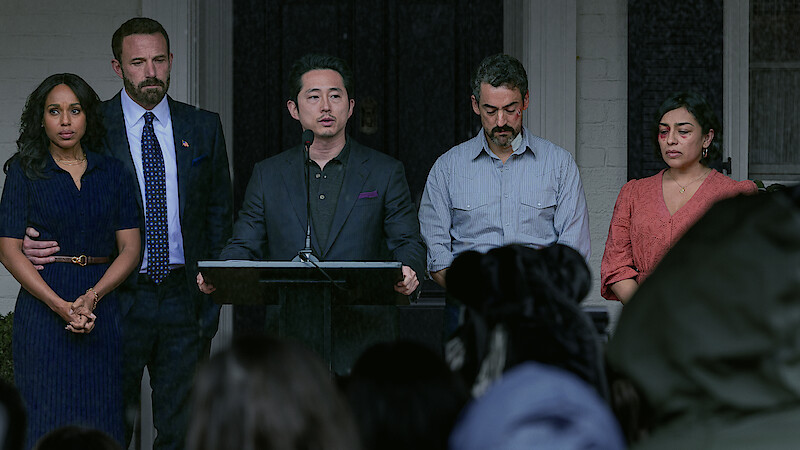
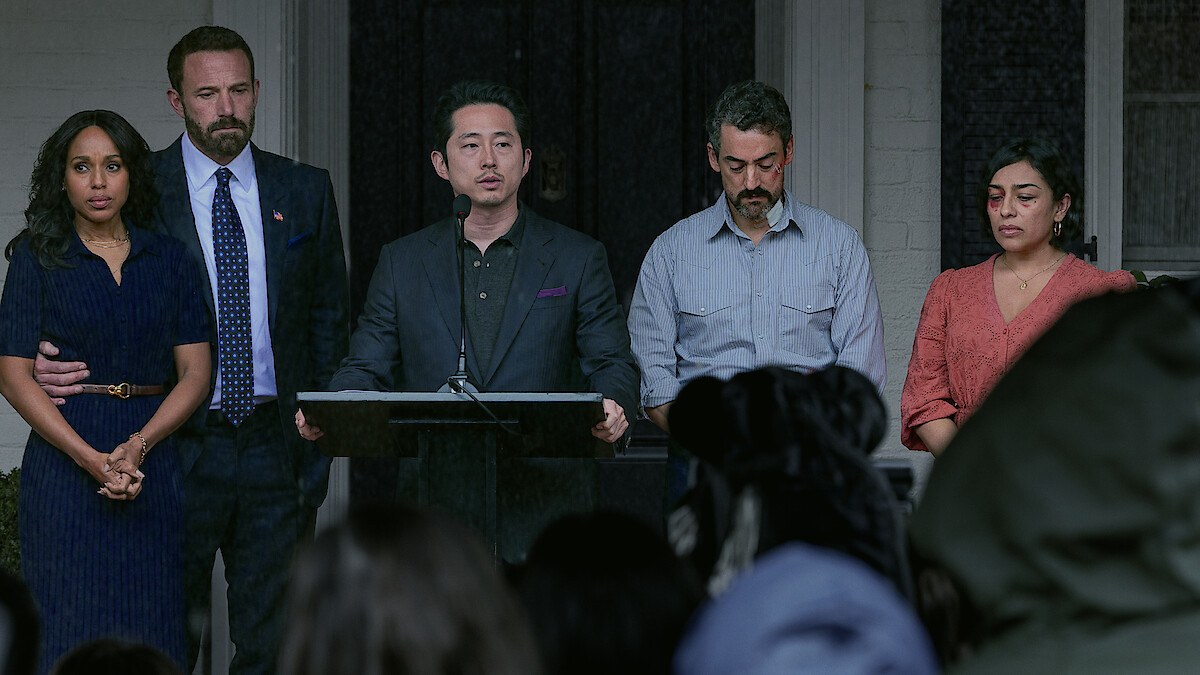
Pure spin. The politician lies and says that it was Ramon who went looking for his son, and it was Mark who shot and killed the abductor. He’s lauded for his bravery and only given a few small slaps on the wrist, including a year of probation and community service. Ramon, with the cash taken from Dayle, returns to Mexico with Cecilia and Hector, having been thrust into the spotlight as an undocumented person.
“It’s definitely a very bittersweet ending,” Méndez says. “Ramon is the hero of the story, but if we told this country what Ramon did, he would be a criminal. Mark, a white American guy who did the same [thing], could be a hero.”
Mark ends up winning the mayoral race thanks to a surge in support from Latinos. During an interview with Gayle King, it’s clear that he’s flirting with the idea of running for president next, though he demurs on the topic, claiming it’s not even remotely on his mind. “You’re in the position where you’re about to take someone’s life,” King says, harkening back to the day Mark killed the abductor. “What did you think?”
“It seemed to be clear to me what the stakes were, and it had to be done,” Mark replies as the screen flashes back to the image of him leaving Dayle’s body behind, with her phone and money now in his possession. “I guess if I had thought of it in advance, I would have been more scared, but in the moment it was easier than I thought.”
What happens to Mark and Abigail’s marriage?
All lies were laid bare during those excruciating twenty-four hours. Mark is forced to reveal that he emptied their bank account for the campaign and thus could not front the $7 million without the help of Dayle.
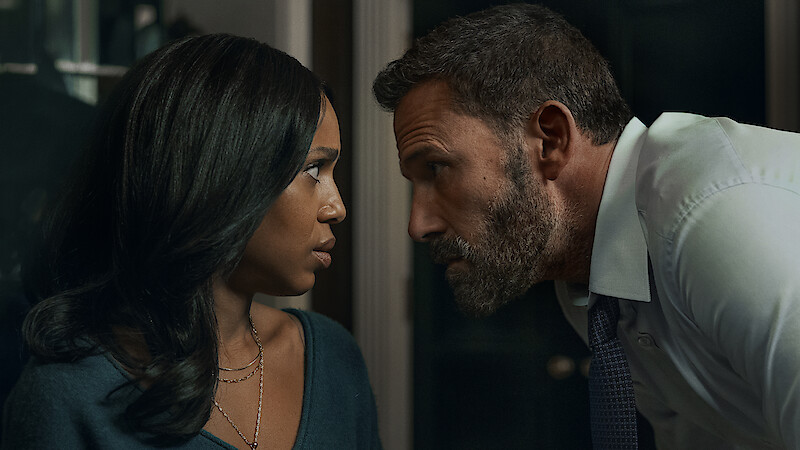
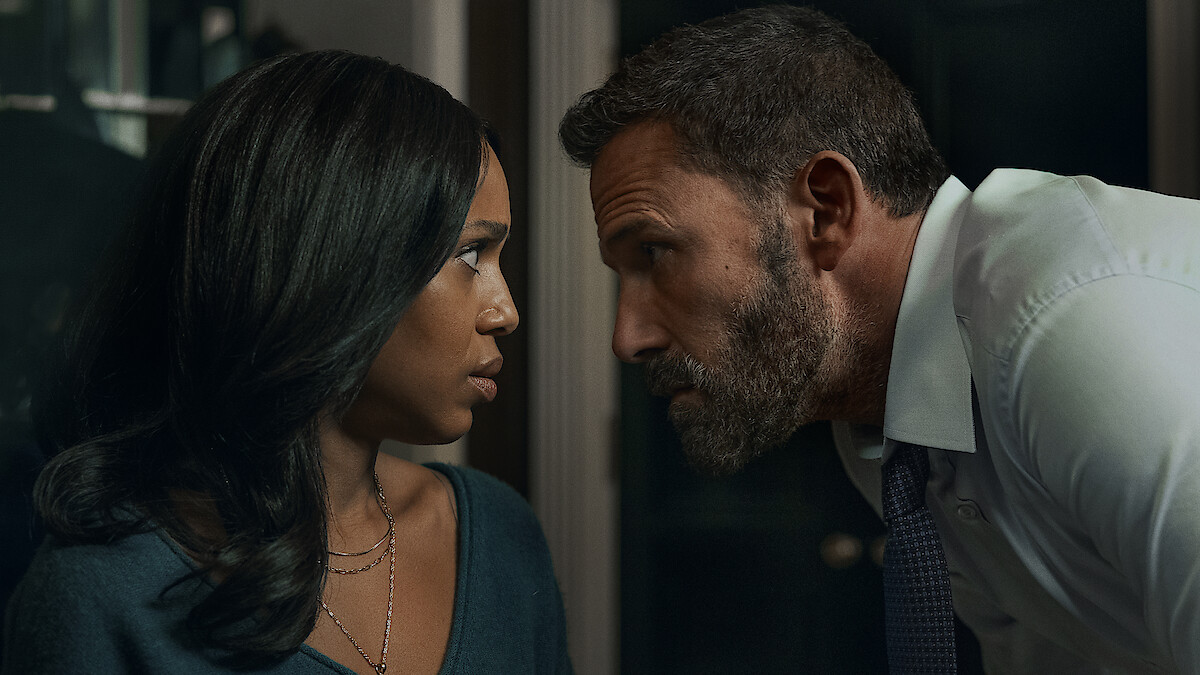
Mark also discovers from an incriminating message on Abigail’s phone that his wife is having an affair with UCLA professor Ron Sperling (Ray Fisher). Later, Mark confronts her and the two go head-to-head. Affleck and Washington texted about the scene for weeks ahead of shooting, mapping out exactly what they wanted to accomplish between their two characters.
“That was a really challenging scene for both of us emotionally, but we were really able to go there,” Washington recalls. “The next day, neither of us had a voice, we were drinking throat coat tea and [chewing] lozenges … I think being willing to go to those scarier, emotional places together was exciting for both of us.”
When Abigail accuses her husband of caring too much about being loved by his potential constituents, and tells him that he makes her feel alone, the politician starts to crumble. “For what it’s worth, I really, really loved you and I never wanted this to happen,” he says through tears.
“There's a great moment that a lot of people bring up because it resonates for them when he says, ‘Is he Black?’” Washington says. “We would always do a few takes that were more improvised and that line actually wasn't written in the script. Mark is really asking out of a deep sense of insecurity — ‘Can I not be who you need me to be?’”
Mark’s emotional reaction became a major turning point for Abigail. “I think to see her husband be so crushed by her infidelity was a real awakening for her on how much she still matters to him and how much he still matters to her,” Washington tells Tudum.
Later, in bed, Mark opens up to Abigail about his rawest desires, including his deep yearning to climb the political ladder and how badly he still wants her. As he rattles off all these vulnerable wants and needs, Abigail finds herself coming to a final decision about their marriage. “That's the scene where she's like, ‘Okay, we're going to do this,’” Washington says. “If he's willing, we're going to do whatever it takes to be a couple, a family, and win, like capital W win, whatever that means, but we're going to do it together.”
Adds Affleck, “The movie is really about marriage — what it means to attach yourself to someone, the bargains and exchanges. They don’t truly know one another until the end, and then they decide whether to stay married knowing more of the truth.”
Following their harrowing experience, the couple becomes a tight, solid front, with Abigail standing firmly by Mark’s side as he makes his false murder confession to the public.
“I think a lot of the film is about people having to navigate the mask that we wear, the way we present ourselves in society versus who we really are,” Washington tells Tudum. “Mark and Abigail still have a mask on, but now it's a united mask, and they see each other clearly behind that mask.”
If you’re left feeling torn about Mark and the many gray areas still lingering in those final moments, that’s totally okay — and actually encouraged by Affleck. “We’re not all going to share the same opinion about things in this country or the world, but I think we can recognize some basic truths about human beings,” the director says. “That’s really the balance I’m trying to strike with this movie: emotional and narrative satisfaction without dictating how you’re supposed to feel about these characters at the end.”
Animals is streaming on Netflix now.